


2 Sink Strainers
In industrial environments, the management of wastewater and process fluids begins at the point of discharge. For facilities utilizing multi-compartment sinks or dual-stream processing lines, the selection of 2 sink strainers is a critical engineering decision. Unlike residential components, industrial-grade strainers must withstand corrosive chemicals, high-temperature effluents, and heavy particulate loads while maintaining consistent flow rates.
As a specialized manufacturer of Strainers & Baskets, Kaifil provides precision-engineered filtration components designed to protect downstream piping and treatment systems. This guide examines the technical specifications, material considerations, and selection criteria necessary for engineers and procurement teams to optimize their industrial drainage and filtration setups.
Understanding Industrial Sink Strainer Systems
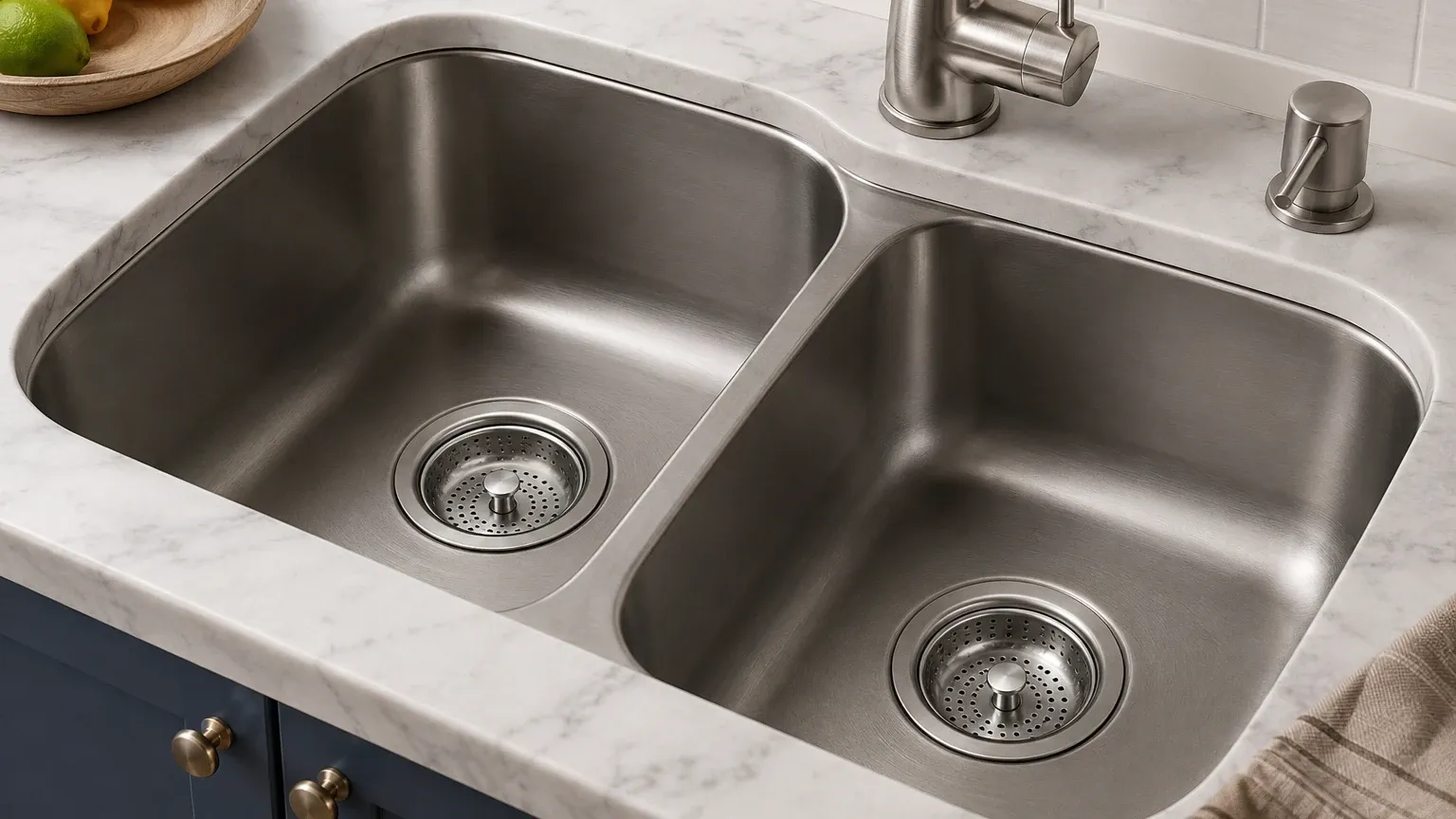
Industrial "2 sink" configurations typically refer to dual-compartment sinks used in commercial kitchens, laboratories, or pharmaceutical cleanrooms. Each compartment requires a dedicated strainer assembly that can handle specific waste streams. In some technical contexts, this may also refer to duplex strainer systems where two baskets are used in parallel to allow for cleaning without interrupting the flow.
In a B2B context, the term 2 sink strainers encompasses the assembly—comprising the flange, the basket, and the sealing mechanism—designed for heavy-duty use. The primary function is to capture solids that could cause blockages or damage pumps and secondary filtration stages. Engineering these components requires a balance between "open area" (to maintain flow) and "retention capability" (to capture specific particle sizes).
Key Components of Industrial Strainers
1. The Flange and Body: Usually constructed from heavy-gauge stainless steel to resist mechanical stress and chemical erosion.
2. The Basket (Strainer): The removable element that performs the actual filtration. These are often customized with specific mesh or perforation patterns.
3. The Seal/Gasket: High-performance elastomers like EPDM, Viton, or PTFE are used to ensure leak-proof performance in varying temperatures.
4. The Tailpiece Connection: Standardized threading (often NPT or BSP) to integrate with industrial plumbing systems.
Material Selection and Durability
Material science is the foundation of industrial filtration. When specifying 2 sink strainers, the choice of alloy determines the lifespan of the component and its compatibility with the process fluid.
Stainless Steel 304 vs. 316
* Type 304: This is the standard for most food and beverage applications. It offers excellent corrosion resistance to most oxidizing acids and is highly durable. However, it can be susceptible to pitting in high-chloride environments.
* Type 316/316L: For chemical processing or pharmaceutical applications, Type 316 is the preferred choice. The addition of molybdenum enhances resistance to chlorides and acetic acids. 316L (low carbon) is used when welding is required to prevent carbide precipitation and ensure the integrity of the mesh-to-frame bond.
Specialty Coatings and Finishes
In specific industrial applications, standard stainless steel may require additional treatments. Electropolishing is frequently utilized in the pharmaceutical industry to create a smooth, non-porous surface that prevents bacterial growth and eases the cleaning process. For highly abrasive slurries, hard-facing or specialized coatings may be applied to the basket to extend the replacement cycle.
Engineering Specifications: Mesh, Perforation, and Micron Ratings
The performance of 2 sink strainers is defined by the geometry of the filtration media. Engineers must specify the correct hole size based on the smallest particle that must be retained.
Perforated Metal vs. Wire Mesh
* Perforated Baskets: These are typically used for "coarse" filtration. They are made by punching holes in a metal sheet. They offer high structural strength and are ideal for capturing larger debris like food scraps, plastic fragments, or metal shavings. Common hole diameters range from 1/32" to 1/2".
* Wire Mesh Baskets: For finer filtration (down to 5 microns), stainless steel wire mesh is layered or pleated within a perforated support cage. This configuration is essential in laboratory sinks where fine precipitates must be captured.
The Importance of Open Area Ratio
The "Open Area Ratio" (OAR) is the ratio of the total area of the holes to the total area of the strainer basket. A higher OAR results in a lower pressure drop across the strainer, which is vital for gravity-fed drainage systems found in industrial sinks. If the OAR is too low, the sink will drain slowly, leading to operational delays and potential overflows. Kaifil engineers typically aim for an OAR of at least 3:1 relative to the cross-sectional area of the inlet pipe to ensure optimal flow even as the basket begins to fill with debris.
Evaluating Design Features for Industrial Baskets
When purchasing Strainers & Baskets, the mechanical design features often dictate the ease of maintenance and the total cost of ownership.
Handle and Removal Mechanisms
In a high-volume environment, the basket must be removed and cleaned frequently. Industrial baskets should feature a robust, ergonomic handle—often a fixed bar or a heavy-duty drop handle—welded securely to the rim. Flimsy handles are a common failure point in lower-quality components.
Deep-Basket vs. Shallow-Basket Designs
* Deep Baskets: Used in applications with high solids loading. They allow for longer intervals between cleaning cycles but require more vertical clearance beneath the sink.
* Shallow Baskets: Ideal for space-constrained installations or applications where the waste is primarily liquid with minimal solids.
Sealing and Locking
For pressurized systems or applications involving hazardous chemicals, a simple gravity-fit basket is insufficient. Twist-lock mechanisms or weighted seals ensure that the basket remains seated even under turbulent flow conditions, preventing "bypass" where debris escapes around the edges of the filter.
Operational Considerations for Dual-Strainer Configurations
In many industrial processes, redundancy is key. The term 2 sink strainers often implies a dual-sink setup where one sink can remain operational while the other is being cleaned or serviced. This is common in:
* Food Processing: One sink for produce washing and another for equipment rinsing, requiring different filtration levels.
* Laboratories: Separate sinks for organic and inorganic waste streams to prevent chemical reactions in the drainage lines.
* Hydraulic Test Stands: Where dual baskets are used to filter oil returning to a reservoir, allowing for continuous operation.
Maintenance and Replacement Cycles
The longevity of a stainless steel strainer is significantly higher than plastic or thin-gauge metal alternatives. However, even the most durable 2 sink strainers require a maintenance schedule.
1. Daily Inspection: Check for mechanical deformation or tears in the mesh.
2. Chemical Cleaning: In food or bio-pharma sectors, baskets should be subjected to CIP (Clean-In-Place) or ultrasonic cleaning to remove biofilm and scale.
3. Gasket Replacement: Seals should be replaced annually or whenever they show signs of compression set or brittleness.
Total Cost of Ownership and Procurement Guidance
While the initial purchase price is a factor, the total cost of ownership (TCO) for industrial strainers includes maintenance labor, replacement frequency, and the cost of downstream damage if the strainer fails.
OEM vs. Off-the-Shelf
Standard off-the-shelf strainers may suffice for light commercial use, but industrial applications often demand OEM customization. Customization options include:
* Specific flange dimensions to fit non-standard sink openings.
* Reinforced basket bottoms to handle heavy metal debris.
* Magnetic inserts to capture ferrous particles in machining environments.
Confirming Specifications Before Purchase
Before finalizing a procurement order for 2 sink strainers, technical teams should confirm the following:
* Fluid Compatibility: Does the alloy match the pH and chemical composition of the waste stream?
* Flow Rate Requirements: Will the OAR support the maximum expected discharge volume?
* Temperature Limits: Can the seals and the basket structure withstand the peak effluent temperature?
* Compliance Standards: Does the product meet FDA, 3A, or specific industry hygiene standards?
By focusing on these technical parameters, engineers can ensure that their filtration systems provide reliable, long-term service. Kaifil’s expertise in manufacturing high-quality Strainers & Baskets ensures that every component is built to the exact tolerances required by demanding industrial sectors, from chemical processing to food production. Investing in precision-engineered 2 sink strainers is not just about drainage; it is about protecting the integrity of the entire facility's fluid management infrastructure.
