


3 Y Strainers
In industrial fluid handling, the 3-inch Y strainer serves as a critical line of defense for downstream equipment. Positioned within piping systems to remove unwanted solids from liquid, gas, or steam lines, these components are essential for protecting pumps, meters, control valves, and regulators from damage caused by scale, rust, or debris. For engineers and procurement teams, selecting the right 3 y strainers involves more than matching pipe diameters; it requires a deep understanding of material compatibility, pressure drop dynamics, and the specific filtration requirements of the application.
As a specialized manufacturer, Kaifil provides precision-engineered Strainers & Baskets designed to withstand the rigorous demands of chemical processing, water treatment, and pharmaceutical manufacturing. This guide explores the technical considerations necessary for integrating 3-inch Y strainers into industrial systems effectively.
The Engineering Logic of the Y-Configuration
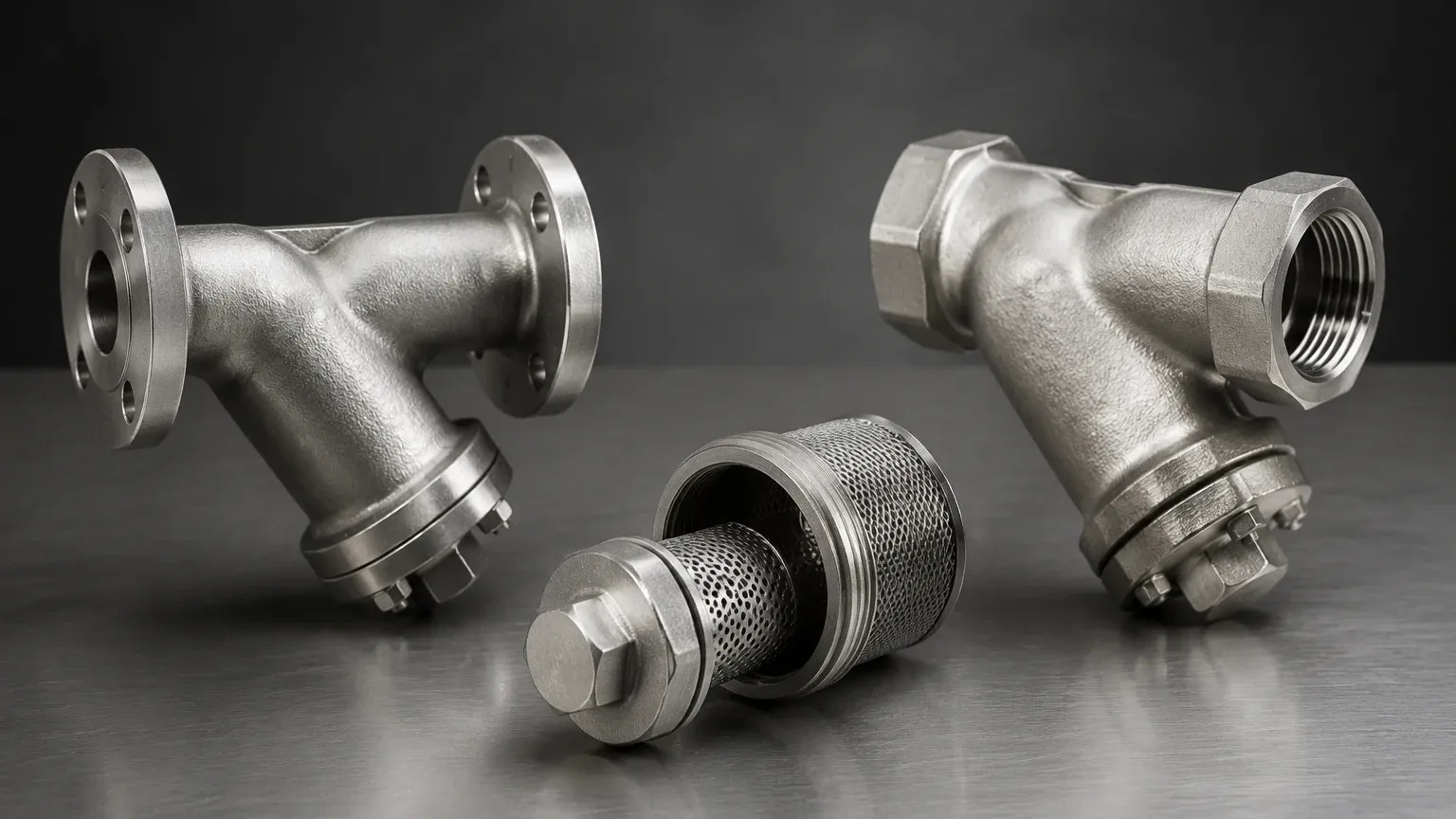
The Y-strainer derives its name from its shape, where the filtering leg connects to the main flow path at an angle. This design is specifically engineered for high-pressure applications and systems where the amount of material to be removed is relatively small.
In a 3-inch system, the Y-configuration offers several mechanical advantages:
1. Compact Footprint: Unlike T-type or basket strainers, Y-strainers have a more streamlined profile, making them ideal for installations where space is a constraint.
2. Versatile Orientation: These units can be installed in either horizontal or vertical positions, provided the "leg" of the Y points downward to allow for gravity-assisted collection of debris.
3. High-Pressure Capability: The geometry of the Y-strainer body allows it to handle significantly higher operating pressures compared to larger, more complex basket designs.
When evaluating 3 y strainers, engineers must consider the "Open Area Ratio" (OAR). This is the ratio of the total open area of the internal screen to the internal cross-sectional area of the pipe. A higher OAR generally results in a lower initial pressure drop and longer intervals between cleaning cycles.
Material Selection for Industrial Environments
The longevity of a 3-inch Y strainer is primarily dictated by its material construction. Since these components are often exposed to corrosive fluids or high-temperature steam, the choice of alloy is paramount.
Stainless Steel (304 and 316)
Stainless steel is the industry standard for high-performance filtration. Kaifil specializes in 304 and 316 stainless steel solutions.
* Type 304: Suitable for general industrial use, offering excellent strength and basic corrosion resistance for water and mild chemical applications.
* Type 316: Contains molybdenum, which provides superior resistance to chlorides and pitting. This is the preferred choice for pharmaceutical, food and beverage, and marine environments where hygiene and chemical stability are non-negotiable.
Specialty Alloys and Coatings
For highly aggressive environments, such as those involving concentrated acids or high-salinity fluids, specialty alloys or protective linings (like PTFE) may be required. However, for the majority of B2B industrial applications, a precision-machined 316 stainless steel body provides the optimal balance of durability and cost-effectiveness.
Internal Components: The Role of Strainers & Baskets
The heart of the Y-strainer is the internal element, often referred to as the screen or basket. The efficiency of the filtration process depends entirely on the configuration of this component. In a 3-inch Y strainer, the element is typically a cylindrical screen held in place by a bolted or threaded cap.
Perforated vs. Mesh Liners
* Perforated Screens: These are made from a single sheet of metal with punched holes. They are used for "coarse" straining, where the goal is to remove larger particles (e.g., 1/16" to 1/4").
* Wire Mesh Liners: For finer filtration, a stainless steel wire mesh is layered over a perforated metal support. This allows for filtration ratings down to the micron level. Engineers must specify the mesh count—the number of openings per linear inch—to ensure the desired level of clarity in the effluent.
When sourcing Strainers & Baskets, it is vital to confirm the mechanical strength of the element. In high-velocity 3-inch lines, the internal screen must be able to withstand the differential pressure (Delta P) that occurs as the screen becomes clogged. A collapsed screen can lead to catastrophic downstream failure.
Hydraulic Performance and Pressure Drop
One of the most common mistakes in filter selection is undersizing the unit, leading to excessive pressure drop. The pressure drop is the difference in pressure between the inlet and outlet of the strainer. For a 3-inch Y strainer, this is influenced by the fluid's viscosity, flow velocity, and the percentage of the screen that is blocked.
Calculating Cv Values
The flow coefficient (Cv) represents the volume of water at 60°F that will flow through the strainer with a pressure drop of 1 psi. A 3-inch Y strainer typically has a Cv value that reflects its internal geometry. Engineers should use the following formula to estimate the pressure drop for their specific fluid:
**ΔP = (G / Cv)² * SG**
*Where:*
* ΔP = Pressure drop in psi
* G = Flow rate in gallons per minute (GPM)
* Cv = Flow coefficient of the strainer
* SG = Specific gravity of the liquid
If the calculated pressure drop exceeds 2 psi for a clean screen, it may be necessary to reconsider the mesh size or move to a larger strainer body to prevent pump cavitation or reduced system efficiency.
Installation and Maintenance Protocols
Proper installation is critical to the performance of 3 y strainers. Because these units are designed to trap debris in the "leg," the orientation must allow the debris to settle away from the main flow path.
Horizontal vs. Vertical Flow
* Horizontal Lines: The strainer should be installed with the leg pointing downward. This ensures that the collected material does not fall back into the pipe when the flow stops.
* Vertical Lines: Y-strainers can only be used in vertical lines if the flow is downward. If the flow is upward, the debris will settle at the bottom of the pipe rather than in the strainer leg, rendering the device ineffective.
The Importance of the Blow-Off Connection
Most industrial 3-inch Y strainers feature a blow-off port in the cap. By installing a blow-off valve, maintenance teams can flush the collected debris from the screen without shutting down the system or dismantling the strainer. This "self-cleaning" capability is a significant advantage in continuous process industries.
For thorough cleaning, however, the system must be depressurized, and the cap removed to inspect the screen for signs of fatigue, corrosion, or persistent scaling. Establishing a regular maintenance cycle based on differential pressure readings is the most effective way to manage total cost of ownership.
Customization and OEM Solutions
Standard off-the-shelf strainers often fail to meet the specific requirements of complex industrial systems. This is where Kaifil’s expertise in customization becomes a strategic advantage. When ordering 3 y strainers, B2B buyers should consider the following customization options:
1. Custom Mesh Sizes: Tailoring the mesh count to the specific particle size distribution of the process fluid.
2. Reinforced Elements: Adding internal supports to the basket to handle high-pressure surges or high-viscosity fluids.
3. Connection Types: While flanged connections are standard for 3-inch lines, some applications may require threaded (NPT/BSPT) or socket-weld ends for leak-free performance in high-vibration environments.
4. Magnetic Inserts: For systems where fine iron or steel particles are present, magnetic rods can be added to the strainer to capture metallic contaminants that might otherwise pass through a standard mesh.
Common Risks and Mitigation Strategies
Failure to properly specify a 3-inch Y strainer can lead to several operational risks:
* Erosion: High-velocity fluids carrying abrasive particles can erode the strainer body and screen over time. Selecting hardened alloys or thicker-walled castings can mitigate this.
* Gasket Failure: The seal between the strainer body and the cap must be compatible with the process fluid. Common materials include PTFE, EPDM, and Viton. Choosing the wrong gasket can lead to hazardous leaks.
* Bypass Flow: If the internal screen is not seated correctly, fluid can bypass the filtration element entirely. Precision manufacturing and strict quality control ensure that the internal tolerances prevent bypass.
Conclusion: Selecting the Right Partner
Integrating 3-inch Y strainers into an industrial piping system is a technical decision that impacts the reliability and efficiency of the entire facility. By focusing on material integrity, hydraulic performance, and ease of maintenance, engineers can ensure that their equipment remains protected from the damaging effects of particulate contamination.
Kaifil provides the technical support and manufacturing precision required to deliver high-performance Strainers & Baskets tailored to your specific application. Whether you are dealing with high-pressure steam, corrosive chemicals, or sensitive food-grade processes, our team works closely with you to develop filtration solutions that meet your exact specifications.
When preparing for your next procurement cycle, ensure you have confirmed the following:
* The maximum operating pressure and temperature.
* The desired filtration rating (micron or mesh size).
* The chemical compatibility of the body and gasket materials.
* The required flow rate and acceptable pressure drop limits.
By addressing these factors upfront, you can optimize your filtration performance and reduce long-term maintenance costs.
