


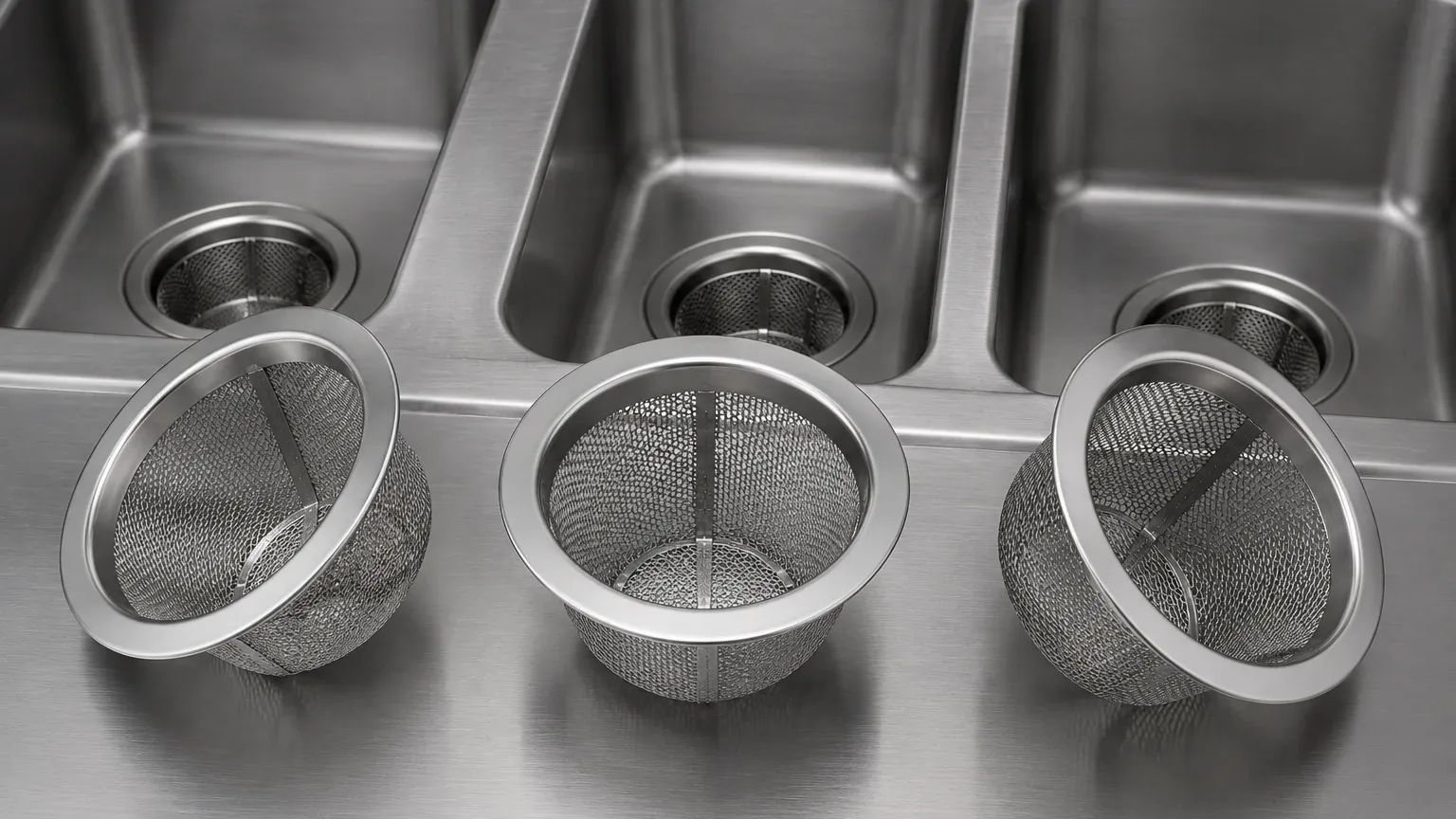
3 Bay Sink Strainers
In industrial and commercial environments, the 3-bay sink is a fundamental component of the sanitation and material processing workflow. Whether utilized in food processing facilities, pharmaceutical laboratories, or chemical manufacturing plants, the efficiency of these sinks depends heavily on the performance of the filtration components installed within them. Specifically, 3 bay sink strainers serve as the primary line of defense, preventing solid particulates from entering the drainage system, protecting downstream plumbing, and ensuring compliance with environmental and health regulations.
Selecting the appropriate Strainers & Baskets for a multi-compartment sink involves more than just matching a drain diameter. It requires a technical understanding of material compatibility, flow dynamics, and the specific filtration requirements of the substances being processed. As a manufacturer specializing in custom stainless steel filtration solutions, Kaifil provides the engineering expertise necessary to optimize these critical components for demanding industrial applications.
The Functional Role of Strainers in 3-Bay Systems
A standard 3-bay sink configuration typically follows a "Wash, Rinse, Sanitize" protocol. Each stage introduces different challenges for the filtration system:
1. The Wash Bay: This compartment handles the highest load of solid debris, fats, oils, and greases (FOG), and concentrated detergents. The strainer here must have a high dirt-holding capacity and be easy to clear frequently without interrupting the workflow.
2. The Rinse Bay: While the particulate load is lower, the volume of water passing through this bay is often high. The strainer must facilitate rapid drainage to prevent overflow and maintain a steady pace of operation.
3. The Sanitize Bay: This bay is exposed to chemical sanitizers, such as chlorine-based solutions or quaternary ammonium compounds. The filtration components must exhibit superior corrosion resistance to withstand prolonged exposure to these reactive agents.
By employing specialized 3 bay sink strainers, facilities can ensure that each compartment operates at peak efficiency while minimizing the risk of costly plumbing blockages or grease trap failures.
Engineering Considerations: Material Selection
In industrial settings, the material of construction is the most critical factor determining the lifespan and reliability of a strainer. While plastic or low-grade alloys may suffice for residential use, industrial 3-bay sinks require high-performance metals.
Stainless Steel 304 vs. 316
Stainless steel is the industry standard due to its durability and hygienic properties.
* Type 304 Stainless Steel: This is the most common material for commercial kitchen and general industrial strainers. It offers excellent resistance to water and common cleaning chemicals. It is cost-effective and provides the structural integrity needed for high-volume drainage.
* Type 316 Stainless Steel: For environments involving high salinity, acidic food processing, or aggressive chemical sanitizers, Type 316 is preferred. The addition of molybdenum enhances its resistance to pitting and crevice corrosion, making it essential for pharmaceutical and high-end chemical applications.
Kaifil’s expertise in stainless steel fabrication ensures that every strainer is manufactured to withstand the specific chemical and thermal stresses of its intended environment.
Technical Specifications: Mesh vs. Perforation
The design of the filtration media within 3 bay sink strainers significantly impacts both filtration accuracy and flow rate. Engineers must choose between perforated metal and wire mesh, or a combination of both.
Perforated Metal Strainers
Perforated baskets are typically used for coarse filtration. They are exceptionally durable and can withstand mechanical abuse during cleaning. The hole size and "open area" percentage are the key metrics here. A higher open area allows for faster drainage but may allow smaller particles to pass through.
Wire Mesh Liners
For applications requiring the capture of fine particulates—such as coffee grounds in food service or fine metal shavings in industrial parts washing—wire mesh is integrated into the basket design. Wire mesh provides a much higher degree of filtration accuracy (measured in microns). However, it requires more precise engineering to ensure the mesh is securely bonded to the support structure to prevent bypassing.
Flow Rate and Drainage Efficiency
An improperly specified strainer can cause "ponding" in the sink, where water backs up because the filtration media restricts flow too severely. When selecting Strainers & Baskets, it is vital to calculate the required flow rate against the effective open area of the strainer. This ensures that the sink can be drained quickly between cycles, maintaining the throughput of the facility.
Customization and OEM Solutions for Industrial Sinks
Standard off-the-shelf strainers often fail to meet the rigorous demands of specialized industrial equipment. Customization is frequently required to address unique challenges such as:
* Non-Standard Dimensions: Industrial sinks may feature deeper sumps or larger drain openings than standard commercial models. Custom-fabricated baskets ensure a precision fit that prevents debris from leaking around the edges of the strainer.
* Integrated Handles and Lifting Mechanisms: In high-volume environments, ergonomics are essential. Custom strainers can be designed with reinforced handles, crossbars, or even magnetic retrieval points to allow operators to remove and clean the baskets safely and efficiently.
* Multi-Stage Filtration: Some 3-bay systems benefit from a dual-layer strainer design, featuring a coarse outer basket to catch large items and a fine inner mesh to capture smaller sediments. This "basket-within-a-basket" approach extends the time between cleanings and provides superior protection for the plumbing.
Kaifil works closely with OEM partners and facility engineers to develop bespoke 3 bay sink strainers that integrate seamlessly into existing hardware while improving overall system performance.
Operational Challenges and Maintenance
Even the highest quality strainer requires proper maintenance to function effectively. In a B2B context, the total cost of ownership (TCO) is heavily influenced by the ease of cleaning and the durability of the component.
Biofilm and Hygiene Management
In food and pharmaceutical applications, the strainer can become a breeding ground for bacteria if not designed correctly. Smooth welds, the absence of sharp internal corners, and high-quality surface finishes (such as electropolishing) are critical. These features prevent the accumulation of organic matter and make the strainers compatible with Clean-in-Place (CIP) or high-pressure washdown protocols.
Structural Integrity and Wear
Industrial strainers are often subjected to heavy loads—such as the weight of several gallons of water and solid waste—and frequent mechanical impacts during the emptying process. A common failure point in low-quality strainers is the joint between the basket and the flange. Kaifil utilizes advanced welding and assembly techniques to ensure that our Strainers & Baskets maintain their shape and seal over thousands of cycles.
Replacement Cycles
Facilities should monitor strainers for signs of mechanical fatigue, such as broken wires in a mesh liner or deformation of the basket walls. Using high-grade stainless steel significantly extends the replacement cycle, reducing long-term procurement costs and preventing the emergency downtime associated with a clogged main drain line.
Evaluating the Total Cost of Ownership
When purchasing 3 bay sink strainers, procurement teams often face a choice between low-cost commodity parts and engineered industrial solutions. While the initial investment in a custom stainless steel strainer is higher, the TCO is almost always lower due to:
* Reduced Plumbing Costs: High-efficiency filtration prevents solids from reaching the grease trap and main sewer lines, drastically reducing the frequency of professional drain cleaning.
* Operational Continuity: Durable strainers do not break or bypass, ensuring that the 3-bay sink remains operational during peak production hours.
* Regulatory Compliance: Effective filtration helps facilities meet local wastewater discharge requirements, avoiding potential fines and environmental liabilities.
Conclusion: Selecting the Right Partner for Filtration
The humble sink strainer is a critical engineering component in any industrial 3-bay system. By focusing on material quality, precise filtration ratings, and robust construction, facilities can optimize their sanitation processes and protect their infrastructure.
As a professional manufacturer, Kaifil provides the technical support and manufacturing capabilities required to produce high-performance Strainers & Baskets tailored to specific industrial needs. From initial material selection to the delivery of custom OEM components, our focus remains on durability, precision, and reliable filtration performance in the most demanding environments.
