


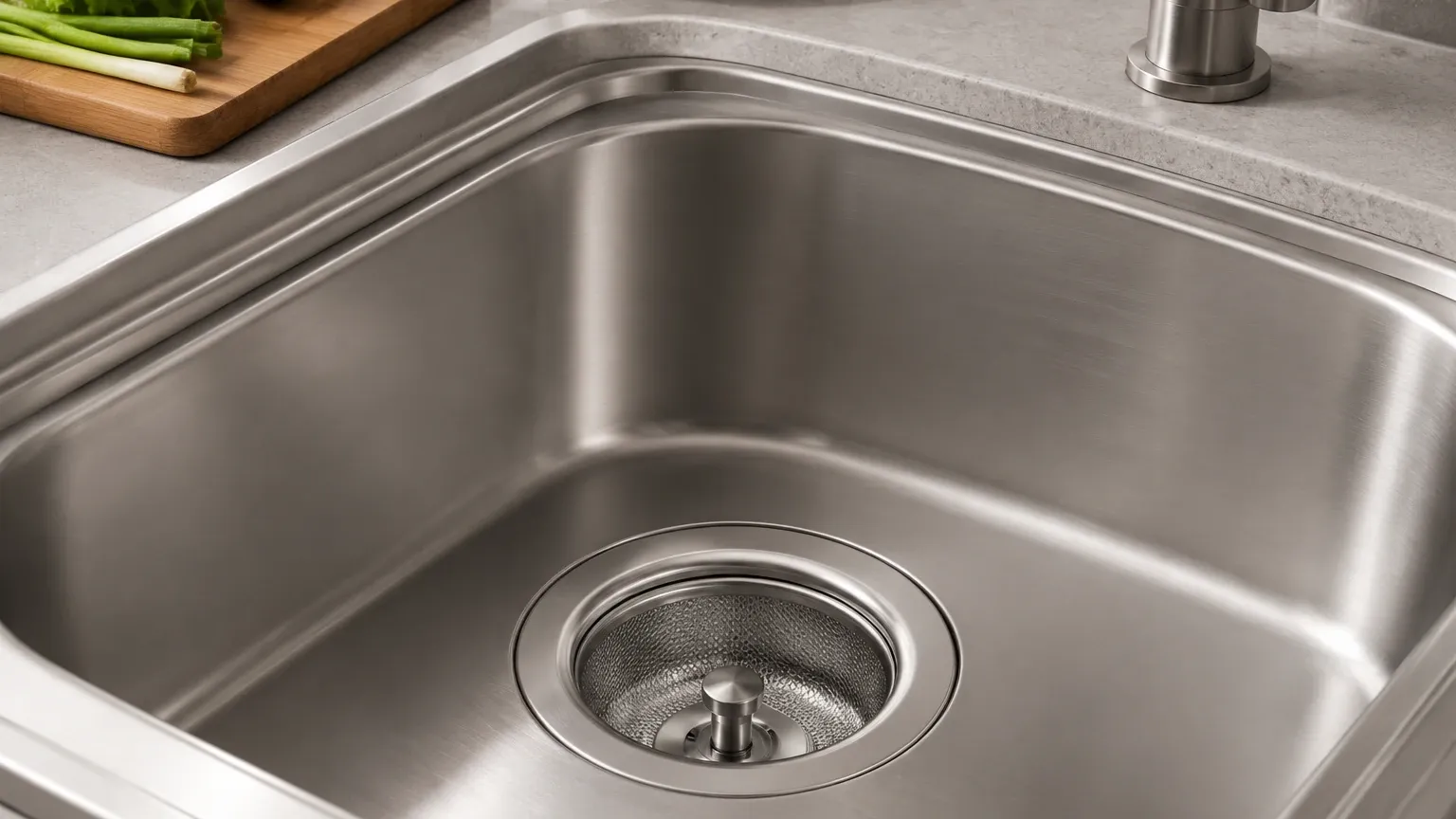
4.5 Inch Kitchen Sink Strainer
In industrial and commercial environments, the 4.5 inch kitchen sink strainer serves as a critical first line of defense in fluid management systems. While often associated with residential use, the 4.5-inch (approximately 114mm) specification is a standard for heavy-duty commercial sinks, food processing wash stations, and laboratory drainage systems. For engineers and facility managers, selecting the right strainer involves more than just matching dimensions; it requires an understanding of material science, flow dynamics, and long-term durability requirements.
Industrial-grade filtration components must withstand rigorous cleaning protocols, corrosive chemicals, and high volumes of solid waste. This guide examines the technical aspects of the 4.5 inch kitchen sink strainer, focusing on its role within the broader category of Strainers & Baskets and providing the necessary criteria for professional procurement.
Understanding the Role of the 4.5 Inch Kitchen Sink Strainer in Industrial Environments
The primary function of a 4.5 inch kitchen sink strainer is to separate solid debris from liquid waste to prevent downstream blockages and protect plumbing infrastructure. In a B2B context, such as in a food processing plant or a high-volume commercial kitchen, the failure of a simple strainer can lead to significant operational downtime and costly repairs.
The 4.5-inch dimension typically refers to the outer diameter of the flange that sits within the sink opening. However, the internal basket—the functional component of the assembly—must be engineered to balance filtration efficiency with flow capacity. A strainer that is too restrictive will cause water to back up, while one with excessively large openings will allow harmful solids to pass into the grease traps or main sewage lines.
When evaluating these components, technical professionals must consider the "open area ratio." This is the ratio of the total area of the holes in the basket to the total surface area of the basket. A higher open area ratio allows for faster drainage and less frequent cleaning, which is essential in fast-paced industrial settings.
Material Selection: Why Stainless Steel is Essential for Strainers & Baskets
Material integrity is the most critical factor in determining the lifespan of a 4.5 inch kitchen sink strainer. In industrial applications, plastic or low-grade plated metals are insufficient due to their susceptibility to thermal shock, mechanical impact, and chemical corrosion. Professional-grade Strainers & Baskets are almost exclusively manufactured from stainless steel, typically Grade 304 or Grade 316.
Grade 304 Stainless Steel
Grade 304 is the standard for most commercial kitchen applications. It offers excellent resistance to organic acids found in food products and is highly durable against physical wear. It is the cost-effective choice for general-purpose drainage where extreme chemical exposure is not a daily occurrence.
Grade 316 Stainless Steel
For environments involving high concentrations of chlorides, salts, or aggressive cleaning agents—such as in marine environments or pharmaceutical laboratories—Grade 316 is preferred. The addition of molybdenum provides enhanced pitting resistance, ensuring the strainer does not develop micro-fissures that can harbor bacteria or lead to structural failure.
Beyond the alloy type, the finish of the stainless steel also matters. Electropolished or high-grit brushed finishes reduce surface roughness, making it harder for organic matter to adhere to the mesh and facilitating easier cleaning during sanitation cycles.
Structural Design: Perforated vs. Woven Mesh Baskets
The construction of the basket within the 4.5 inch kitchen sink strainer determines its filtration precision and mechanical strength. There are two primary designs used in industrial filtration: perforated metal and woven wire mesh.
Perforated Metal Baskets
Perforated baskets are created by punching holes into a solid sheet of stainless steel. This design is exceptionally robust and can withstand significant weight and pressure without deforming. In a 4.5-inch strainer, perforated baskets are ideal for catching large debris like vegetable scraps, bones, or packaging fragments. The hole sizes usually range from 1mm to 5mm, depending on the specific application requirements.
Woven Wire Mesh Baskets
Woven mesh is used when finer filtration is required. These baskets are constructed by weaving stainless steel wires into a precise grid. While slightly more delicate than perforated metal, woven mesh provides a much higher open area ratio, which is critical for high-flow applications. In some advanced industrial designs, a woven mesh liner is placed inside a perforated basket to provide both structural strength and fine particle retention.
For custom OEM projects, the choice between these designs depends on the "solids loading" of the effluent. High solids loading typically requires the rigidity of a perforated basket, whereas low solids loading with fine particles may necessitate a precision woven mesh.
Technical Evaluation Criteria for Procurement Teams
When specifying a 4.5 inch kitchen sink strainer for a large-scale project, purchasing teams and engineers should confirm several technical parameters to ensure the product meets the intended performance expectations.
1. Flange and Tailpiece Compatibility: Ensure the strainer assembly matches the standard 1.5-inch or 2-inch tailpiece connections common in industrial plumbing. The flange must provide a watertight seal against the sink surface, often requiring high-quality gaskets made of EPDM or silicone rather than standard rubber.
2. Drainage Speed (Flow Rate): Calculate the required flow rate based on the sink's usage. A 4.5-inch opening can typically handle significant volume, but the basket’s hole pattern will be the limiting factor.
3. Debris Capacity: Consider the depth of the basket. "Deep-cup" designs allow for more debris accumulation before flow is restricted, reducing the frequency of manual emptying—a key factor in labor efficiency.
4. Locking Mechanisms: In some industrial settings, strainers must remain in place to prevent accidental discharge of solids. Look for designs with secure locking nuts or heavy-duty stoppers that can withstand vibration and high-pressure water flow.
Maintenance and Longevity: Optimizing the Lifecycle of Industrial Strainers
The total cost of ownership (TCO) for a 4.5 inch kitchen sink strainer is determined more by its maintenance requirements and replacement cycle than its initial purchase price. Cheaply made strainers often suffer from broken handles, warped baskets, or corroded finishes within months of installation in a commercial setting.
To optimize the lifecycle of these components, facility managers should implement a regular inspection and cleaning schedule. Stainless steel strainers are generally compatible with Clean-in-Place (CIP) processes, but manual removal of the basket for deep cleaning is often necessary to prevent biofilm buildup.
Furthermore, the replacement of seals and gaskets should be factored into the maintenance budget. Over time, exposure to hot water and detergents can cause gaskets to lose their elasticity, leading to leaks that can damage the surrounding cabinetry or flooring. High-quality Strainers & Baskets are designed with replaceable components, allowing the main housing to remain in service for years while only the wear-parts are refreshed.
Customization Options for Specialized Filtration Requirements
Standard off-the-shelf 4.5 inch kitchen sink strainers may not satisfy the needs of every industrial application. Customization is often required when the fluid being filtered has unique properties or when the installation environment has space constraints.
Kaifil specializes in providing tailored filtration solutions that go beyond standard consumer specifications. Customization options for 4.5-inch strainers and baskets include:
* Variable Mesh Sizes: Engineering the basket with specific micron ratings to capture microscopic particles in laboratory or chemical processing settings.
* Reinforced Structures: Adding support ribs or thicker gauge steel to baskets that will be subjected to heavy mechanical loads.
* Specialized Coatings: Applying PTFE or other non-stick coatings to prevent the adhesion of viscous or sticky substances.
* Unique Geometry: Modifying the height or diameter of the basket to fit specialized industrial sinks or sumps while maintaining the 4.5-inch flange standard.
By working with a manufacturer that understands the nuances of stainless steel fabrication, engineering teams can ensure that their filtration components are optimized for their specific operational challenges.
Conclusion: Selecting the Right Partner for Filtration Solutions
The 4.5 inch kitchen sink strainer is a deceptively simple component that plays a vital role in the efficiency and safety of industrial drainage systems. By prioritizing high-grade materials like SS304 or SS316, evaluating the structural design of the basket, and considering the long-term maintenance requirements, procurement professionals can select products that offer superior performance and durability.
For those managing large-scale installations or specialized industrial processes, partnering with a manufacturer that offers technical expertise and customization capabilities is essential. Reliable Strainers & Baskets are not just hardware; they are engineered solutions that protect infrastructure and support operational continuity. Before proceeding with a purchase, engineers should confirm material certifications, flow rate data, and compatibility with existing plumbing standards to ensure a seamless and long-lasting installation.
