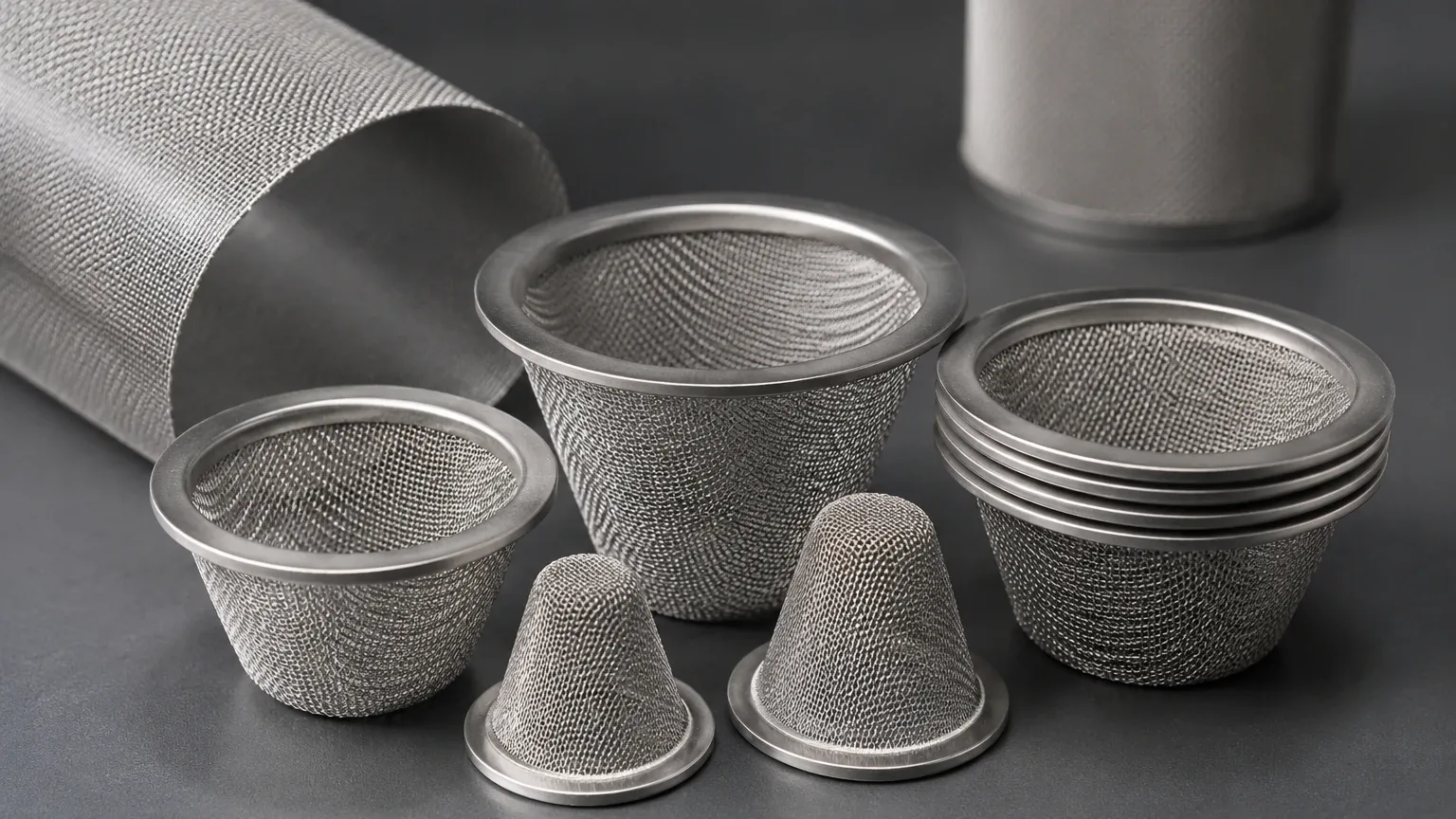
400 Micron Paint Strainers
In the landscape of industrial coating and fluid handling, the precision of filtration components directly dictates the quality of the final finish and the longevity of downstream equipment. Among the various grades of coarse filtration, 400 micron paint strainers serve as a critical primary defense layer. These components are designed to capture large particulates, undissolved resins, and environmental contaminants that could otherwise compromise high-volume spray systems or clog precision nozzles. For engineers and procurement specialists, understanding the technical nuances of these strainers—particularly when integrated into robust Strainers & Baskets—is essential for optimizing production uptime and maintaining coating integrity.
Technical Specifications of 400 Micron Filtration
To evaluate the utility of a 400 micron paint strainer, one must first understand the physical dimensions of the filtration barrier. A micron (micrometer) is one-millionth of a meter. A 400-micron rating implies that the filter media will prevent the passage of solid particles larger than 0.4 millimeters. In the context of wire mesh sizing, this typically corresponds to approximately a 40-mesh count, depending on the wire diameter used during the weaving process.
For industrial applications, the "open area" percentage is a vital metric. This represents the ratio of the total area of the holes to the total area of the mesh. A higher open area reduces the initial pressure drop across the filter, allowing for higher flow rates. However, in heavy-duty industrial environments, the wire diameter must be balanced against this open area to ensure the mesh does not deform under the hydraulic pressure of high-viscosity paints or pump surges.
Material Engineering: Stainless Steel vs. Synthetics
While disposable paper or nylon strainers are common in automotive refinishing shops, industrial-scale operations require the durability and chemical resistance of metallic filtration. Kaifil specializes in the manufacture of stainless steel filtration solutions, which offer several engineering advantages for 400 micron paint strainers:
1. Chemical Compatibility: Industrial coatings often contain aggressive solvents, ketones, or esters that can degrade synthetic fibers. Stainless steel (typically Grade 304 or 316) is inert to most paint chemistries, ensuring no material leaching or structural failure occurs during the filtration process.
2. Thermal Stability: In certain coating processes, materials are pre-heated to reduce viscosity. Stainless steel strainers maintain their structural integrity at temperatures that would melt or weaken nylon and polyester.
3. Mechanical Strength: High-pressure pumping systems exert significant force on the filter media. Stainless steel wire mesh, often reinforced by a perforated metal basket, can withstand these pressures without the risk of "blow-through," where the mesh tears and allows contaminants to bypass the filter.
4. Reusability and Sustainability: Unlike single-use disposables, stainless steel strainers can be cleaned and returned to service. This reduces the total cost of ownership and minimizes the waste stream in a manufacturing facility.
Integration into Industrial Strainers & Baskets
In a B2B manufacturing context, the 400-micron mesh is rarely a standalone component. It is usually integrated into complex Strainers & Baskets designed for specific housing units. These assemblies consist of several key structural elements:
* The Flange and Rim: This provides the sealing surface between the basket and the strainer housing. Precision machining is required here to prevent bypass—where fluid flows around the filter rather than through it.
* The Support Cylinder: For 400-micron mesh, which is relatively fine, a perforated metal backup cylinder is often used. This provides the necessary rigidity to prevent the mesh from collapsing under high differential pressure.
* The Handle and Lifting Mechanism: In large-scale systems, the weight of a paint-filled basket can be significant. Ergonomic handles or mechanical lifting points are integrated to facilitate safe and efficient maintenance cycles.
Application Scenarios for 400 Micron Ratings
The selection of a 400-micron rating is typically reserved for specific stages of the coating process. While finishing coats might require 100 or 190-micron filtration, the 400-micron level is the industry standard for:
* High-Viscosity Primers: Thick, zinc-rich primers or high-build epoxies contain large pigment particles and fillers. A finer mesh would clog almost instantly, whereas a 400-micron strainer allows the functional solids to pass while removing unwanted clumps.
* Pre-Filtration of Raw Materials: When bulk paint is transferred from drums or totes to mixing tanks, it often picks up skin fragments or environmental debris. 400 micron paint strainers act as a "scalping" filter to protect the mixing equipment.
* Recirculation Loops: In continuous spray systems, paint is often recirculated. A 400-micron basket in the return line captures any contaminants introduced during the application process before the fluid returns to the main reservoir.
* Marine and Architectural Coatings: These applications often involve heavy-duty coatings applied with large-orifice airless sprayers. The 400-micron filter ensures the pump's check valves remain clear without restricting the high flow rates required for these projects.
Engineering Considerations: Pressure Drop and Flow Rate
One of the most common mistakes in filter selection is over-specifying the filtration fineness. Choosing a 100-micron filter when a 400-micron filter would suffice leads to unnecessary pressure drops and frequent downtime for cleaning.
Engineers must calculate the "Clean Pressure Drop" (ΔP) across the strainer. This is a function of the fluid's viscosity, the flow velocity, and the open area of the 400-micron mesh. As the strainer captures contaminants, the "Dirty Pressure Drop" increases. In industrial systems, differential pressure gauges are used to monitor this. A well-designed 400-micron basket will provide a large surface area (often achieved through pleated mesh or deep-basket designs) to maximize the dirt-holding capacity and extend the interval between cleaning cycles.
Customization and OEM Solutions
No two industrial paint lines are identical. Factors such as piping diameter, flow direction (inside-to-out vs. outside-to-in), and housing constraints require customized filtration components. Kaifil provides OEM services that allow engineers to specify the exact dimensions and structural reinforcements needed for their 400 micron paint strainers.
Customization options often include:
* Reinforced Bottoms: To prevent wear in systems with high-velocity bottom entry.
* Multi-Layer Mesh: Combining a 400-micron outer layer with a coarser inner layer for graduated filtration.
* Specialized Alloys: Using 316L stainless steel for enhanced corrosion resistance in water-borne coating systems that may have high chloride content.
Maintenance and Cleaning Protocols
The longevity of a stainless steel 400-micron strainer depends on proper maintenance. Because these strainers are used for paint, the primary challenge is preventing the coating from curing within the mesh apertures.
In B2B environments, automated cleaning stations or ultrasonic baths are often employed. The process typically involves:
1. Solvent Soaking: Immersing the basket in a compatible solvent to soften the paint.
2. Back-Flushing: Using high-pressure fluid or air from the clean side of the mesh to push contaminants out of the pores.
3. Inspection: Using backlighting or magnification to ensure the 400-micron apertures are completely clear. Any permanent deformation or wire breakage indicates the basket should be replaced to prevent bypass.
Conclusion: The Strategic Importance of Coarse Filtration
While often overshadowed by ultra-fine secondary filters, the 400 micron paint strainer is the foundation of a reliable industrial coating system. By removing the bulk of the contaminant load, these strainers protect expensive pumps, prevent nozzle blockages, and ensure that secondary filters can operate at peak efficiency for longer durations.
When selecting Strainers & Baskets, engineers must look beyond the micron rating and consider the mechanical design, material grade, and manufacturer’s expertise. A precision-engineered 400-micron solution from a specialist like Kaifil provides the durability and performance required for demanding industrial environments, ultimately contributing to lower operational costs and superior product finishes.