


40um Cell Strainers
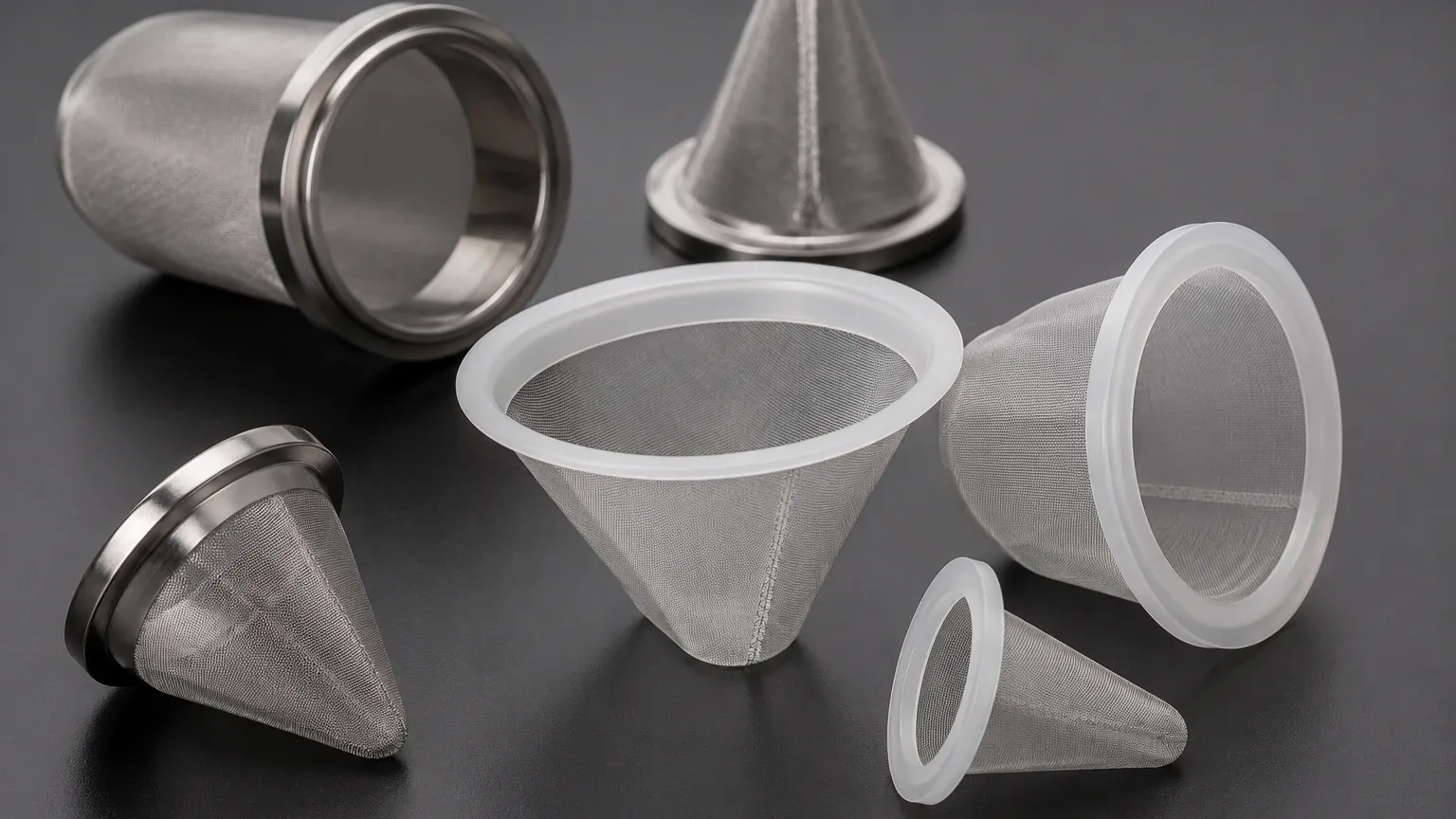
In the landscape of industrial filtration and laboratory sample preparation, the precision of particle separation is a fundamental requirement for maintaining process integrity. The 40um cell strainers represent a specific class of high-precision filtration tools designed to isolate single-cell suspensions by effectively removing cellular aggregates, tissue debris, and large particulate matter. While often associated with bench-top laboratory work, the engineering principles behind 40-micron filtration extend into broader industrial applications where fine-mesh Strainers & Baskets are utilized to protect sensitive downstream equipment and ensure the purity of biological and chemical fluids.
Selecting the appropriate 40um cell strainers requires a deep understanding of mesh geometry, material science, and fluid dynamics. For engineers and procurement professionals, the choice is not merely about the pore size but about the reliability of the filtration barrier under operational stress. This guide explores the technical nuances of 40-micron filtration, the comparative advantages of different construction materials, and the critical factors that influence performance in high-stakes environments.
Engineering Principles of 40-Micron Filtration
The primary function of 40um cell strainers is to act as a physical barrier that allows particles smaller than 40 micrometers to pass while retaining larger solids. This process, known as size-exclusion filtration, relies heavily on the uniformity of the mesh openings. In precision filtration, even a slight variance in the weave can lead to "bypass," where larger particles escape through oversized apertures, or premature clogging, where undersized apertures restrict flow.
Mesh Geometry and Aperture Precision
For a strainer to be rated accurately at 40um, the manufacturing process must adhere to strict tolerances. In stainless steel wire mesh, this is achieved through precise weaving patterns, typically a plain weave or a twill weave. The wire diameter must be balanced against the aperture size to maintain structural integrity without significantly reducing the open area. A higher open area percentage is generally desirable as it reduces the pressure drop across the filter and increases the flow rate, which is critical when processing high-viscosity fluids or large volumes of cell culture.
Nominal vs. Absolute Ratings
It is essential to distinguish between nominal and absolute filtration ratings. A nominal 40um rating suggests that the strainer will retain a majority of particles of that size, whereas an absolute rating guarantees that 100% of particles above 40um will be captured. In critical applications such as flow cytometry or the production of sterile pharmaceuticals, absolute ratings are often required to prevent contamination of sensitive analytical instruments or final products.
Material Selection: Stainless Steel vs. Synthetic Mesh
The choice of material for 40um cell strainers significantly impacts their chemical compatibility, thermal stability, and durability. While disposable plastic strainers with nylon mesh are common in standard laboratory settings, industrial and high-performance applications often demand the robustness of stainless steel.
Stainless Steel (304 and 316L)
Stainless steel is the material of choice for demanding industrial environments. It offers superior resistance to mechanical stress and can withstand high temperatures and pressures that would deform synthetic meshes.
* Durability: Unlike nylon or polyester, stainless steel mesh does not stretch or sag over time, ensuring that the 40um aperture remains constant throughout the filtration cycle.
* Chemical Resistance: Stainless steel, particularly the 316L grade, provides excellent resistance to a wide range of solvents, acids, and bases, making it suitable for chemical processing and pharmaceutical manufacturing.
* Sterilization: Stainless steel strainers are compatible with various sterilization methods, including autoclaving, gamma irradiation, and ETO (ethylene oxide) treatment, without compromising the structural integrity of the mesh.
Synthetic Polymers (Nylon and Polyester)
Synthetic meshes are frequently used in single-use 40um cell strainers. They are lightweight and cost-effective for low-volume applications. However, they are prone to "blinding" (clogging) more quickly than metal meshes and may leach extractables if not properly validated for the specific fluid being filtered. For large-scale operations, the transition to permanent Strainers & Baskets made of stainless steel often provides a better total cost of ownership by eliminating the recurring expense and waste of disposables.
Operational Challenges: Clogging, Shear Stress, and Recovery
Using 40um cell strainers effectively involves managing several operational variables that can affect the quality of the filtrate and the efficiency of the process.
Managing Filter Blinding
Clogging, or blinding, occurs when the mesh pores become obstructed by particles. In cell filtration, this is often caused by high concentrations of genomic DNA released from lysed cells or by the accumulation of large tissue fragments. To mitigate this, engineers often implement a multi-stage filtration strategy, using a coarser strainer (e.g., 70um or 100um) upstream of the 40um strainer. This graduated approach extends the life of the finer mesh and prevents sudden drops in flow rate.
Minimizing Shear Stress
Cells are sensitive to mechanical forces. When a cell suspension is forced through a 40um mesh under high pressure, the resulting shear stress can cause cell rupture or activate unwanted biological pathways. Maintaining a low differential pressure and optimizing the mesh geometry to provide a smooth flow path are critical for maximizing the viability of the recovered cells.
Maximizing Sample Recovery
In many B2B applications, the fluid being filtered is highly valuable. "Dead volume"—the amount of liquid trapped within the strainer frame or mesh—can lead to significant financial loss over time. Precision-engineered strainers are designed with minimal dead volume and smooth surface finishes to ensure that the maximum amount of filtrate is recovered. Surface treatments like electropolishing can further reduce the adhesion of biological materials to the stainless steel mesh, facilitating easier cleaning and higher recovery rates.
Key Evaluation Criteria for Procurement
When sourcing 40um cell strainers for industrial or laboratory use, procurement teams should evaluate suppliers based on technical specifications rather than just price. The following criteria are essential for ensuring performance:
1. Mesh Uniformity: Request documentation or microscopic verification of the weave consistency. Inconsistent apertures lead to unpredictable filtration results.
2. Structural Integrity: Ensure the mesh is securely bonded to the housing or frame. In industrial Strainers & Baskets, the welding or crimping method must be robust enough to withstand backwashing or high-pressure cleaning.
3. Biocompatibility: For pharmaceutical or medical applications, the materials must be USP Class VI compliant and free from heavy metals or toxic additives.
4. Flow Rate Data: Suppliers should provide flow rate curves for various viscosities to help engineers size the filtration system correctly.
Common Risks in Precision Strainer Selection
Failure to account for the specific requirements of a 40-micron application can lead to several risks, ranging from process inefficiencies to catastrophic equipment failure.
* Mesh Migration: In low-quality strainers, individual wires or fibers may break off and contaminate the filtrate. This is particularly dangerous in injectable drug manufacturing or high-precision hydraulic systems.
* Bypass Leakage: If the strainer does not seat perfectly within its housing, fluid will take the path of least resistance, bypassing the 40um mesh entirely. This renders the filtration process ineffective.
* Chemical Incompatibility: Using a nylon mesh with certain organic solvents can cause the mesh to swell or dissolve, contaminating the sample and altering the pore size.
Industrial Scaling: From Lab Strainers to Heavy-Duty Strainers & Baskets
While the term "cell strainer" often evokes a small plastic tool used in a 50mL conical tube, the need for 40-micron filtration is equally prevalent in large-scale industrial processes. As a project moves from the R&D phase to full-scale production, the filtration requirements scale accordingly.
Industrial Strainers & Baskets are engineered to handle high flow rates and high solids loading while maintaining the same 40um precision. These large-scale components are often integrated into complex piping systems and may feature automated cleaning mechanisms, such as scrapers or back-pulse systems, to maintain continuous operation. Customization is a key factor here; engineers must often specify the exact dimensions, flange types, and reinforcement structures required to integrate the 40um filtration stage into an existing industrial manifold.
Maintenance and Longevity of Stainless Steel Strainers
For organizations utilizing reusable stainless steel 40um strainers, a proper maintenance protocol is essential for ensuring long-term accuracy and hygiene. Unlike disposable units, stainless steel components represent a capital investment that must be protected.
Cleaning Protocols
Ultrasonic cleaning is the most effective method for removing trapped particles from a 40um mesh. The high-frequency sound waves create cavitation bubbles that dislodge debris from the intricate weave without damaging the wires. For biological applications, enzymatic cleaners or caustic washes may be used to break down proteins and lipids before sterilization.
Integrity Testing
Regular integrity testing, such as the bubble point test, should be performed to ensure that the 40um mesh has not been compromised by wear or mechanical damage. This involves wetting the mesh with a liquid and measuring the pressure required to force air through the pores. A deviation from the established bubble point indicates that the pore size has changed or that there is a hole in the mesh.
Conclusion
The 40um cell strainers are a critical component in the toolkit of any engineer or scientist working with fine particulate separation. Whether used in a small-scale laboratory setting or integrated into a massive industrial process via specialized Strainers & Baskets, the success of the filtration depends on mesh precision, material integrity, and proper operational management. By focusing on technical specifications—such as mesh weave uniformity, chemical compatibility, and structural durability—procurement and engineering teams can ensure that their filtration processes remain efficient, reliable, and cost-effective. As industrial requirements for purity and precision continue to evolve, the importance of high-quality 40-micron filtration solutions will only increase, necessitating a partnership with manufacturers who understand the rigorous demands of these applications.
