


6 Basket Strainer
In industrial fluid handling systems, the 6-inch basket strainer serves as a critical line of defense for downstream equipment. Designed to remove large particles, debris, and contaminants from liquid streams, these components are essential for protecting pumps, valves, heat exchangers, and spray nozzles from mechanical damage and clogging. For engineers and procurement teams, selecting a 6 basket strainer requires a deep understanding of flow dynamics, material compatibility, and the specific mechanical requirements of the application.
Industrial strainers are generally categorized by their pipe size, configuration (simplex or duplex), and the internal basket design. A 6-inch nominal pipe size (NPS) strainer is typically used in high-volume systems where maintaining a low pressure drop is paramount. This guide examines the technical specifications, engineering considerations, and maintenance protocols associated with 6-inch Strainers & Baskets to ensure optimal system performance.
Engineering Specifications and Material Selection
The performance of a 6 basket strainer is heavily dependent on the materials used in its construction. Because these units often operate in demanding environments—ranging from corrosive chemical processing to high-temperature steam systems—the housing and the internal basket must be matched to the fluid properties.
Stainless Steel Alloys
Stainless steel is the industry standard for high-performance filtration. Grade 304 stainless steel offers excellent general corrosion resistance and is suitable for water treatment and mildly corrosive industrial fluids. For more aggressive environments, such as those involving chlorides or acidic solutions, Grade 316 or 316L is preferred due to its molybdenum content, which enhances pitting resistance. In specialized chemical applications, exotic alloys like Hastelloy or Monel may be required, though stainless steel remains the most cost-effective solution for the majority of B2B industrial needs.
Pressure and Temperature Ratings
6-inch strainers are typically manufactured to meet specific ASME (American Society of Mechanical Engineers) standards, such as B16.5 for flanges and B16.34 for valves and pressure vessels. Common pressure classes include Class 150, 300, and 600. It is vital to confirm that the strainer housing can withstand the maximum surge pressure of the system, not just the operating pressure. Furthermore, the temperature of the fluid affects the seal materials (O-rings or gaskets) and the structural integrity of the metal components.
Performance Metrics: Flow Rate and Pressure Drop
One of the most critical factors in sizing a 6 basket strainer is the relationship between flow rate and pressure drop (differential pressure). Every strainer introduces some resistance to the flow, and as the basket collects debris, this resistance increases.
The Cv Value
The flow coefficient (Cv) represents the volume of water at 60°F that will flow through the strainer with a pressure drop of 1 psi. For a 6-inch strainer, the Cv value is significantly higher than that of smaller units, allowing for large volumes of fluid to pass through with minimal energy loss. Engineers must calculate the clean pressure drop using the specific gravity and viscosity of the fluid. High-viscosity fluids, such as heavy oils or syrups, will result in a much higher pressure drop than water, necessitating a larger filtration surface area.
Open Area Ratio (OAR)
The efficiency of a basket strainer is often measured by its Open Area Ratio. This is the ratio of the total open area of the basket (the sum of the holes or mesh openings) to the internal cross-sectional area of the inlet pipe. A standard industrial 6 basket strainer should ideally provide an OAR of at least 6:1 or 8:1. A higher OAR means the strainer can operate longer between cleaning cycles because it has more surface area to accumulate debris before the pressure drop becomes critical.
Comparing Simplex and Duplex 6-Inch Configurations
When integrating a 6-inch strainer into a system, engineers must decide between a simplex or a duplex design based on the required system uptime.
Simplex Basket Strainers
A simplex 6 basket strainer consists of a single housing and one basket. It is the most economical choice for systems that can be shut down periodically for maintenance. When the basket reaches its debris capacity, the flow must be stopped, the housing depressurized, and the cover removed to clean the basket. These are common in batch processing or in systems with redundant parallel lines.
Duplex Basket Strainers
For continuous-flow applications where downtime is not an option—such as cooling water loops for power plants or chemical reactors—a duplex configuration is necessary. A duplex 6-inch strainer consists of two separate housings connected by a diversion valve (often a plug or ball valve). When one basket becomes clogged, the operator can switch the flow to the clean chamber without interrupting the process. This allows for "on-the-fly" maintenance and ensures that the downstream equipment is never left unprotected.
Customization of Internal Strainers & Baskets
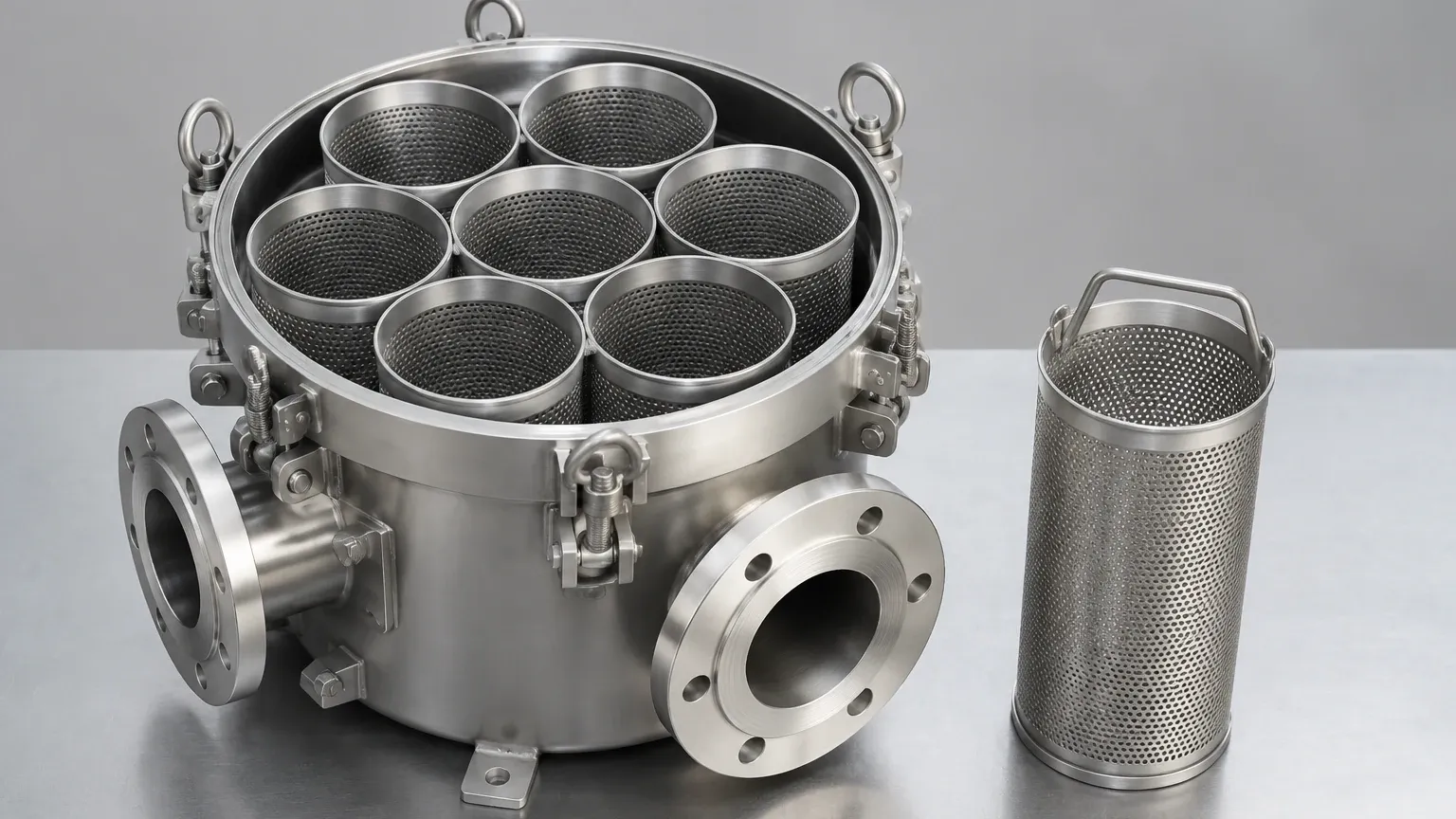
The internal basket is the heart of the filtration process. While standard sizes exist, many industrial applications require customized Strainers & Baskets to meet specific filtration targets. Customization typically focuses on the filtration media and the structural reinforcement of the basket.
Perforated Metal vs. Wire Mesh
Baskets are usually constructed from a perforated metal sheet which provides the structural strength. If finer filtration is required, the perforated basket is lined with a fine wire mesh. The choice of mesh size depends on the smallest particle that needs to be removed. For example, a 6 basket strainer might use a 1/8-inch perforated hole for coarse primary filtration, but might be lined with a 100-mesh screen (150 microns) for protecting sensitive instrumentation.
Structural Reinforcements
In high-pressure or high-velocity systems, the basket is subject to significant mechanical stress, especially when it becomes partially clogged. Custom baskets can be designed with heavy-duty handles, reinforced bottoms, and longitudinal stiffeners to prevent collapsing. Additionally, magnetic inserts can be added to the basket to capture fine ferrous particles that might otherwise pass through the mesh.
Maintenance and Cleaning Protocols
Proper maintenance of a 6-inch basket strainer is essential for the longevity of the entire piping system. Neglecting a clogged strainer can lead to basket failure, pump cavitation, or a total system blockage.
1. Differential Pressure Monitoring: The most effective way to manage maintenance is by installing differential pressure gauges across the inlet and outlet. A common rule of thumb is to clean the basket when the pressure drop reaches 5-10 psi above the clean pressure drop.
2. Safe Opening Procedures: Before opening a 6 basket strainer, the unit must be completely isolated and vented. For 6-inch units, the volume of fluid inside the housing is substantial, so proper drainage is necessary to prevent environmental contamination or operator injury.
3. Basket Inspection: During cleaning, the basket should be inspected for signs of "blind-off" (permanent clogging of the mesh), corrosion, or mechanical deformation. Wire mesh linings should be checked for tears, as even a small breach can allow damaging debris to pass through.
4. Seal Integrity: The cover gasket or O-ring should be inspected every time the strainer is opened. In 6-inch units, the large diameter of the seal makes it susceptible to misalignment or pinching, which can lead to leaks during restart.
Application-Specific Considerations
Chemical Processing
In the chemical industry, 6-inch strainers often handle aggressive solvents or acids. The primary concern here is chemical compatibility. Beyond the metal housing, the elastomer seals must be carefully selected (e.g., Viton, EPDM, or PTFE) to prevent swelling or degradation. Furthermore, if the fluid is hazardous, the strainer may require specialized features like bolted covers or steam jackets to maintain fluid temperature and viscosity.
Food and Beverage
For food-grade applications, the 6 basket strainer must meet sanitary standards (such as 3-A or EHEDG). This involves using 316L stainless steel with a specific surface finish (Ra) to prevent bacterial growth. The design must be free of "dead legs" or crevices where organic material could accumulate. Quick-release covers are often used to facilitate frequent cleaning and inspection.
Water Treatment and Desalination
In large-scale water treatment, 6-inch strainers are used for intake protection and pre-filtration for membrane systems. In seawater applications, the risk of galvanic corrosion and biofouling is high. Utilizing high-grade stainless steels or specialized coatings can extend the service life of the strainer components in these harsh environments.
Total Cost of Ownership (TCO)
When evaluating a 6 basket strainer, purchasing managers should look beyond the initial acquisition cost. The Total Cost of Ownership includes installation, energy costs (related to pressure drop), maintenance labor, and the cost of replacement parts. A well-engineered strainer with a high OAR and durable construction may have a higher upfront price but will significantly reduce operational costs over its 10-to-20-year lifespan by minimizing downtime and protecting more expensive downstream assets.
By focusing on precise engineering specifications and choosing the right configuration for the specific industrial environment, engineers can ensure that their 6-inch filtration solution provides reliable, long-term protection. Whether it is a standard simplex unit or a highly customized duplex system, the 6 basket strainer remains a fundamental component of modern industrial infrastructure.
