


6 Y Strainers
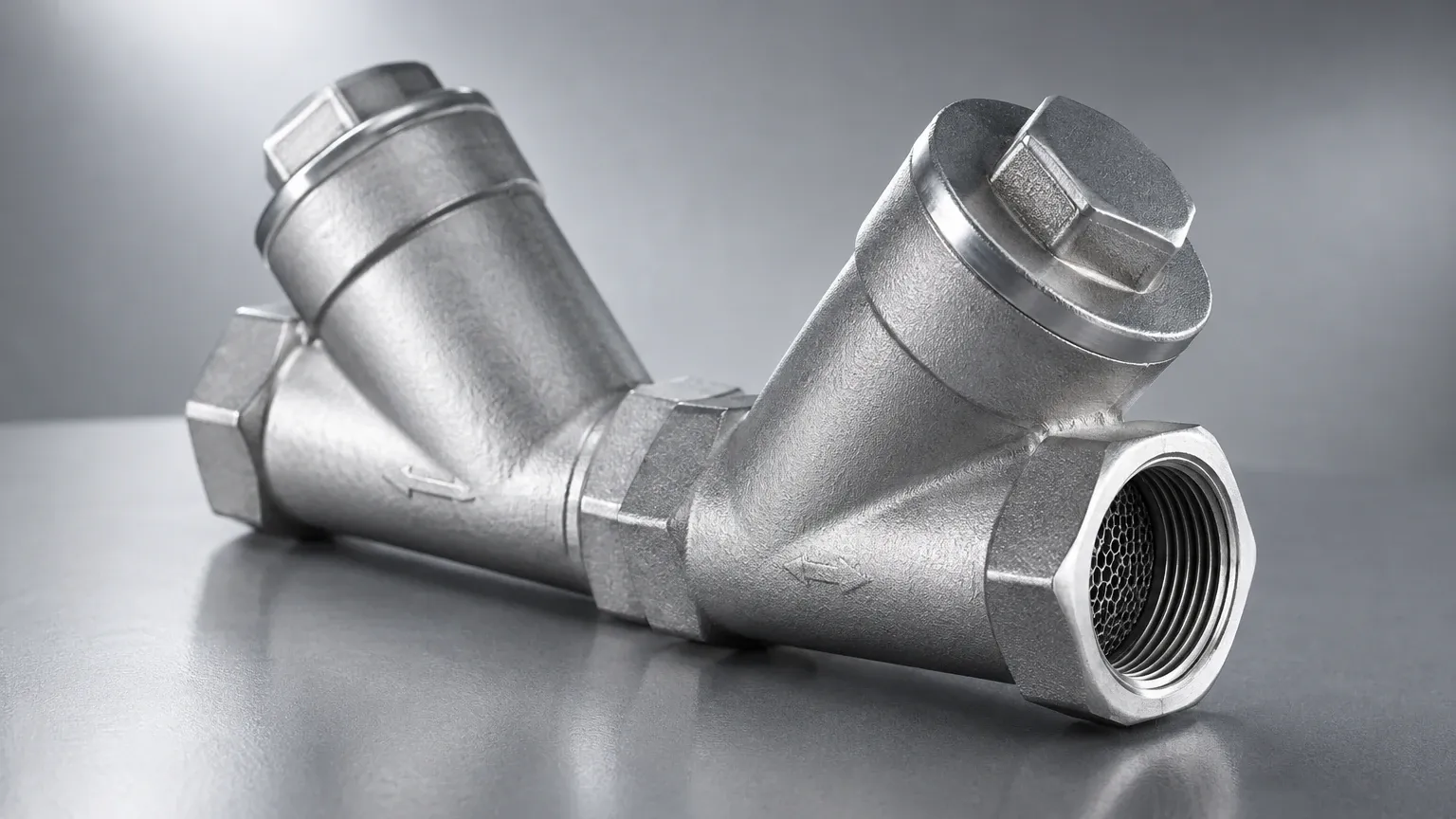
In industrial fluid handling, the 6-inch Y strainer serves as a critical line of defense for downstream equipment. As a mid-to-large scale component, 6 Y strainers are designed to mechanically remove solids from flowing liquids or gases using a perforated or wire mesh straining element. This process is essential for protecting expensive machinery such as pumps, control valves, meters, and steam traps from damage caused by scale, rust, jointing compound, or other foreign debris.
Selecting the correct 6-inch Y strainer requires a deep understanding of fluid dynamics, material compatibility, and the specific filtration requirements of the application. For engineers and procurement teams, the decision-making process involves balancing initial cost with long-term operational efficiency, particularly regarding pressure drop and maintenance frequency.
Understanding the Role of 6-Inch Y Strainers in Industrial Piping
The "Y" configuration is named for its shape, where the straining leg intersects the main flow line at an angle. This design is particularly advantageous for high-pressure applications and systems where the amount of material to be removed is relatively small. In a 6-inch (DN150) piping system, the volume of fluid moved is substantial, making the efficiency of the strainer paramount.
Unlike T-type strainers or larger basket strainers, 6 Y strainers offer a compact footprint, making them suitable for installations where space is at a premium. They can be installed in either horizontal or vertical positions, provided the "leg" of the Y points downward to collect debris effectively. This versatility is why they are frequently found in chemical processing, water treatment, and steam distribution systems.
Critical Engineering Specifications for 6 Y Strainers
When specifying 6 Y strainers, engineers must look beyond the pipe size. Several technical parameters dictate whether a strainer will perform reliably under industrial conditions:
Pressure and Temperature Ratings
The structural integrity of the strainer housing must align with the system's operating pressure. For 6-inch units, common ratings include ANSI Class 150, 300, or 600. In steam applications or high-temperature chemical processing, the material's thermal expansion and strength at elevated temperatures are critical. Stainless steel is often preferred for these environments due to its superior mechanical properties compared to cast iron or carbon steel.
Flow Coefficient (Cv) and Pressure Drop
The pressure drop across a strainer is a function of the fluid's velocity, viscosity, and the open area of the internal screen. A 6-inch Y strainer naturally introduces some resistance to flow. Engineers use the Cv value—the volume of water in gallons per minute that will flow through the strainer with a 1 psi pressure drop—to calculate the impact on system efficiency. Over-sizing the mesh (using a mesh that is too fine) can lead to an unacceptable pressure drop, increasing the load on pumps and raising energy costs.
Material Selection: Why Stainless Steel is Standard for High-Performance Applications
For most industrial applications involving Strainers & Baskets, stainless steel is the material of choice. The choice between different grades, such as 304, 316, or 316L, depends on the chemical composition of the fluid and the environment.
* Grade 304 Stainless Steel: Suitable for general-purpose applications, including water treatment and food processing where moderate corrosion resistance is required.
* Grade 316/316L Stainless Steel: Contains molybdenum, which provides enhanced resistance to chlorides and pitting. This is essential for pharmaceutical, marine, and aggressive chemical environments.
* Durability and Longevity: Stainless steel housings and internal screens resist erosion-corrosion, which is common in high-velocity 6-inch lines. Unlike carbon steel, stainless steel does not contribute rust or scale to the system, ensuring the purity of the process fluid.
Filtration Precision: Mesh and Perforation Options
The heart of the 6 Y strainer is the internal element. This component is typically a perforated metal sheet or a combination of a perforated support cylinder lined with a fine wire mesh. The selection of the filtration media determines the particle size that will be captured.
Perforated Screens
Perforated screens are used for coarse filtration, typically capturing particles 1/32" to 1/4" in size. In 6-inch strainers, these screens provide high structural strength, which is necessary to withstand the differential pressure that occurs as the screen becomes clogged.
Wire Mesh Liners
For finer filtration, a stainless steel wire mesh is layered inside the perforated basket. Mesh sizes can range from 20 mesh (840 microns) down to 400 mesh (37 microns) or finer. When specifying mesh for 6 Y strainers, it is vital to consider the "open area ratio." A higher ratio means less frequent cleaning and lower pressure drops. Custom manufacturers like Kaifil can provide specific wire diameters and weave types (such as plain or twilled) to optimize the balance between filtration fineness and flow capacity.
Installation Best Practices and Spatial Requirements
Proper installation of a 6-inch Y strainer is vital for its functionality and ease of maintenance. Because a 6-inch unit can be heavy, especially when filled with fluid, adequate piping support is required to prevent stress on the flanges.
Orientation
In horizontal piping, the Y-leg should be in the horizontal plane or pointing downward to prevent fluid from being trapped in the leg. In vertical piping, the flow must be downward so that gravity assists in directing the debris into the collection leg. Installing a Y strainer in a vertical line with upward flow is generally discouraged as it allows debris to fall back into the pipe when flow stops.
Maintenance Clearance
A common oversight in facility design is failing to leave enough room for screen removal. For 6 Y strainers, the screen is often quite long. There must be sufficient clearance to unscrew the cap or unbolt the flange and slide the screen out for cleaning. If space is extremely limited, engineers may need to consider a different strainer geometry or a custom-shortened screen design.
Maintenance Strategies for Minimizing Pressure Drop
A 6-inch Y strainer is only effective if it is cleaned regularly. As debris accumulates, the effective open area of the screen decreases, causing the pressure drop to rise exponentially. This can lead to "screen burst," where the differential pressure exceeds the structural limits of the mesh, allowing contaminants to bypass the filter and move downstream.
Blow-off Valves
Many 6 Y strainers are equipped with a blow-off port in the cap. By installing a ball valve on this port, operators can flush out accumulated debris without shutting down the system or dismantling the strainer. This is effective for loose, granular debris but may not remove sticky or fibrous materials that have become wedged in the mesh.
Differential Pressure Monitoring
In critical 6-inch lines, installing pressure gauges upstream and downstream of the strainer is a best practice. By monitoring the differential pressure (Delta P), maintenance teams can move from a schedule-based cleaning routine to a condition-based one. This prevents unnecessary downtime while ensuring the strainer never reaches a critical clogging point.
Customizing 6 Y Strainers for Specialized Industrial Processes
Standard off-the-shelf strainers may not meet the rigorous demands of every application. Customization allows engineers to tailor the component to the exact needs of the process.
* Connection Types: While flanged connections (ANSI, DIN, or JIS) are standard for 6-inch lines, some applications may require butt-weld ends for high-pressure integrity or specialized sanitary couplings for the food and pharmaceutical sectors.
* Cover Designs: For applications requiring frequent manual cleaning, quick-opening covers (such as swing-bolt or clamp styles) can be used instead of standard bolted covers to reduce labor time.
* Magnetic Inserts: In systems where fine iron or steel particles (black brown rust) are a concern, magnetic rods can be suspended inside the strainer basket to capture sub-micron metallic debris that would otherwise pass through the mesh.
* Specialty Coatings: While stainless steel offers excellent resistance, certain highly acidic or abrasive slurries may require specialized linings or exotic alloys (like Hastelloy or Monel) to ensure a reasonable service life.
Evaluating Total Cost of Ownership
When purchasing 6 Y strainers, the initial purchase price is often a small fraction of the total cost of ownership (TCO). A low-quality strainer with a poorly designed screen may have a higher pressure drop, leading to thousands of dollars in extra pumping energy costs over its lifespan. Furthermore, if the internal mesh is not manufactured to high standards, frequent replacements and potential downstream damage can far outweigh the savings of a cheaper unit.
By focusing on high-quality stainless steel construction and precision-engineered filtration media, industrial facilities can ensure that their 6-inch piping systems remain protected and efficient. Whether the application involves cooling water, chemical reagents, or high-pressure steam, the 6 Y strainer remains a fundamental component of modern industrial infrastructure.
