


60 Mesh Paint Strainers
In industrial coating and finishing operations, the integrity of the final surface finish is directly proportional to the purity of the fluid being applied. Particulate contamination, whether from undissolved pigments, skinning, or external debris, leads to surface defects such as "fish-eyes," seeds, and uneven textures. For many industrial-grade primers, latex paints, and high-viscosity coatings, the 60 mesh paint strainer serves as the primary line of defense.
As a critical component in fluid handling systems, these strainers are integrated into Strainers & Baskets assemblies to ensure that airless sprayers, pressure pots, and automated coating lines operate without clogging or premature wear on precision nozzles. Understanding the technical specifications, material performance, and engineering considerations of 60 mesh filtration is essential for maintaining high-throughput production environments.
Technical Specifications of 60 Mesh Filtration
The term "60 mesh" refers to the number of openings per linear inch of the filter media. In technical terms, a standard 60 mesh stainless steel wire cloth typically provides an aperture size of approximately 250 microns (0.0098 inches). This specific micron rating is widely regarded as the industry standard for filtering medium-to-heavy viscosity fluids.
Wire Diameter and Open Area
When specifying 60 mesh paint strainers for industrial use, engineers must consider the relationship between wire diameter and the percentage of open area. A thicker wire increases the structural durability of the mesh—essential for high-pressure applications—but reduces the total open area, which can increase the pressure drop across the filter. Conversely, a thinner wire provides a higher flow rate but may require a perforated metal support basket to prevent the mesh from collapsing under the force of the fluid stream.
Filtration Accuracy
While 60 mesh is effective for removing larger agglomerates and debris, it is often used as a secondary or final-stage filter. In complex coating systems, fluid may first pass through a coarser 20 or 30 mesh strainer to remove large contaminants before reaching the 60 mesh stage. This staged approach prevents the finer 60 mesh screen from blinding (clogging) too quickly, thereby extending the maintenance intervals and protecting downstream components like spray tips, which often have orifices smaller than the mesh openings.
Engineering Considerations for Strainers & Baskets
In a B2B industrial context, the housing and support structure for the filtration media are just as important as the mesh itself. Industrial Strainers & Baskets are designed to withstand the rigors of continuous operation, varying pressures, and aggressive chemical solvents.
Structural Integrity
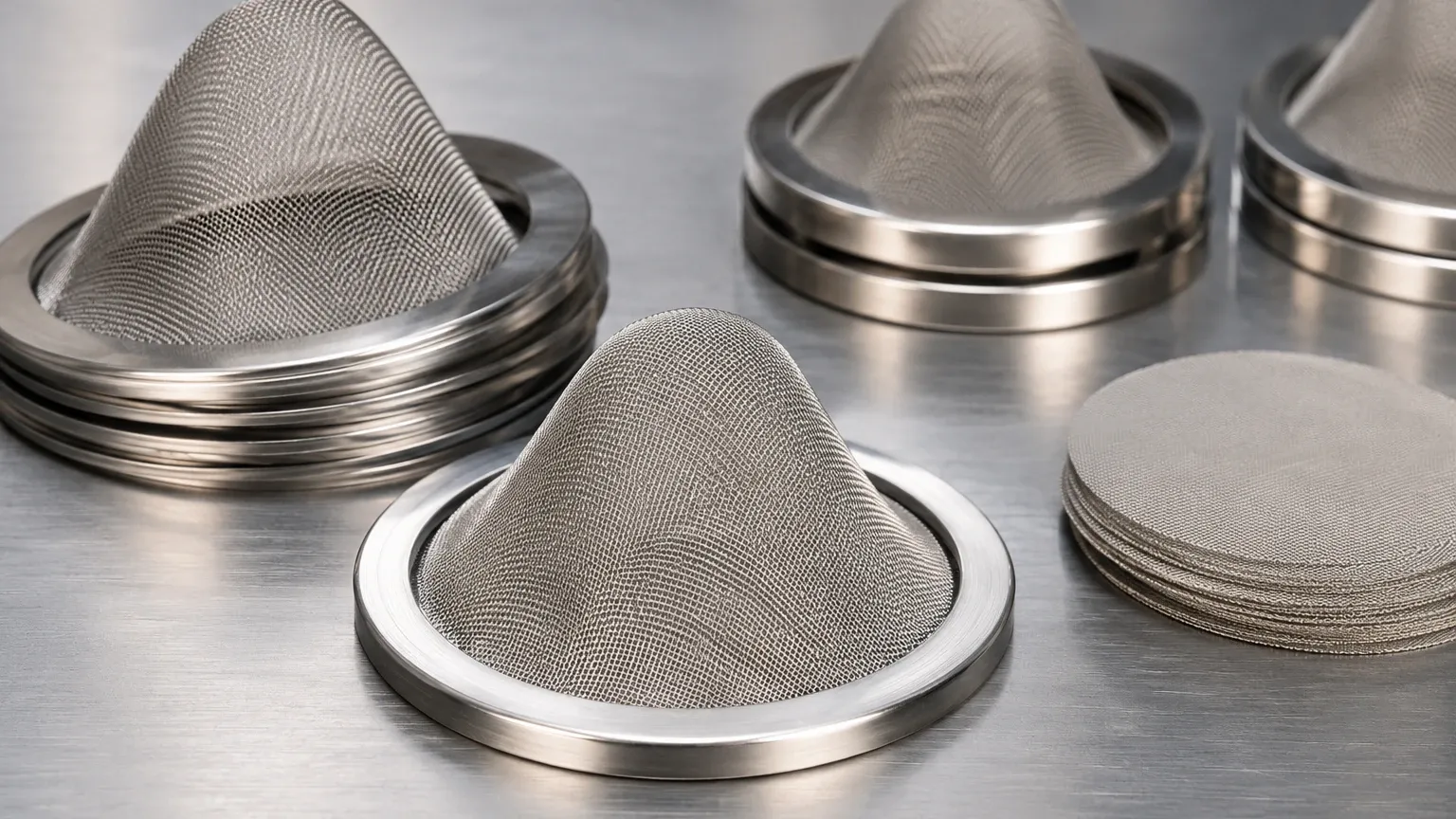
Unlike disposable nylon or paper strainers used in low-volume manual painting, industrial 60 mesh strainers are typically constructed from stainless steel. These are often designed as cylindrical or conical baskets that fit into T-style or Y-strainer housings. For high-pressure paint delivery systems, the 60 mesh wire cloth is often pleated to increase the surface area or sintered to a perforated metal core to provide the necessary mechanical strength to resist deformation.
Seal and Bypass Prevention
A critical failure point in many filtration systems is the seal between the strainer basket and the housing. If the 60 mesh paint strainers are not seated correctly, or if the gaskets are incompatible with the solvents in the paint (such as MEK or Xylene), fluid will bypass the filter media entirely. This allows contaminants to reach the spray gun, leading to immediate downtime. High-quality industrial strainers utilize precision-machined flanges and chemically resistant O-rings (typically Viton or PTFE) to ensure 100% of the fluid passes through the mesh.
Material Performance: Why Stainless Steel is Standard
For professional manufacturing and OEM applications, stainless steel (primarily Grade 304 or 316) is the preferred material for 60 mesh paint strainers. The selection of stainless steel over synthetic alternatives is driven by several performance factors:
1. Chemical Compatibility: Industrial coatings often contain aggressive solvents and resins. Stainless steel provides excellent resistance to corrosion and chemical degradation, ensuring that the filter media does not leach impurities into the paint or weaken over time.
2. Solvent Cleaning and Reusability: In a high-volume production environment, the total cost of ownership is reduced by using cleanable filters. Stainless steel 60 mesh strainers can be soaked in solvents, ultrasonically cleaned, or back-flushed, allowing them to be reused multiple times without loss of filtration accuracy.
3. Temperature Stability: Some industrial coating processes involve heated fluid delivery systems to reduce viscosity. Stainless steel maintains its structural integrity at elevated temperatures where plastic or nylon mesh might soften or fail.
4. Mechanical Strength: The abrasive nature of certain pigments (such as titanium dioxide or metallic flakes) can cause rapid wear on softer filter materials. Stainless steel wire mesh is highly resistant to abrasion, maintaining the precise 250-micron opening throughout its service life.
Application Scenarios for 60 Mesh Filtration
The 60 mesh paint strainer is a versatile tool across several heavy-duty industries. Its ability to balance flow rate with particle retention makes it suitable for various stages of the coating process.
Automotive and Transportation
In automotive OEM and Tier 1 finishing lines, 60 mesh strainers are used in the delivery of primers and basecoats. They ensure that no particulate matter enters the robotic spray systems, which could cause expensive rework on vehicle bodies. The precision of a 60 mesh screen is vital for maintaining the consistency of metallic and pearlescent finishes.
Architectural and Industrial Maintenance
For large-scale architectural projects involving the application of latex or acrylic paints via airless sprayers, 60 mesh is the standard manifold filter size. It prevents the clogging of spray tips, which typically range from 0.015" to 0.021" in diameter. By removing particles larger than 250 microns, the strainer ensures a continuous, fan-shaped spray pattern.
Wood Finishing and Furniture
In high-end wood finishing, where lacquers and topcoats must be perfectly smooth, 60 mesh strainers are used to filter out wood dust or dried finish particles that may have contaminated the fluid reservoir. This is particularly important in pressure-pot systems where the fluid is under constant agitation.
Flow Dynamics and Pressure Drop Considerations
One of the most common questions engineers face when selecting 60 mesh paint strainers is the impact on system pressure. Every filter introduces a degree of resistance to the flow, known as pressure drop (ΔP).
As the 60 mesh screen captures contaminants, the available open area decreases, causing the pressure drop to increase. If the ΔP becomes too high, it can lead to pump cavitation, reduced flow at the spray gun, or even a rupture of the filter media. To mitigate this, industrial systems often include pressure gauges on both the upstream and downstream sides of the Strainers & Baskets. A significant difference between the two readings indicates that the 60 mesh strainer requires cleaning or replacement.
Furthermore, the viscosity of the paint significantly influences the flow dynamics. A high-solids epoxy will experience a much higher pressure drop through a 60 mesh screen than a water-based stain. Engineers must calculate the required flow rate (GPM or LPM) and ensure that the surface area of the 60 mesh strainer is sufficient to handle the volume without excessive restriction.
Customization and OEM Integration
For manufacturers of painting equipment and industrial fluid handling systems, off-the-shelf strainers may not always meet specific spatial or performance requirements. Custom-engineered 60 mesh paint strainers allow for optimization in several areas:
* Custom Dimensions: Tailoring the length and diameter of the basket to fit compact machine footprints.
* Reinforcement Options: Adding internal or external support cages for high-differential pressure environments.
* End Fittings: Customizing the flange, handle, or threaded connection to simplify installation and removal during maintenance cycles.
* Multi-Layer Composites: Sintering 60 mesh wire cloth with coarser mesh layers to create a multi-stage filter in a single component, providing both high strength and fine filtration.
By working with a manufacturer that specializes in custom stainless steel filtration, purchasing teams can ensure that their 60 mesh strainers are perfectly matched to their specific application, reducing the risk of bypass and extending the life of the entire filtration system.
Maintenance and Cleaning Protocols
To ensure the longevity of stainless steel 60 mesh paint strainers, a consistent maintenance schedule is required. Unlike disposable filters, these components are an investment in the system's long-term efficiency.
Cleaning Procedures
When a strainer becomes loaded with solids, it should be removed and cleaned using a solvent compatible with the coating material. For dried-on paint, ultrasonic cleaning is highly effective at vibrating particles out of the wire intersections without damaging the mesh. It is important to avoid using wire brushes or sharp tools to scrape the mesh, as this can distort the 60 mesh openings and compromise filtration accuracy.
Inspection for Wear
During cleaning, the mesh should be inspected for signs of "blinding" (permanent clogging of the pores) or physical damage. Even small tears in a 60 mesh screen can allow large contaminants through, defeating the purpose of the strainer. In high-vibration environments, the welds between the mesh and the basket frame should also be checked for fatigue cracks.
Conclusion: Selecting the Right 60 Mesh Solution
The 60 mesh paint strainer is a fundamental component in industrial fluid management, providing a reliable 250-micron barrier against contamination. For B2B buyers and engineers, the focus should remain on the quality of the construction, the durability of the stainless steel media, and the precision of the Strainers & Baskets assembly.
By choosing high-performance metal filtration over disposable alternatives, industrial operations can achieve better surface finishes, lower maintenance costs, and more sustainable production processes. Whether for automotive OEM lines, heavy machinery coating, or architectural finishing, the 60 mesh strainer remains the benchmark for balancing flow efficiency with rigorous particulate control.
