


70 Micron Cell Strainers
In the landscape of industrial filtration and precision separation, the 70 micron cell strainers represent a critical threshold for particle management. While the term is frequently associated with laboratory-scale biological research, the engineering principles behind 70-micron filtration extend deeply into industrial manufacturing, chemical processing, and pharmaceutical production. For engineers and procurement specialists, selecting the right filtration media at this specific micrometer rating requires a comprehensive understanding of material science, fluid dynamics, and mechanical durability.
At this scale, filtration is no longer just about removing visible debris; it is about achieving high-purity separation and protecting downstream equipment from microscopic particulates. When integrated into larger Strainers & Baskets, these 70-micron components provide the necessary precision for demanding B2B applications where failure or bypass is not an option.
Technical Specifications of 70 Micron Mesh
To understand the performance of 70 micron cell strainers, one must first analyze the geometry of the mesh. A 70-micron (μm) opening is approximately equivalent to a 200-mesh count in standard US Sieve sizes, depending on the wire diameter used. In industrial applications, these strainers are typically constructed from stainless steel wire cloth, which offers superior mechanical strength compared to nylon or plastic alternatives.
Material Selection: SS304 vs. SS316L
For most industrial environments, the choice of material is the first engineering hurdle. Stainless steel 304 is the standard for general-purpose applications, providing excellent strength and basic corrosion resistance. However, in pharmaceutical or chemical processing where 70 micron cell strainers are exposed to aggressive solvents, chlorides, or high-temperature sterilization cycles, SS316L is the preferred specification. The addition of molybdenum in SS316L enhances resistance to pitting and crevice corrosion, ensuring the integrity of the 70-micron apertures over long-term use.
Weave Types and Flow Characteristics
The weave type significantly impacts the "Open Area" percentage of the strainer. For 70-micron filtration, a plain weave is most common, providing a uniform square opening that allows for predictable flow rates. Engineers must calculate the open area to determine the potential pressure drop (ΔP) across the filter. A higher open area reduces the energy required for pumping but may compromise the structural rigidity of the mesh if the wire diameter is too thin. Balancing these factors is essential when designing custom Strainers & Baskets for high-velocity fluid systems.
Engineering Considerations for Industrial Integration
When transitioning from a lab-scale environment to an industrial production line, the housing and support structure of the 70 micron cell strainers become as important as the mesh itself. A fine 70-micron mesh is inherently delicate; under high differential pressure, the mesh can bow or rupture if not properly supported.
Structural Support and Reinforcement
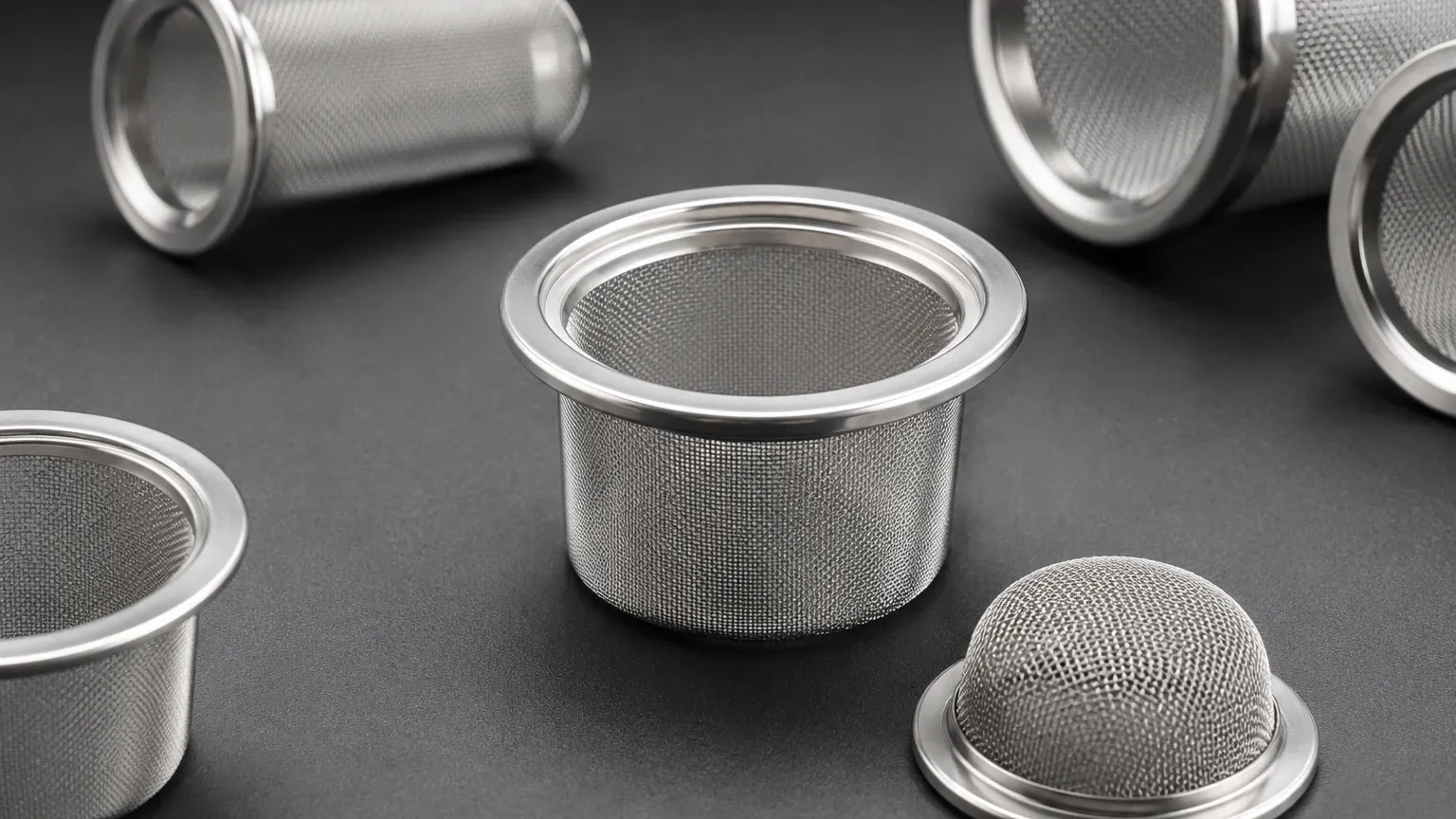
In industrial strainer baskets, the 70-micron mesh is often used as a liner inside a more robust perforated metal basket. This "dual-layer" approach allows the fine mesh to perform the precision filtration while the perforated outer layer provides the mechanical strength to withstand hydraulic shocks and high flow volumes. This configuration is standard in hydraulic systems and water treatment plants where fine particulate removal is required without sacrificing the structural integrity of the filtration unit.
Flow Velocity and Particle Loading
Engineers must also account for the particle loading capacity. Because 70 micron cell strainers capture relatively small particles, they are prone to faster blinding (clogging) than coarser strainers. If the fluid contains a high concentration of solids, the surface area of the strainer must be increased. This is often achieved by using pleated mesh designs or larger basket dimensions to extend the service life between cleaning cycles. Monitoring the differential pressure across the strainer is the primary method for determining when a cleaning or replacement cycle is necessary.
Applications Across Key Industries
The utility of 70 micron cell strainers spans multiple sectors, each with unique performance requirements and regulatory standards.
Pharmaceutical and Biotechnology
In bioprocessing, 70-micron filtration is often used for primary cell separation or to remove large aggregates from cell culture media. Unlike disposable plastic strainers used in labs, industrial stainless steel 70 micron cell strainers are designed for repeated sterilization via autoclaving or Steam-in-Place (SIP) protocols. The durability of stainless steel ensures that the pore size remains consistent even after multiple thermal cycles, which is critical for maintaining process validation.
Food and Beverage Processing
The food industry utilizes 70-micron filtration for the clarification of juices, oils, and syrups. At this micron rating, the strainer can effectively remove fine pulp or crystalline impurities that affect the clarity and texture of the final product. Because these applications often involve high-viscosity fluids, the engineering of the Strainers & Baskets must account for increased shear stress on the mesh.
Chemical and Petrochemical
In chemical manufacturing, 70 micron cell strainers protect sensitive instrumentation and spray nozzles from particulate contamination. They are also used in catalyst recovery processes where the 70-micron threshold is matched to the particle size of the catalyst being used. In these environments, chemical compatibility is the primary concern, necessitating the use of high-grade alloys or specialized coatings.
Selection Criteria: What Purchasing Teams Need to Confirm
Procuring 70 micron cell strainers for industrial use involves more than just specifying the micron rating. To ensure the component is fit for purpose, purchasing teams and engineers should confirm the following technical details with their manufacturer:
1. Effective Filtration Area (EFA): Does the design provide enough surface area to handle the required flow rate without excessive pressure drop?
2. Micron Rating Accuracy: Is the 70-micron rating nominal or absolute? In precision applications, an absolute rating (where 99% or more of particles at 70 microns are retained) is often required.
3. Connection Types: For industrial integration, how does the strainer mount? Options include flange mounts, NPT threads, or custom gaskets for sanitary applications.
4. Certification and Compliance: Does the material meet FDA, 3A, or ASME standards? For pharmaceutical and food applications, material traceability (MTRs) is often a mandatory requirement.
5. Cleanability: Is the mesh designed for backwashing, or does it require ultrasonic cleaning? The ease of maintenance directly impacts the total cost of ownership.
Common Risks and Maintenance Protocols
The primary risk associated with 70 micron cell strainers is "blinding," where particles become wedged in the mesh openings, reducing flow and increasing pressure. If the pressure exceeds the design limits, the mesh may undergo permanent deformation, leading to "mesh migration" or bypass.
To mitigate these risks, a robust maintenance schedule is essential. For stainless steel strainers, ultrasonic cleaning is often the most effective method for removing fine particulates from the 70-micron apertures without damaging the wire. In automated systems, backwashing cycles can be programmed based on differential pressure sensors. If the strainer is part of a duplex system, flow can be diverted to a secondary basket while the first is being cleaned, ensuring continuous operation.
Furthermore, engineers should inspect the mesh for signs of fatigue or mechanical wear during every maintenance cycle. Even small tears in a 70-micron mesh can lead to significant downstream contamination, potentially damaging expensive pumps or compromising product quality.
Customization and OEM Solutions
Many industrial applications require 70 micron cell strainers that do not fit standard off-the-shelf specifications. Customization allows engineers to optimize the filtration performance for specific fluid properties and spatial constraints.
Custom design options include:
* Variable Dimensions: Tailoring the length and diameter of the basket to fit existing housing units.
* Reinforced Frames: Adding support rings or heavy-duty handles for easier removal and cleaning.
* Multi-Stage Filtration: Combining a 70-micron layer with coarser pre-filter layers in a single basket to manage high solids loading.
* Specialized Finishes: Electropolishing the stainless steel to reduce particle adhesion and improve cleanability in sanitary environments.
By working closely with a manufacturer that specializes in Strainers & Baskets, companies can develop filtration solutions that are precisely tuned to their operational needs, reducing downtime and improving overall process efficiency.
Conclusion
The 70 micron cell strainers are a vital component in the toolkit of modern industrial engineering. Whether they are used for protecting high-pressure nozzles, recovering valuable catalysts, or ensuring the purity of pharmaceutical products, their performance depends on a combination of precise mesh manufacturing and robust structural design. By understanding the technical nuances of 70-micron filtration—from material selection and open area calculations to maintenance protocols—purchasing teams and engineers can make informed decisions that enhance the reliability and longevity of their filtration systems.
