


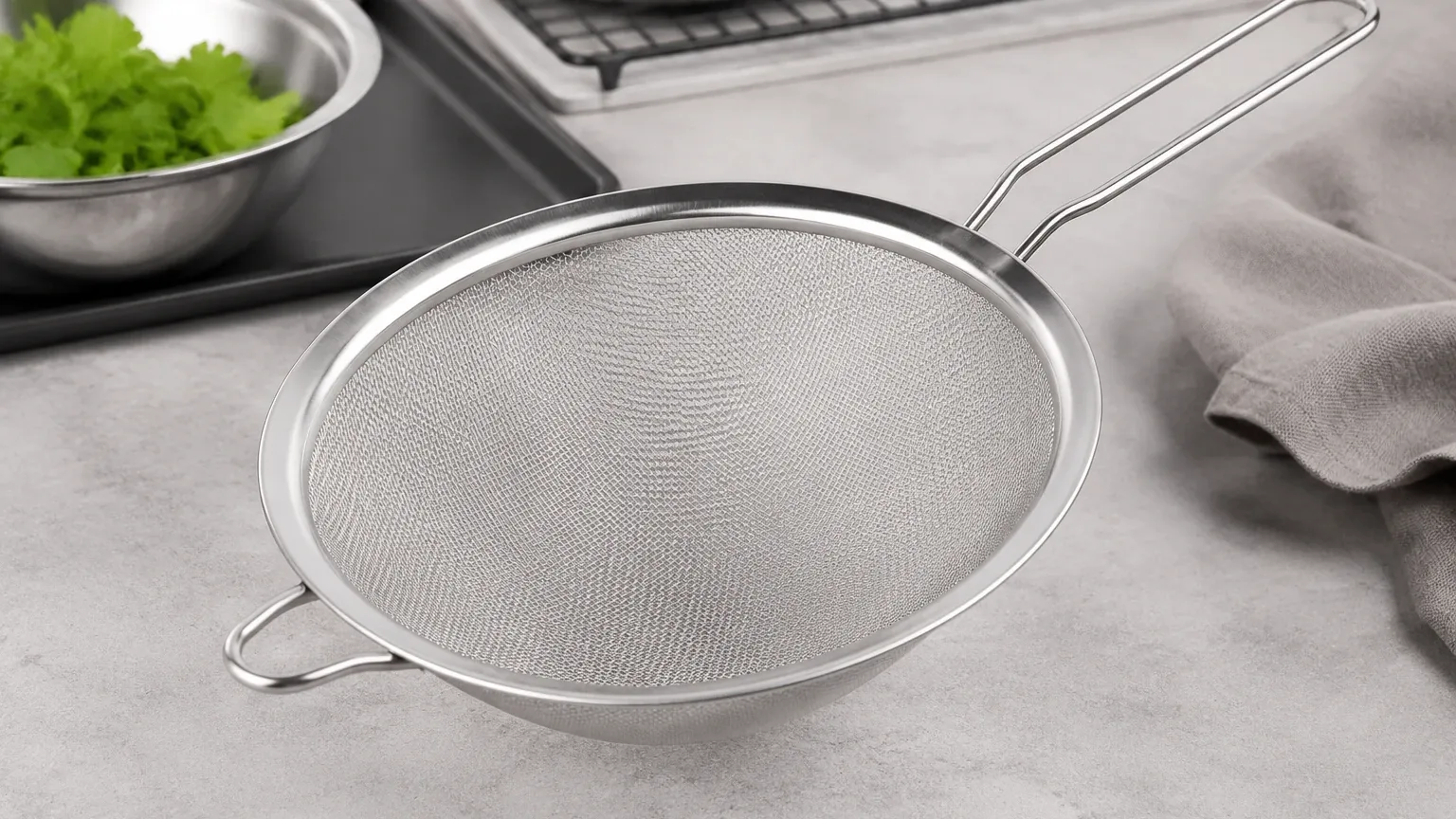
9 Inch Stainless Steel Strainer
In industrial fluid handling and process engineering, the 9 inch stainless steel strainer represents a critical component for protecting downstream equipment from particulate contamination. Whether utilized in chemical processing, water treatment, or the food and beverage industry, these components serve as the first line of defense for pumps, valves, and heat exchangers. Selecting the correct strainer requires a deep understanding of material science, fluid dynamics, and the specific mechanical requirements of the application.
At the industrial scale, a "9 inch" designation typically refers to either the diameter of the strainer basket or the nominal pipe size of the housing it inhabits. Regardless of the specific configuration, the primary objective remains the same: to remove unwanted solids from a liquid or gas stream through a perforated or wire mesh medium. Stainless steel is the preferred material for these applications due to its exceptional strength-to-weight ratio and its ability to withstand corrosive environments.
Understanding the Industrial Role of a 9 Inch Stainless Steel Strainer
Industrial Strainers & Baskets are designed to handle high flow rates while maintaining structural integrity under significant pressure. A 9 inch stainless steel strainer is often found in mid-to-large scale piping systems where flow volumes are substantial. Unlike disposable filters, these strainers are designed for longevity and reuse, making them a cost-effective solution for coarse to medium filtration.
The mechanical design of these strainers focuses on maximizing the "open area ratio." This ratio compares the total area of the openings in the strainer medium to the cross-sectional area of the inlet pipe. For a 9 inch system, engineers typically look for an open area ratio of at least 3:1 or 4:1. This ensures that the strainer does not become a bottleneck in the system, preventing excessive pressure drops that could lead to pump cavitation or system inefficiency.
Material Engineering: 304 vs. 316 Stainless Steel
When specifying a 9 inch stainless steel strainer, the choice of alloy is the most significant factor affecting the component's lifespan and performance. While there are many grades of stainless steel, the industrial sector primarily relies on Grade 304 and Grade 316.
Grade 304 Stainless Steel
Grade 304 is the standard "18/8" stainless steel, containing approximately 18% chromium and 8% nickel. It offers excellent corrosion resistance in most atmospheric conditions and is widely used in water treatment and general industrial applications. It is a cost-effective choice when the fluid being filtered is non-corrosive and the environment is relatively controlled.
Grade 316 Stainless Steel
For more demanding environments, Grade 316 is the industry standard. The addition of 2% to 3% molybdenum significantly enhances its resistance to pitting and crevice corrosion, particularly in chloride-rich environments. In chemical processing plants or marine applications, a 9 inch stainless steel strainer made from 316 or 316L (low carbon) is essential to prevent premature failure due to chemical attack. 316L is also preferred in pharmaceutical and food applications where intergranular corrosion must be avoided during welding processes.
Design Configurations for Strainers & Baskets
The internal geometry of a 9 inch stainless steel strainer is dictated by the type of housing and the nature of the debris being captured. There are three primary configurations used in industrial settings:
1. Simplex Basket Strainers: These are the most common for batch processes. The 9-inch basket sits within a housing; when the basket is full, the system is shut down, the housing is opened, and the basket is cleaned.
2. Duplex Basket Strainers: For continuous processes where flow cannot be interrupted, duplex systems use two 9-inch baskets. A valve diverts flow from one basket to the other, allowing for maintenance without stopping the production line.
3. Y-Strainers: While less common at the 9-inch scale for heavy solids loading, Y-strainers are used for steam or gas lines where the amount of debris is minimal. They are more compact but have a smaller holding capacity than basket-style strainers.
The construction of the basket itself can vary. It may consist of a heavy-duty perforated plate that provides structural support, lined with a fine wire mesh to achieve the desired micron rating. This "dual-layer" approach ensures that the 9 inch stainless steel strainer can withstand high differential pressures without the mesh collapsing.
Key Performance Metrics: Flow Rate and Pressure Drop
Engineers must calculate the "Clean Pressure Drop" when integrating a 9 inch stainless steel strainer into a system. As fluid passes through the strainer medium, energy is lost due to friction and turbulence. If the pressure drop (Delta P) is too high, it indicates that the strainer is either too small for the flow rate or the mesh is too fine for the application.
Factors influencing pressure drop include:
* Viscosity of the Fluid: Thicker fluids require larger openings or larger surface areas to maintain flow.
* Velocity: Higher flow velocities increase turbulence and pressure loss.
* Percentage of Clogging: As the strainer captures debris, the available open area decreases, and the pressure drop increases exponentially.
In a 9-inch system, monitoring the differential pressure across the strainer is vital. Most industrial setups include pressure gauges on both the inlet and outlet sides. A common engineering rule is to clean or replace the basket when the differential pressure reaches 5-10 psi above the clean pressure drop.
Customization Options for Precision Filtration
One of the strengths of working with a professional manufacturer like Kaifil is the ability to customize the 9 inch stainless steel strainer to meet unique operational requirements. Standard off-the-shelf components often fail to address specific engineering challenges.
Customization options include:
* Reinforced Baskets: For high-pressure applications where the surge of fluid might deform a standard basket, internal or external support ribs can be added.
* Magnetic Inserts: In metalworking or hydraulic applications, magnetic rods can be placed inside the basket to capture fine ferrous particles that might otherwise pass through the mesh.
* Handle Configurations: Depending on the clearance above the strainer housing, baskets can be fitted with bail handles, lifting lugs, or slanted handles to facilitate easier removal.
* Micron Ratings: Mesh linings can range from coarse (4000 microns) to very fine (5 microns), depending on the sensitivity of the downstream equipment.
Industry-Specific Applications and Compliance
The application of a 9 inch stainless steel strainer varies significantly across different sectors, each with its own set of regulatory and performance standards.
Chemical and Petrochemical
In these industries, the primary concern is chemical compatibility. Strainers must be able to handle aggressive solvents, acids, and high temperatures. The structural integrity of the welds (often TIG or MIG) is paramount to ensure that the strainer does not bypass under high-stress conditions.
Food and Beverage
For food-grade applications, the 9 inch stainless steel strainer must meet hygienic standards. This involves using 316L stainless steel and ensuring that all surfaces are polished to a specific Ra (Roughness Average) value to prevent bacterial growth. The design must be "dead-leg" free, meaning there are no areas where fluid can stagnate.
Water Treatment
In municipal or industrial water treatment, these strainers are used to protect membranes and spray nozzles from sand, scale, and organic matter. Durability and ease of cleaning are the primary drivers here, as these systems often operate 24/7.
Maintenance and Total Cost of Ownership (TCO)
While the initial purchase price of a 9 inch stainless steel strainer is an important factor, procurement teams should focus on the Total Cost of Ownership. A high-quality stainless steel strainer from a reputable manufacturer may have a higher upfront cost but will offer significant savings over time.
Durability: Cheaply made strainers often suffer from mesh detachment or basket deformation. A robustly constructed basket can be cleaned and reused hundreds of times.
Cleaning Efficiency: Well-designed baskets are easier to flush and clean, reducing labor costs and downtime. Techniques such as ultrasonic cleaning can be used on stainless steel mesh to restore it to near-original condition.
System Protection: The primary "cost" of a strainer failure is not the strainer itself, but the damage to a $50,000 pump or the loss of a day’s production. Investing in a precision-engineered 9 inch stainless steel strainer is an insurance policy for the entire process line.
Selection Checklist for Engineering Teams
Before finalizing a purchase or custom order for a 9 inch stainless steel strainer, engineers and purchasing agents should confirm the following data points:
* Fluid Properties: What is the chemical composition, temperature, and viscosity of the medium?
* Flow Rate: What is the maximum and minimum flow rate the system will experience?
* Operating Pressure: What is the maximum working pressure (MWP) of the system?
* Filtration Goal: What is the size of the smallest particle that must be removed? (This determines the mesh or perforation size).
* Housing Dimensions: If replacing an existing basket, what are the exact flange-to-flange or height-to-diameter measurements required?
* Connection Type: Does the system require flanged, threaded, or sanitary clamp connections?
By addressing these technical requirements, organizations can ensure they select a 9 inch stainless steel strainer that provides optimal performance, protects critical infrastructure, and delivers long-term reliability in demanding industrial environments. For those seeking specialized designs, exploring the full range of Strainers & Baskets is the most effective way to find a solution tailored to specific mechanical and chemical constraints.
