


9 Inch Strainer
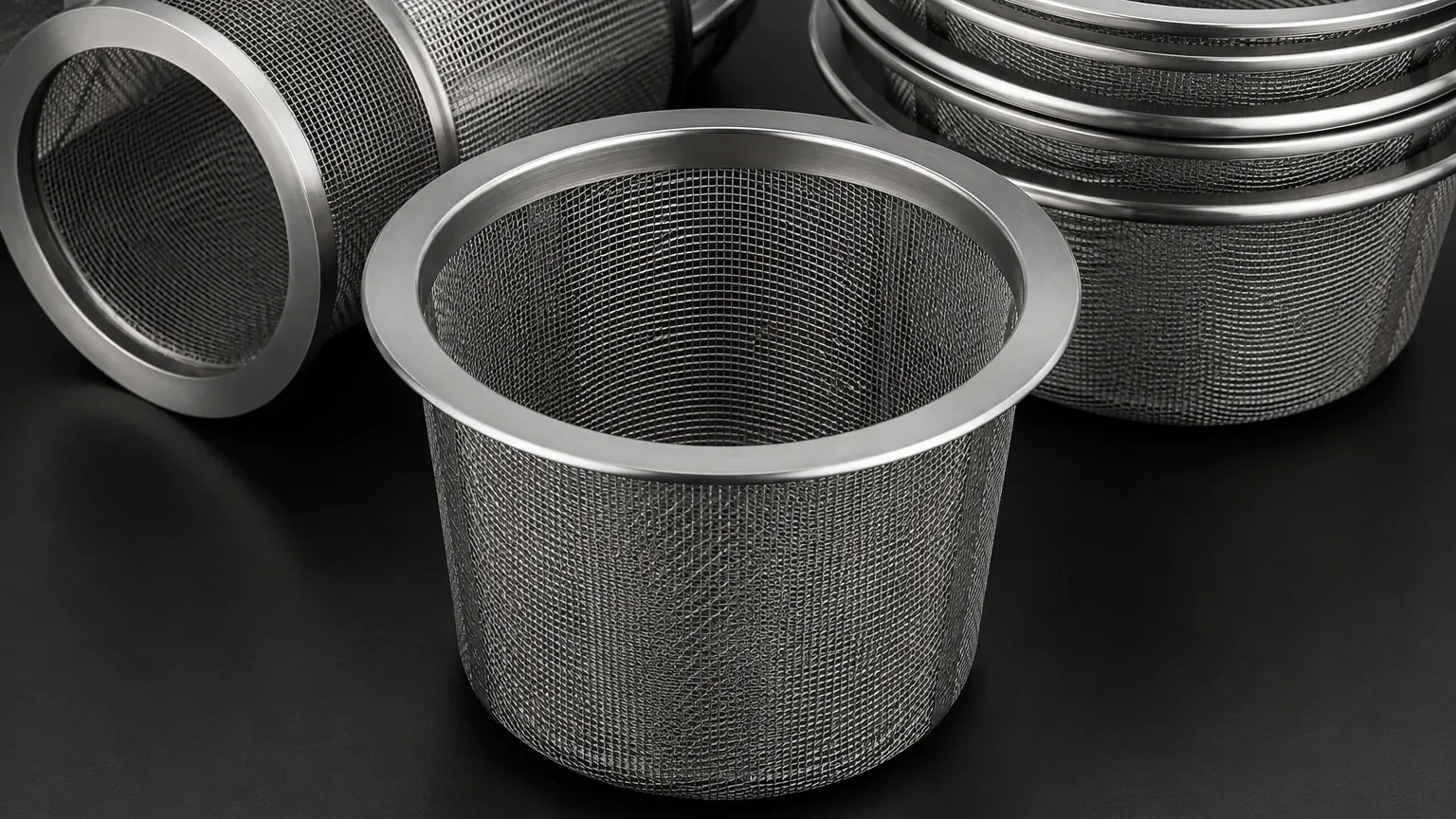
In industrial fluid handling, the efficiency of a filtration system is often dictated by the precise sizing and structural integrity of its internal components. A 9 inch strainer represents a specific high-capacity class of filtration media used within larger piping systems to protect downstream equipment from particulate contamination. Whether utilized in simplex, duplex, or Y-strainer housings, the 9-inch diameter basket or element is a critical component for managing high flow rates while maintaining acceptable pressure drops.
As a professional manufacturer, Kaifil specializes in the engineering and production of custom Strainers & Baskets designed to meet the rigorous demands of chemical processing, water treatment, and industrial manufacturing. Understanding the technical nuances of a 9 inch strainer—from material selection to structural reinforcement—is essential for engineers and procurement teams looking to optimize their filtration processes.
Technical Specifications and Engineering Considerations
The performance of a 9 inch strainer is not merely a function of its diameter but a combination of its length, the type of filtration media used, and the structural design of the basket. In industrial applications, these strainers are typically designed as "baskets" that can be easily removed for cleaning or replacement.
Material Selection for Durability
Most industrial 9 inch strainers are constructed from stainless steel due to its superior corrosion resistance and mechanical strength.
* SS304: Suitable for general industrial applications, including water treatment and non-corrosive chemical processing. It offers excellent durability and cost-effectiveness.
* SS316L: Preferred for pharmaceutical, food and beverage, and highly corrosive chemical environments. The addition of molybdenum provides enhanced resistance to pitting and crevice corrosion, particularly in chloride-rich environments.
* Specialty Alloys: For extreme conditions involving high temperatures or highly aggressive acids, alloys like Monel or Hastelloy may be utilized in the construction of the strainer mesh and frame.
Filtration Media: Perforated vs. Mesh
A 9 inch strainer can be configured with different types of filtration media depending on the required micron rating:
1. Perforated Metal: Used for coarse filtration (straining). The hole size and staggered pattern determine the open area ratio. This is the primary structural layer for most baskets.
2. Wire Mesh Lining: For finer filtration, a stainless steel wire mesh is sintered or welded to the interior or exterior of the perforated basket. This allows for precision down to 5 microns while maintaining the structural rigidity needed to withstand high differential pressures.
3. Wedge Wire: In applications involving high-viscosity fluids or where "backwashing" is required, wedge wire (V-wire) provides a non-clogging surface and high mechanical strength.
The Importance of the Open Area Ratio
One of the most critical metrics for an engineer evaluating a 9 inch strainer is the Open Area Ratio (OAR). This is the ratio between the total open area of the strainer holes and the cross-sectional area of the inlet pipe.
A well-designed 9-inch basket should ideally provide an OAR of at least 6:1 or 8:1. A high OAR ensures that even as the strainer begins to collect debris, the pressure drop (Delta P) across the element remains low. If the OAR is too low, the fluid velocity through the remaining open holes increases, which can lead to "particle shearing" (forcing contaminants through the mesh) or premature clogging, resulting in frequent system downtime for cleaning.
Applications of 9 Inch Strainers in Industrial Sectors
Due to their size, 9 inch strainers are typically found in mid-to-large scale industrial operations where flow rates exceed several hundred gallons per minute (GPM).
Chemical and Petrochemical Processing
In these sectors, a 9 inch strainer is often used as a "police filter" to protect expensive pumps, meters, and valves from scale, weld slag, or pipe debris. The robust construction of a stainless steel 9-inch basket ensures it can handle the chemical compatibility requirements and potential pressure surges common in these environments.
Food and Beverage Production
For large-scale liquid processing, such as in breweries or juice production, 9-inch baskets are used to remove pulp, seeds, or larger particulates. In these applications, the strainer must be designed with sanitary standards in mind, featuring smooth welds and polished surfaces to prevent bacterial growth and facilitate Clean-in-Place (CIP) procedures.
Cooling Water Systems
Power plants and large manufacturing facilities use 9 inch strainers in their cooling water loops to prevent debris from the cooling towers or raw water sources from fouling heat exchangers. The large surface area of a 9-inch element allows for extended run times between cleaning cycles, which is vital for continuous operations.
Customization and OEM Capabilities
Standard off-the-shelf strainers may not always meet the specific geometric or performance requirements of a complex industrial system. This is where custom manufacturing becomes essential. When sourcing a 9 inch strainer, several customization options should be considered:
* Handle Configurations: Depending on the housing design, baskets may require overhead handles, side-grip handles, or slanted handles to facilitate easy removal by operators wearing protective gear.
* Reinforcement Rings: For high-pressure applications, the 9-inch basket can be reinforced with longitudinal ribs or circumferential rings to prevent the cylinder from collapsing under high differential pressure.
* Bottom Designs: Baskets can be manufactured with flat bottoms, slanted bottoms, or even conical shapes to optimize flow distribution and solids capacity.
* Magnetic Inserts: In metalworking or hydraulic applications, magnetic rods can be integrated into the 9 inch strainer to capture fine ferrous particles that might otherwise pass through the mesh.
Evaluating Performance: Pressure Drop and Flow Velocity
When integrating a 9 inch strainer into a system, engineers must calculate the clean pressure drop. This calculation involves the fluid's viscosity, specific gravity, flow rate, and the mesh size of the strainer.
If the fluid is highly viscous (e.g., heavy oils or resins), the pressure drop across a 9-inch basket will be significantly higher than with water. In such cases, designers may opt for a larger 9-inch basket with an extended length to increase the total surface area, thereby reducing the velocity of the fluid as it passes through the mesh. Lowering the velocity not only reduces the pressure drop but also extends the life of the filtration media by reducing mechanical wear and tear.
Maintenance and Lifecycle Management
The total cost of ownership for a 9 inch strainer is heavily influenced by its maintenance requirements. A strainer is a "sacrificial" component designed to protect more expensive equipment, but it must be maintained to ensure system efficiency.
Monitoring Differential Pressure
Systems utilizing 9-inch filtration elements should always be equipped with differential pressure gauges. A common industry standard is to clean or replace the basket when the pressure drop reaches 10-15 psi over the clean pressure drop. Allowing the pressure to rise further risks deforming the basket or causing a "blow-through," where the mesh fails and contaminants bypass the filter.
Cleaning Procedures
Stainless steel 9 inch strainers are generally reusable. Cleaning methods include:
* Manual Wash: Removing the basket and using a high-pressure water hose or brush.
* Ultrasonic Cleaning: For fine mesh strainers where particulates are lodged deep within the weave.
* Chemical Soaking: Used when the contaminants are organic or scale-based and cannot be removed mechanically.
Key Questions for Procurement and Engineering Teams
Before finalizing a purchase order for a 9 inch strainer, technical professionals should confirm several critical details with the manufacturer to ensure the component is fit for purpose:
1. What is the exact flange or housing fit? A 9-inch diameter can have slight variations depending on whether it is a "drop-in" basket for a specific brand of housing or a custom-engineered part.
2. What is the maximum allowable differential pressure (DP)? Ensure the basket is structurally rated for the maximum DP the pump can generate.
3. Is the mesh supported? For fine filtration (below 100 microns), a 9 inch strainer should always have a heavy-duty perforated backup tube to prevent the mesh from tearing.
4. Are there specific certification requirements? In industries like pharmaceuticals or food processing, material mill test reports (MTRs) and certificates of conformance are often required to prove the grade of stainless steel used.
Conclusion
The 9 inch strainer is a workhorse in industrial filtration, providing the necessary surface area and structural integrity to manage high-volume fluid streams. By selecting the correct materials, understanding the fluid dynamics of the application, and opting for high-quality manufacturing, facilities can significantly reduce equipment wear and process downtime.
Kaifil remains committed to providing high-performance Strainers & Baskets tailored to the unique specifications of global industrial partners. From standard 9-inch designs to complex, custom-engineered filtration components, our focus is on delivering durability, precision, and technical excellence in every product.
