


Are Sink Basket Strainers Universal
In the world of industrial maintenance, facility management, and commercial kitchen design, the question of whether components are interchangeable is central to operational efficiency. When addressing the specific query, are sink basket strainers universal, the answer requires a nuanced understanding of industry standards versus specialized application requirements. While a high degree of standardization exists in residential and light commercial plumbing, industrial filtration and heavy-duty processing environments often demand customized solutions that deviate from "off-the-shelf" specifications.
For engineers and procurement professionals, assuming universality can lead to significant downtime, bypass leakage, or premature component failure. Understanding the technical boundaries of strainer dimensions, material properties, and connection types is essential for maintaining the integrity of a fluid handling system.
Understanding the Concept of "Universal" in Industrial Filtration
The term "universal" is frequently used in retail contexts to describe sink basket strainers designed for the standard 3-1/2 inch (approximately 89mm) drain opening found in the vast majority of North American kitchen sinks. In these scenarios, the strainer assembly is built to fit a specific diameter, and the basket itself is designed to seat within that assembly.
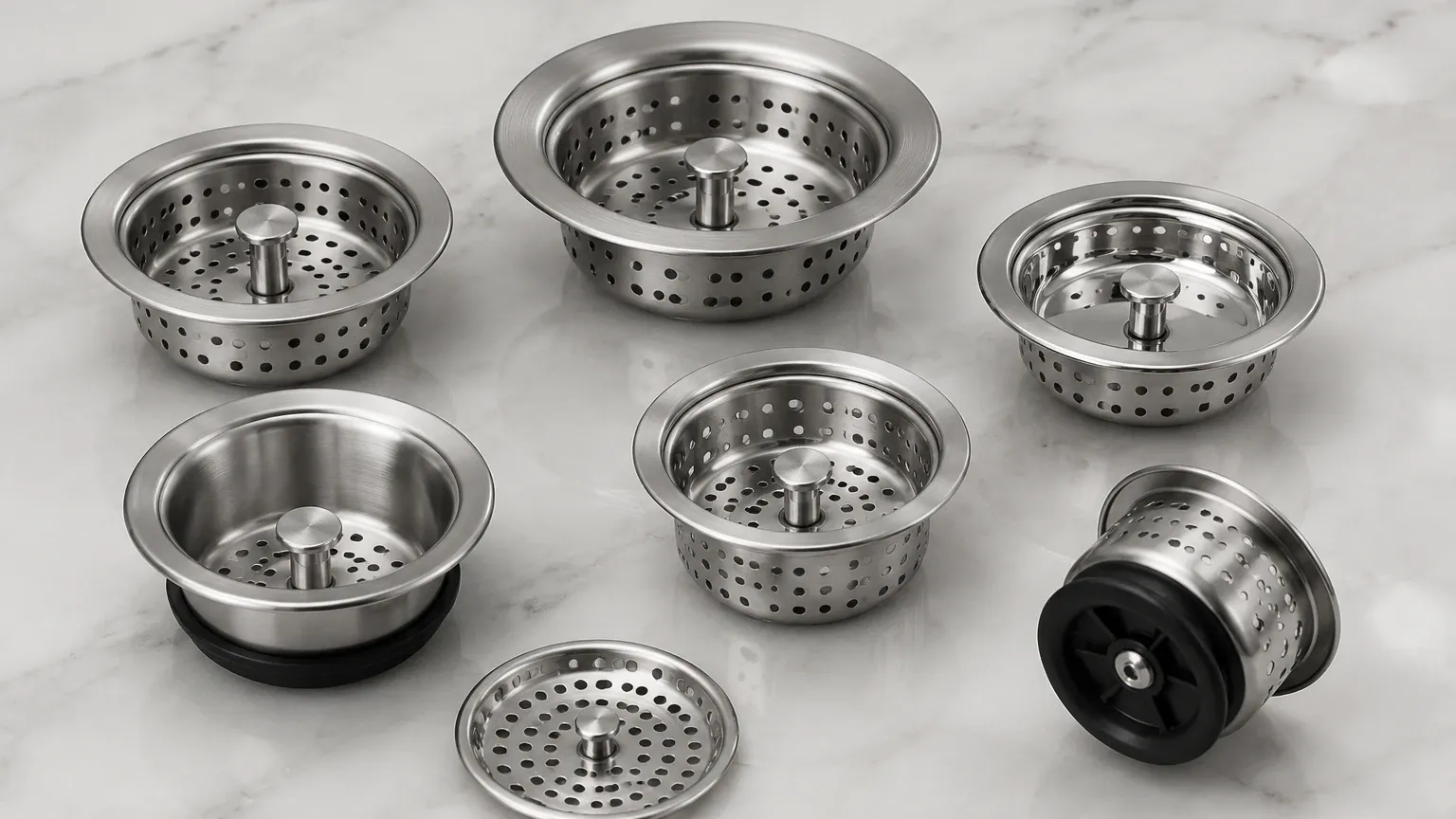
However, in B2B and industrial sectors, the term is a misnomer. While many Strainers & Baskets share common diameters, the internal mechanisms, locking styles, and sealing surfaces vary significantly between manufacturers. A basket from one brand may not seat properly in the flange of another, leading to a failure to hold water or, more critically, allowing debris to bypass the filtration media and enter the downstream piping system.
In industrial processing—such as food production, chemical manufacturing, or pharmaceutical labs—drains and filtration points are often integrated into specialized machinery. These environments rarely adhere to "universal" residential standards, requiring precision-engineered components that match the specific flow rates and chemical exposures of the application.
Standard Dimensions vs. Specialized Industrial Requirements
To determine if a strainer is compatible with a specific system, one must look beyond the primary diameter. Several key dimensions dictate whether a basket will function correctly within its housing:
1. Flange and Drain Opening Diameter
As noted, the 3-1/2 inch opening is the standard for commercial kitchen sinks. However, bar sinks often use a 2-inch or 2-1/2 inch opening, and industrial floor sinks or processing vats may utilize openings ranging from 4 inches to over 10 inches.
2. Seating Depth and Profile
The depth at which the basket sits within the strainer body is critical. If a basket is too shallow, it may not engage with the center post or locking mechanism. If it is too deep, it may obstruct the flow or prevent the sink from draining efficiently. The profile of the seat—whether it is flat, tapered, or o-ring sealed—must match the strainer body exactly to prevent bypass.
3. Center Post and Locking Mechanism
There are three primary types of basket engagement:
* Post-style: A central stem that is pushed down to seal or lifted to drain.
* Twist-and-lock: A mechanism that requires a specific rotation to engage the seal.
* Drop-in: Simple gravity-held baskets used primarily for debris collection rather than fluid retention.
These mechanisms are rarely cross-compatible. A twist-and-lock basket will not function in a post-style housing, reinforcing the fact that sink basket strainers are not truly universal.
Material Engineering: Why Stainless Steel is the Professional Choice
When evaluating are sink basket strainers universal, material composition is as important as physical dimensions. In industrial environments, the "universal" plastic or thin-gauge chrome-plated brass components found in hardware stores are often inadequate.
Professional-grade filtration components, such as those manufactured by Kaifil, prioritize stainless steel for its superior mechanical and chemical properties. The choice between different grades of stainless steel depends on the specific industrial environment:
* Type 304 Stainless Steel: The standard for most food and beverage applications. It offers excellent corrosion resistance and is easy to sanitize, meeting the rigorous hygiene standards of commercial kitchens and food processing plants.
* Type 316 Stainless Steel: Utilized in more aggressive environments, such as chemical processing or marine applications. The addition of molybdenum provides enhanced resistance to pitting and crevice corrosion in chloride-rich environments.
Using a "universal" component made of inferior materials in a high-temperature or chemically active environment can lead to rapid degradation. This not only necessitates frequent replacements but also risks contaminating the process fluid with metallic debris or corrosion byproducts.
Technical Selection Criteria for Strainers & Baskets
Selecting the right filtration component requires an engineering-first approach. Rather than searching for a universal fit, technical professionals should evaluate the following criteria to ensure optimal performance:
Filtration Accuracy (Micron Rating vs. Perforation Size)
Industrial baskets are designed to capture specific particle sizes. A "universal" basket typically features large perforations intended for food waste. In contrast, precision-engineered baskets may utilize fine wire mesh or micro-perforated metal to capture smaller solids that could damage downstream pumps or clog heat exchangers. Determining the required filtration level is the first step in moving away from generic components toward optimized solutions.
Flow Rate and Pressure Drop
Every strainer introduces a degree of flow resistance. In high-volume industrial processes, the open area of the basket must be calculated to ensure it does not cause an excessive pressure drop. A basket with too little open area will clog rapidly, requiring constant maintenance and potentially causing system backups.
Durability and Structural Integrity
In applications involving high-pressure washdowns or heavy debris loads, the basket must maintain its shape under stress. Industrial-grade Strainers & Baskets often feature reinforced rims, heavy-gauge wire mesh, and robust handles designed for repeated removal and cleaning without deformation.
Common Risks of Using Non-Specific Strainers
The temptation to use a "universal" replacement often stems from a desire to reduce costs or simplify procurement. However, the risks associated with improper fit in a B2B context are substantial:
1. Bypass Leakage: If the basket does not seat perfectly, unfiltered fluid can bypass the media. In a hydraulic or cooling system, this allows contaminants to reach sensitive components, leading to catastrophic equipment failure.
2. Incompatibility with Cleaning Protocols: Generic strainers may have "blind spots" or rough welds where bacteria can accumulate. In pharmaceutical or food-grade applications, this can lead to batch contamination and regulatory non-compliance.
3. Mechanical Interference: A basket that is not designed for the specific housing may vibrate or move during operation. This can lead to wear on the housing's sealing surfaces, eventually requiring the replacement of the entire assembly rather than just the basket.
4. Total Cost of Ownership (TCO): While a universal basket may have a lower initial purchase price, its shorter lifespan and the potential for system damage often result in a much higher total cost compared to a custom-engineered, high-quality stainless steel component.
Customization Options for Demanding Industrial Environments
Because the answer to "are sink basket strainers universal" is often "no" in a professional setting, customization becomes the standard path for reliability. Manufacturers like Kaifil specialize in bridging the gap between standard dimensions and unique application needs.
Customization options for industrial strainers include:
* Variable Mesh Sizes: Combining different layers of wire mesh to achieve specific filtration targets while maintaining structural strength.
* Specialized Handle Designs: Long handles for deep vats, magnetic handles for easy retrieval, or locking handles for high-vibration environments.
* Reinforced Structures: Adding internal ribs or external cages to baskets that must withstand high differential pressures.
* Custom Flanges: Engineering the top rim of the basket to fit non-standard or proprietary drain housings found in imported or legacy machinery.
By opting for a customized approach, engineers can ensure that the filtration component is a perfect match for the system's mechanical, thermal, and chemical requirements.
Maintenance and Replacement Cycles
Regardless of whether a strainer is a standard size or a custom design, its performance depends on proper maintenance. In industrial settings, replacement cycles should be determined by the accumulation of debris and the physical condition of the mesh.
Regular inspections should check for:
* Mesh Integrity: Look for tears, fraying, or broken welds in the wire mesh.
* Seal Condition: Inspect any rubber or silicone gaskets for cracking or loss of elasticity.
* Deformation: Ensure the basket still seats squarely in the housing.
High-quality stainless steel strainers are designed for longevity and can often be cleaned and reused for years. However, having a reliable source for exact-specification replacements is critical for minimizing downtime during scheduled maintenance windows.
Conclusion: Making Informed Purchasing Decisions
While the consumer market may suggest that sink basket strainers are universal, the reality for industrial and commercial applications is far more complex. Dimensional variances, material requirements, and mechanical engagement styles mean that "one size fits all" is rarely a viable strategy for professional engineering teams.
When specifying or replacing Strainers & Baskets, the focus should remain on technical compatibility and long-term performance. By understanding the specific needs of the application—from the chemical nature of the fluid to the precise diameter of the drain—procurement professionals can select components that offer reliable filtration, protect downstream equipment, and provide the lowest total cost of ownership.
For those managing complex systems where standard parts fall short, partnering with a manufacturer capable of providing precision-engineered, custom stainless steel solutions is the most effective way to ensure system integrity. In the end, the goal is not just to find a part that fits, but to find a part that performs.
