


Basket Strainer 10 Inch
In large-scale industrial piping systems, the protection of downstream equipment such as pumps, valves, and heat exchangers is a critical engineering priority. A basket strainer 10 inch (DN250) serves as a heavy-duty filtration component designed to remove large volumes of particulate matter from liquid process streams. Unlike smaller inline strainers, a 10-inch system is engineered for high flow rates and high dirt-holding capacity, making it a staple in chemical processing, water treatment, and food production facilities.
Selecting the correct 10-inch basket strainer requires a deep understanding of fluid dynamics, material compatibility, and the specific mechanical stresses associated with large-diameter piping. This guide examines the technical specifications, design variations, and selection criteria essential for engineers and purchasing teams evaluating Strainers & Baskets for industrial applications.
Engineering Fundamentals of 10-Inch Basket Strainers
A 10-inch basket strainer is typically defined by its connection size, which matches a 10-inch nominal pipe size (NPS). At this scale, the volume of fluid being processed is substantial, often reaching several thousand gallons per minute (GPM) depending on the allowable pressure drop. The primary function is to intercept solids while maintaining a low resistance to flow.
Flow Dynamics and Pressure Drop
The "clean pressure drop" is the most important metric when sizing a basket strainer 10 inch. Because these units handle high-velocity flows, an undersized or poorly designed basket can cause a significant drop in system pressure, forcing pumps to work harder and increasing energy costs. Engineers must calculate the Cv value (flow coefficient) to ensure the strainer can handle the maximum flow rate of the system without exceeding the design limits for pressure loss.
Structural Integrity
At the 10-inch scale, the physical weight of the strainer and the internal pressure exerted on the basket are significant. The housing must be constructed to withstand the system's maximum operating pressure, often rated according to ASME B16.5 flange standards (such as Class 150 or Class 300). The basket itself must be reinforced to prevent collapsing or bypassing under the weight of accumulated debris.
Material Selection and Chemical Compatibility
For industrial environments, the choice of material for both the housing and the internal basket is dictated by the chemical nature of the fluid and the operating temperature. Kaifil specializes in stainless steel solutions, which offer superior durability compared to cast iron or carbon steel in corrosive environments.
Stainless Steel 304 vs. 316L
* Stainless Steel 304: Suitable for general industrial water applications, cooling systems, and non-corrosive chemicals. It provides excellent structural strength and moderate corrosion resistance at a cost-effective price point.
* Stainless Steel 316L: The preferred choice for pharmaceutical, food and beverage, and aggressive chemical processing. The addition of molybdenum enhances resistance to pitting and crevice corrosion, particularly in chloride-rich environments.
Gasket and Seal Materials
The performance of a basket strainer 10 inch also depends on the integrity of its seals. Common materials include EPDM for water applications, Viton (FKM) for high temperatures and chemicals, and PTFE for extreme chemical inertness. For food-grade applications, all sealing materials must comply with FDA regulations to ensure process purity.
Design Variations: Simplex vs. Duplex Systems
When integrating a 10-inch strainer into a process line, engineers must decide between a simplex or duplex configuration based on the required system uptime.
Simplex Basket Strainers
A simplex basket strainer 10 inch features a single chamber and basket. This design is ideal for batch processes or systems where the flow can be temporarily shut down to clean or replace the basket. It is more compact and cost-effective but requires a system halt for maintenance.
Duplex (Twin) Basket Strainers
For continuous-flow applications where downtime is not an option, a duplex system is required. This configuration consists of two 10-inch strainer chambers connected by a diverting valve. When one basket becomes clogged, the flow is diverted to the clean chamber, allowing the operator to service the dirty basket without interrupting the process. This is common in cooling water loops for power plants or continuous chemical reactors.
Filtration Accuracy and Basket Construction
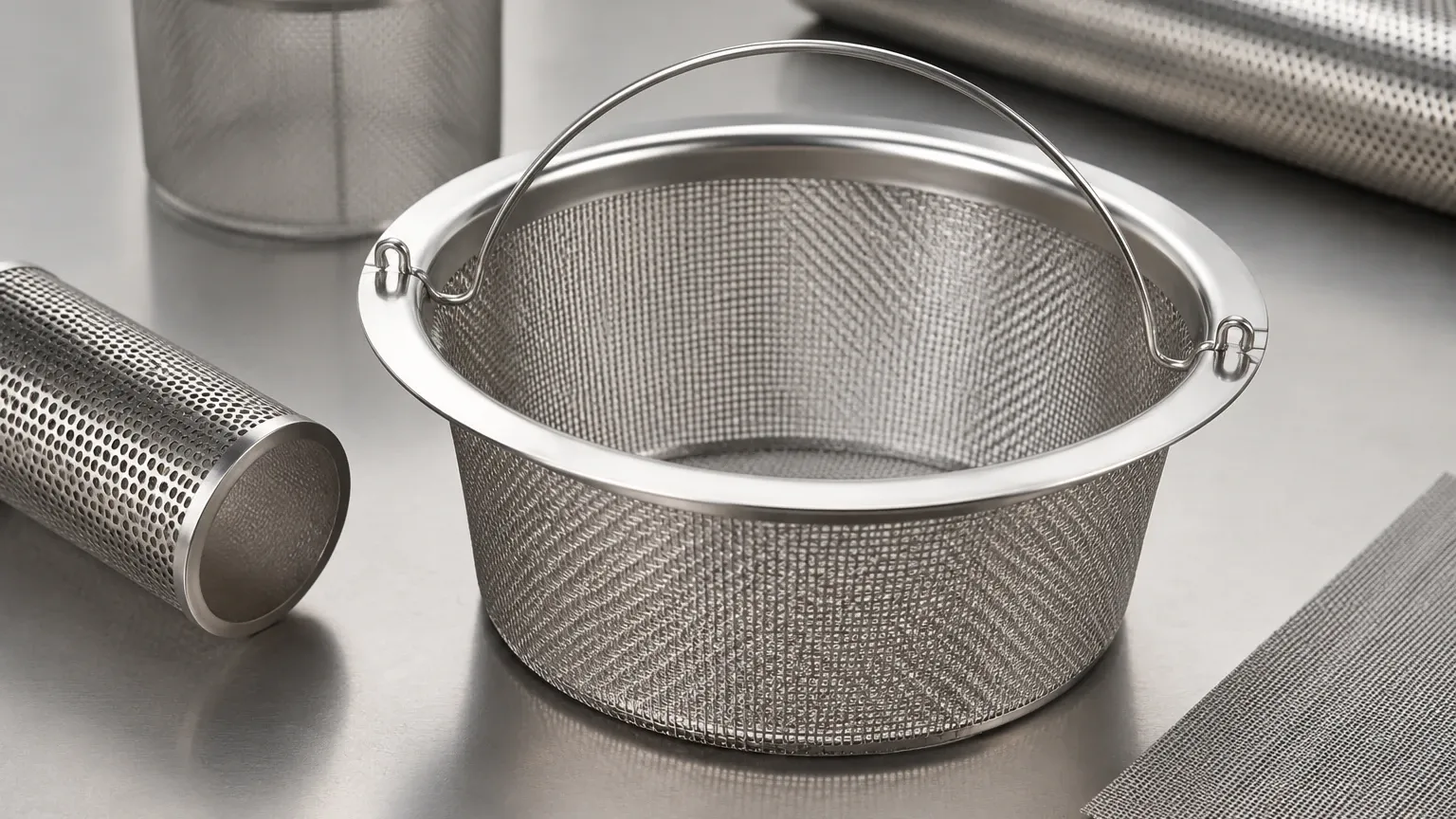
The "basket" is the heart of the strainer. For a 10-inch unit, the basket construction is typically multi-layered to balance filtration fineness with mechanical strength.
Perforated Plates
The outer layer of the basket is usually a heavy-gauge perforated stainless steel plate. This provides the primary structural support. Common hole sizes range from 1/16" to 1/4". For coarse filtration, the perforated plate may be used alone.
Wire Mesh Linings
When finer filtration is required, the perforated basket is lined with a precision stainless steel wire mesh. This allows for filtration down to 20 microns or finer. In a basket strainer 10 inch, the mesh must be securely pleated or bonded to the perforated support to withstand the high differential pressures that occur as the basket fills with contaminants.
Open Area Ratio
A critical engineering specification is the ratio of the basket's open area to the internal cross-sectional area of the 10-inch pipe. A high ratio (typically 6:1 or higher) ensures that the strainer can accumulate a significant amount of debris before the pressure drop becomes critical, thereby extending the interval between cleanings.
Operational Considerations and Maintenance
Maintaining a basket strainer 10 inch involves monitoring the differential pressure across the unit. Most industrial installations utilize differential pressure gauges or sensors to alert operators when the basket is approximately 50% full.
Cleaning Protocols
Because of the size and weight of a 10-inch basket, ease of access is a major design consideration. Quick-opening covers (such as swing-bolt or clamp designs) are often preferred over standard bolted flanges to reduce the time and labor required for maintenance. Once removed, the basket can be cleaned using high-pressure water, steam, or ultrasonic baths, depending on the nature of the contaminants.
Replacement Cycles
While stainless steel baskets are designed for long-term reuse, they are subject to wear. Erosion from abrasive particles or fatigue from pressure fluctuations can eventually lead to mesh failure. Regular inspection of the basket's structural welds and the integrity of the mesh lining is essential to prevent bypass, which could lead to catastrophic failure of downstream equipment.
Customization and OEM Solutions
Standard off-the-shelf strainers may not meet the specific requirements of complex industrial layouts. Customization is often necessary to address unique challenges:
* Custom Flange Orientations: Adjusting the inlet and outlet heights or angles to fit existing piping constraints.
* Specialty Coatings: Applying Halar or epoxy coatings for specialized chemical resistance.
* Magnetic Inserts: Adding magnetic rods to the basket to capture fine ferrous particles that might otherwise pass through the mesh.
* Reinforced Baskets: Designing baskets with extra internal bracing for high-viscosity fluids or high-pressure surge environments.
Kaifil provides comprehensive OEM support, working from engineering drawings to manufacture 10-inch strainers that meet exact site specifications. By controlling the manufacturing process from material selection to final pressure testing, Kaifil ensures that each component performs reliably in demanding industrial environments.
Conclusion
The implementation of a basket strainer 10 inch is a significant investment in the longevity and efficiency of an industrial fluid system. By focusing on high-quality materials, appropriate pressure ratings, and optimized basket designs, facilities can significantly reduce maintenance costs and prevent unplanned downtime. Whether for a simple water intake or a complex chemical process, selecting a robust and well-engineered strainer is the first line of defense in maintaining process integrity.
For technical assistance in selecting the right configuration for your application, or to explore custom manufacturing options, engineers are encouraged to Review product options and application support to ensure their filtration systems meet the highest standards of industrial performance.
