


Basket Strainer Cost
In industrial fluid handling systems, basket strainers serve as a critical line of defense for downstream equipment such as pumps, valves, flow meters, and spray nozzles. While the initial procurement price is a primary concern for purchasing departments, engineers must evaluate the basket strainer cost through the lens of total cost of ownership (TCO). This evaluation includes material selection, pressure ratings, filtration precision, and long-term maintenance requirements. Understanding the technical variables that drive pricing allows for the selection of a filtration solution that balances performance with budgetary constraints.
Factors Influencing the Initial Purchase Price
The primary cost of a basket strainer is determined by its physical construction and the engineering standards it must meet. Several variables contribute to the final quote from a manufacturer.
Material Selection and Metallurgy
The choice of material is perhaps the most significant driver of cost. In many industrial applications, stainless steel is the standard due to its corrosion resistance and durability.
* 304 Stainless Steel: This is often the baseline for industrial strainers. It provides excellent resistance to atmospheric corrosion and many organic and inorganic chemicals. It is generally the most cost-effective stainless option.
* 316/316L Stainless Steel: For environments involving chlorides or more aggressive chemical processing, 316 stainless steel is required. The addition of molybdenum increases corrosion resistance but also raises the material cost by approximately 20% to 40% compared to 304.
* High Alloys: In extreme cases involving highly acidic or high-temperature environments, alloys like Monel, Hastelloy, or Duplex stainless steel may be specified. These materials can increase the basket strainer cost by several multiples compared to standard stainless steel.
Sizing and Pressure Ratings
Basket strainers are sized based on the Nominal Pipe Size (NPS) and the required flow rate. As the size increases, the volume of material and the complexity of the casting or fabrication process grow. Furthermore, the pressure rating (e.g., ASME Class 150, 300, or 600) dictates the wall thickness of the housing and the robustness of the flange connections. A Class 300 strainer will naturally be more expensive than a Class 150 unit of the same pipe size because it requires more heavy-duty construction to safely contain higher internal pressures.
Design Complexity: Simplex vs. Duplex
The configuration of the strainer significantly impacts the price.
* Simplex Strainers: These feature a single basket chamber. They are more affordable but require the system to be shut down or bypassed during cleaning.
* Duplex Strainers: These consist of two separate basket chambers connected by a diverting valve. While the initial Strainers & Baskets cost for a duplex system is substantially higher—often double or triple that of a simplex unit—it allows for continuous operation, which can save thousands of dollars in prevented downtime.
The Impact of Filtration Precision on Cost
The internal basket is the heart of the strainer, and its design directly affects both the initial cost and the operational efficiency of the system.
Perforated vs. Mesh Linings
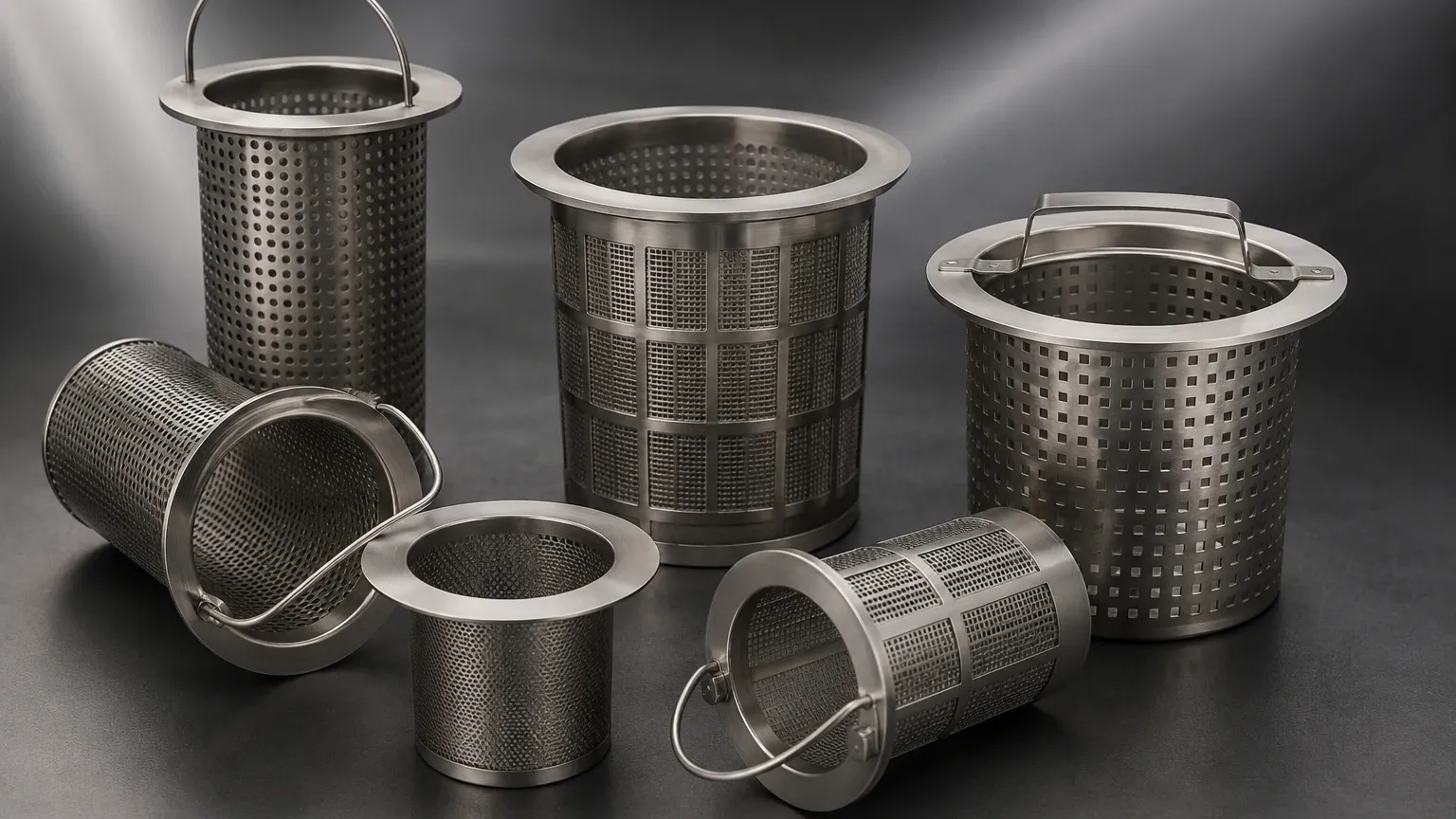
Standard baskets are typically made from perforated sheet metal. The cost is relatively low for standard hole sizes (e.g., 1/8" or 1/16"). However, when finer filtration is required, a wire mesh lining is added to the perforated basket for support.
Fine mesh (measured in microns or mesh count) requires precision weaving and specialized attachment techniques, such as spot welding or silver soldering. As the mesh count increases (meaning the openings become smaller), the cost of the basket rises. Engineers must specify the coarsest mesh possible that still protects downstream equipment to avoid unnecessary expenses and excessive pressure drops.
Open Area Ratio
The ratio of the open area of the basket to the cross-sectional area of the inlet pipe is a critical engineering metric. A higher open area ratio (e.g., 6:1 or 8:1) means the strainer can operate longer before the pressure drop becomes unacceptable. Achieving a high ratio often requires a larger housing or a pleated basket design, both of which increase the manufacturing cost but decrease the frequency of maintenance.
Operational Costs and Total Cost of Ownership
A low purchase price can be deceptive if the unit leads to high operational expenses. When calculating the basket strainer cost over its lifespan, engineers should consider the following factors:
Pressure Drop and Energy Consumption
Every strainer induces a pressure drop ($ΔP$) in the system. If a strainer is undersized to save on initial costs, the resulting high pressure drop forces the system's pumps to work harder. Over several years, the additional electricity required to overcome this resistance can exceed the original cost of the strainer. Selecting a unit with a larger basket area can mitigate these long-term energy costs.
Maintenance and Cleaning Labor
The method of basket access affects labor costs.
* Bolted Covers: These are the least expensive to manufacture but require tools and significant time to open for cleaning.
* Quick-Opening Covers: Features such as swing bolts, yoke covers, or knob-style closures increase the initial price but allow for rapid basket removal. In facilities where strainers must be cleaned daily, the labor savings provided by a quick-opening cover often pay for the price difference within the first year of operation.
Consumables: Gaskets and Seals
The type of seal used between the cover and the housing is an ongoing cost. Standard EPDM or Buna-N gaskets are inexpensive. However, if the process fluid requires Viton, PTFE, or Kalrez seals due to chemical compatibility or high temperatures, the replacement cost for these consumables will be significantly higher. Engineers must confirm that the seal material is compatible with the fluid to prevent premature failure and leakage.
Customization and Engineering Requirements
Custom-engineered filtration solutions often carry a premium but provide specific advantages that standard off-the-shelf units cannot match.
1. Custom Inlet/Outlet Configurations: If a strainer must fit into an existing piping footprint with unconventional offsets, custom fabrication is required.
2. Specialized Coatings: For highly corrosive environments where even stainless steel might struggle, internal linings such as Tefzel or epoxy coatings can be applied.
3. Instrumentation: Integrating differential pressure gauges or electronic sensors to alert operators when the basket is full adds to the cost but prevents equipment damage caused by bypassed or collapsed baskets.
When working with a manufacturer like Kaifil, providing detailed application data—including flow rate, fluid viscosity, operating pressure, temperature, and the nature of the solids being removed—ensures that the quoted basket strainer cost reflects a unit that is fit for purpose without being over-engineered.
Common Risks in Low-Cost Procurement
Choosing a basket strainer based solely on the lowest bid can introduce several risks into an industrial process:
* Material Non-Compliance: Lower-cost units may use sub-standard alloys that do not meet the specified chemical composition, leading to premature pitting or stress corrosion cracking.
* Poor Weld Quality: In fabricated strainers, the integrity of the welds is paramount. Sub-par welding can lead to structural failure under pressure surges.
* Inaccurate Micron Ratings: If the mesh lining is not secured correctly or if the weave is inconsistent, larger particles can pass through the strainer, potentially damaging expensive downstream components like turbine flow meters.
Technical Checklist for Cost Evaluation
Before finalizing a purchase, technical professionals should confirm the following details with their supplier to ensure an accurate cost-to-performance comparison:
* Housing Material: Is it cast or fabricated? Does it meet the required ASTM standards?
* Basket Construction: Is the mesh tack-welded or fully seamed? Is there a reinforced handle for safe removal?
* Pressure Drop Curves: Has the manufacturer provided clean pressure drop data for the specific fluid viscosity of the application?
* Compliance: Does the unit require ASME Section VIII U-Stamp or other regional certifications (e.g., CE/PED)?
* Lead Time: How does the delivery schedule impact the overall project cost? Custom units may have longer lead times but offer better integration.
Conclusion
The true basket strainer cost is a combination of the initial capital expenditure and the long-term expenses related to energy, labor, and replacement parts. By prioritizing high-quality materials like stainless steel and selecting a design that optimizes pressure drop and ease of maintenance, industrial operators can achieve a lower total cost of ownership. Engineering precision during the specification phase ensures that the filtration system provides reliable protection for the entire facility's infrastructure, preventing costly unplanned downtime and equipment repair.
