


Basket Strainer Eaton
In industrial fluid handling, the protection of downstream equipment is a primary engineering concern. Whether managing a chemical processing line, a food production facility, or a hydraulic system, the presence of particulate matter can lead to catastrophic pump failure, clogged nozzles, and compromised product quality. Among the most trusted names in this sector is the basket strainer eaton line, which has set industry benchmarks for durability and flow efficiency. For engineers and procurement specialists, understanding the technical nuances of these systems—and the custom manufacturing options available for replacement components—is essential for maintaining operational uptime.
Industrial Strainers & Baskets serve as the first line of defense in piping systems. Unlike Y-strainers, which are typically used for smaller amounts of particulate, basket strainers are designed for applications where high flow rates and significant debris loading are expected. This article explores the technical specifications, selection criteria, and maintenance considerations for high-performance basket filtration systems.
Technical Overview of Basket Strainer Designs
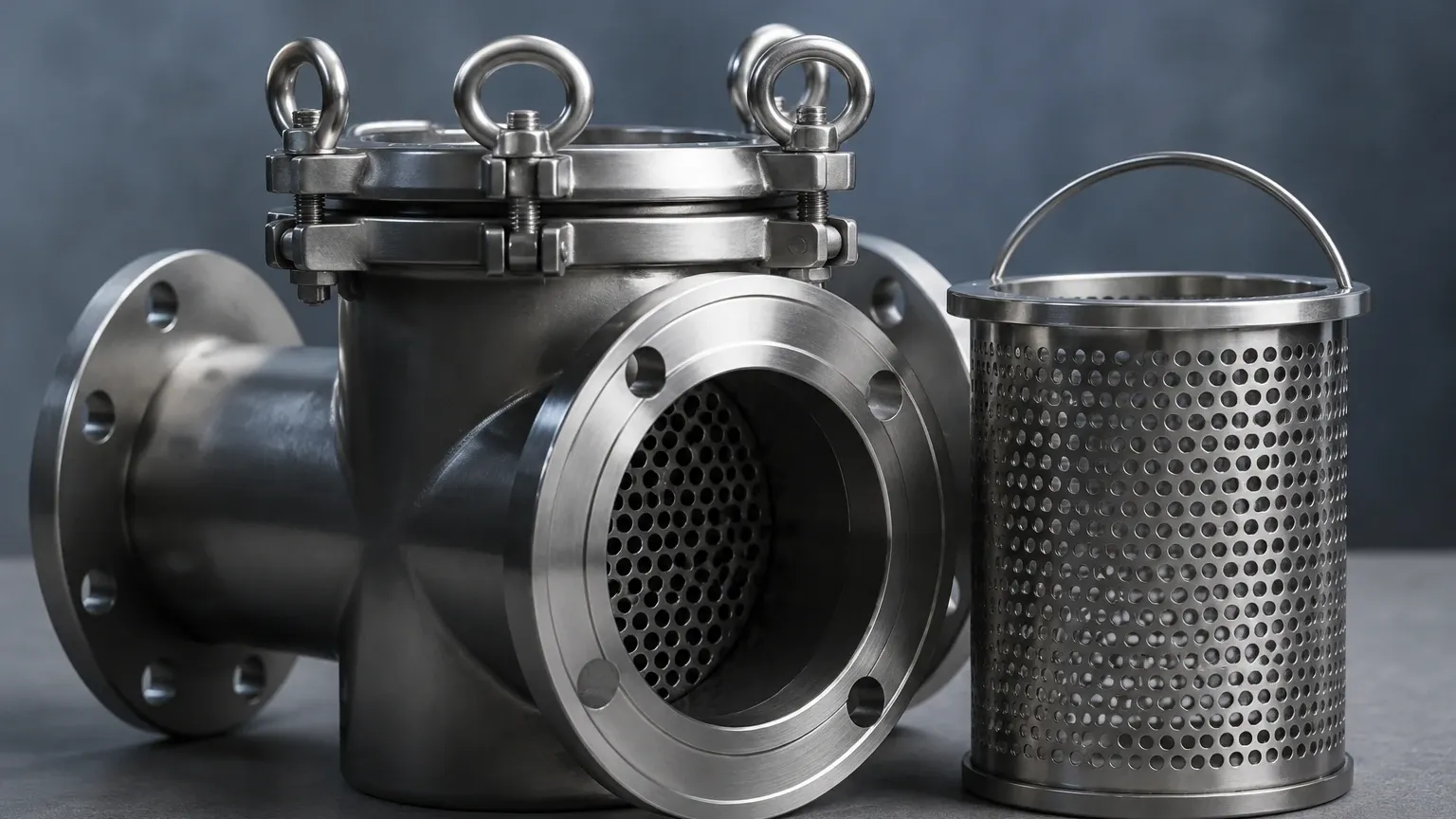
A basket strainer is a closed vessel with a removable screen element that intercepts solids from a flowing liquid. The "basket" geometry is critical because it provides a significantly larger surface area than other strainer types. This increased area translates to a lower pressure drop across the unit and longer intervals between cleaning cycles.
When evaluating a basket strainer eaton model, such as the widely utilized Model 72 or Model 53, engineers typically look at the following mechanical features:
* Cover Design: Quick-opening covers (using swing bolts or threaded caps) are standard for applications requiring frequent cleaning. Bolted covers are reserved for high-pressure environments where a more robust seal is required.
* Housing Materials: Ductile iron, carbon steel, and stainless steel (SS304/SS316) are the primary materials. Stainless steel is often preferred in chemical and pharmaceutical sectors due to its corrosion resistance and ease of sterilization.
* Flow Path: The liquid enters the top of the basket and flows outward through the mesh. This ensures that debris is trapped inside the basket, making it easy to remove and clean without contaminating the downstream line.
Engineering Considerations: Open Area Ratio and Pressure Drop
One of the most critical metrics in filtration engineering is the Open Area Ratio (OAR). The OAR is the relationship between the internal cross-sectional area of the inlet pipe and the total net open area of the strainer basket. A high-quality basket strainer should ideally provide an OAR of at least 6:1. This ensures that even as the basket begins to fill with debris, the pressure drop remains within acceptable limits.
When specifying Strainers & Baskets, engineers must calculate the clean pressure drop based on the fluid's viscosity and specific gravity. High-viscosity fluids, such as oils or syrups, require larger mesh openings or larger strainer housings to prevent excessive resistance. If the pressure drop exceeds the system's design limits, it can lead to cavitation in pumps and reduced flow rates.
Material Selection for Demanding Environments
The longevity of a basket strainer eaton assembly depends heavily on material compatibility. In industrial environments, the choice of stainless steel is often non-negotiable.
1. SS304: Suitable for general industrial use, water treatment, and mildly corrosive environments.
2. SS316/316L: The gold standard for chemical processing and marine applications. The addition of molybdenum provides superior resistance to chlorides and pitting.
3. Specialty Alloys: For highly aggressive acids or high-temperature applications, manufacturers like Kaifil can produce custom baskets using Monel, Hastelloy, or Duplex stainless steel.
Beyond the housing, the mesh lining of the basket must be selected based on the particle size to be removed. Mesh sizes are typically measured in microns or standard mesh counts. A common mistake is selecting a mesh that is too fine, which leads to rapid clogging and frequent maintenance. The rule of thumb is to select a mesh size that is slightly smaller than the smallest particle that could damage downstream equipment.
Simplex vs. Duplex Basket Strainers
The choice between simplex and duplex configurations is dictated by the process's tolerance for downtime.
* Simplex Strainers: These are used in batch processes where the flow can be stopped to clean the basket. They are cost-effective and have a smaller footprint. Many basket strainer eaton simplex models feature a "low profile" design to fit into tight piping configurations.
* Duplex (Twin) Strainers: These consist of two separate strainer chambers connected by a diverter valve. When one basket becomes clogged, the flow is diverted to the clean chamber without interrupting the process. This is essential for continuous operations like cooling water systems or fuel oil lines in power plants.
Customization and OEM Replacement Baskets
While standard housings from major brands are reliable, the internal baskets are often the components that require the most frequent replacement or customization. Industrial applications often demand specific modifications that off-the-shelf products cannot meet.
Custom manufacturers like Kaifil specialize in engineering high-performance Strainers & Baskets that are compatible with existing basket strainer eaton housings. Customization options include:
* Reinforced Baskets: For high-pressure differential applications, baskets can be reinforced with perforated metal backing to prevent mesh collapse.
* Magnetic Inserts: To remove fine iron or steel particles that might pass through a standard mesh, magnetic rods can be integrated into the basket design.
* Multi-Stage Filtration: Baskets can be designed with multiple layers of varying mesh sizes to provide graduated filtration, extending the life of the finest mesh layer.
* Custom Dimensions: For older systems or unique piping layouts where standard replacements no longer fit, custom-fabricated baskets ensure a perfect seal and optimal flow.
Maintenance and Total Cost of Ownership (TCO)
The initial purchase price of a basket strainer eaton is only one part of the total cost of ownership. To maximize ROI, maintenance teams must implement a proactive cleaning schedule.
Differential pressure gauges are the most effective tool for monitoring basket health. A typical recommendation is to clean the basket when the pressure differential reaches 5-10 psi over the clean pressure drop. Waiting too long can cause the basket to rupture or the bypass valve (if equipped) to open, allowing contaminants to flow downstream.
When cleaning, the basket should be inspected for:
* Broken Welds: Especially at the handle or the bottom seam.
* Mesh Integrity: Looking for signs of abrasion or "wire drawing" where the mesh has been stretched.
* Gasket/O-ring Wear: Ensuring the seal between the basket and the housing remains airtight to prevent bypass.
Industry-Specific Applications
Chemical Processing
In this sector, the primary concern is chemical compatibility and pressure ratings. Basket strainers are used to protect expensive flow meters and control valves from pipe scale and undissolved solids. Stainless steel construction is mandatory to prevent contamination and ensure the structural integrity of the vessel.
Food and Beverage
Hygiene is the priority here. Strainers must be designed with "sanitary" features, such as polished internal surfaces and the absence of crevices where bacteria can grow. Many basket strainer eaton models used in food production utilize Tri-Clamp connections for easy removal and cleaning.
Water Treatment
Large-scale water intake systems use basket strainers to remove organic debris, sand, and gravel. In these high-volume applications, the durability of the basket is paramount, as it may be subjected to heavy physical loads from large debris.
Conclusion: Selecting the Right Filtration Partner
Selecting a basket strainer eaton solution involves more than just picking a part number from a catalog. It requires a deep understanding of fluid dynamics, material science, and the specific demands of the process environment. While standard housings provide a robust foundation, the performance of the system often hinges on the quality and design of the internal basket.
For engineers looking to optimize their filtration processes, partnering with a manufacturer that understands both OEM standards and custom engineering requirements is vital. Whether you are replacing a standard basket or designing a completely new filtration stage, focusing on high-quality Strainers & Baskets ensures long-term equipment protection and process efficiency. By considering factors like OAR, material grade, and ease of maintenance, purchasing teams can significantly reduce TCO and prevent costly unscheduled downtime.
