


Basket Strainer Edmonton
In the industrial landscape of Edmonton, where sectors such as oil and gas, petrochemical processing, and heavy manufacturing drive the local economy, the reliability of fluid handling systems is paramount. One of the most critical components in these systems is the basket strainer. Designed to protect downstream equipment like pumps, valves, and heat exchangers from particulate damage, a high-quality basket strainer ensures operational continuity and reduces maintenance overhead. Selecting the right Strainers & Baskets requires a deep understanding of fluid dynamics, material compatibility, and the specific environmental challenges found in the Alberta industrial corridor.
Understanding the Role of Basket Strainers in Industrial Piping
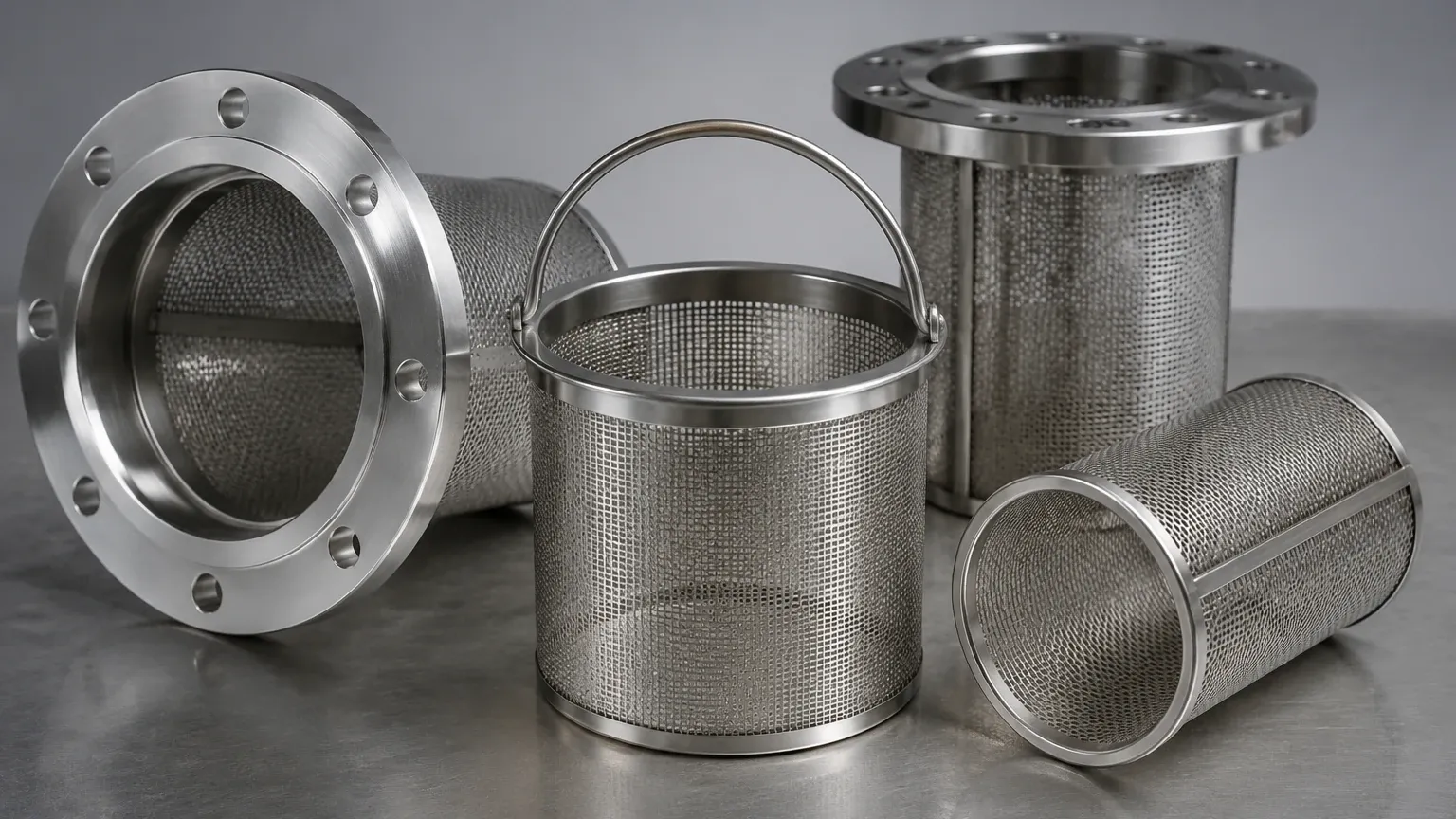
A basket strainer is a closed vessel with a cleanable screen element designed to remove foreign particles from a process line. Unlike Y-strainers, which are often used for smaller amounts of particulate or in steam applications, basket strainers are typically preferred for high-flow systems where a larger holding capacity for debris is required. In the context of a basket strainer Edmonton application, these units are often integrated into large-diameter piping systems where downtime must be minimized.
The primary function is mechanical separation. As fluid enters the strainer housing, it is directed through a perforated or wire mesh basket. The basket captures solids while allowing the cleaned fluid to pass through the outlet. Because basket strainers have a larger surface area than other strainer types, they offer a lower pressure drop and longer intervals between cleanings. This is particularly important in heavy industrial applications where the fluid may carry a significant load of scale, sand, or process by-products.
Key Engineering Considerations for Heavy-Duty Filtration
When specifying a basket strainer for an industrial project, engineers must look beyond basic pipe size. Several technical factors dictate whether a strainer will perform reliably over its service life.
Flow Rate and Pressure Drop
The relationship between flow rate and pressure drop (ΔP) is the most critical calculation in strainer selection. A strainer that is too small for the required flow will cause an excessive pressure drop, forcing pumps to work harder and potentially leading to cavitation or system failure. Conversely, an oversized strainer may be unnecessarily expensive and take up valuable footprint in a facility. Engineers typically aim for a clean pressure drop of less than 2 PSI, allowing for a margin of safety as the basket begins to fill with debris.
Micron Rating and Mesh Selection
The level of filtration required depends entirely on the downstream equipment being protected. For protecting a standard centrifugal pump, a coarse perforated basket might suffice. However, if the strainer is protecting a precision spray nozzle or a sensitive chemical reactor, a fine wire mesh liner (down to 5 or 10 microns) may be necessary. In Edmonton’s diverse industrial sector, requirements range from coarse sand removal in produced water to fine particulate capture in food and beverage processing.
Simplex vs. Duplex Configurations
For systems that can be shut down periodically for maintenance, a simplex basket strainer is the standard choice. However, in continuous-flow environments where the process cannot be interrupted, a duplex strainer—which consists of two strainer chambers connected by a diverter valve—is required. This allows one side to be cleaned while the other remains in operation, ensuring 100% uptime.
Material Selection: Stainless Steel vs. Alloys
The choice of material for both the housing and the internal basket is dictated by the chemical composition of the fluid and the operating temperature. In many Edmonton-based industrial applications, corrosion resistance is a top priority due to the presence of sour gas, acidic chemicals, or harsh environmental conditions.
Stainless Steel 304 and 316
Stainless steel is the industry standard for most basket strainers. Grade 304 offers excellent durability and basic corrosion resistance for water and mild chemical applications. Grade 316, which contains molybdenum, provides superior resistance to chlorides and pitting, making it the preferred choice for chemical processing and more aggressive industrial fluids. Kaifil specializes in manufacturing these components to exacting standards, ensuring that the structural integrity of the basket can withstand the mechanical stresses of high-pressure flow.
Specialty Alloys and Coatings
In extreme cases where standard stainless steel may fail—such as in highly acidic environments or high-temperature steam applications—specialty alloys like Monel, Hastelloy, or Duplex Stainless Steel may be required. Furthermore, the selection of seal materials (O-rings and gaskets) is equally important. EPDM, Viton, and PTFE are commonly used, each offering different levels of chemical compatibility and thermal stability.
Evaluating Performance: Flow Rate and Pressure Drop
To optimize the performance of a basket strainer Edmonton installation, one must consider the "Open Area Ratio" (OAR). The OAR is the ratio of the total open area of the strainer basket to the internal cross-sectional area of the inlet pipe. A higher OAR (typically 6:1 or higher) indicates that the strainer can handle more debris before the pressure drop becomes significant. This directly impacts the maintenance frequency and the overall efficiency of the system.
In cold-weather climates like Alberta, fluid viscosity can change dramatically with temperature. For example, heavy oils or glycol-based fluids will exhibit higher viscosity at lower temperatures, leading to a higher pressure drop across the strainer. Engineers must calculate the maximum expected viscosity to ensure the strainer housing and basket are sized appropriately for year-round operation.
Maintenance Protocols for Industrial Basket Strainers
A basket strainer is only as effective as its maintenance regime. Because these are "passive" components, they can sometimes be overlooked until a problem arises. Proper maintenance involves several key steps:
1. Differential Pressure Monitoring: Installing pressure gauges on both the inlet and outlet sides of the strainer is the most effective way to monitor performance. When the differential pressure reaches a predetermined limit (usually 10-15 PSI), the basket must be cleaned.
2. Safe Venting and Draining: Before opening the strainer housing, the system must be depressurized. Most industrial basket strainers include vent and drain plugs to facilitate this process safely.
3. Basket Inspection: During cleaning, the basket should be inspected for signs of mechanical fatigue, such as broken wire mesh or distorted frames. A compromised basket can allow bypass, defeating the purpose of the strainer.
4. Seal Replacement: Gaskets and O-rings should be inspected every time the housing is opened. Even a minor leak can lead to significant fluid loss or environmental hazards over time.
Customization and OEM Solutions for Specialized Applications
Off-the-shelf strainers do not always meet the unique requirements of complex industrial systems. This is where custom manufacturing becomes essential. For many engineers looking for a basket strainer Edmonton solution, customization might involve specific flange ratings (such as ANSI 150, 300, or 600), non-standard dimensions to fit into existing piping footprints, or specialized internal reinforcements for high-velocity flows.
Kaifil provides comprehensive OEM and customized filtration solutions, working closely with engineering teams to develop Strainers & Baskets that meet precise technical specifications. This includes everything from the selection of the wire mesh weave (plain, twilled, or dutch weave) to the design of heavy-duty support cages that prevent basket collapse under high differential pressure. Customization ensures that the filtration component is an asset to the system's efficiency rather than a bottleneck.
Total Cost of Ownership in Industrial Filtration
When procurement teams evaluate basket strainers, the initial purchase price is often the focus. However, the total cost of ownership (TCO) is a more accurate metric for long-term profitability. TCO includes:
* Initial Cost: The price of the housing and initial baskets.
* Operating Costs: The energy required to overcome the pressure drop created by the strainer.
* Maintenance Costs: The labor and downtime associated with cleaning and replacing baskets.
* Replacement Costs: How often the basket or the entire unit must be replaced due to corrosion or wear.
Investing in a high-quality stainless steel basket strainer from a reputable manufacturer like Kaifil can significantly reduce TCO. Durable materials and precision engineering mean fewer replacements and lower maintenance requirements, which is especially critical in the high-stakes industrial environments of Edmonton. By selecting a strainer designed for the specific rigors of the application, companies can avoid the costly consequences of downstream equipment failure and unplanned outages.
In conclusion, the selection of a basket strainer is a technical decision that impacts the safety, efficiency, and longevity of an entire industrial process. By focusing on material quality, precise engineering calculations, and appropriate maintenance strategies, Edmonton's industrial operators can ensure their systems remain protected against the challenges of particulate contamination.
