


Basket Strainer Garbage Disposal
In industrial fluid management, the concept of a basket strainer garbage disposal system refers to the mechanical separation and removal of solid debris from liquid process streams. While the term is often associated with residential kitchen appliances, in a B2B and engineering context, it describes the critical primary filtration stage where coarse particles are captured to protect downstream equipment. For engineers and facility managers, selecting the right high-performance Strainers & Baskets is essential for maintaining system integrity, preventing pump cavitation, and ensuring the longevity of sensitive instrumentation.
Industrial basket strainers act as the frontline defense in piping systems. Unlike fine filters that target microscopic particulates, these components are designed to handle larger volumes of solids—effectively acting as a "garbage disposal" for the system by trapping waste in a removable basket for easy cleaning and disposal. This article examines the technical engineering considerations, material requirements, and selection criteria necessary for implementing effective straining solutions in demanding industrial environments.
The Engineering Role of Strainers & Baskets in Fluid Handling
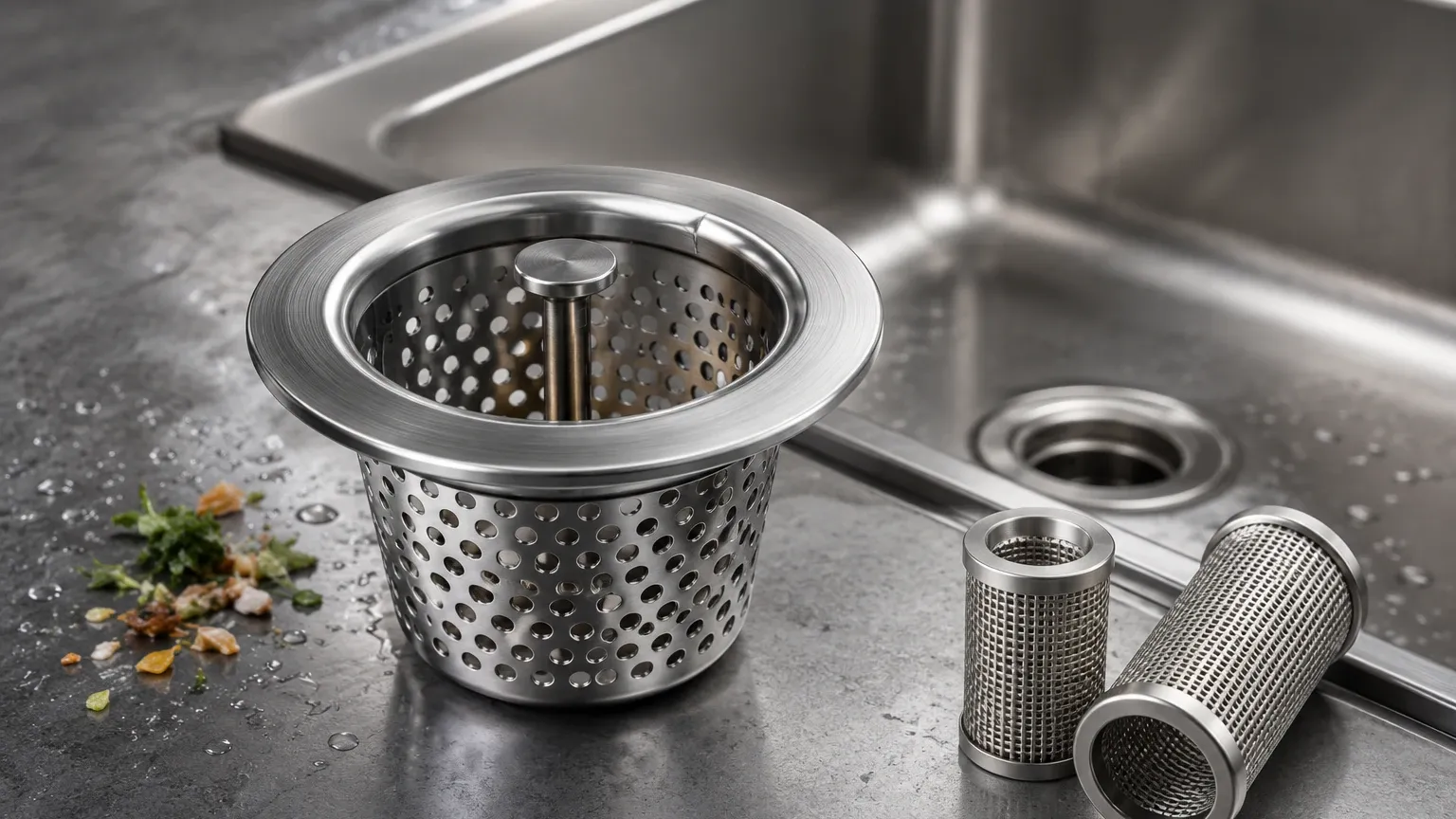
The primary function of a basket strainer is to remove unwanted solids from a liquid medium. This is achieved through a perforated metal or wire mesh basket housed within a pressure vessel. As fluid enters the strainer housing, it is directed into the basket; the liquid passes through the openings while the solids are retained.
In an industrial "basket strainer garbage disposal" application, the design must account for the Open Area Ratio (OAR). The OAR is the relationship between the internal cross-sectional area of the inlet pipe and the total open area of the strainer basket. A high-quality industrial strainer typically offers an OAR of at least 6:1 or 8:1. This ensures that even as the basket begins to fill with debris, the pressure drop (delta P) remains within acceptable limits, preventing flow restriction and potential system failure.
For engineers, understanding the flow dynamics within the strainer is vital. Laminar and turbulent flow patterns can affect how particles settle within the basket. Kaifil specializes in manufacturing custom baskets that optimize these flow paths, ensuring that the "garbage" or debris is distributed evenly, which extends the intervals between necessary maintenance cycles.
Technical Specifications for Industrial Waste Management
When specifying a basket strainer for waste management or debris removal, several technical variables must be analyzed to ensure the component can withstand the operational rigors of the application.
Pressure Ratings and Temperature Limits
Industrial systems often operate under high pressure and extreme temperatures. A basket strainer must be rated for the maximum allowable working pressure (MAWP) of the system. In chemical processing or steam applications, the housing and the internal basket must maintain structural integrity at temperatures exceeding 200°C. Stainless steel is the preferred material for these environments due to its high tensile strength and thermal stability.
Micron and Mesh Sizing
The "filtration accuracy" of a basket strainer is determined by the size of the openings in the basket. This is usually measured in mesh count (number of openings per linear inch) or microns. For a basket strainer garbage disposal role, the mesh is typically coarser than that used in secondary filtration. However, if the system requires the removal of finer particulates, a multi-layer mesh basket—where a fine wire mesh is supported by a heavy-duty perforated metal cylinder—is often employed.
Viscosity Considerations
The viscosity of the fluid significantly impacts the performance of the strainer. Highly viscous fluids, such as oils, resins, or food syrups, require larger basket surface areas and coarser mesh to prevent excessive pressure drops. Engineers must calculate the viscosity-corrected pressure drop to ensure the pump system can handle the resistance provided by the strainer.
Material Selection: Durability in Corrosive Environments
The effectiveness of a basket strainer garbage disposal system is heavily dependent on material compatibility. In industries such as chemical processing, pharmaceutical manufacturing, and food production, the materials must be resistant to corrosion and chemical degradation.
1. 304 Stainless Steel: This is the standard material for most industrial applications. It offers excellent resistance to atmospheric corrosion and is suitable for water treatment and general industrial fluid handling.
2. 316L Stainless Steel: For more aggressive environments, such as those involving chlorides or acidic solutions, 316L is required. The addition of molybdenum provides superior pitting resistance, making it ideal for marine and pharmaceutical applications.
3. Specialty Alloys: In cases where extreme chemical resistance is needed, alloys like Hastelloy or Monel may be used for the internal basket components.
Kaifil’s focus on stainless steel filtration solutions ensures that every basket is manufactured to withstand the specific chemical profile of the process fluid. This durability is critical because a failure in the strainer basket could allow "garbage" to bypass the system, leading to catastrophic damage to downstream pumps, heat exchangers, and spray nozzles.
Customization and OEM Solutions for Specialized Applications
Off-the-shelf filtration products often fail to meet the unique geometric or performance requirements of complex industrial systems. This is where customized Strainers & Baskets become necessary. Customization allows engineers to tailor the strainer to the specific types of solids being handled.
For instance, in a food processing plant, a basket strainer garbage disposal unit might need to capture organic waste while adhering to strict sanitary standards. This requires smooth, crevice-free welds and high-grade surface finishes (such as electropolishing) to prevent bacterial growth.
OEM capabilities allow for the design of baskets with specific handle configurations for easy removal, reinforced bottoms for high-solids loading, and custom flange connections to fit existing piping layouts. By working with a manufacturer like Kaifil, purchasing teams can ensure that the replacement baskets or new installations are engineered for the exact flow rate and particulate size of their specific process.
Operational Efficiency and Total Cost of Ownership (TCO)
While the initial purchase price of a basket strainer is a factor, the total cost of ownership (TCO) is a more accurate measure of value. The TCO includes the cost of downtime, labor for cleaning, and the frequency of basket replacement.
A poorly designed basket strainer garbage disposal system will clog frequently, requiring manual intervention and stopping production. Conversely, a high-capacity basket with a large open area reduces the frequency of cleaning.
Maintenance Indicators
To optimize maintenance, many industrial strainers are equipped with differential pressure gauges. These gauges monitor the pressure at the inlet and outlet. When the pressure difference reaches a predetermined threshold, it indicates that the basket is full of debris and needs to be cleaned. Implementing an automated blow-down system or using a duplex strainer (which allows for cleaning one basket while the other remains in service) can further improve operational efficiency.
Cleaning and Disposal
The ease of cleaning is a hallmark of a well-engineered basket. Quick-opening covers and ergonomic basket handles reduce the time required for waste removal. In heavy-duty applications, the basket must be robust enough to withstand high-pressure washing or chemical cleaning without deforming the mesh or perforation pattern.
Selection Criteria: What Engineers Should Confirm
Before finalizing a purchase for a basket strainer or replacement basket, technical professionals should confirm several key data points with the manufacturer:
* Fluid Characteristics: Confirm the viscosity, density, and chemical composition of the fluid.
* Particulate Profile: Define the size, shape, and concentration of the solids being removed. Is the "garbage" abrasive, fibrous, or gelatinous?
* Flow Parameters: Provide the minimum, normal, and maximum flow rates to ensure the strainer is sized correctly for the velocity of the fluid.
* Connection Standards: Ensure the flange or NPT connections match the existing piping (e.g., ANSI, DIN, or JIS standards).
* Compliance Requirements: Determine if the application requires FDA, 3A, or ASME pressure vessel certification.
By addressing these factors, engineers can select a basket strainer garbage disposal solution that provides reliable protection and minimizes the risk of process interruptions.
Conclusion
In the industrial sector, the basket strainer is more than just a simple mesh bucket; it is a precision-engineered component vital for the health of the entire fluid system. Whether it is protecting a high-pressure pump in a hydraulic system or removing debris in a water treatment plant, the quality of the Strainers & Baskets used will directly impact the efficiency and safety of the operation.
Kaifil’s expertise in custom stainless steel filtration allows for the creation of durable, high-performance straining solutions that meet the specific needs of diverse industries. By focusing on material integrity, precise filtration accuracy, and robust manufacturing, Kaifil helps engineers manage their "basket strainer garbage disposal" needs with confidence and technical precision.
