


Basket Strainer Gutter
In industrial fluid handling and processing, the integrity of downstream equipment depends heavily on the efficiency of primary filtration stages. A basket strainer gutter system serves as a critical frontline defense, capturing solid contaminants before they can reach sensitive pumps, valves, or heat exchangers. Unlike simpler Y-strainers, basket strainers are designed for high-flow applications where a larger debris-holding capacity is required, and the "gutter" or collection channel within the assembly ensures that fluid is directed precisely through the filtration media without bypass.
For engineers and procurement teams, selecting the right Strainers & Baskets involves more than just matching pipe sizes. It requires a deep understanding of fluid dynamics, material compatibility, and the mechanical stresses of the specific application. Whether managing cooling water, chemical reagents, or food-grade liquids, the design of the basket and its housing determines the long-term operational costs and maintenance intervals of the entire system.
Understanding the Role of Basket Strainers in Industrial Drainage Systems
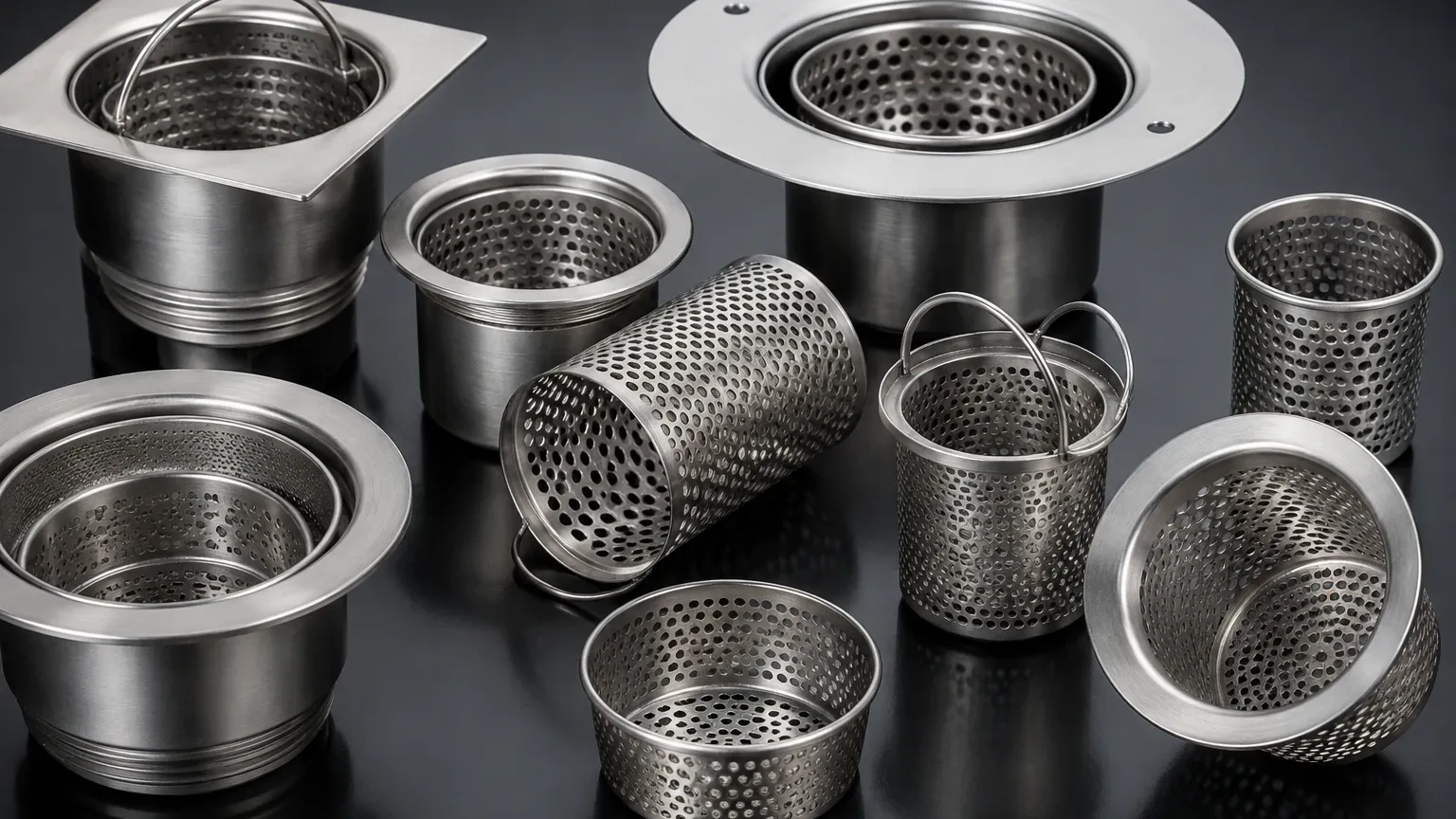
Industrial basket strainers are closed vessels with a removable screen or basket that intercepts particles from a flowing liquid. The term "basket strainer gutter" often refers to the internal geometry or the specific application of these strainers in large-scale drainage and collection systems where high volumes of liquid must be cleared of solids quickly.
The primary advantage of a basket-style design over other filtration methods is the sheer volume of the straining element. Because the basket has a much larger surface area than the cross-section of the inlet pipe, it can accumulate a significant amount of debris before the pressure drop becomes critical. This is particularly important in "gutter" applications—such as floor drainage in processing plants or intake systems from open water sources—where the particle load can be unpredictable and heavy.
Simplex vs. Duplex Configurations
When evaluating a basket strainer gutter setup, the first engineering decision is usually between simplex and duplex designs:
* Simplex Strainers: These are used in systems where the flow can be interrupted for cleaning. The process is shut down, the pressure is relieved, and the basket is removed and emptied.
* Duplex (Twin) Strainers: These consist of two separate strainer chambers connected by a diverting valve. When one basket becomes full, the flow is switched to the other chamber without stopping the process. This is essential for continuous operations where downtime is not an option.
Engineering Considerations for Basket Strainer Gutter Performance
To ensure a basket strainer performs reliably, several technical parameters must be calculated during the design phase. These factors influence not only the filtration accuracy but also the energy efficiency of the pumping system.
The Open Area Ratio (OAR)
The Open Area Ratio is the relationship between the internal cross-sectional area of the inlet pipe and the total net open area of the strainer basket. A common industrial standard is an OAR of at least 6:1. A higher ratio means the strainer can operate longer between cleanings and will result in a lower initial pressure drop. In a basket strainer gutter application, where flow rates may surge, a high OAR is vital to prevent cavitation in downstream pumps.
Pressure Drop ($ΔP$)
Every filter introduces a resistance to flow, known as pressure drop. Engineers must account for the "clean" pressure drop (the resistance of the housing and a new basket) and the "dirty" pressure drop (the point at which the basket must be cleaned). Typically, a basket should be cleaned or replaced when the differential pressure reaches 5 to 10 psi. If the $ΔP$ exceeds the structural limits of the basket, the mesh may collapse, leading to catastrophic system failure and downstream contamination.
Material Selection for High-Durability Filtration
The choice of material for both the housing and the basket is dictated by the chemical nature of the fluid and the operating temperature. Stainless steel is the industry standard for most high-performance applications due to its mechanical strength and resistance to oxidation.
1. SS304: Suitable for general-purpose applications, including water treatment and food processing where mild corrosion resistance is required.
2. SS316/316L: Contains molybdenum, which provides superior resistance to chlorides and acids. This is the preferred choice for chemical processing, marine environments, and pharmaceutical production.
3. Specialty Alloys: For highly aggressive environments, materials like Monel, Hastelloy, or Duplex Stainless Steel may be used to prevent pitting and stress corrosion cracking.
At Kaifil, the focus remains on precision-engineered stainless steel components. Utilizing high-grade alloys ensures that the basket strainer gutter remains structurally sound even under the abrasive forces of high-velocity particulate flow.
Applications Across Critical Industrial Sectors
Basket strainers are versatile components found in almost every industry that moves liquid through pipes. Their ability to be customized with different mesh sizes—from coarse perforated plate to fine Dutch weave wire mesh—makes them adaptable to various needs.
Chemical and Petrochemical Processing
In these sectors, strainers protect expensive catalysts and prevent clogging in spray nozzles. The basket strainer gutter must be able to withstand volatile organic compounds (VOCs) and extreme pH levels. Precision-welded baskets ensure that no bypass occurs at the flange interface.
Food and Beverage Production
Sanitary basket strainers are designed with polished surfaces to prevent bacterial growth. They are used to remove pulp from juices, seeds from preserves, or charred particles from cooking oils. These units often feature "gutter" style drainage ports to allow for easy Clean-in-Place (CIP) procedures.
Power Generation and Cooling Towers
Large-scale cooling systems often draw water from rivers or lakes. A basket strainer gutter system at the intake prevents aquatic life, leaves, and trash from entering the cooling loops. Given the massive flow rates in power plants, these baskets are often reinforced with heavy-duty perforated backing to support the finer filtration mesh.
Optimizing Flow and Reducing Pressure Drop
The internal geometry of the strainer housing plays a significant role in how fluid moves through the basket. A well-designed "gutter" or flow path minimizes turbulence. Turbulence not only increases pressure drop but can also cause vibration, which leads to fatigue in the wire mesh over time.
To optimize flow, engineers often look at the entrance and exit angles of the housing. A tangential inlet can help distribute the fluid more evenly around the circumference of the basket, preventing a single "hot spot" of debris accumulation. This even distribution extends the life of the basket and makes the cleaning process more effective, as the debris is not compacted into one specific area of the mesh.
Customization and OEM Solutions for Specialized Requirements
Off-the-shelf strainers often fail to meet the specific spatial or performance constraints of complex industrial skids. Customization is frequently necessary to ensure the basket strainer gutter fits within existing piping layouts or meets specific micron rating requirements.
Tailored Basket Designs
Baskets can be customized in several ways:
* Slanted or Inclined Baskets: For applications with space constraints, slanted baskets can provide a larger surface area within a shorter housing.
* Magnetic Inserts: For systems handling lubricating oils or hydraulic fluids, magnetic rods can be placed inside the basket to capture fine ferrous particles that might pass through standard mesh.
* Reinforced Structures: For high-pressure applications, baskets are built with a "cage" of perforated metal to support the finer wire cloth, preventing deformation under high differential pressure.
Handle and Lifting Mechanisms
In large-scale industrial settings, a full basket can be extremely heavy. Custom handles, lifting lugs, or even davit covers (for the housing lid) are essential for operator safety and efficient maintenance. These ergonomic features reduce the time required for a "basket swap," minimizing process interruption.
Maintenance and Operational Longevity
The total cost of ownership for a basket strainer is determined by its maintenance requirements. A stainless steel basket is a sustainable choice because it is washable and reusable, unlike disposable cartridge filters. However, a strict maintenance protocol is required to maximize its lifespan.
Cleaning Procedures
When the differential pressure indicates a clog, the basket should be removed and cleaned using a soft brush or high-pressure water spray. It is important to clean from the "clean side" to the "dirty side" (backwashing) to dislodge particles trapped in the mesh. Harsh chemical cleaners should only be used if they are compatible with the stainless steel grade and the gaskets (EPDM, Viton, or PTFE) used in the housing.
Inspection for Wear
Regular inspections should check for:
* Wire Fraying: Especially in high-vibration environments.
* Gasket Integrity: A worn seal at the basket flange will allow fluid to bypass the filter entirely.
* Corrosion Pitting: Even stainless steel can succumb to localized corrosion if the fluid chemistry changes or if stagnant pockets are allowed to form.
By selecting high-quality Strainers & Baskets, facilities can significantly reduce the risk of equipment damage. The integration of a robust basket strainer gutter system ensures that fluid systems remain clean, efficient, and operational, providing a reliable solution for even the most demanding industrial environments.
