


Basket Strainer Kitchen Sink Replacement
In industrial and commercial environments, the efficiency of a drainage system is often dependent on the smallest components. A basket strainer serves as the primary line of defense for plumbing infrastructure, capturing solids and debris before they can cause downstream blockages or damage to grease traps and wastewater treatment systems. When performance degrades, a basket strainer kitchen sink replacement becomes a technical necessity to maintain operational hygiene and prevent costly facility downtime. For engineers and facility managers, selecting the correct replacement involves more than simply matching dimensions; it requires an understanding of material science, fluid dynamics, and mechanical sealing.
The Role of High-Performance Strainers in Industrial Environments
While residential strainers focus primarily on aesthetics and basic functionality, industrial-grade Strainers & Baskets are engineered for durability and high-volume throughput. In commercial kitchens, food processing plants, and laboratory settings, these components are exposed to corrosive cleaning agents, high-temperature liquids, and constant mechanical stress.
The primary function of the basket strainer is to separate solids from the liquid stream. This is achieved through a perforated or mesh-lined basket that allows water to pass while retaining food particles, metal shavings, or other debris. A failure in this component can lead to clogged pipes, foul odors, and non-compliance with local wastewater regulations. Therefore, understanding the engineering specifications of a replacement unit is critical for maintaining a reliable filtration system.
Key Indicators for Basket Strainer Kitchen Sink Replacement
Identifying the right time for a replacement can prevent emergency repairs. In a B2B context, proactive maintenance is always more cost-effective than reactive fixes. Several technical indicators suggest that a basket strainer has reached the end of its service life:
1. Persistent Leaks at the Flange
The interface between the sink and the strainer body is sealed with gaskets or specialized compounds. Over time, thermal expansion and contraction, combined with chemical exposure, can degrade these seals. If tightening the locknut does not resolve a leak, the housing or the seating surface may be warped, necessitating a full replacement.
2. Material Corrosion and Pitting
In environments using harsh disinfectants or processing acidic foods, lower-grade metals will eventually succumb to pitting corrosion. Pitting creates small holes that can harbor bacteria, compromising the sanitary integrity of the sink. Stainless steel components that show signs of rust or surface degradation should be replaced with high-grade AISI 304 or 316 alternatives.
3. Mechanical Failure of the Stopper or Linkage
Commercial strainers often feature heavy-duty stoppers or remote-control cable systems. If the internal mechanism fails to provide a watertight seal or if the basket no longer sits securely in the housing, the efficiency of the sink is compromised. This often occurs due to the accumulation of mineral scale or physical wear on the moving parts.
4. Reduced Flow Rates
If a basket strainer is consistently causing slow drainage even when clean, it may be due to an improper mesh size for the specific application. A basket strainer kitchen sink replacement offers the opportunity to upgrade to a design with a higher open-area percentage, improving flow rates without sacrificing filtration accuracy.
Material Selection: Engineering for Durability
When sourcing a replacement, material selection is the most significant factor in determining the component's lifespan. Stainless steel is the industry standard for industrial filtration and drainage due to its inherent strength and resistance to oxidation.
* Type 304 Stainless Steel: This is the most common grade used in commercial kitchen applications. It offers excellent resistance to water and standard cleaning chemicals. It is durable enough for most food service and light industrial applications.
* Type 316 Stainless Steel: For environments involving high salt concentrations, strong acids, or pharmaceutical processing, 316 stainless steel is preferred. The addition of molybdenum enhances its resistance to chloride-induced pitting, making it essential for harsh chemical environments.
* Electropolished Finishes: For high-hygiene applications, an electropolished finish reduces surface roughness. This prevents organic matter from adhering to the metal, making the basket easier to clean and reducing the risk of biofilm formation.
Technical Specifications for Proper Fit and Performance
To ensure a successful basket strainer kitchen sink replacement, several technical dimensions and specifications must be verified. A mismatch in sizing can lead to improper sealing and mechanical instability.
Sink Opening Diameter
Most commercial sinks feature a standard 3-1/2 inch (approx. 89mm) or 4-inch opening. However, custom industrial sinks may have non-standard apertures. It is vital to measure the internal diameter of the sink drain hole precisely before ordering a replacement.
Flange Thickness and Depth
The thickness of the sink material (e.g., 14-gauge vs. 18-gauge stainless steel) affects how the strainer sits. A deep-cup design is often required for thicker sinks or those with integrated insulation. Ensuring the strainer housing is deep enough to accommodate the locking nut and the tailpiece connection is a common oversight in procurement.
Filtration Accuracy (Perforation and Mesh)
The "basket" portion of the strainer can be manufactured with various filtration levels.
* Perforated Metal: Ideal for large debris. Typical hole sizes range from 1mm to 5mm. Perforated baskets are structurally robust and easy to clear.
* Wire Mesh Liners: For applications requiring the capture of finer particles (such as coffee grounds or fine sediment), a wire mesh liner can be integrated into the basket. This provides a much higher level of filtration but requires more frequent cleaning to prevent flow restriction.
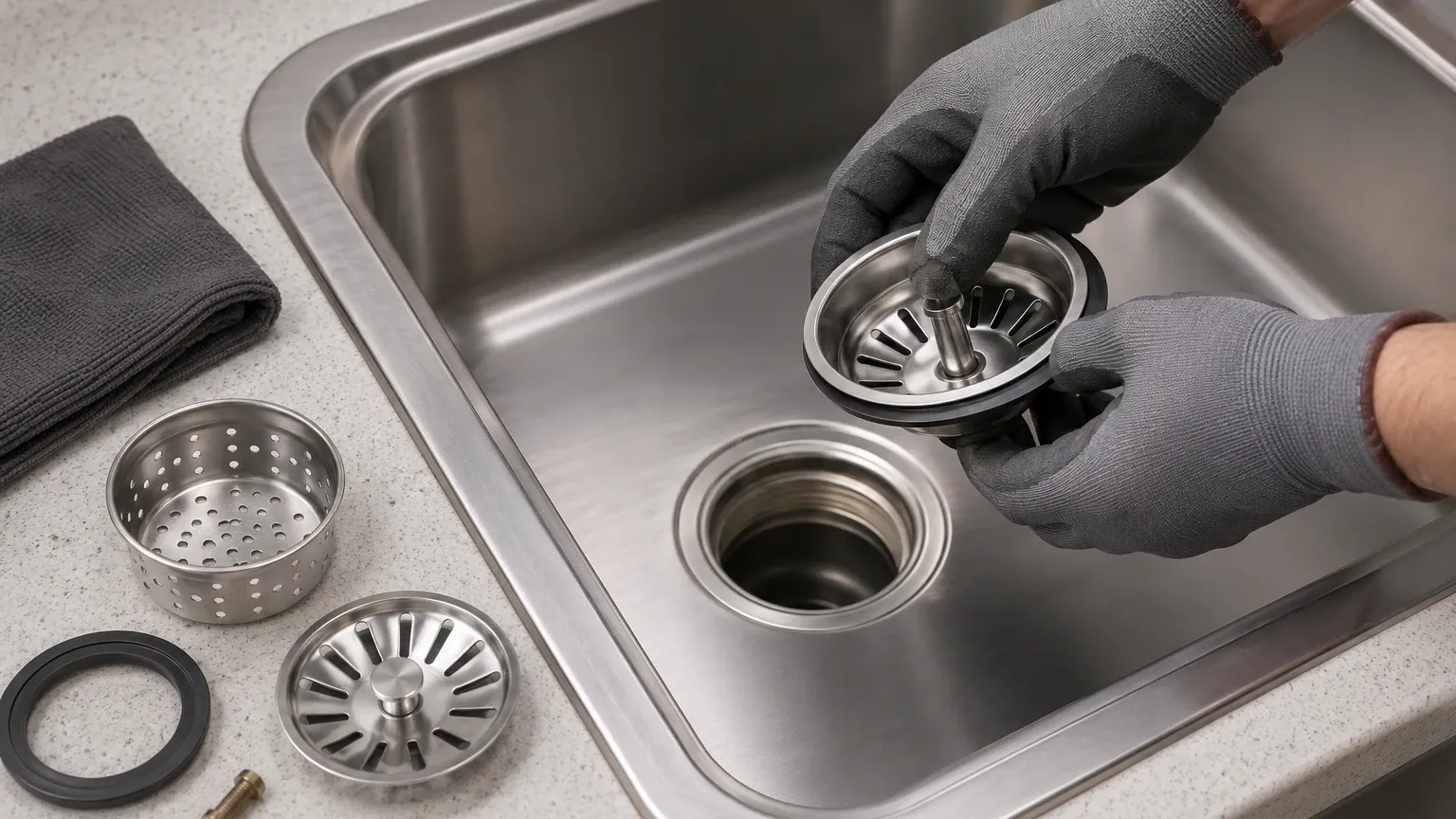
Installation Best Practices for Industrial Applications
Installing a replacement basket strainer in a professional setting requires precision to ensure a long-term, leak-free seal. Unlike residential installations that may rely solely on plumber's putty, industrial applications often benefit from high-performance gaskets.
1. Surface Preparation: The sink's drain area must be completely free of old putty, silicone, and debris. Any irregularities on the surface can prevent a proper seal.
2. Gasket Selection: Use EPDM or silicone gaskets for superior chemical and thermal resistance. In high-temperature environments, ensure the gasket material is rated for the maximum expected fluid temperature.
3. Torque Application: The locknut must be tightened sufficiently to compress the gaskets and create a mechanical bond, but over-tightening can deform the sink or crack the strainer housing. Using a dedicated basket strainer wrench is recommended for applying even pressure.
4. Tailpiece Integration: The connection to the P-trap or waste line must be aligned perfectly. Stress on the tailpiece connection can transfer to the strainer body, leading to premature seal failure.
Optimizing Lifecycle and Maintenance of Strainers & Baskets
Once a basket strainer kitchen sink replacement is complete, a maintenance schedule should be established to maximize the component's ROI. In a B2B environment, the goal is to extend the replacement cycle through proper care.
* Daily Cleaning: Baskets should be emptied and rinsed daily. For grease-heavy environments, an alkaline degreaser may be necessary to prevent the mesh from blinding.
* Inspection of Seals: Monthly inspections should check for signs of moisture around the locknut and the tailpiece. Early detection of a weeping seal can prevent water damage to the surrounding structure.
* Avoidance of Harsh Abrasives: While stainless steel is tough, using steel wool or highly abrasive pads can scratch the surface, creating microscopic grooves where bacteria and minerals can accumulate.
The Advantage of Custom Manufactured Filtration Solutions
Standard off-the-shelf strainers may not suffice for specialized industrial equipment or unique architectural sink designs. This is where custom manufacturing becomes essential. Companies like Kaifil specialize in producing precision-engineered filtration components that meet specific operational requirements.
Customization options often include:
* Variable Mesh Counts: Tailoring the filtration level to the specific waste profile of the facility.
* Reinforced Structures: For high-pressure or high-impact environments where standard baskets might collapse or deform.
* Specialized Alloys: Utilizing exotic metals for extreme chemical compatibility.
* OEM Compatibility: Manufacturing replacement parts that fit legacy equipment where original manufacturer parts are no longer available.
By choosing a manufacturer-direct solution for Strainers & Baskets, procurement teams can ensure they receive components that adhere to strict quality control standards. This direct relationship also allows for technical consultation, ensuring that the replacement part is an upgrade over the original equipment rather than just a functional equivalent.
Conclusion
A basket strainer kitchen sink replacement is a critical maintenance task that impacts the overall efficiency of an industrial facility's plumbing and filtration system. By focusing on high-grade stainless steel materials, precise technical specifications, and professional installation techniques, facility managers can significantly reduce the risk of leaks and clogs. Whether you are managing a commercial kitchen, a laboratory, or a processing plant, investing in quality filtration components ensures long-term operational stability and protects your infrastructure from the costs of neglect.
