


Basket Strainer Manufacturer
In industrial fluid handling systems, the protection of downstream equipment—such as pumps, valves, flow meters, and heat exchangers—is a critical engineering priority. Debris, scale, and particulate matter can cause catastrophic mechanical failure or significant downtime. This is where the expertise of a professional basket strainer manufacturer becomes essential. Unlike standard off-the-shelf components, industrial-grade strainers and baskets must be engineered to withstand specific pressure differentials, flow rates, and chemical environments.
Selecting the right manufacturer involves more than comparing price points; it requires an evaluation of engineering capabilities, material science knowledge, and the ability to provide customized solutions that align with complex system requirements. This guide explores the technical considerations and quality benchmarks necessary when sourcing these vital filtration components.
The Role of a Basket Strainer Manufacturer in Industrial Systems
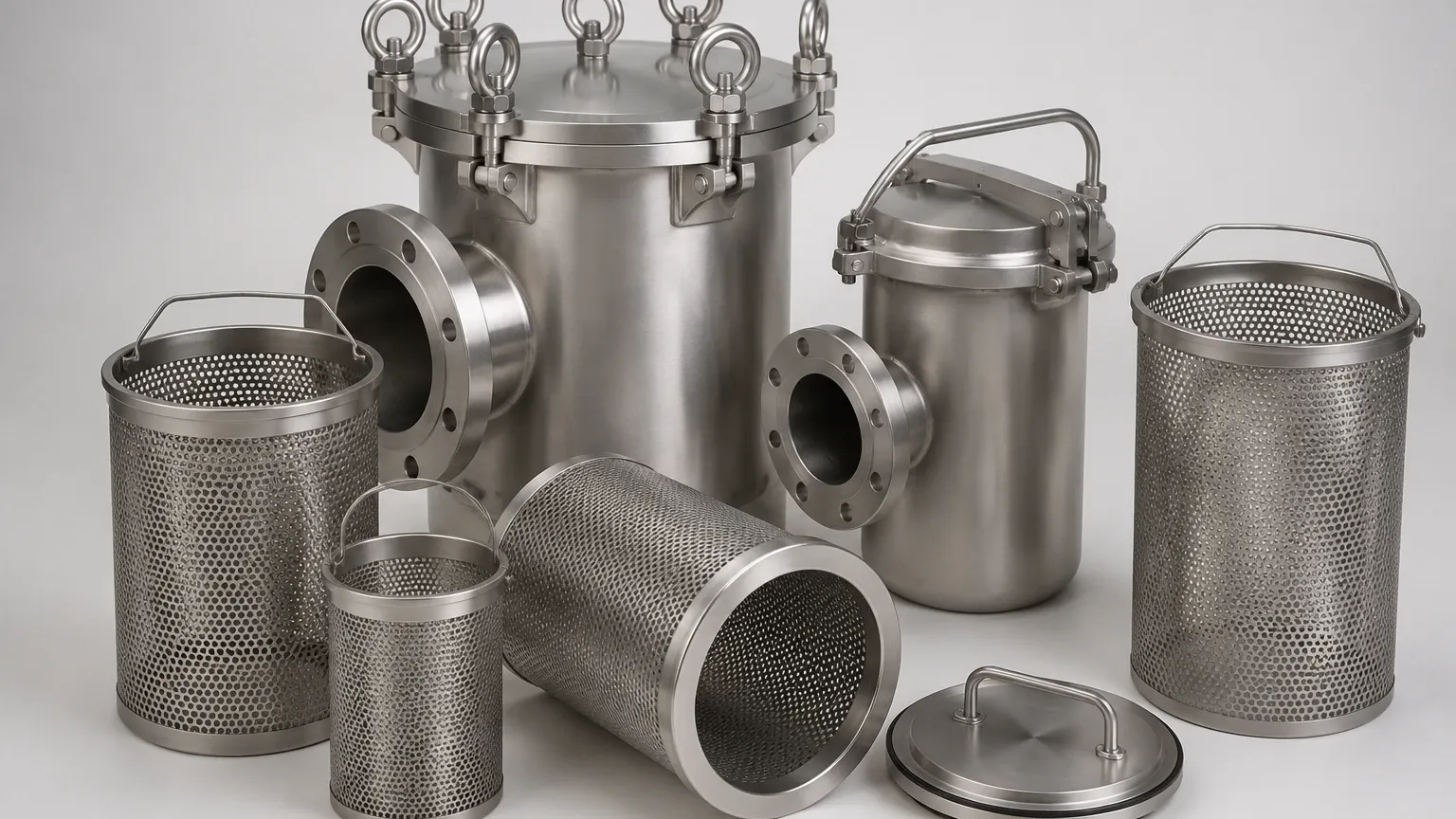
A basket strainer is a closed vessel with a removable screen or basket designed to remove large particles from a process fluid. While the concept is simple, the execution requires precision engineering. A specialized manufacturer does not merely produce a container; they design a hydraulic component that must balance filtration efficiency with system performance.
In sectors like chemical processing, water treatment, and food and beverage production, the basket strainer acts as the first line of defense. A manufacturer must account for the specific gravity of the fluid, the nature of the contaminants (fibrous, abrasive, or gelatinous), and the required flow velocity. By working with a dedicated basket strainer manufacturer, engineers can ensure that the internal basket geometry is optimized to minimize pressure drop while maximizing the dirt-holding capacity.
Technical Specifications and Material Selection
Material compatibility is perhaps the most significant factor in the longevity of Strainers & Baskets. Industrial environments often involve corrosive fluids or extreme temperatures that would degrade standard carbon steel or low-grade alloys.
Stainless Steel Grades
Most high-performance industrial baskets are manufactured from stainless steel, specifically Grade 304 or Grade 316.
- SS304: Suitable for general-purpose applications, providing excellent strength and basic corrosion resistance for water and mild chemical service.
- SS316/316L: Contains molybdenum, which significantly enhances resistance to chlorides and pitting. This is the standard for marine environments, pharmaceutical production, and aggressive chemical processing.
Specialty Alloys
For highly specialized applications involving concentrated acids or high-temperature steam, manufacturers may utilize exotic alloys like Monel, Hastelloy, or Inconel. A competent manufacturer provides material certifications (MTRs) to verify that the alloy used meets the chemical and physical requirements of the project.
Understanding Filtration Efficiency: Mesh, Micron, and Open Area
The performance of a basket strainer is defined by its ability to capture particles of a specific size without obstructing flow. Engineers must navigate the relationship between mesh count, micron rating, and the open area ratio.
Mesh vs. Micron
- Mesh Count: Refers to the number of openings per linear inch. A higher mesh count indicates a finer screen.
- Micron Rating: Defines the actual size of the particles that the screen will intercept.
A manufacturer must be able to provide multi-layered baskets where a fine wire mesh is supported by a heavy-duty perforated metal backing. This "dual-media" approach ensures that the fine filtration layer does not collapse under the pressure of the fluid flow.
The Open Area Ratio (OAR)
One of the most overlooked metrics in strainer selection is the Open Area Ratio. This is the ratio between the total area of the openings in the basket and the cross-sectional area of the inlet pipe. A high-quality manufacturer typically aims for an OAR of at least 6:1 or 8:1. A higher ratio means the strainer can operate longer before the pressure drop (Delta P) reaches a critical level, thereby extending the maintenance interval.
Customization Capabilities for Specialized Applications
Standard catalog items rarely meet the nuances of complex industrial piping. Customization is where a manufacturer proves their value. Engineering teams often require specific modifications to ensure seamless integration into existing infrastructure.
Structural Customization
- Handle Designs: For large-scale industrial baskets, ergonomic handles or lifting lugs are necessary for safe removal during cleaning.
- Reinforced Bottoms: In high-velocity systems, the bottom of the basket is subject to the most stress. Manufacturers can add reinforced plates or double-stitching to prevent structural failure.
- Flange and Connection Types: Whether the system requires NPT threads, ANSI flanges, or sanitary Tri-clamp fittings, the manufacturer must provide precise tolerances to prevent leaks.
OEM and Bespoke Designs
Original Equipment Manufacturers (OEMs) often require baskets that fit into proprietary housings. A manufacturer with in-house design and prototyping capabilities can produce small batches of custom-dimensioned baskets that meet specific filtration profiles, ensuring that the end-user’s equipment operates at peak efficiency.
Evaluating Manufacturing Quality and Performance Metrics
The integrity of a basket strainer is determined by the quality of its construction, particularly the welding and assembly methods. Poorly manufactured baskets often fail at the seams or the interface between the mesh and the support frame.
Welding and Joining
In industrial filtration, TIG (Tungsten Inert Gas) welding or plasma welding is preferred over standard spot welding. These methods provide a cleaner, stronger bond that resists vibration and thermal expansion. For pharmaceutical or food-grade applications, the welds must be ground smooth and passivated to eliminate any crevices where bacteria could proliferate.
Pressure Drop (Delta P) Testing
A reliable manufacturer provides data on the clean pressure drop across their strainer designs. This allows engineers to calculate the total system head loss and ensure that pumps are appropriately sized. If the initial pressure drop is too high, it indicates that the basket design is restrictive, which will lead to increased energy consumption and frequent cleaning cycles.
Maintenance and Operational Longevity
The total cost of ownership (TCO) for a strainer system is heavily influenced by how easily the baskets can be maintained. A manufacturer who understands the operational reality of a plant will design baskets for quick servicing.
Cleaning Cycles
Baskets should be designed to be easily cleaned via backwashing or manual rinsing. If the mesh is too delicate, it may be damaged during high-pressure cleaning. Conversely, if the design is too complex, trapped debris can become a permanent fixture, reducing the effective filtration area over time.
Replacement Schedules
While stainless steel baskets are durable, they are eventually subject to wear, especially in abrasive slurry applications. A manufacturer should maintain detailed records of custom designs so that replacement baskets can be ordered and shipped with minimal lead time, preventing extended system outages.
Engineering Considerations for Sizing and Selection
When consulting with a basket strainer manufacturer, engineers should be prepared to provide the following data points to ensure the correct component is specified:
1. Fluid Properties: Viscosity, density, and chemical composition.
2. Flow Rate: Minimum, normal, and maximum flow (GPM or m³/h).
3. Operating Pressure and Temperature: Both the steady-state and potential surge conditions.
4. Allowable Pressure Drop: The maximum Delta P the system can tolerate before cleaning is required.
5. Particle Characteristics: The size, shape, and concentration of the solids to be removed.
By providing this data, the manufacturer can recommend the optimal combination of perforated metal, wire mesh, and structural reinforcement.
Conclusion
Choosing a basket strainer manufacturer is a strategic decision that impacts the reliability and efficiency of an entire industrial process. From the selection of high-grade stainless steel to the precision of the mesh-to-frame welding, every detail matters. A manufacturer that combines technical expertise with the flexibility for customization allows engineers to protect their equipment with confidence.
By focusing on the open area ratio, material compatibility, and structural integrity, purchasing teams can move beyond commodity-based buying and invest in filtration solutions that offer long-term performance and lower operational costs. Whether the application involves simple water filtration or complex chemical processing, the right manufacturer provides the engineering support necessary to keep industrial systems running smoothly.
