


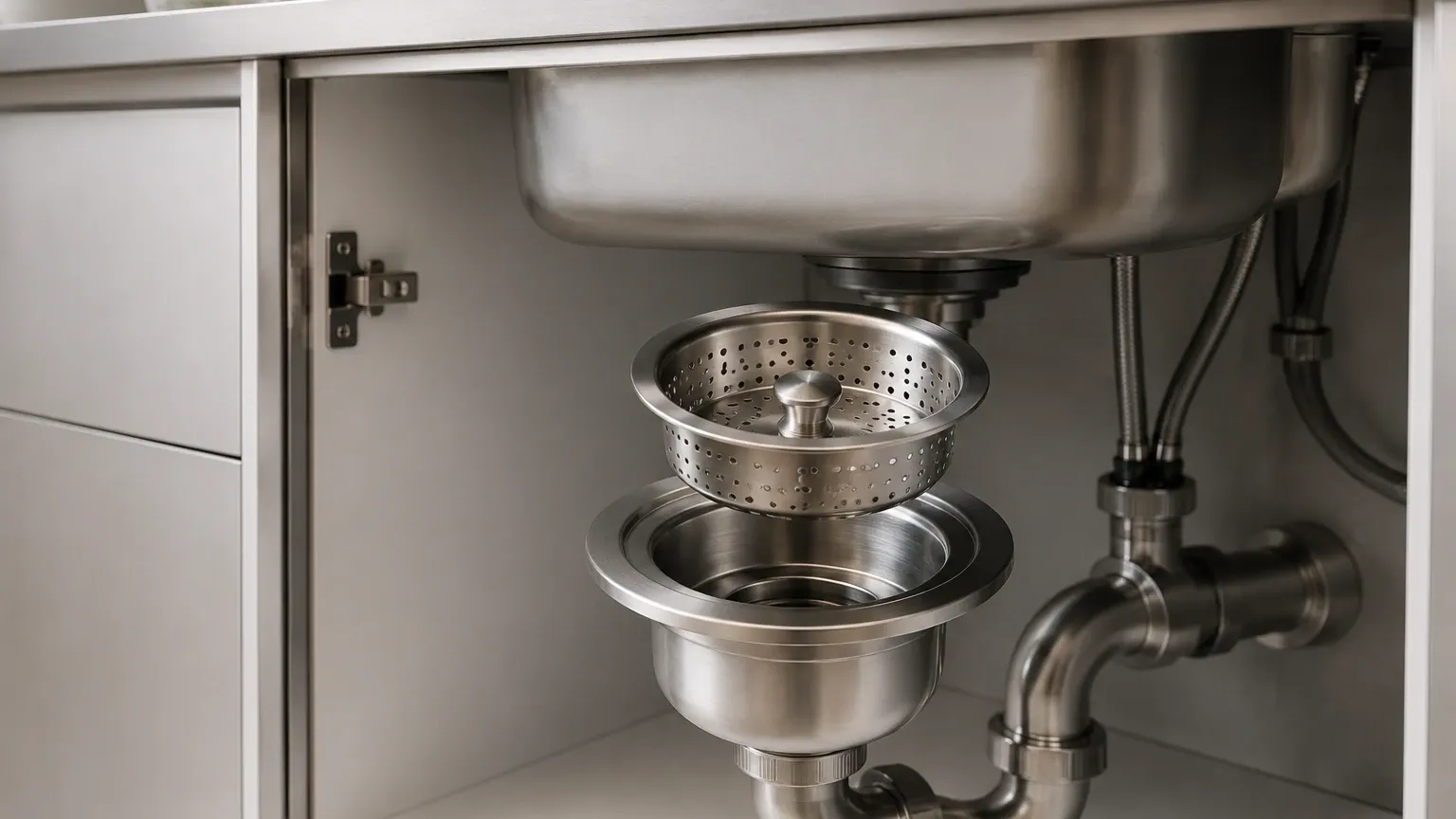
Basket Strainer Under Sink
In industrial and commercial environments, the filtration of wastewater and process fluids at the point of discharge is a critical step in maintaining facility infrastructure. While the term "basket strainer under sink" often evokes residential plumbing, its application in professional settings—such as commercial kitchens, laboratories, pharmaceutical wash stations, and chemical processing plants—requires a significantly higher level of engineering and material integrity. These components serve as the first line of defense, capturing solids and debris before they can enter the drainage system, where they might cause blockages or damage downstream treatment equipment.
Selecting the correct filtration solution involves understanding the interplay between flow rates, material compatibility, and the specific nature of the particulates being filtered. For engineers and facility managers, the choice of a basket strainer is not merely a plumbing decision but a strategic component of a comprehensive fluid management system.
The Engineering Role of Strainers & Baskets in Industrial Drainage
In a professional context, Strainers & Baskets are designed to handle high volumes of fluid while maintaining low pressure drops. Unlike standard consumer-grade products, industrial-grade basket strainers are typically constructed from high-grade stainless steel to withstand corrosive cleaning agents, high temperatures, and abrasive solids.
Primary Functions
The primary role of a basket strainer located under a sink or wash station is mechanical separation. This process achieves several goals:
1. Infrastructure Protection: By capturing large solids, the strainer prevents the accumulation of debris in horizontal piping runs, reducing the frequency of hydro-jetting and mechanical rodding.
2. Pump and Valve Safeguarding: In systems where drainage is pumped to a central treatment plant, the strainer protects sensitive pump impellers and check valves from damage caused by hard particulates.
3. Regulatory Compliance: Many jurisdictions require pre-filtration of commercial effluent to prevent excessive solids from entering the municipal sewer system.
4. Resource Recovery: In specific industrial processes, the basket strainer allows for the collection of valuable metal shavings, chemical precipitates, or organic materials that would otherwise be lost.
Material Selection: Why Stainless Steel Dominates
When specifying a basket strainer under sink for a B2B application, material selection is the most critical factor in determining the component's lifespan and performance. Kaifil specializes in stainless steel solutions because of the material's inherent advantages in demanding environments.
Stainless Steel 304 vs. 316
* Grade 304: This is the standard industrial grade, offering excellent corrosion resistance for general applications, including food and beverage processing and standard laboratory environments. It is resistant to most oxidizing acids and is highly durable.
* Grade 316: For environments involving high salt concentrations, chlorides, or aggressive chemicals (such as in marine applications or heavy chemical processing), Grade 316 is preferred. The addition of molybdenum enhances its resistance to pitting and crevice corrosion.
Compared to plastic or brass alternatives, stainless steel strainers offer superior thermal stability. They do not warp or degrade when exposed to boiling water or steam cleaning, which is a common requirement in pharmaceutical and food-grade sanitation protocols.
Technical Specifications and Selection Criteria
Engineers must evaluate several technical parameters to ensure the basket strainer under sink meets the operational demands of the facility. A mismatch in specifications can lead to frequent clogging, bypass of contaminants, or restricted flow.
Perforation and Mesh Sizes
The filtration efficiency of a basket is determined by the size of its openings. Industrial baskets often utilize a dual-layer design: a heavy-duty perforated metal outer shell for structural integrity and a fine wire mesh inner liner for precise filtration.
* Coarse Filtration: Holes ranging from 1/8" to 1/2" are used for capturing large debris like food scraps or packaging waste.
* Fine Filtration: Wire mesh liners can provide filtration down to 20 microns or less, suitable for capturing fine powders or metal fines.
Flow Rate and Open Area Ratio
The "Open Area Ratio" (OAR) is the ratio of the total area of the holes in the basket to the cross-sectional area of the inlet pipe. A high OAR is essential to ensure that the strainer does not become a bottleneck in the system. For industrial applications, an OAR of 4:1 or higher is typically recommended to allow for significant debris accumulation before a noticeable drop in flow occurs.
Connection Types
Depending on the existing piping infrastructure, the strainer housing may require different connection methods:
* Threaded (NPT/BSP): Common for smaller diameter lines and standard commercial sinks.
* Flanged: Used in heavy industrial settings where the strainer must be integrated into high-capacity drainage systems.
* Sanitary/Tri-Clamp: Essential for the pharmaceutical and food industries to ensure there are no crevices where bacteria can grow.
Installation and Integration Challenges
Integrating a high-performance basket strainer under sink requires careful spatial planning. In many commercial settings, the "under-sink" area is crowded with grease traps, water heaters, and chemical dispensing systems.
Space Constraints
Custom-designed strainers are often necessary when standard off-the-shelf units do not fit the available footprint. Compact, high-capacity baskets can be engineered to maximize the filtration surface area within a limited vertical or horizontal space.
Accessibility for Maintenance
A strainer is only effective if it is cleaned regularly. The design must allow for the quick and tool-free removal of the basket. In industrial environments, "downtime" for maintenance must be minimized. Features such as ergonomic handles, quick-release lids, and drop-in basket designs are critical for operational efficiency.
Maintenance and Operational Longevity
The total cost of ownership (TCO) for a basket strainer is heavily influenced by its maintenance requirements and durability. While a lower-quality plastic strainer may have a lower initial purchase price, the frequent need for replacement and the risk of failure make it more expensive over time.
Cleaning Protocols
In B2B settings, cleaning protocols are often dictated by HACCP (Hazard Analysis and Critical Control Points) or other safety standards. Stainless steel baskets can be subjected to high-pressure washing, ultrasonic cleaning, or chemical sterilization without loss of structural integrity.
Signs of Wear and Replacement Cycles
Engineers should inspect strainers for:
* Mechanical Deformation: Often caused by heavy debris being dropped into the sink or excessive pressure.
* Erosion-Corrosion: High-velocity fluids containing abrasive particles can wear down the mesh over time.
* Seal Integrity: Gaskets and O-rings should be replaced periodically to prevent leaks under the sink.
Custom OEM Solutions for Specialized Applications
Every industrial facility has unique requirements. A standard basket strainer under sink may not suffice for a facility processing highly viscous fluids or one that requires specialized magnetic inserts to capture ferrous particles.
Kaifil provides extensive OEM capabilities, allowing for the customization of:
* Basket Geometry: Tapered, flat-bottom, or multi-stage baskets to fit specific housing designs.
* Reinforcement: Adding support rods or external cages for high-pressure applications.
* Handle Configurations: Specialized handles for easy extraction in deep or recessed housings.
By working closely with a manufacturer, engineering teams can develop filtration components that are perfectly aligned with their specific flow dynamics and particulate profiles.
Conclusion: Making an Informed Purchasing Decision
When selecting a basket strainer under sink for commercial or industrial use, the focus must remain on technical performance and long-term reliability. By prioritizing high-grade materials like stainless steel and ensuring the technical specifications—such as mesh size and open area ratio—match the application's needs, facilities can avoid costly plumbing emergencies and protect their downstream equipment.
For those seeking reliable, high-performance filtration components, exploring professional Strainers & Baskets is the first step toward an optimized drainage and process system. Whether for a single laboratory sink or a large-scale industrial wash station, the right strainer is a small but vital investment in operational continuity.
