


T Strainer Basket
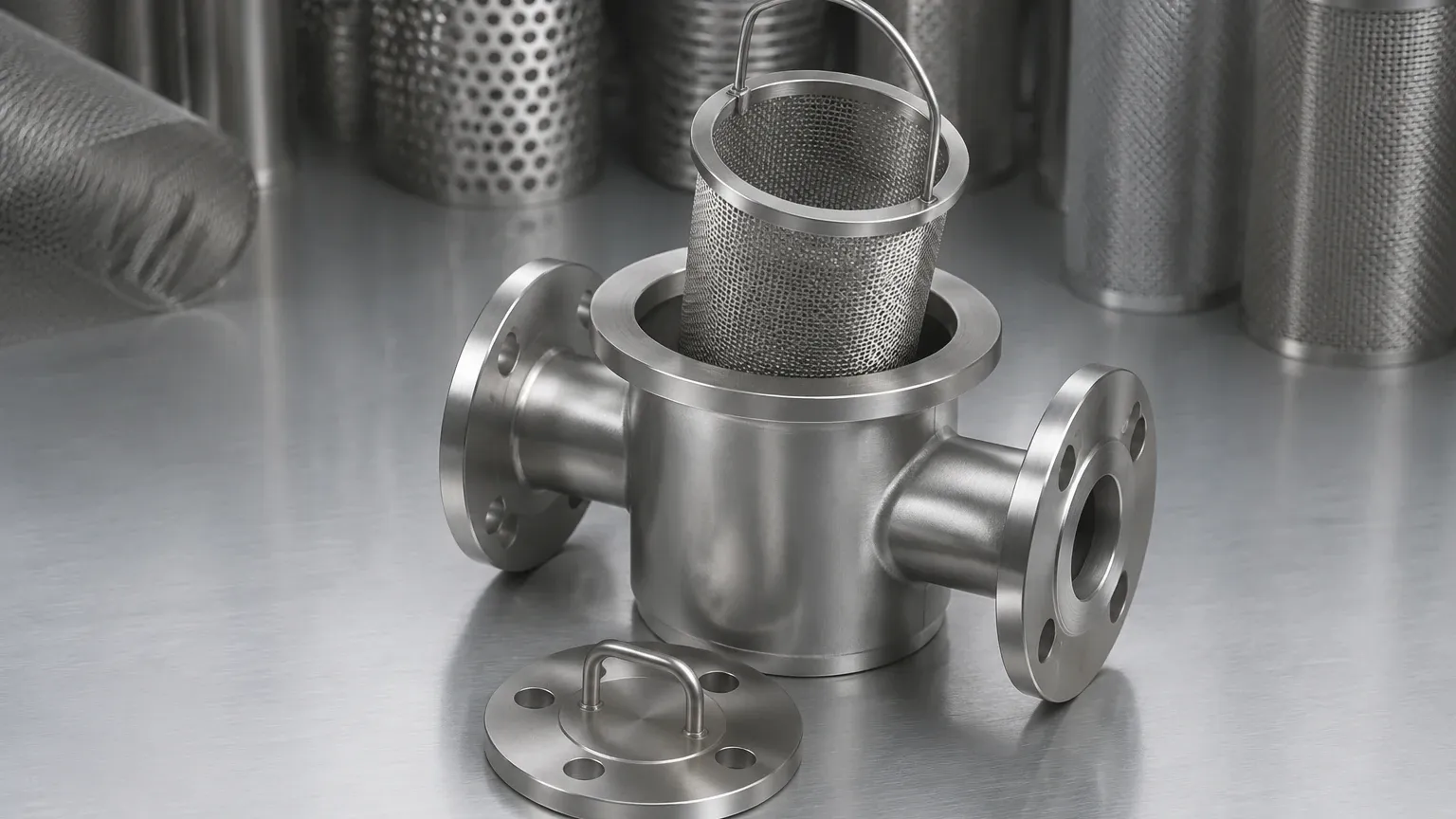
In industrial piping systems, the protection of downstream equipment—such as pumps, valves, and flow meters—is a critical engineering priority. Among the various mechanical filtration solutions, the T-type strainer stands out for its compact footprint and high-flow efficiency. At the heart of this component lies the t strainer basket, a precision-engineered insert designed to capture solid contaminants while maintaining optimal fluid dynamics.
For engineers and procurement professionals, selecting the correct basket configuration is not merely a matter of sizing; it involves a complex evaluation of material compatibility, pressure differentials, and filtration accuracy. As a specialized manufacturer of stainless steel filtration solutions, Kaifil provides high-performance Strainers & Baskets tailored to the rigorous demands of chemical processing, water treatment, and hydraulic applications.
Engineering Fundamentals of T Strainer Baskets
The T-type strainer is characterized by its "T" shape, where the strainer body is positioned perpendicular to the main flow line. The internal basket is the primary functional element. Unlike Y-strainers, which are often used for smaller debris and lower flow rates, T-strainers are designed for larger volumes and applications where the strainer must be serviced frequently without dismantling the entire piping section.
Flow Path and Orientation
In a standard T-strainer, fluid enters the inlet and is directed into the interior of the basket. The solids are retained within the basket, and the filtered fluid passes through the mesh or perforated walls to the outlet. The design of the t strainer basket must account for the direction of flow—typically inside-to-out—to ensure that debris is trapped in a way that allows for easy removal during maintenance cycles.
Structural Integrity
Industrial baskets must withstand significant mechanical stress. When a basket becomes loaded with contaminants, the pressure differential across the mesh increases. If the basket is not structurally sound, this pressure can lead to deformation or "blow-by," where the filtration media fails and allows contaminants to bypass the system. High-quality baskets often feature reinforced frames or heavier-gauge perforated metal support to prevent such failures.
Material Selection and Chemical Compatibility
Material science plays a pivotal role in the longevity of a t strainer basket. Because these components are often exposed to corrosive chemicals, high temperatures, and abrasive particulates, selecting the right alloy is essential for preventing premature degradation.
Stainless Steel Grades
* SS304/304L: The standard choice for general industrial applications, providing excellent corrosion resistance in water treatment and food and beverage environments.
* SS316/316L: Preferred for chemical processing and marine environments. The addition of molybdenum enhances resistance to pitting and crevice corrosion, particularly in the presence of chlorides.
* Specialty Alloys: For highly aggressive environments involving concentrated acids or extreme temperatures, manufacturers may utilize Duplex stainless steel or Monel, though 316L remains the industry benchmark for most high-performance baskets.
Temperature and Pressure Considerations
The mechanical properties of stainless steel change at elevated temperatures. Engineers must confirm that the selected basket material maintains its tensile strength at the system's maximum operating temperature. Furthermore, the thickness of the basket walls must be calculated based on the maximum allowable pressure drop (PSID) to ensure safety and reliability.
Filtration Performance and Micron Ratings
The primary function of the basket is to achieve a specific level of filtration. This is defined by the size of the openings in the basket material, which can range from coarse straining to fine filtration.
Perforated Metal vs. Wire Mesh
Most industrial baskets utilize a two-stage construction. The outer layer is typically a heavy-duty perforated metal sheet that provides structural rigidity. The inner layer consists of a fine wire mesh that dictates the filtration accuracy.
* Perforated Metal: Used for coarse straining (typically 1/16" to 1/4" holes). It is ideal for removing large debris like scale, welding slag, or stones.
* Wire Mesh: Used for finer filtration (from 20 mesh down to 400 mesh or finer). The mesh is measured by the number of openings per linear inch. For example, a 100-mesh screen has 100 openings per inch, providing filtration down to approximately 150 microns.
Open Area Ratio
A critical engineering metric for any t strainer basket is the "Open Area Ratio" (OAR). This is the ratio of the total area of the holes in the basket to the cross-sectional area of the inlet pipe. A higher OAR (typically 150% to 200% or more) results in a lower initial pressure drop and longer intervals between cleanings. If the OAR is too low, the strainer will require frequent maintenance and may cause cavitation in downstream pumps.
Customization Options for Industrial Applications
Off-the-shelf filtration components often fail to meet the specific nuances of complex industrial systems. Customization is frequently required to optimize performance and ease of maintenance.
Reinforced and Multi-Layer Designs
In high-pressure hydraulic systems or applications subject to water hammer, standard baskets may collapse. Custom Strainers & Baskets can be manufactured with internal or external reinforcement rings, longitudinal stiffeners, and multi-layered sintered mesh for maximum durability.
Magnetic Inserts
For systems where fine iron or steel particles (fines) are a concern, such as in lubricating oil systems or metalworking fluid recovery, magnetic inserts can be added to the basket. These magnets capture sub-micron ferrous particles that might otherwise pass through the mesh, providing an extra layer of protection for precision components.
Handle and Cover Configurations
To facilitate rapid maintenance, baskets can be designed with various handle styles, such as slant handles, bail handles, or threaded lift tabs. These features are essential for T-strainers, as they allow technicians to quickly extract the basket from the top or side of the housing during a scheduled shutdown.
Maintenance, Cleaning, and Total Cost of Ownership
The total cost of ownership (TCO) of a filtration system is heavily influenced by the maintenance requirements of the basket. A poorly designed basket that is difficult to clean or prone to damage will lead to increased labor costs and production downtime.
Cleaning Protocols
Stainless steel baskets are generally reusable. Cleaning methods vary depending on the nature of the contaminant:
* Mechanical Cleaning: Brushing or high-pressure water washing for non-adhesive solids.
* Chemical Cleaning: Soaking in solvents or mild acids to dissolve scales or organic buildup.
* Ultrasonic Cleaning: The most effective method for fine mesh baskets, using high-frequency sound waves to dislodge particles trapped deep within the mesh pores.
Replacement Cycles
While stainless steel is durable, baskets are considered wear parts. Fatigue from pressure cycling and erosion from abrasive particles will eventually necessitate replacement. Engineers should monitor the pressure drop across the strainer; a consistently high differential pressure even after cleaning indicates that the mesh is blinded or the structure is compromised.
Technical Selection Criteria: A Checklist for Engineers
Before finalizing a purchase order for a t strainer basket, technical teams should confirm the following parameters to ensure system compatibility:
1. Fluid Properties: Viscosity, density, and chemical composition (to determine material and mesh size).
2. Flow Rate: Maximum and minimum flow rates to calculate the required Open Area Ratio.
3. Filtration Target: The specific micron rating or mesh size required to protect downstream equipment.
4. Operating Conditions: Maximum operating pressure and temperature.
5. Housing Dimensions: Precise internal diameter, depth, and seating arrangement of the existing strainer housing.
6. Gasket/Seal Material: Compatibility of the basket's seating seals with the process fluid.
The Role of Precision Manufacturing
Quality in filtration starts with the manufacturing process. Precision in the welding of the mesh to the perforated support is vital; any gaps or weak welds can lead to bypass or structural failure. Kaifil utilizes advanced manufacturing techniques to ensure that every t strainer basket meets strict dimensional tolerances and performance standards.
By focusing on the engineering details—from the gauge of the wire mesh to the integrity of the support frame—manufacturers can provide solutions that not only filter effectively but also contribute to the overall efficiency and safety of the industrial plant. Whether you are replacing an existing component or designing a new system, understanding the technical nuances of basket design is the key to achieving reliable, long-term filtration performance.
