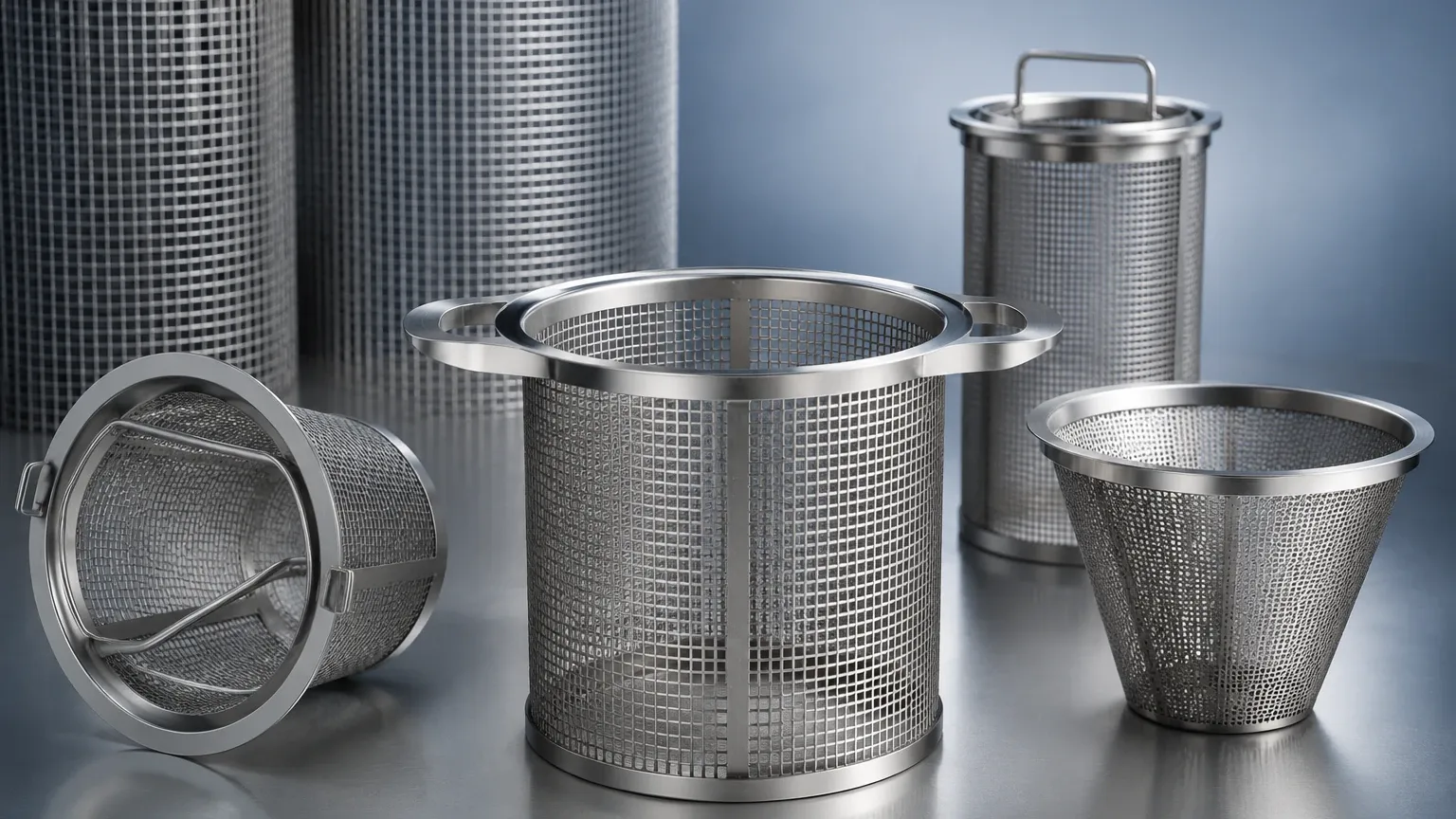
Basket Strainer Viva
In industrial fluid handling, the efficiency of a process often hinges on the reliability of its primary protection components. A basket strainer serves as the critical first line of defense, protecting downstream equipment such as pumps, valves, and heat exchangers from damage caused by particulate matter. The term "basket strainer viva" represents more than just a component; it signifies the vitality and operational life (viva) of a filtration system designed for high-performance, continuous duty. For engineers and procurement specialists, selecting the right Strainers & Baskets is a balancing act between filtration precision, flow capacity, and long-term durability.
Understanding the Role of Basket Strainers in Industrial Systems
Unlike Y-strainers, which are typically used for smaller amounts of particulate in high-pressure steam or gas lines, basket strainers are designed for liquid applications where high flow rates and significant solids loading are expected. The "basket" design allows for a much larger surface area than other strainer types, which directly translates to a lower pressure drop and longer intervals between cleanings.
In the context of a "viva" or high-vitality system, the basket strainer must be engineered to handle the dynamic stresses of industrial environments. This includes managing hydraulic surges, resisting chemical corrosion, and maintaining structural integrity under high differential pressure. When a strainer fails or becomes prematurely clogged, it doesn't just stop the flow; it puts the entire process at risk, leading to costly downtime and potential equipment damage.
Engineering Considerations for Basket Strainer Selection
When evaluating Strainers & Baskets for a specific application, several technical parameters must be scrutinized to ensure the "viva" of the installation. Engineers must look beyond the basic pipe size and consider the fluid dynamics within the housing.
1. Material Compatibility and Metallurgy
Stainless steel is the industry standard for high-performance basket strainers, but the specific grade matters.
- SS304: Suitable for general-purpose applications, providing excellent corrosion resistance in water and mild chemical environments.
- SS316L: The preferred choice for pharmaceutical, food and beverage, and aggressive chemical processing. The addition of molybdenum and the lower carbon content enhance resistance to pitting and crevice corrosion, especially in chloride-rich environments.
- Specialty Alloys: For extreme conditions, materials like Monel or Hastelloy may be required to maintain the structural life of the basket.
2. The Open Area Ratio (OAR)
One of the most critical factors in the performance of a basket strainer viva is the Open Area Ratio. This is the ratio of the total open area of the basket mesh or perforations to the cross-sectional area of the inlet pipe. A high-quality industrial strainer should ideally offer an OAR of at least 6:1. A higher ratio ensures that even as the basket begins to collect debris, the pressure drop remains within acceptable limits, preserving the efficiency of the pump and the overall system flow.
3. Filtration Accuracy: Perforations vs. Mesh
The internal basket can be constructed using perforated metal, wire mesh, or a combination of both.
- Perforated Baskets: These are inherently robust and used for removing larger particles (typically 1/32" to 1/2"). They serve as the structural support for finer mesh liners.
- Wire Mesh Liners: For finer filtration (down to 20 microns or less), a stainless steel wire mesh is sintered or spot-welded to the interior of the perforated basket. The choice of weave—such as plain weave or Dutch weave—affects both the flow rate and the ease of cleaning.
The Importance of "Viva" in Continuous Processing
In industries like chemical manufacturing or large-scale water treatment, the "viva" of a basket strainer refers to its ability to remain operational without frequent intervention. A "basket strainer viva" approach prioritizes designs that facilitate easy maintenance and high solids-holding capacity.
High-Flow Low-Pressure Drop Designs
Every pound per square inch (PSI) lost across a strainer is energy wasted by the pump. High-performance strainers are designed with streamlined internal geometries to minimize turbulence. By reducing the resistance to flow, these units contribute to a more sustainable and cost-effective operation. For engineers, calculating the "Clean Clean Pressure Drop" is a vital step in the sizing process to ensure the system doesn't operate at its limit from day one.
Structural Integrity Under Differential Pressure
As a basket fills with debris, the differential pressure (Delta P) across the element increases. If the basket is not engineered to withstand this pressure, it can collapse, sending both the collected debris and fragments of the basket into the downstream process. A robust basket strainer viva design includes reinforced handles, heavy-duty support cages, and precision-machined seats to ensure the basket remains seated and intact even under high-load conditions.
Application-Specific Requirements
The requirements for Strainers & Baskets vary significantly across different sectors. Understanding these nuances is essential for selecting a component that supports the long-term vitality of the specific process.
Food and Beverage Industry
In food processing, the focus is on hygiene and cleanability. Strainers must be designed with "dead-leg" free zones where bacteria cannot accumulate. Polished stainless steel surfaces (Ra < 0.8 μm) and the use of FDA-compliant gaskets (such as EPDM or PTFE) are mandatory. The basket must be easily removable for sanitization, often requiring quick-release V-band clamps or swing-bolt covers.
Chemical and Petrochemical Processing
In these environments, chemical resistance is the primary concern. The basket strainer must be able to withstand aggressive solvents, acids, and high temperatures. Engineers often specify 316L stainless steel with specialized coatings if necessary. The "viva" of the strainer here is measured by its resistance to stress-corrosion cracking and its ability to maintain a leak-proof seal over thousands of thermal cycles.
Water Treatment and Desalination
For large-scale water treatment, the sheer volume of fluid requires strainers with massive surface areas. In desalination plants, the high chloride content of seawater necessitates the use of high-grade stainless steels or duplex alloys to prevent rapid degradation. Here, the basket strainer acts as a pre-filter, protecting sensitive reverse osmosis membranes from physical damage.
Maintenance and Operational Longevity
To ensure the continued life or "viva" of a basket strainer, a proactive maintenance strategy is required. This involves more than just cleaning the basket when the flow slows down.
Differential Pressure Monitoring
The most effective way to manage a basket strainer is through differential pressure monitoring. By installing gauges on the inlet and outlet, operators can see exactly when the basket is reaching its capacity. Many modern systems use DP transmitters that send an alert to the control room when a pre-set threshold is reached, preventing the system from ever reaching a critical pressure drop.
The Cleaning Process
The design of the basket itself influences how easily it can be cleaned. A well-designed basket will have a smooth interior surface that allows debris to be washed away easily. In some applications, "backwashing" or "blow-down" valves can be installed at the bottom of the strainer housing to remove heavy sludge without opening the unit, although a full manual clean of the basket is still required periodically to remove wedged particles.
Redundancy: Duplex Strainers
For processes that cannot be shut down for cleaning, a duplex basket strainer is the ideal solution. A duplex system consists of two separate strainer housings connected by a diverting valve. When one basket is full, the flow is diverted to the second housing, allowing the first basket to be cleaned without interrupting the process. This is the ultimate expression of "viva" in industrial filtration—ensuring the process never dies.
Customization: Tailoring the Solution to the Problem
Standard off-the-shelf strainers often fall short in specialized industrial applications. Customization is where the true engineering value lies. Manufacturers like Kaifil specialize in developing Strainers & Baskets that are tailored to specific geometric and performance constraints.
Customization options include:
- Non-Standard Dimensions: Fitting a high-capacity strainer into a tight footprint or an existing piping layout.
- Specialized Connection Types: Flanged (ANSI, DIN, JIS), NPT threaded, or sanitary tri-clamp connections to match existing infrastructure.
- Heating Jackets: For high-viscosity fluids like resins or chocolate that must be kept at a specific temperature to flow through the mesh.
- Magnetic Inserts: Adding magnetic rods to the basket to capture fine ferrous particles that might otherwise pass through the mesh.
Total Cost of Ownership (TCO) vs. Initial Purchase Price
When procurement teams evaluate basket strainers, the initial purchase price is often the most visible metric. However, for a basket strainer viva, the Total Cost of Ownership is far more relevant. A cheaper, poorly engineered strainer may save money upfront but can lead to:
- Increased Energy Costs: Due to higher permanent pressure drops.
- Frequent Replacement Parts: Baskets that collapse or gaskets that fail prematurely.
- Production Losses: Every hour of downtime caused by a clogged or failed strainer can cost thousands of dollars in lost output.
Investing in a high-quality, precision-manufactured stainless steel strainer ensures that the component will outlast the equipment it is protecting, providing a much higher return on investment over the life of the plant.
Conclusion: Securing the Vitality of Your Process
The selection of a basket strainer is a critical decision that impacts the reliability, efficiency, and safety of an industrial fluid system. By focusing on the "viva"—the life and performance—of the strainer, engineers can ensure that their processes remain uninterrupted and their downstream equipment remains protected. Whether it is a standard application or a complex custom requirement, the focus must always be on quality materials, precise engineering, and a deep understanding of the fluid dynamics involved.
For technical professionals looking to optimize their filtration systems, exploring the range of available Strainers & Baskets is the first step toward a more robust and efficient operation. By confirming material compatibility, calculating the necessary open area ratio, and planning for ease of maintenance, you can ensure that your filtration system provides the vital protection your process demands.