


Cell Strainers 40um
In the realm of precision filtration, the 40um (micrometer) threshold represents a critical benchmark for various industrial, pharmaceutical, and biological processes. Whether used in laboratory settings for preparing single-cell suspensions or in large-scale industrial environments for fine particle separation, the accuracy and reliability of the filtration medium are paramount. For engineers and procurement specialists, selecting the right filtration component requires a deep understanding of material science, mesh geometry, and the specific demands of the application environment.
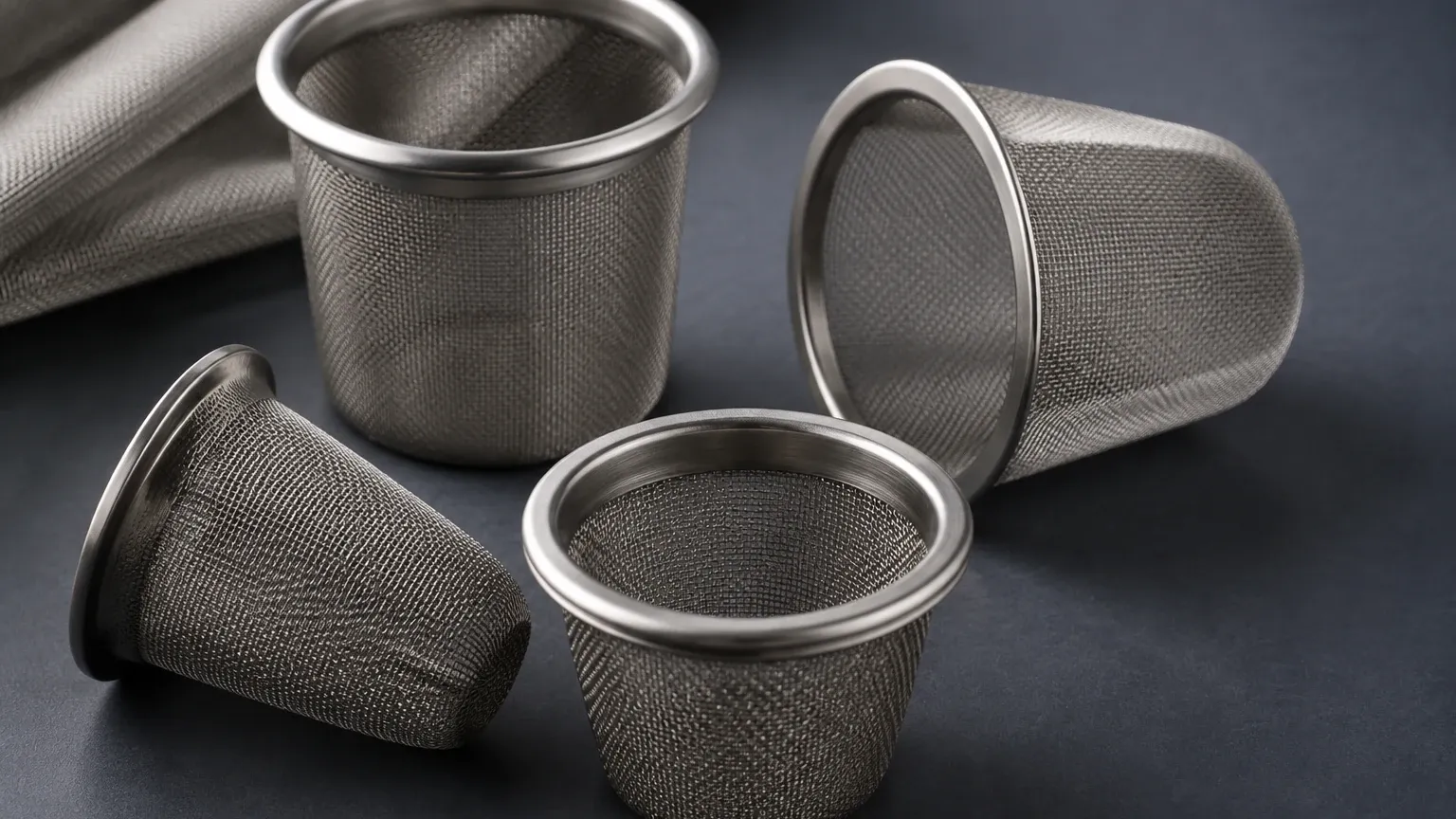
While many associate the term with disposable plastic laboratory tools, the industrial application of 40um filtration often necessitates more robust solutions. High-quality Strainers & Baskets manufactured from stainless steel offer the durability, chemical resistance, and precision required for demanding B2B sectors, including chemical processing, food and beverage production, and pharmaceutical manufacturing.
The Role of 40um Filtration in Industrial and Laboratory Processes
The 40um micron rating is specifically engineered to allow the passage of smaller particles or cells while effectively capturing larger aggregates, debris, or tissue fragments. In biological contexts, this is essential for creating high-quality cell suspensions for flow cytometry, primary cell culture, or molecular analysis. However, the utility of 40um filtration extends far beyond the petri dish.
In industrial fluid systems, a 40um filter acts as a fine-mesh barrier that protects sensitive downstream equipment. For instance, in high-pressure hydraulic systems or precision chemical dosing lines, particles larger than 40 microns can cause significant mechanical wear or clog narrow orifices. By implementing a 40um strainer, operators ensure the longevity of pumps, valves, and nozzles, thereby reducing maintenance downtime and the total cost of ownership.
Material Science: Why Stainless Steel is Superior for Precision Strainers
When evaluating cell strainers 40um, the choice of material significantly impacts performance, especially regarding chemical compatibility and thermal stability. While polymer-based strainers are common in single-use lab applications, stainless steel (typically Grade 304 or 316L) is the standard for industrial-grade filtration for several reasons:
Chemical and Corrosion Resistance
Stainless steel 316L contains molybdenum, which provides enhanced resistance to pitting and crevice corrosion in chloride-rich environments. This is vital in chemical processing and marine applications where the filtration media is constantly exposed to aggressive solvents or saline solutions. Unlike plastic, stainless steel does not leach phthalates or other contaminants into the filtrate, ensuring the purity of the final product.
Thermal Stability
Industrial processes often involve high-temperature fluids or require steam sterilization (SIP) and cleaning-in-place (CIP) protocols. Stainless steel strainers can withstand temperatures far exceeding the melting points of common laboratory plastics (such as nylon or polypropylene), maintaining their structural integrity and filtration accuracy under extreme heat.
Mechanical Strength and Reusability
Under high pressure or high flow rates, plastic mesh can stretch or deform, altering the effective pore size. Stainless steel wire mesh is rigid and durable. This mechanical strength allows the strainers to be cleaned and reused multiple times, making them a more sustainable and cost-effective solution for long-term industrial operations.
Technical Specifications and Mesh Geometry for 40um Filtration
Achieving a precise 40um rating involves complex weaving techniques. The performance of the strainer is defined not just by the micron rating, but by the mesh count, wire diameter, and open area percentage.
Mesh Count and Wire Diameter
For a 40um aperture, manufacturers typically use a very high mesh count. The wire diameter must be carefully selected to balance the need for structural strength with the requirement for a high open area. A thinner wire increases the open area, which reduces the pressure drop across the filter and allows for higher flow rates. Conversely, thicker wire provides more durability but may restrict flow.
Plain Weave vs. Twill Weave
* Plain Weave: The most common type of weave where each weft wire passes over and under one warp wire. It provides a consistent pore size and is suitable for most 40um applications.
* Twill Weave: Used when a heavier wire is required for a specific micron rating. Each weft wire passes over and under two warp wires, allowing for a sturdier mesh that can still achieve fine filtration levels like 40um.
Filtration Accuracy: Nominal vs. Absolute
It is crucial for engineers to distinguish between nominal and absolute ratings. A nominal 40um rating suggests the filter will stop a large percentage of particles of that size, but some may pass through. An absolute rating, often achieved through multi-layered sintered mesh or high-precision weaving, ensures that no particle larger than 40um can pass through the medium. For critical pharmaceutical or high-tech applications, absolute ratings are often required.
Key Applications for Cell Strainers 40um in B2B Sectors
The versatility of 40um filtration makes it a staple in various specialized industries. Understanding these applications helps in selecting the appropriate configuration of strainers and baskets.
Pharmaceutical and Biotechnology
In the production of vaccines and biologics, 40um strainers are used to remove cell clumps and tissue debris from harvested cell cultures. This step is vital before the fluid enters more refined purification stages, such as chromatography or ultrafiltration. The use of electropolished stainless steel ensures that the strainer surface is smooth, preventing bacterial adhesion and facilitating thorough sterilization.
Food and Beverage Processing
Precision filtration is used to ensure the clarity and safety of liquids. In the production of fine syrups, oils, or clarified juices, 40um baskets capture microscopic impurities that could affect the texture or shelf-life of the product. Because these systems must meet stringent FDA or EHEDG standards, the non-reactive nature of stainless steel is a prerequisite.
Water Treatment and Desalination
Before water reaches sensitive reverse osmosis (RO) membranes, it must undergo several stages of pre-filtration. A 40um stainless steel strainer serves as an effective secondary or tertiary pre-filter, removing fine silt and organic matter that could otherwise foul the membranes, leading to increased energy consumption and frequent membrane replacement.
Engineering Selection: Integrating Strainers & Baskets into Existing Systems
When integrating cell strainers 40um into an industrial workflow, engineers must consider several technical factors to ensure optimal performance. It is not merely about the micron rating; it is about how the component interacts with the entire system.
1. Flow Rate and Pressure Drop: Every filter introduces a resistance to flow. Engineers must calculate the maximum allowable pressure drop (ΔP) for the system. A 40um mesh has a relatively high resistance compared to coarser meshes, so the total surface area of the strainer or basket must be sized appropriately to accommodate the required flow rate without exceeding pressure limits.
2. Housing Compatibility: The strainer must fit securely within its housing to prevent "bypass," where fluid flows around the filter rather than through it. Custom-designed baskets with precision-machined flanges or O-ring seals are often necessary to ensure a leak-proof fit.
3. Structural Reinforcement: In high-pressure applications, a fine 40um mesh may require a perforated metal backup or a coarser support mesh to prevent the fine wires from bursting or collapsing under the fluid force.
4. Customization Requirements: Many industrial applications require unique geometries, such as conical strainers, pleated cartridges, or oversized baskets. Working with a manufacturer that offers OEM and customized filtration solutions allows for the development of components that meet these specific spatial and functional constraints.
Maintenance, Sterilization, and Long-Term Performance
The longevity of a 40um stainless steel strainer depends heavily on proper maintenance. Unlike disposable plastic strainers, these components are designed for an extended service life, provided they are handled correctly.
Cleaning Protocols
Because 40um pores are very fine, they can become blinded (clogged) by sticky or fibrous materials. Ultrasonic cleaning is often the most effective method for 40um mesh, as high-frequency sound waves create cavitation bubbles that dislodge particles from deep within the weave. For chemical applications, backwashing or the use of specific solvent baths may be required to dissolve accumulated residues.
Inspection and Replacement Cycles
Regular inspection is necessary to check for signs of mesh fatigue, such as broken wires or distorted openings. In critical processes, a scheduled replacement cycle should be established based on the volume of fluid processed or the observed pressure drop over time. Even the most durable stainless steel mesh will eventually experience wear, and maintaining a spare inventory of Strainers & Baskets is a best practice for avoiding unplanned production halts.
Total Cost of Ownership (TCO)
While the initial investment in a stainless steel 40um strainer is higher than that of a disposable plastic alternative, the TCO is often significantly lower in an industrial context. The reduction in waste, the ability to withstand rigorous cleaning cycles, and the protection provided to expensive downstream equipment make high-quality metal filtration a superior economic choice for B2B operations.
In conclusion, whether you are refining a laboratory protocol or optimizing an industrial production line, the choice of 40um filtration media is a decision that impacts product quality and operational efficiency. By prioritizing material integrity, engineering precision, and application-specific design, technical professionals can ensure that their filtration systems deliver consistent, reliable results in even the most demanding environments.
