


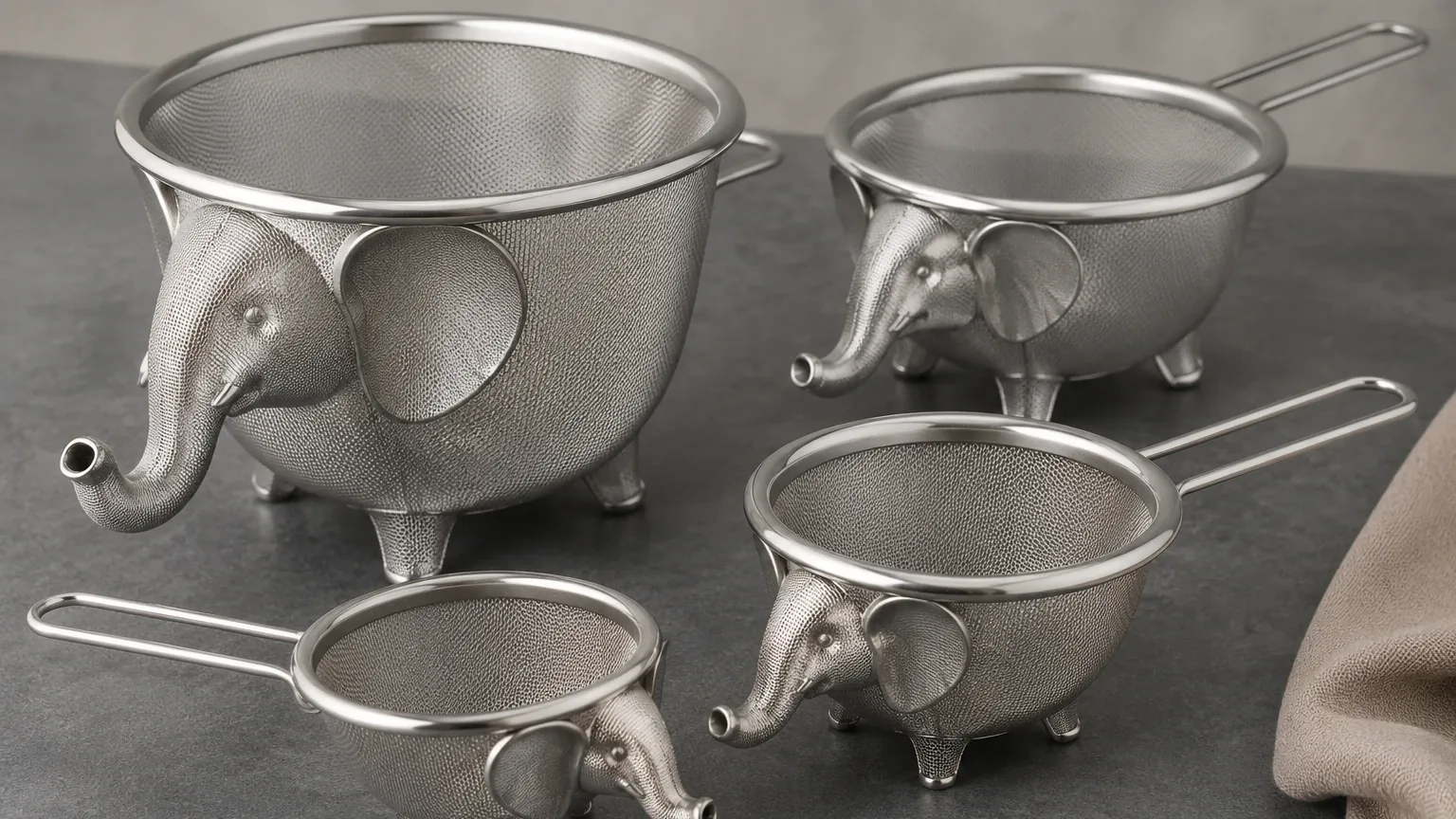
Elephant Kitchen Strainers
In the realm of commercial food preparation and industrial fluid handling, the efficiency of a drainage system often depends on the geometry and material integrity of its filtration components. The term "elephant kitchen strainers" has emerged in the market to describe a specific category of high-capacity, deep-basket strainers designed to handle significant debris loads without compromising flow rates. For engineers and procurement specialists in the food processing, hospitality, and industrial kitchen sectors, moving beyond the novelty of the name to understand the underlying engineering principles is essential for maintaining operational uptime and hygiene standards.
Industrial-grade Strainers & Baskets are the primary line of defense for plumbing systems and downstream processing equipment. Whether used in a large-scale vegetable washing station or a high-volume commercial scullery, these components must withstand corrosive detergents, high temperatures, and constant mechanical stress. This article examines the technical specifications, material considerations, and selection criteria that define high-performance basket filtration solutions.
The Engineering Behind High-Capacity Basket Design
The "elephant" designation typically refers to the physical profile of the strainer—characterized by a deep, high-volume basket and a robust drainage pattern that mimics the high-capacity throughput required in demanding environments. In a B2B context, this translates to the "Effective Filtration Area" (EFA).
The EFA is a critical metric for any filtration component. A standard flat strainer can quickly become blinded by debris, leading to standing water and potential bacterial growth. In contrast, deep-basket designs provide a larger surface area, allowing fluid to pass through the side walls even when the bottom of the basket is partially filled with solids. This design philosophy is central to industrial basket strainers, where maintaining a low pressure drop (ΔP) is vital for system efficiency.
Key design features of these high-capacity baskets include:
* Tapered Profiles: Facilitates easy removal and cleaning while ensuring a snug fit within the drain housing to prevent bypass.
* Reinforced Rims: Prevents deformation under the weight of heavy debris or during frequent extraction for maintenance.
* Variable Perforation Patterns: Allows for customization based on the specific particulate size common to the application.
Material Science: Stainless Steel vs. Alternatives
While consumer-grade elephant kitchen strainers may utilize plastics or lightweight alloys, industrial and commercial applications demand the use of high-quality stainless steel. Kaifil specializes in the fabrication of stainless steel filtration solutions because of the material's inherent advantages in rigorous environments.
304 Stainless Steel
Grade 304 is the standard for most commercial kitchen environments. It offers excellent corrosion resistance to most oxidizing acids and is highly durable. For general food service applications where the strainer is exposed to water and standard cleaning agents, 304 provides an optimal balance of performance and cost-effectiveness.
316 Stainless Steel
In environments involving high salt concentrations, acidic food processing (such as citrus or tomato processing), or aggressive chemical sanitizers, Grade 316 is the preferred choice. The addition of molybdenum enhances its resistance to pitting and crevice corrosion. For industrial facilities, specifying 316 stainless steel for their basket strainers ensures a significantly longer service life and reduces the risk of material failure that could lead to batch contamination.
Surface Finishes
Beyond the alloy type, the surface finish of the strainer impacts its performance. Electropolishing is often employed to create a microscopically smooth surface. This reduces the ability of organic matter to adhere to the mesh or perforated metal, making the cleaning process more efficient and supporting stringent HACCP (Hazard Analysis and Critical Control Points) protocols.
Comparing Perforated Metal and Wire Mesh Baskets
When selecting high-capacity strainers, engineers must choose between perforated metal and wire mesh, or a combination of both. Each has specific mechanical properties suited for different stages of the filtration process.
1. Perforated Metal Baskets: These are typically used for coarse filtration. They are constructed from a single sheet of stainless steel with punched holes. The primary advantage here is structural rigidity. Perforated baskets can handle heavy loads of solid waste without tearing or losing their shape. They are ideal for the primary stage of debris capture in large-scale kitchen drains.
2. Wire Mesh Baskets: For finer filtration requirements, stainless steel wire mesh is utilized. This allows for much smaller micron ratings. However, wire mesh is more delicate than perforated metal. In many industrial "elephant" style designs, a wire mesh liner is supported by a perforated metal outer basket. This "dual-layer" approach provides the fine filtration of mesh with the structural integrity of perforated plate.
Performance Metrics: Flow Rates and Pressure Drop
For a facility manager or a system engineer, the primary concern is how the strainer affects the overall flow of the drainage or processing system. A poorly designed strainer acts as a bottleneck.
When evaluating Strainers & Baskets, the "Open Area Ratio" is the most important technical specification. This ratio compares the total area of the holes to the total area of the basket surface. A higher open area ratio generally results in a lower initial pressure drop and a longer interval between cleanings.
In high-volume commercial kitchens, the accumulation of fats, oils, and greases (FOG) can quickly reduce the open area. Therefore, the basket's geometry must account for both solid debris and the viscous nature of kitchen waste. High-capacity baskets are engineered to maintain flow even when the solids loading reaches 50% or more of the basket's volume.
Customization and OEM Capabilities
One of the limitations of off-the-shelf elephant kitchen strainers is their fixed dimensions. Industrial applications rarely follow a one-size-fits-all model. Customization is often required to fit existing infrastructure or to meet specific process requirements.
Customization options usually include:
* Dimensional Adjustments: Modifying the diameter, depth, and flange width to match unique drain housings.
* Handle Configurations: Incorporating fixed, drop-down, or extended handles to facilitate safe and ergonomic removal from deep sumps.
* Micron Rating Specification: Tailoring the perforation size or mesh count to the specific waste profile of the facility (e.g., fine coffee grounds vs. large vegetable scraps).
* Magnetic Inserts: In some industrial processing lines, magnetic bars are added to the basket to capture ferrous metal fragments, protecting downstream pumps and machinery.
Common Risks and Failure Modes
Understanding why strainers fail is crucial for making informed purchasing decisions. In commercial and industrial settings, failure is rarely due to a single event but rather a cumulative process of wear and improper selection.
* Bypass: If the strainer does not fit perfectly within its housing, fluid will take the path of least resistance, carrying debris past the filter. This can lead to clogged pipes and expensive hydro-jetting services.
* Corrosion Fatigue: Exposure to harsh chemicals can lead to stress corrosion cracking, especially in lower-grade materials or at weld points. High-quality manufacturing processes, such as TIG welding and proper annealing, mitigate these risks.
* Mechanical Deformation: Using a strainer that is too light for the debris load can cause the basket to collapse or the handle to break. This not only stops filtration but can also create a safety hazard for staff during cleaning.
Total Cost of Ownership (TCO) in Filtration
While the initial purchase price of a high-quality stainless steel basket strainer is higher than that of a standard consumer-grade product, the Total Cost of Ownership is significantly lower.
Engineers should calculate TCO by considering:
1. Replacement Frequency: How many cheap strainers will be discarded over the lifespan of one high-quality stainless steel unit?
2. Labor Costs: How much time is spent cleaning the unit? A well-designed basket that resists clogging and is easy to empty saves significant man-hours over a year.
3. Downstream Protection: What is the cost of repairing a pump or clearing a main line blockage caused by a failed or bypassed strainer?
By investing in robust, professionally manufactured filtration components, facilities can ensure continuous operation and compliance with local wastewater regulations.
Conclusion: Selecting the Right Solution
Whether you are looking for the specific high-capacity benefits associated with elephant kitchen strainers or require a completely bespoke industrial basket, the focus must remain on material quality and engineering precision. Stainless steel remains the gold standard for these applications due to its durability, hygiene, and resistance to the rigors of commercial use.
When consulting with a manufacturer like Kaifil, it is helpful to have the following information ready:
* The specific dimensions of the drain or housing.
* The typical flow rate (GPM or LPM) of the system.
* The nature of the debris being captured (size, weight, and chemical composition).
* The temperature and chemical environment of the application.
By prioritizing these technical factors, procurement teams can move beyond generic products and implement filtration solutions that provide long-term reliability and performance. For more information on custom designs and technical specifications, professionals are encouraged to explore the range of available Strainers & Baskets to find the configuration that best meets their operational needs.
