


Food Strainers & Colanders
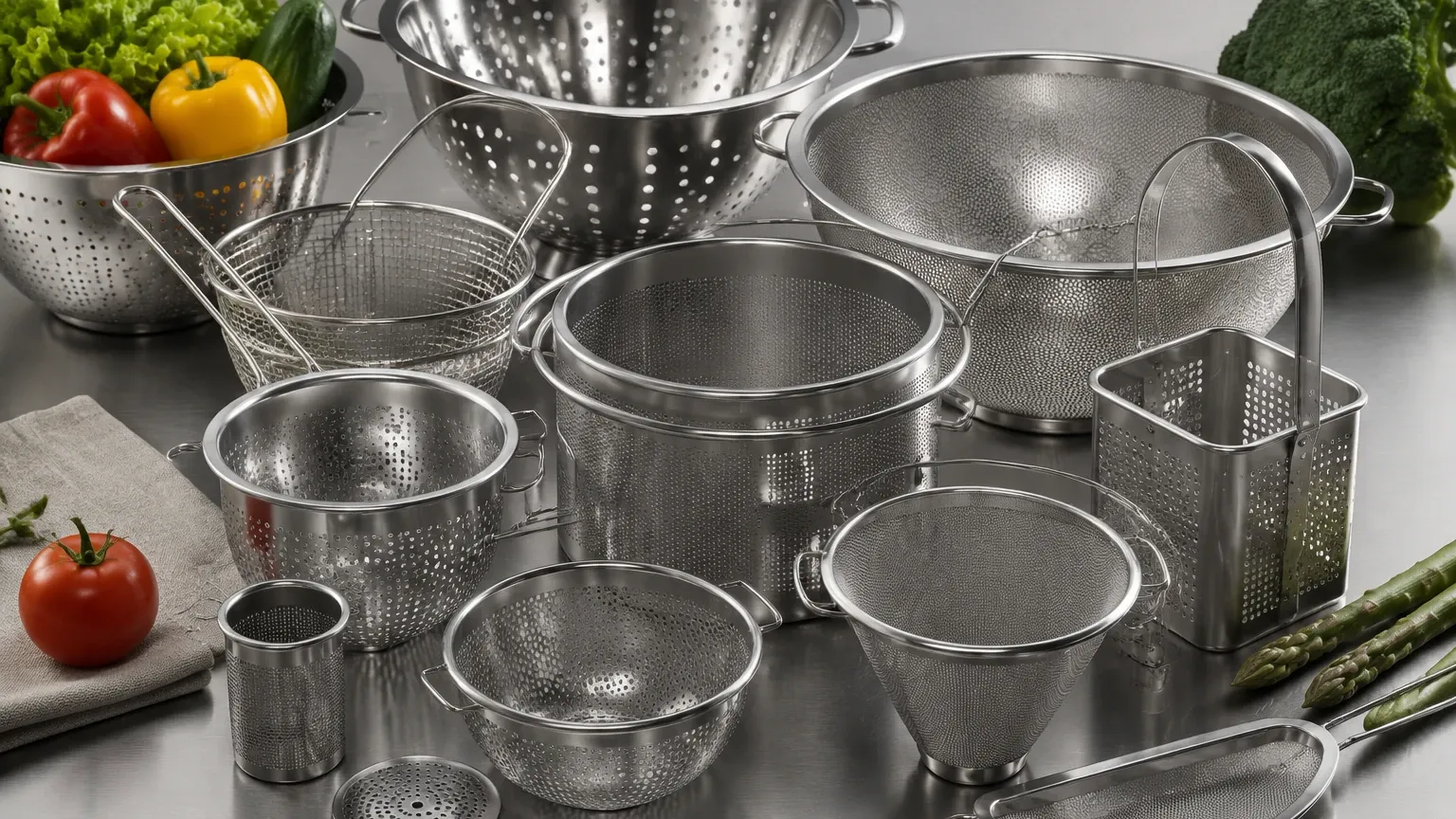
In the context of industrial food processing, the terms "food strainers & colanders" refer to much more than simple kitchen tools. For engineers and production managers, these components are critical pieces of filtration hardware designed to ensure product purity, protect downstream equipment, and maintain strict hygiene standards. Unlike consumer-grade counterparts, industrial food strainers and baskets are engineered to withstand high pressure, corrosive cleaning agents, and continuous operational cycles.
Selecting the right filtration solution involves a deep understanding of material science, fluid dynamics, and regulatory compliance. Whether managing a large-scale dairy facility, a beverage bottling line, or a pharmaceutical processing plant, the choice of Strainers & Baskets directly impacts the total cost of ownership and the quality of the final output.
Material Selection: Why Stainless Steel is the Standard
Material integrity is the first consideration in industrial food filtration. In environments where moisture, heat, and acidic or saline ingredients are present, carbon steel or plastics often fail to meet the necessary durability and safety thresholds. Stainless steel, specifically 304 and 316L grades, is the industry standard for several reasons:
Corrosion Resistance
Food processing often involves high concentrations of salt, vinegar, or citric acid, which can rapidly degrade inferior metals. 316L stainless steel, containing molybdenum, offers superior resistance to pitting and crevice corrosion, making it ideal for the most demanding applications. This ensures that the strainer does not introduce metallic contaminants into the food stream.
Thermal Stability
Industrial processes frequently involve extreme temperatures, from cryogenic freezing to high-heat pasteurization and sterilization. Stainless steel maintains its structural integrity across these ranges, preventing warping or embrittlement that could lead to mechanical failure.
Surface Finish and Hygiene
For food-grade applications, the surface finish of food strainers & colanders is paramount. Electropolishing or high-grit mechanical polishing reduces surface roughness (Ra), eliminating microscopic pits where bacteria can colonize. This smooth surface facilitates more effective Cleaning-in-Place (CIP) procedures, reducing the risk of cross-contamination between batches.
Engineering Considerations for Strainers & Baskets in Food Processing
When specifying strainers for an industrial line, engineers must look beyond basic dimensions. Several technical factors determine the efficiency and longevity of the filtration component.
Pressure Drop and Flow Rates
Every filtration element introduces a degree of resistance to the flow. A well-designed basket strainer minimizes the pressure drop (ΔP) to ensure that the pump system operates within its optimal range. Engineers must calculate the "open area ratio"—the ratio of the total area of the holes or mesh openings to the area of the inlet pipe. A ratio of 4:1 or higher is typically desired to prevent frequent clogging and excessive pressure buildup.
Mechanical Strength and Support
In high-viscosity applications, such as processing syrups or purees, the force exerted on the mesh can be significant. Industrial strainers often utilize a multi-layer construction where a fine wire mesh is supported by a heavy-duty perforated metal basket. This prevents the mesh from deforming or "bursting" under the load of accumulated solids.
Gasket and Seal Compatibility
While the metal body is durable, the seals are often the weak point. In food processing, gaskets must be made from FDA-compliant materials such as EPDM, PTFE, or Silicone. These materials must resist the specific fats, oils, and chemicals used in the process, as well as the high temperatures used during steam sterilization.
Types of Industrial Food Strainers and Their Applications
The configuration of food strainers & colanders varies based on where they sit in the production line and the nature of the media being filtered.
Simplex Basket Strainers
These are used in batch processes where the flow can be momentarily stopped to clean the basket. They are common in the initial stages of raw material intake, such as straining bulk liquids like milk or liquid sugar to remove large debris or packaging remnants.
Duplex Strainers
For continuous processes that cannot be shut down, duplex strainers feature two separate baskets with a diverter valve. When one basket becomes full, the flow is switched to the second basket, allowing the first to be cleaned without interrupting production. This is essential for high-volume beverage bottling lines.
Y-Strainers and Tee-Strainers
These are typically used for "police filtration" or terminal protection. They are installed immediately before sensitive equipment like spray nozzles, heat exchangers, or flow meters to catch any stray particulates that could cause damage or downtime.
Custom Cone and Hat Strainers
Often used during the commissioning of a new plant or after maintenance, these temporary strainers are placed between pipe flanges to capture construction debris (like weld slag) before it enters the main processing equipment.
Evaluating Performance: Micron Ratings and Flow Dynamics
The primary function of food strainers & colanders is to remove particulates of a specific size. This is measured in microns (μm) or mesh count. Understanding the difference between nominal and absolute filtration ratings is vital for procurement teams.
* Nominal Rating: Indicates the ability of the strainer to retain the majority of particulates at a given size (e.g., 90%). This is often sufficient for coarse straining.
* Absolute Rating: Refers to the diameter of the largest spherical particle that will pass through the filter under specified test conditions. This is required for high-precision applications, such as removing fine seeds from fruit juices or ensuring the clarity of oils.
Engineers must balance the desire for fine filtration with the reality of maintenance. A mesh that is too fine will clog rapidly, leading to frequent downtime. Conversely, a mesh that is too coarse will fail to protect downstream equipment or compromise product quality. Finding the "sweet spot" requires analyzing the particle size distribution of the contaminants and the viscosity of the fluid.
Maintenance and Hygiene Standards (HACCP/FDA)
In the food and beverage industry, equipment must align with Hazard Analysis and Critical Control Points (HACCP) protocols. Industrial strainers are often designated as "Critical Control Points" because they are the physical barrier against foreign object contamination.
Ease of Cleaning
B2B buyers should prioritize designs that allow for rapid disassembly. Quick-release covers and swing-bolt closures enable maintenance teams to remove and clean baskets in minutes. For highly sensitive applications, self-cleaning strainers use internal scrapers or backwashing mechanisms to remove debris without manual intervention.
Compliance Documentation
When purchasing Strainers & Baskets, it is essential to confirm that the manufacturer provides material traceability reports (MTRs). These documents prove that the stainless steel used is of the specified grade and that the components meet FDA or 3-A Sanitary Standards. This documentation is critical during safety audits and quality inspections.
Customization and OEM Solutions for Food Filtration
Every food processing facility has unique requirements based on floor space, existing piping, and specific product characteristics. Standard off-the-shelf strainers may not always provide the optimal solution. Customization options typically include:
* Custom Dimensions: Tailoring the height and diameter of the basket to fit within tight spatial constraints or to increase the holding capacity for high-solids applications.
* Specialized Connections: Offering various inlet/outlet configurations, including NPT threads, flanged ends, or sanitary tri-clamp fittings to match existing infrastructure.
* Heating Jackets: For products like chocolate, fats, or resins that solidify at room temperature, strainers can be equipped with steam or hot water jackets to maintain the product's viscosity during filtration.
* Reinforced Structures: Adding internal bracing or thicker perforated plates for applications involving high-pressure surges or heavy particulate loads.
By working with a manufacturer that offers OEM capabilities, engineering teams can develop filtration components that are perfectly integrated into their specific process, rather than forcing a standard product to fit a non-standard application.
Conclusion: Making Informed Procurement Decisions
Selecting industrial food strainers & colanders is a technical exercise that requires balancing filtration efficiency, mechanical durability, and hygienic design. For the B2B buyer, the focus should remain on the long-term performance and the reliability of the manufacturer. A high-quality stainless steel strainer may have a higher initial purchase price than a generic alternative, but the reduction in downtime, ease of cleaning, and protection of expensive downstream machinery provide a significantly better return on investment.
Before finalizing a purchase, engineers should confirm the following with their supplier:
1. Material Grade: Is the stainless steel 304 or 316L, and is it certified?
2. Filtration Accuracy: Does the micron rating meet the specific needs of the product?
3. Pressure Rating: Can the housing and the internal basket withstand the maximum system pressure?
4. Compliance: Does the design meet FDA or other relevant food safety standards?
5. Serviceability: Are replacement baskets and gaskets readily available?
By addressing these questions, production facilities can ensure they are using filtration solutions that support both operational excellence and consumer safety.
