


Gold Strainers
In the specialized field of mineral processing and precious metal recovery, the term "gold strainers" refers to high-precision filtration components designed to separate gold-bearing ores, activated carbon, and slurries within complex extraction circuits. These components are critical to the efficiency of Carbon-in-Pulp (CIP), Carbon-in-Leach (CIL), and Carbon-in-Column (CIC) processes. Because gold recovery involves abrasive slurries, corrosive chemicals like cyanide, and the need for extreme precision to prevent the loss of valuable materials, the engineering of these Strainers & Baskets must meet rigorous industrial standards.
For engineers and procurement teams, selecting the correct gold strainers involves more than choosing a mesh size. It requires a deep understanding of fluid dynamics, material science, and the mechanical stresses inherent in large-scale mining operations. This article explores the technical specifications, application environments, and selection criteria for industrial-grade gold strainers.
The Role of Gold Strainers in Mineral Processing
Gold extraction is a multi-stage process where filtration acts as a primary gatekeeper for efficiency. In a typical recovery circuit, strainers are deployed at several critical junctures to ensure that the gold-loaded carbon is retained while the barren slurry is allowed to pass through, or to protect downstream equipment from debris.
Trash Screening
Before the ore slurry enters the leaching tanks, it must be cleared of "trash"—organic matter like wood chips, plastic fragments, and oversized rock particles. If these contaminants are not removed by a robust trash strainer, they can clog interstage screens or contaminate the activated carbon, leading to significant recovery losses. Trash strainers used here must handle high flow rates and high solids concentrations without frequent blinding.
Interstage Screening
In CIP and CIL circuits, gold is adsorbed onto activated carbon granules. Interstage screens (often configured as cylindrical or basket-style strainers) are used to keep the carbon in the correct tank while allowing the slurry to flow to the next stage. The aperture of these gold strainers must be smaller than the carbon granules (typically 0.6 mm to 2.0 mm) but large enough to prevent the slurry from backing up.
Carbon Safety Screens
At the end of the circuit, carbon safety screens act as a final insurance policy. They catch any carbon that might have escaped through damaged interstage screens. Given the high value of gold-loaded carbon, the integrity of these strainers is paramount to the financial viability of the mining operation.
Technical Engineering Considerations
When designing or purchasing gold strainers, several engineering factors dictate the performance and lifespan of the component. A failure in any of these areas can result in unplanned downtime or, worse, the loss of precious metal.
Material Selection and Corrosion Resistance
Most industrial gold strainers are fabricated from high-grade stainless steel. While SS304 is suitable for some non-corrosive environments, SS316L is the industry standard for gold recovery due to its superior resistance to pitting and crevice corrosion in the presence of chlorides and cyanides. In highly aggressive environments, duplex stainless steels or specialized alloys may be required to prevent stress corrosion cracking.
Mechanical Strength and Abrasion Resistance
Slurries are inherently abrasive. The constant movement of rock particles against the strainer surface can lead to wire thinning and eventual structural failure. To combat this, gold strainers often utilize wedge wire (profile wire) technology. Wedge wire provides a continuous slot that widens inwardly, reducing the chance of particles becoming wedged (blinding) and offering a much higher structural rigidity than standard woven wire mesh.
Open Area and Flow Dynamics
The "open area" refers to the percentage of the strainer surface that is unobstructed. A higher open area reduces the pressure drop across the screen and allows for higher throughput. However, there is a trade-off between open area and structural strength. Precision engineering ensures that the strainer can withstand the hydraulic head pressure of the slurry while maintaining the maximum possible flow rate.
Types of Gold Strainers and Their Configurations
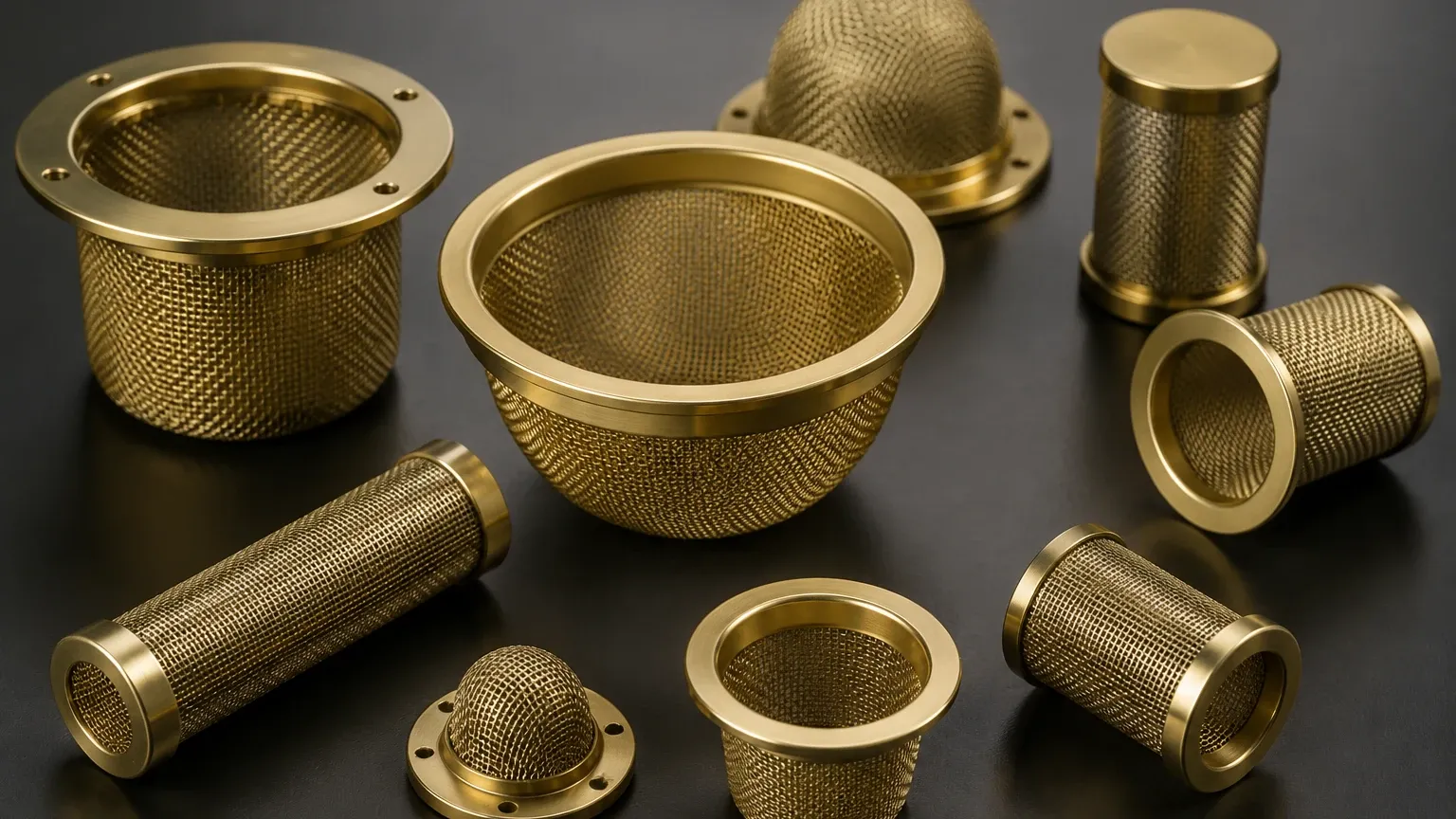
Industrial filtration solutions for gold recovery are rarely one-size-fits-all. Depending on the mechanical setup of the plant, different configurations of Strainers & Baskets are utilized.
1. Cylindrical Wedge Wire Screens: Used primarily as interstage screens. Their non-plugging characteristics make them ideal for continuous operation in slurry tanks.
2. Basket Strainers: Often used in pump suction lines or at the discharge of elution columns. These are designed for easy removal and cleaning, making them suitable for batch processes where carbon is moved between stages.
3. Vibrating Screen Panels: Used in the initial stages of ore preparation and trash removal. These require high fatigue resistance to withstand the constant mechanical vibration.
4. Conical Strainers (Temporary Strainers): Frequently used during the commissioning of a new plant to protect pumps and valves from construction debris, though they are less common in the active recovery circuit.
Overcoming Common Operational Challenges
Engineers must account for several operational risks when integrating gold strainers into a recovery circuit. Addressing these during the specification phase can significantly reduce total cost of ownership (TCO).
Blinding and Scaling
Blinding occurs when particles near the size of the aperture become stuck, effectively sealing the screen. In gold mining, calcium carbonate scaling is also a frequent issue, where minerals precipitate out of the solution and coat the mesh. Gold strainers designed with smooth surface finishes or specialized coatings can help mitigate scale adhesion. Furthermore, the use of "vane-type" or "pulsed" cleaning mechanisms in some interstage designs helps keep the apertures clear.
Near-Size Particle Interference
If the ore is ground to a size very close to the strainer aperture, the risk of blinding increases exponentially. Selection of the micron rating must be based on a detailed particle size distribution (PSD) analysis of the slurry. A safety margin is typically engineered into the aperture size to ensure that even with some wear, the strainer continues to perform its primary separation function.
Structural Fatigue
In tanks with high-intensity agitation, the gold strainers are subjected to constant turbulent forces. If the welding or the support structure of the basket is insufficient, the metal will eventually succumb to fatigue. High-quality manufacturing processes, such as TIG (Tungsten Inert Gas) welding and reinforced ribbing, are essential for components intended for long-term immersion in agitated tanks.
Customization and OEM Requirements
Because every mining site has a unique ore mineralogy and flow sheet, customization is often a necessity. OEM (Original Equipment Manufacturer) capabilities allow for the production of strainers that fit existing housings while improving upon the original design's performance.
Key customization options include:
* Variable Slot Widths: Tailoring the aperture to the specific carbon size used at a site.
* Reinforced Flanges: Ensuring a leak-proof seal in high-pressure environments.
* Surface Treatments: Electropolishing or passivating the stainless steel to enhance corrosion resistance and reduce material buildup.
* Handle and Lifting Lug Placement: Improving the ergonomics for maintenance teams who must manually pull and clean large baskets.
Maintenance and Replacement Cycles
To maintain optimal recovery rates, a proactive maintenance schedule for gold strainers is required. The replacement cycle depends heavily on the abrasiveness of the ore and the chemical composition of the slurry.
* Daily Monitoring: Pressure gauges should be monitored to detect early signs of blinding or scaling.
* Periodic Inspection: Strainers should be removed and inspected for wire thinning or broken welds. Even a small hole in a carbon safety screen can result in the loss of thousands of dollars worth of gold-loaded carbon.
* Cleaning Protocols: Acid washing is often used to remove calcium carbonate scale from stainless steel strainers. It is vital that the material (e.g., SS316L) is compatible with the cleaning agents used.
Conclusion: Selecting the Right Filtration Partner
The efficiency of a gold recovery circuit is inextricably linked to the performance of its filtration components. Gold strainers must be robust enough to survive the harshest industrial environments while remaining precise enough to capture microscopic values. By focusing on high-grade materials, precision aperture control, and site-specific customization, operators can ensure maximum uptime and recovery.
For those seeking reliable, high-performance filtration components, exploring a wide range of Strainers & Baskets is the first step toward optimizing industrial mineral processing. When engineering gold strainers, the goal is always to balance flow efficiency with structural integrity, ensuring that the only thing passing through the screen is the barren slurry, leaving the valuable gold-loaded carbon exactly where it belongs.
