


How to Clean Strainers
In industrial fluid handling systems, the efficiency of downstream equipment—such as pumps, valves, and heat exchangers—depends heavily on the performance of filtration components. Strainers & Baskets serve as the primary line of defense, capturing large-scale particulates and debris before they can cause mechanical damage or process contamination. However, the effectiveness of these components is not static; it diminishes as debris accumulates. Understanding how to clean strainers properly is essential for maintaining system pressure, ensuring flow rates, and extending the service life of the filtration media.
This technical guide explores the engineering considerations, safety protocols, and step-by-step methodologies for cleaning industrial strainers and baskets, with a focus on stainless steel components used in demanding chemical, food and beverage, and hydraulic applications.
Understanding the Need for Regular Strainer Maintenance
Industrial strainers are designed to be permanent or semi-permanent fixtures in a piping system. Unlike disposable filter cartridges, stainless steel baskets and screens are engineered for reuse. The accumulation of solids on the mesh surface creates a "filter cake," which initially may improve filtration efficiency but eventually leads to a significant increase in differential pressure (ΔP).
When the pressure drop across the strainer exceeds the manufacturer’s recommended threshold—typically between 5 to 10 psi (0.35 to 0.7 bar) depending on the application—the system must be halted or diverted for cleaning. Failure to address a clogged strainer can result in several critical issues:
* Structural Failure: Excessive pressure can cause the strainer basket to collapse or the mesh to burst, allowing contaminants to bypass the filter.
* Pump Cavitation: A restricted intake line starves the pump of fluid, leading to cavitation, vibration, and eventual mechanical seal or impeller failure.
* Process Inconsistency: Reduced flow rates can disrupt temperature control in heat exchangers or chemical reaction times in processing vessels.
Preparation and Safety Protocols
Before beginning the process of how to clean strainers, maintenance teams must adhere to strict safety and preparation protocols. Industrial systems often operate under high pressure, extreme temperatures, or with hazardous chemicals.
1. System Isolation: Utilize a bypass line if available to maintain process flow, or shut down the system entirely. Close the inlet and outlet valves to isolate the strainer housing.
2. Depressurization: Slowly open the vent valve or drain plug to release internal pressure. Never attempt to open a strainer housing while it is under pressure.
3. Fluid Drainage: Drain the remaining fluid into a secondary containment vessel, especially if dealing with hazardous chemicals or oils.
4. PPE Requirements: Ensure personnel are equipped with appropriate personal protective equipment (PPE), including chemical-resistant gloves, face shields, and aprons, depending on the fluid being filtered.
How to Clean Strainers: A Step-by-Step Methodology
Once the strainer is safely isolated and the housing is opened, the cleaning process follows a technical hierarchy based on the type of contaminant and the mesh density.
1. Mechanical Removal of Large Debris
Upon removing the basket or screen from the housing, the first step is to remove loose or large-scale particulates.
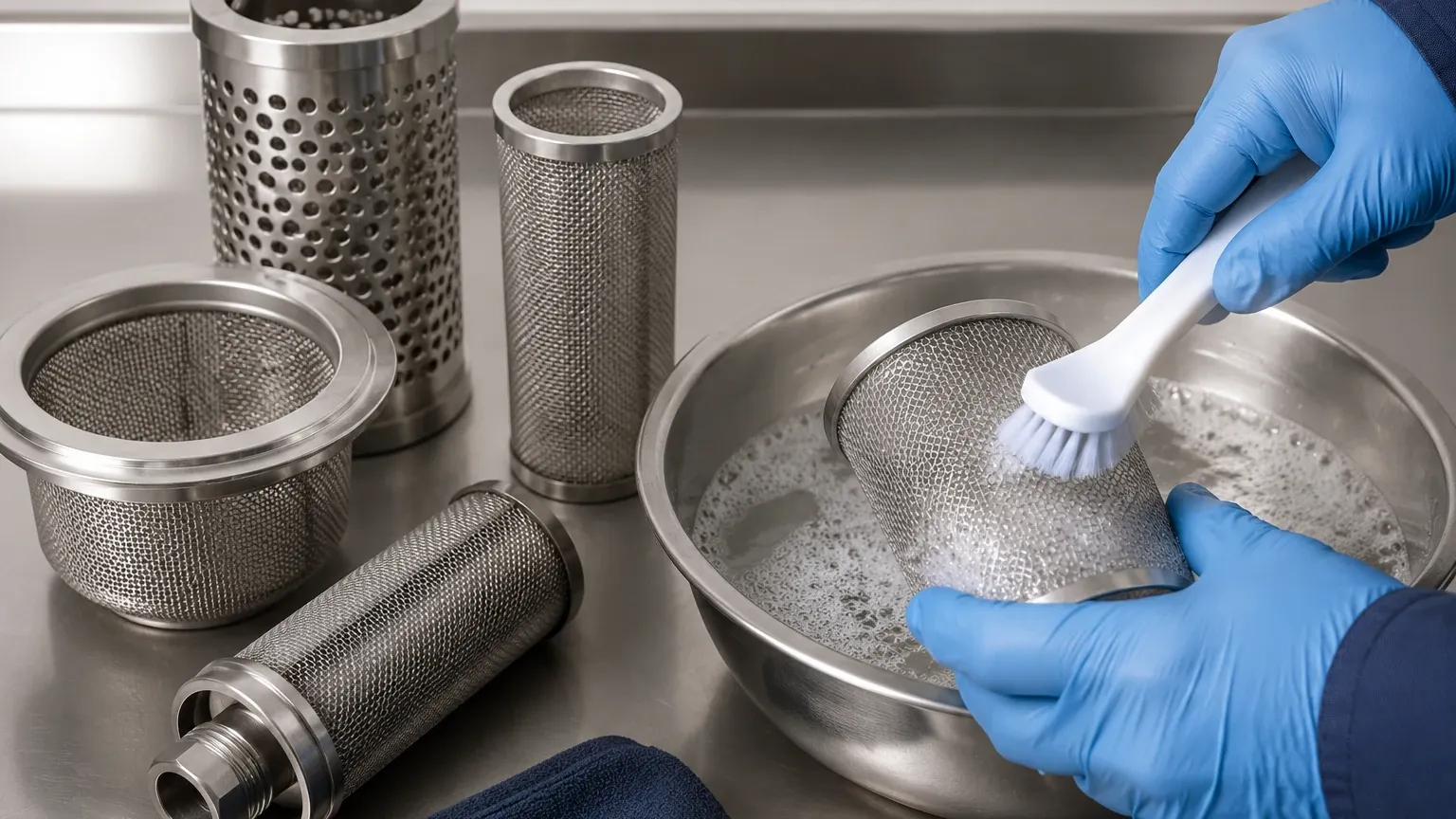
* Gravity and Manual Removal: Invert the basket to allow loose debris to fall out. Use a non-metallic brush (such as nylon) to gently remove stuck particles. Avoid using wire brushes or metal scrapers on fine mesh, as these can scratch the stainless steel or distort the wire spacing.
* Low-Pressure Rinsing: Use a standard water hose to rinse the basket from the outside in (reverse flow). This helps dislodge particles trapped within the mesh openings.
2. High-Pressure Water Blasting
For stubborn or compacted debris, high-pressure water (hydro-blasting) is effective. However, the angle and pressure must be controlled. Direct the spray at a 45-degree angle to the mesh surface to "peel" away the debris. For fine wire mesh, ensure the pressure does not exceed the structural limits of the wire to prevent deformation.
3. Chemical Soaking and Degreasing
If the strainer has been used in oil, resin, or chemical applications, mechanical cleaning may be insufficient.
* Solvent Cleaning: Soak the basket in a compatible degreaser or solvent to break down hydrocarbons.
* Acid/Alkali Cleaning: For mineral scale or organic buildup, use a mild acid or alkaline solution. It is critical to confirm that the cleaning agent is compatible with the specific grade of stainless steel (e.g., 304 or 316L). For example, avoid high concentrations of chlorides which can cause pitting corrosion in stainless steel.
4. Ultrasonic Cleaning
For precision metal filter components with very fine micron ratings, ultrasonic cleaning is the gold standard. The basket is submerged in a specialized cleaning fluid, and high-frequency sound waves create cavitation bubbles. These bubbles implode on the surface of the mesh, reaching deep into the pores to remove microscopic particles that manual brushing cannot reach.
Inspection and Quality Control Post-Cleaning
Cleaning is only half of the maintenance cycle. Before reinstallation, a thorough inspection is required to ensure the integrity of the Strainers & Baskets.
* Visual Mesh Inspection: Hold the basket up to a strong light source. Check for "blinded" areas where debris remains lodged. If more than 10-15% of the surface area remains clogged after multiple cleaning attempts, the basket may need professional refurbishment or replacement.
* Structural Integrity Check: Inspect the welds, the flange, and the handle. Look for signs of stress cracking or deformation caused by previous high-pressure events.
* Seal and Gasket Assessment: Never reuse a damaged or overly compressed gasket. The seal between the basket and the housing is critical; if it fails, fluid will "bypass" the filter, rendering the strainer useless.
* Corrosion Analysis: Check for signs of localized corrosion, such as pitting or crevice corrosion, which can weaken the wire mesh over time.
Common Risks and Pitfalls in Strainer Cleaning
Even experienced maintenance teams can make errors that compromise filtration performance. Common pitfalls include:
* Using Abrasive Tools: Steel wool or carbon steel brushes can leave behind small particles of carbon steel on the stainless surface. These particles will rust, leading to galvanic corrosion and premature failure of the strainer.
* Incomplete Rinsing: If chemical cleaning agents are not thoroughly rinsed off, they can react with the process fluid or concentrate in crevices, causing corrosion during operation.
* Improper Reinsertion: If a basket is not seated correctly in the housing, the cover may not seal properly, or the basket may vibrate during operation, leading to fatigue failure of the mesh.
* Neglecting the Housing: While focusing on how to clean strainers, engineers often forget to clean the interior of the strainer housing itself. Accumulated sediment at the bottom of the housing can quickly re-clog a clean basket once flow resumes.
Engineering Considerations for Custom Filtration Solutions
In some industrial environments, standard cleaning procedures may need to be performed too frequently, indicating that the original strainer selection may not be optimized for the current process conditions. When evaluating maintenance cycles, consider the following engineering factors:
* Open Area Ratio (OAR): A higher OAR (the ratio of the total area of the holes to the area of the pipe inlet) allows for longer run times between cleanings. If cleaning is required daily, a larger basket or a custom-designed strainer with more surface area may be necessary.
* Mesh vs. Perforation: Perforated plates are easier to clean but offer less surface area than pleated wire mesh. For high-solids loading, a combination of a perforated support basket with a fine mesh liner can provide both strength and filtration precision.
* Material Selection: In corrosive environments, upgrading from 304 to 316L stainless steel or specialized alloys can prevent the surface roughness that allows debris to "stick" more tenaciously to the mesh.
Conclusion: Optimizing Total Cost of Ownership
Effective maintenance of industrial strainers is a balance between operational uptime and equipment protection. By implementing a standardized approach to how to clean strainers, facilities can ensure that their filtration systems operate at peak efficiency with minimal pressure drop.
Regular cleaning, coupled with rigorous inspection and the use of high-quality stainless steel components, reduces the total cost of ownership by preventing downstream equipment failure and minimizing the need for frequent replacement of filtration media. For systems with unique flow characteristics or specialized chemical requirements, consulting with a manufacturer for customized basket designs can further optimize maintenance intervals and process reliability.
