


Jb Basket Strainers
In industrial fluid handling, the integrity of downstream equipment such as pumps, valves, and heat exchangers depends heavily on the efficiency of primary filtration. Among the various configurations available to engineers, jb basket strainers represent a critical component for removing large-scale contaminants from liquid streams. These strainers are designed to provide a high dirt-holding capacity while maintaining a low pressure drop, making them indispensable in sectors ranging from chemical processing to large-scale water treatment.
As a specialized manufacturer of stainless steel filtration solutions, Kaifil focuses on the precision engineering required to produce Strainers & Baskets that meet the rigorous demands of industrial environments. Understanding the technical nuances of these components—from material selection to flow dynamics—is essential for optimizing system performance and reducing long-term operational costs.
The Role of Strainers & Baskets in Industrial Process Protection
Industrial piping systems are often susceptible to debris such as scale, rust, weld beads, and foreign solids. If left unfiltered, these particles can cause catastrophic failure in sensitive equipment. The primary function of jb basket strainers is to intercept these solids before they reach critical system nodes. Unlike Y-strainers, which are typically used for smaller amounts of debris, basket-style strainers are preferred when the concentration of solids is higher or when the process requires frequent cleaning.
The "basket" design provides a significantly larger surface area than other strainer types. This increased area allows for longer run times between cleaning cycles and minimizes the impact on system pressure. In the context of jb basket strainers, the focus is often on robust construction that can handle high flow rates without compromising the structural integrity of the filter element. For engineers, selecting the right strainer involves balancing the need for fine filtration with the hydraulic requirements of the overall system.
Technical Characteristics of Jb Basket Strainers
When evaluating jb basket strainers, several design features distinguish high-performance units from standard components. These features directly impact ease of maintenance, filtration accuracy, and service life.
Housing and Cover Design
The housing of a basket strainer must be rated for the maximum operating pressure of the system. Common designs include bolted covers for high-pressure applications and quick-opening covers (such as swing-bolt or clamp designs) for systems that require frequent manual cleaning. The internal geometry is engineered to direct the flow through the basket with minimal turbulence, which helps prevent erosion of the filter mesh.
Basket Geometry
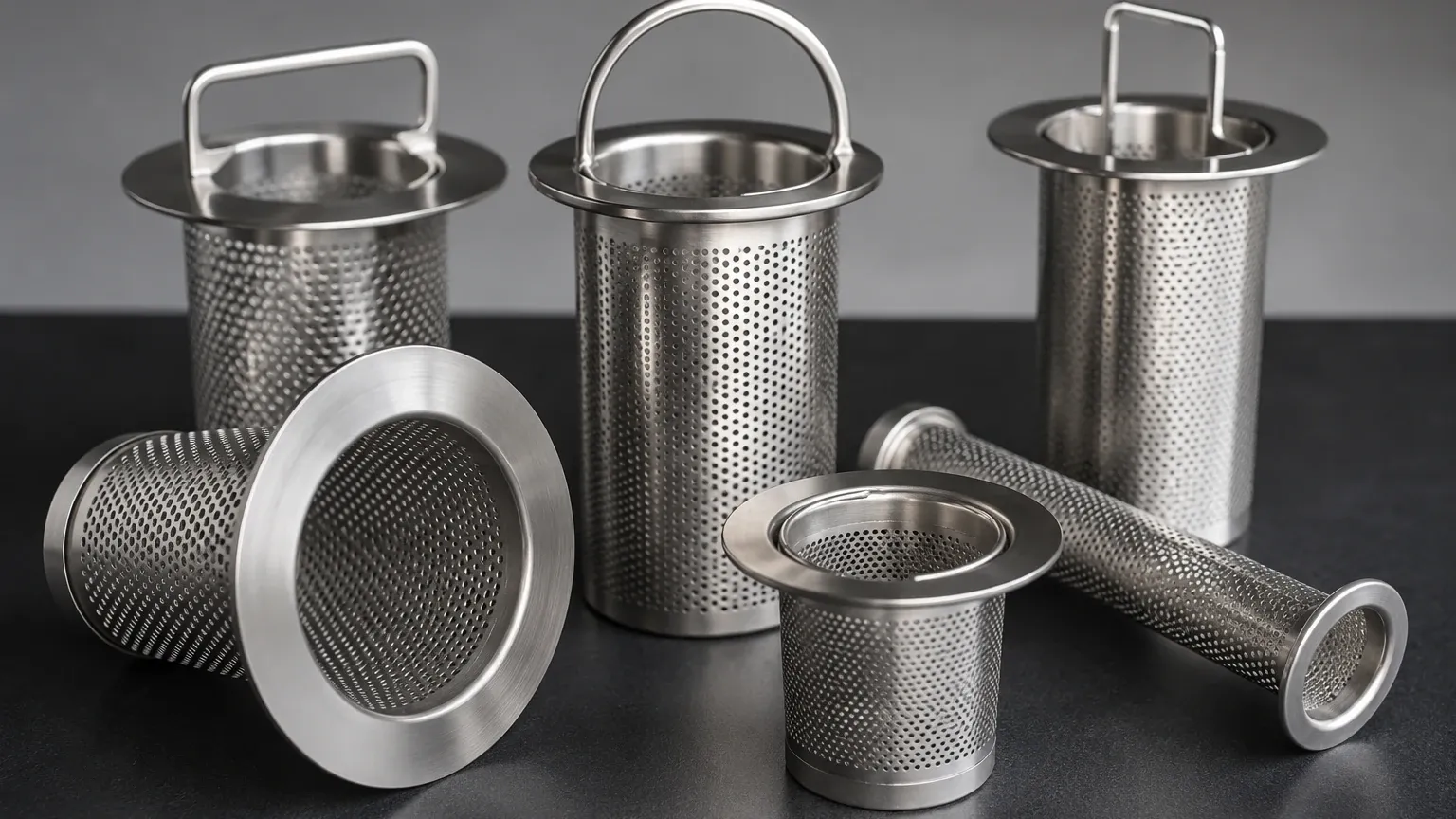
The basket itself is the heart of the unit. It typically consists of a perforated metal cylinder that provides structural support, lined with a finer wire mesh to achieve the desired micron rating. The ratio of the open area of the basket to the cross-sectional area of the inlet pipe (often referred to as the "open area ratio") is a key metric. A higher ratio ensures that even as the basket collects debris, the flow remains relatively unimpeded.
Sealing Mechanisms
Effective sealing is paramount to prevent bypass, where unfiltered fluid escapes around the edges of the basket. Precision-machined seats and high-quality O-rings or gaskets (typically EPDM, Viton, or PTFE) are used to ensure that 100% of the fluid passes through the filtration media. In jb basket strainers, the seal between the basket and the housing body must be robust enough to withstand thermal expansion and pressure surges.
Material Engineering: Selecting the Right Stainless Steel Grade
Material selection is perhaps the most critical factor in the longevity of jb basket strainers, especially in corrosive environments. Kaifil utilizes high-grade stainless steel to ensure durability and chemical compatibility.
1. SS304 Stainless Steel: This is the standard material for most general-purpose industrial applications. It offers excellent strength and good corrosion resistance for water treatment, food and beverage, and light chemical processes.
2. SS316L Stainless Steel: For more demanding environments, such as pharmaceutical manufacturing or chemical processing involving chlorides and acids, SS316L is the preferred choice. The addition of molybdenum provides superior resistance to pitting and crevice corrosion. The "L" (low carbon) variant is particularly important for welded components to prevent sensitization and intergranular corrosion.
3. Specialty Alloys: In extreme cases involving highly aggressive media or high temperatures, materials like Duplex stainless steel or Monel may be required. However, for the majority of B2B industrial applications, precision-manufactured SS316L provides the best balance of performance and cost-effectiveness.
Beyond the housing, the mesh material must also be considered. The wire mesh used in Kaifil's Strainers & Baskets is woven to precise specifications to ensure consistent pore size and mechanical stability under load.
Optimizing Filtration Performance: Mesh Size and Micron Ratings
Specifying the correct filtration level for jb basket strainers is a delicate engineering task. If the mesh is too coarse, harmful particles will pass through; if it is too fine, the strainer will clog prematurely, causing excessive pressure drop and requiring frequent maintenance.
* Perforated Media: Used for coarse filtration (typically 1/2" down to 1/32" holes). These are ideal for removing large debris like stones, bolts, or large scale.
* Wire Mesh Liners: For finer filtration, a wire mesh liner is added to the perforated basket. This allows for filtration down to 20 microns or even finer. The mesh is typically spot-welded or mechanically fastened to the support basket.
* Multi-Layer Sintered Mesh: In applications requiring extreme durability and precise filtration, multiple layers of wire mesh can be sintered together. This creates a rigid, high-strength filter element that can withstand high differential pressures without deforming.
Engineers must also account for the viscosity of the fluid. Higher viscosity liquids require larger mesh openings or a significantly larger strainer body to maintain acceptable flow rates. When dealing with jb basket strainers, calculating the clean pressure drop using the fluid's specific gravity and viscosity is a mandatory step in the design phase.
Customization and OEM Solutions for Complex Systems
Standard off-the-shelf strainers often fail to meet the specific spatial or performance requirements of specialized industrial skids. This is where custom manufacturing becomes essential. Kaifil provides extensive OEM capabilities to tailor jb basket strainers to unique application needs.
Customization options include:
* Modified Inlet/Outlet Configurations: Offset nozzles, right-angle flow, or custom flange ratings (ANSI, DIN, JIS) to fit existing piping layouts.
* Jacketed Designs: For processes involving fluids that solidify at room temperature (like resins or certain food products), steam or hot oil jackets can be integrated into the strainer housing to maintain fluid temperature.
* Magnetic Inserts: To capture fine ferrous particles that might otherwise pass through a standard mesh, magnetic rods can be installed within the basket.
* Differential Pressure Taps: Pre-installed ports for pressure gauges or sensors allow for automated monitoring of the strainer’s condition.
By working closely with an OEM manufacturer, engineering teams can ensure that the filtration component is not an afterthought but a fully integrated part of the process architecture.
Maintenance, Cleaning, and Replacement Protocols
The total cost of ownership for jb basket strainers is heavily influenced by maintenance requirements. A well-designed strainer should be easy to service with minimal downtime.
Cleaning Procedures
When the differential pressure reaches a predetermined limit (typically 5-10 psi above the clean pressure drop), the strainer must be cleaned. The process involves isolating the unit, venting pressure, and removing the basket. For jb basket strainers, it is often recommended to have a spare basket on hand. This allows the operator to swap the dirty basket for a clean one immediately, minimizing the time the system is offline. The dirty basket can then be cleaned using ultrasonic baths, high-pressure water jets, or chemical cleaning, depending on the nature of the contaminant.
Replacement Cycles
While the stainless steel housing of a basket strainer can last for decades, the internal mesh baskets are wear items. Over time, repeated cleaning and exposure to high-velocity flow can lead to wire fatigue or erosion. Regular inspection for broken wires or distorted mesh is critical. If a basket shows signs of structural compromise, it should be replaced immediately to prevent debris from bypassing the filter and damaging downstream equipment.
Critical Factors for Procurement and System Integration
For purchasing teams and project engineers, selecting a supplier for jb basket strainers involves more than comparing unit prices. The reliability of the manufacturer and the technical support provided are equally important.
Key considerations include:
* Compliance and Certification: Ensure the manufacturer adheres to international standards such as ISO 9001 and that the materials used are traceable (MTRs).
* Technical Documentation: A reputable supplier should provide detailed drawings, pressure drop curves, and installation manuals.
* Lead Times: In maintenance and repair operations (MRO), lead time is often the most critical factor. Manufacturers like Kaifil, who control the production process from material selection to final assembly, can often offer more reliable delivery schedules.
* Scalability: Whether the project requires a single custom unit or hundreds of standard strainers for a global rollout, the manufacturer must have the production capacity to meet the demand without sacrificing quality.
In conclusion, jb basket strainers are vital components in the protection of industrial fluid systems. By focusing on high-quality materials, precise engineering, and application-specific customization, operators can ensure efficient filtration, protect expensive downstream assets, and achieve a lower total cost of ownership. For those seeking reliable, high-performance Strainers & Baskets, partnering with a manufacturer that understands the complexities of industrial filtration is the most effective path to success.
