


J Strainer
In industrial fluid handling systems, the protection of downstream equipment such as pumps, valves, and instrumentation is a critical engineering priority. Among the various configurations used to remove particulate matter from process streams, the j strainer—often categorized within the broader family of Strainers & Baskets—serves a specific role in suction and low-pressure applications. These components are designed to capture coarse solids that could otherwise cause mechanical wear or catastrophic failure in high-value machinery.
Selecting the appropriate strainer requires a deep understanding of fluid dynamics, material compatibility, and the specific geometric constraints of the piping system. For engineers and procurement teams, the j strainer represents a robust solution for maintaining system integrity in sectors ranging from chemical processing to large-scale water treatment.
Understanding the Role of J Strainers in Industrial Filtration
A j strainer is characterized by its specific flow path and housing geometry, which is often optimized for suction lines or vertical-to-horizontal piping transitions. Unlike standard inline Y-strainers that are frequently used in high-pressure steam or gas lines, the J-style configuration is frequently found in liquid applications where the prevention of pump cavitation is paramount.
The primary function of these strainers is the removal of large debris, scale, and foreign objects. Because they are often placed on the suction side of a pump, the design must minimize pressure drop (Delta P). High resistance at the strainer can lead to a drop in Net Positive Suction Head (NPSH) available to the pump, resulting in cavitation, vibration, and eventual seal or impeller damage.
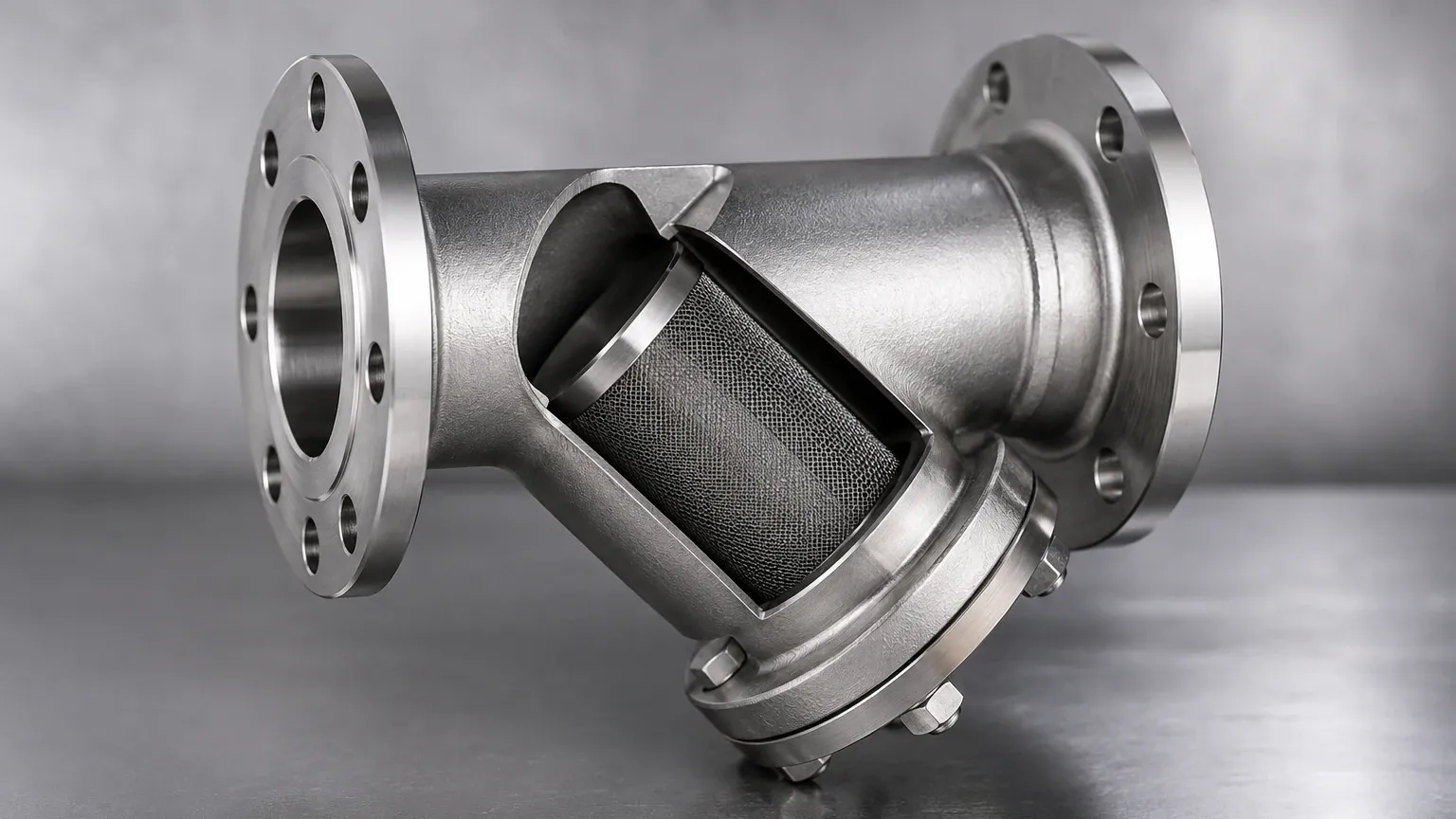
In many industrial contexts, the j strainer is synonymous with durability. By utilizing stainless steel construction, these components withstand the erosive forces of high-velocity fluids and the corrosive nature of industrial chemicals. The internal element, usually a perforated metal basket or a wire mesh-lined cylinder, is the heart of the device, determining the filtration efficiency and the maintenance interval.
Engineering Specifications and Material Integrity
When specifying a j strainer for a B2B application, material selection is the first point of evaluation. Kaifil specializes in high-grade stainless steel solutions, typically utilizing AISI 304 or 316L.
Stainless Steel 304 vs. 316L
* Type 304: Suitable for general industrial applications, including water treatment and food processing where moderate corrosion resistance is required. It offers excellent structural strength and cost-effectiveness.
* Type 316L: Preferred for chemical processing, pharmaceutical, and marine environments. The addition of molybdenum provides superior resistance to chlorides and pitting, ensuring a longer service life in aggressive media.
Filtration Media Configurations
The internal basket of a j strainer can be configured in several ways depending on the target particle size:
1. Perforated Plate: Used for coarse filtration (typically 1/16" to 1/4" holes). These provide high structural rigidity and are ideal for capturing large scale or stones.
2. Wire Mesh Lining: For finer filtration requirements, a stainless steel wire mesh is sintered or mechanically fastened to the interior of a perforated basket. This allows for filtration down to 40 microns or finer while maintaining the mechanical strength of the outer plate.
3. Wedge Wire: In high-viscosity applications or where backwashing is required, wedge wire elements offer a non-clogging surface and high open-area ratios.
Comparative Analysis: J Strainer vs. Standard Basket Strainers
While both J-style and standard basket strainers fall under the category of Strainers & Baskets, their mechanical footprints differ significantly. A standard simplex basket strainer usually features a top-entry design where the fluid enters and exits at the same horizontal plane.
The j strainer configuration is often chosen when the piping layout necessitates a change in direction or when space constraints prevent the use of a traditional T-style or Y-style housing. The "J" shape allows for a deeper basket well in some designs, increasing the dirt-holding capacity before the pressure drop becomes critical. This is particularly useful in batch processes where the strainer cannot be cleaned frequently without interrupting production.
Furthermore, the flow velocity profile within a J-style housing can be more laminar than in a Y-strainer. Reduced turbulence leads to less internal erosion and a more predictable pressure drop curve, which is essential for engineers performing system modeling and pump sizing.
Key Selection Parameters for Engineers
Specifying a j strainer involves more than matching the pipe size. Engineers must confirm several technical variables to ensure the component performs as expected over its operational lifecycle.
1. Open Area Ratio (OAR)
The OAR is the ratio between the total open area of the strainer holes and the cross-sectional area of the inlet pipe. A well-designed j strainer should have an OAR of at least 4:1. A higher OAR ensures that as the basket begins to clog with debris, the increase in pressure drop is gradual rather than exponential, providing more time for maintenance teams to respond.
2. Micron Rating and Mesh Count
Choosing the correct mesh size is a balance between protection and flow. If the mesh is too fine, the strainer will clog prematurely; if it is too coarse, downstream equipment remains at risk. Engineers must analyze the particle size distribution (PSD) of the process fluid and select a micron rating that captures the "killer particles"—those large enough to jam a valve or score a pump sleeve.
3. Pressure and Temperature Ratings
Industrial strainers must be rated for the maximum allowable working pressure (MAWP) of the system. This includes accounting for potential pressure spikes or water hammer. Since stainless steel's strength decreases at elevated temperatures, the pressure-temperature rating (P-T rating) must be verified against the specific alloy used in the j strainer construction.
4. Connection Types
Depending on the industry, connections may vary:
* Flanged (ANSI/ASME): Standard for heavy industrial and chemical applications, allowing for easy removal and high-pressure sealing.
* NPT/Threaded: Common in smaller diameter lines (under 2 inches) for water or hydraulic oil.
* Sanitary/Tri-Clamp: Required for food, beverage, and pharmaceutical applications to ensure no crevices exist where bacteria can grow.
Installation Best Practices and Maintenance Cycles
The performance of a j strainer is heavily dependent on correct installation. Because these are often used in suction applications, they must be installed as close to the pump as possible, but with sufficient straight pipe length upstream to ensure a uniform flow profile. This prevents uneven loading of the strainer basket, which can lead to localized mesh failure.
Maintenance Considerations
Maintenance cycles for Strainers & Baskets are typically determined by monitoring the differential pressure (DP) across the unit. Installing DP gauges or transducers is highly recommended.
* Cleaning Protocol: When the DP reaches a predetermined limit (often 5-10 psi above the clean drop), the system should be bypassed or shut down. The J-strainer cover is removed, and the basket is extracted. Stainless steel baskets are reusable and should be cleaned using a soft brush or ultrasonic bath, depending on the nature of the contaminants.
* Gasket Integrity: Every time the strainer is opened, the cover gasket or O-ring should be inspected. For chemical applications, PTFE or Viton seals are standard to prevent leaks and environmental hazards.
Common Risks and Mitigation in Strainer Operation
One of the most common risks in operating a j strainer is "blinded" mesh. This occurs when fine particulates that are slightly smaller than the mesh openings become wedged in the wires. Over time, this reduces the effective open area. To mitigate this, engineers may specify a "staggered" hole pattern in perforated plates or use specialized weave patterns in wire mesh that promote particle release during cleaning.
Another risk is structural collapse of the basket. If a strainer is left in service too long and the differential pressure exceeds the basket's burst rating, the metal can deform or tear. This sends both the captured debris and pieces of the strainer itself into the pump. High-quality j strainers from manufacturers like Kaifil include reinforced basket handles and heavy-duty support cylinders to prevent such failures.
Custom OEM Solutions for Complex Filtration Requirements
Off-the-shelf filtration components often fail to meet the specific needs of specialized industrial processes. This is where custom manufacturing becomes essential. For a j strainer to function optimally, it may require modifications such as:
* Custom Dimensions: Adjusting the face-to-face length to fit existing piping without expensive modifications.
* Specialized Coatings: Applying ECTFE (Halar) or other fluoropolymer coatings for extreme chemical resistance.
* Magnetic Inserts: Adding magnetic rods to the basket to capture fine ferrous particles that might pass through a standard mesh.
* Heating Jackets: For high-viscosity fluids like resins or chocolate, a steam or hot oil jacket ensures the fluid remains at the correct temperature to flow through the strainer.
Kaifil’s expertise in custom stainless steel filtration allows for the development of these specialized components. By working closely with engineering teams, manufacturers can provide j strainers that are not just generic parts, but engineered solutions tailored to the specific flow rates, chemical compositions, and maintenance schedules of a particular facility.
Conclusion: Confirming Requirements for the Next Step
Before finalizing a purchase or specification for a j strainer, procurement and engineering teams should confirm the following data points with their supplier:
1. Fluid Properties: Viscosity, density, and chemical concentration.
2. Flow Conditions: Minimum, normal, and maximum flow rates.
3. Contaminant Profile: Type of solids, expected loading (ppm), and particle size.
4. Regulatory Compliance: Any requirements for PED (Pressure Equipment Directive), ASME Section VIII, or FDA compliance for food-contact surfaces.
By addressing these technical boundaries, organizations ensure they select a filtration solution that provides maximum protection with minimum operational overhead. Whether for a new installation or a system retrofit, the j strainer remains a fundamental component in the reliable operation of industrial fluid systems.
