


Kitchen Sink Basket Strainers
In the context of commercial plumbing, industrial food preparation, and laboratory environments, kitchen sink basket strainers serve as a critical first line of defense for drainage systems. While often overlooked as a simple hardware component, the engineering behind these filtration devices determines the efficiency of wastewater management and the protection of downstream piping from debris accumulation. For facility managers, engineers, and B2B procurement teams, selecting the appropriate strainer involves evaluating material science, hydraulic performance, and mechanical durability.
Industrial-grade filtration solutions, such as those found in professional Strainers & Baskets, are designed to withstand high-volume usage, corrosive cleaning agents, and physical stress that would cause standard residential components to fail. This guide examines the technical specifications and selection criteria essential for professional applications.
Understanding the Role of Basket Strainers in Commercial and Industrial Plumbing
The primary function of kitchen sink basket strainers is the separation of solids from liquid waste. In a commercial kitchen or industrial processing facility, the volume of organic and inorganic debris is significantly higher than in domestic settings. A failure in this primary filtration stage can lead to clogged grease traps, damaged pumps, and costly downtime for pipe remediation.
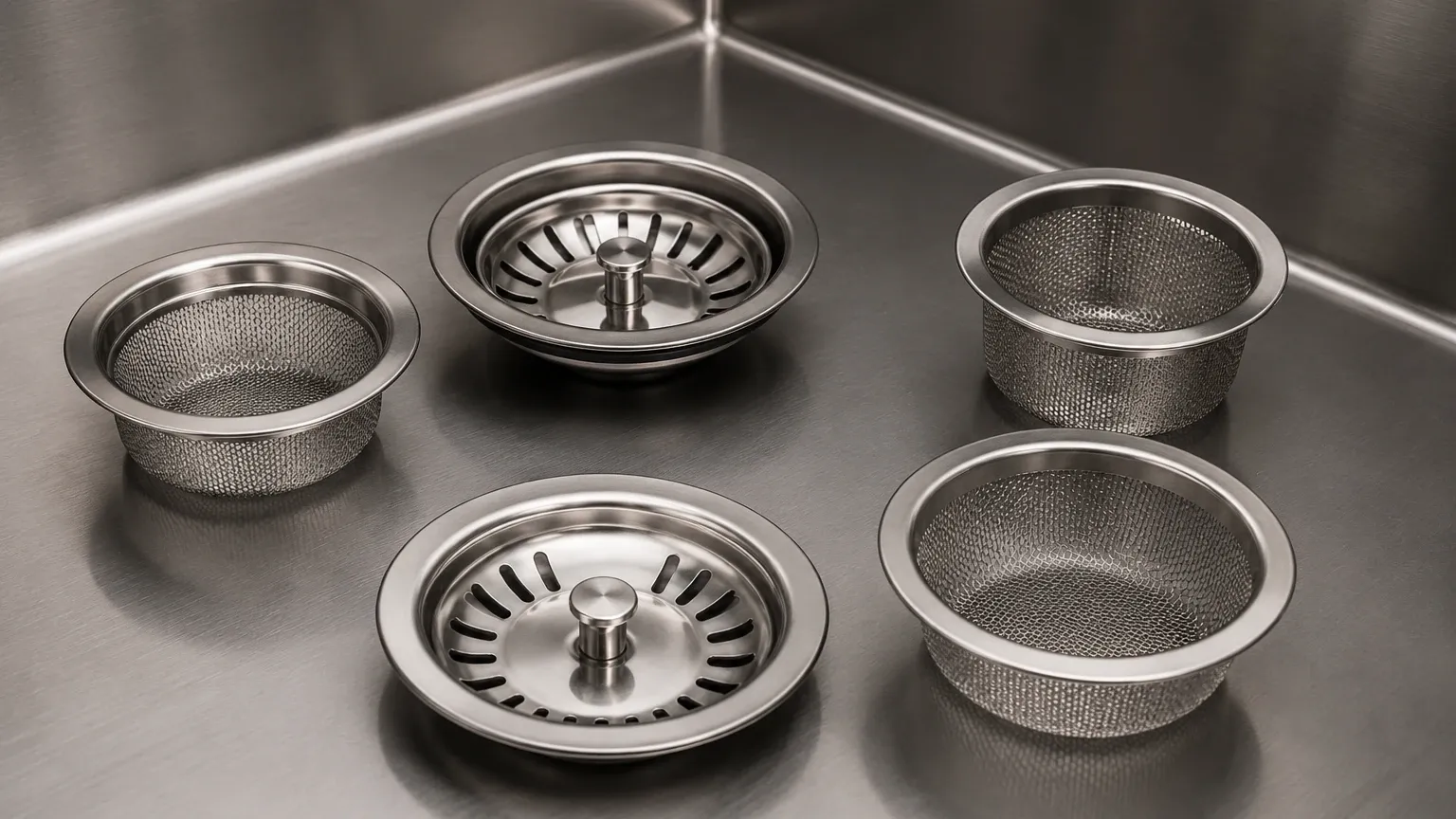
From an engineering perspective, the basket strainer acts as a removable filter element within a housing (the strainer body). The "basket" design is intentional; it provides a large surface area for filtration, allowing water to pass through the sides and bottom even as the base of the basket begins to fill with captured solids. This prevents immediate drainage backup and maintains a consistent flow rate during peak operational hours.
Engineering Specifications and Material Selection
Material integrity is the most significant factor in the longevity of a basket strainer. Most professional-grade components are manufactured from stainless steel, but the specific grade of the alloy dictates its performance in different environments.
Stainless Steel Grade 304 vs. 316
* Type 304: This is the standard for most commercial kitchens. It offers excellent corrosion resistance to common food acids and high-temperature water. It is durable and maintains its structural integrity under frequent mechanical cleaning.
* Type 316: In environments involving high salinity, heavy chlorides, or aggressive chemical cleaning agents (common in laboratory or specialized food processing), Type 316 stainless steel is preferred. The addition of molybdenum enhances its resistance to pitting and crevice corrosion.
Gauge and Thickness
Industrial strainers typically utilize a heavier gauge of metal than consumer models. A thicker gauge prevents the strainer body from warping under the weight of a full sink or the thermal expansion caused by boiling water. For B2B applications, confirming the thickness of the flange and the basket walls is essential to ensure the component can handle the torque applied during installation and the rigors of daily use.
Design Variations: Perforations, Mesh, and Flow Dynamics
The efficiency of kitchen sink basket strainers is largely determined by the configuration of the filtration media. Manufacturers like Kaifil utilize various methods to achieve the desired balance between filtration accuracy and flow capacity.
Perforation Patterns
Most standard baskets use circular perforations. The diameter of these holes determines the size of the particles captured. In industrial settings, the "open area" percentage is a key metric. A higher open area reduces the pressure drop and allows for faster drainage, which is critical for high-capacity sinks. However, if the perforations are too large, they may allow debris to pass through that could settle in the p-trap.
Wire Mesh Integration
For applications requiring finer filtration—such as capturing small seeds, coffee grounds, or micro-solids in laboratory sinks—a wire mesh lining may be integrated into the basket. Stainless steel wire mesh provides a much higher level of precision than standard perforations. When selecting mesh-lined baskets, engineers must consider the "micron rating" and the potential for the mesh to blind (clog) more rapidly than perforated metal.
Flow Rate Considerations
Flow dynamics are influenced by the depth of the basket and the total surface area of the openings. A deeper basket allows for more debris accumulation before the flow is significantly restricted. In high-flow environments, specifying a basket with a high-flow center post or a specialized hole pattern can prevent the "vortexing" effect that sometimes slows drainage.
Key Evaluation Criteria for B2B Procurement
When sourcing kitchen sink basket strainers for large-scale projects or OEM integration, technical professionals should evaluate the following criteria to ensure long-term performance and compatibility.
Dimensional Compatibility
While 3-1/2 inch drains are the industry standard for commercial sinks, variations in flange thickness and tailpiece diameters can complicate installation. Procurement teams must verify the exact dimensions of the sink opening and the connection type (e.g., slip joint vs. threaded) to ensure a leak-proof fit. Precision-manufactured components ensure that the strainer sits flush with the sink surface, preventing the accumulation of bacteria-harboring residue around the rim.
Sealing Mechanisms
The seal between the strainer body and the sink is a common failure point. While plumbers' putty was traditionally used, modern industrial strainers often feature high-performance gaskets made from EPDM or silicone. These materials offer superior resistance to temperature fluctuations and chemical exposure compared to standard rubber seals. Furthermore, the locking nut mechanism should be robust enough to maintain a constant compression seal over years of vibration and thermal cycling.
Ergonomics and Durability of Moving Parts
The stopper mechanism—whether it is a ball-lock, spring-loaded, or a simple drop-in post—must be rated for thousands of cycles. In a B2B context, the ease of removal for cleaning is paramount. A basket that is difficult to extract or that has sharp edges can lead to maintenance delays or workplace safety concerns.
Manufacturing Processes and Customization Options
For specialized industrial equipment, off-the-shelf strainers may not meet specific engineering requirements. Professional manufacturers offer customization options that allow for optimized performance in unique applications.
OEM and Custom Fabrication
Customization may include specific alloy requirements, non-standard dimensions for specialized processing tanks, or integrated mounting hardware. Advanced manufacturing techniques, such as precision stamping and TIG welding, ensure that custom components maintain the same structural integrity as mass-produced items. Electropolishing is another common post-production process used to enhance corrosion resistance and create a smooth surface that resists biofilm adhesion.
Quality Control Standards
Reliable B2B suppliers adhere to strict quality control protocols, ensuring that every unit meets the specified tolerances. This is particularly important for projects involving hundreds of units, where a minor dimensional inconsistency can lead to significant labor costs during installation.
Maintenance, Longevity, and Total Cost of Ownership
The total cost of ownership (TCO) for kitchen sink basket strainers extends far beyond the initial purchase price. Lower-quality components often require frequent replacement and can lead to secondary costs associated with plumbing repairs.
Replacement Cycles
In high-traffic commercial environments, a low-cost strainer may last only 12 to 18 months before the finish degrades or the seal fails. In contrast, a high-quality stainless steel strainer designed for industrial use can last the lifetime of the sink fixture. Investing in superior materials reduces the frequency of maintenance interventions and the associated labor costs.
Cleaning Protocols
To maintain optimal flow and hygiene, baskets should be cleaned daily. In industrial settings, they may be subjected to high-pressure dishwashers or caustic sanitizers. Specifying 300-series stainless steel ensures that the components will not rust or discolor when exposed to these harsh cleaning cycles. Engineers should also look for "no-tool" disassembly designs that allow staff to thoroughly clean the strainer body and tailpiece without specialized equipment.
Preventing Common Failure Modes
The most common failure modes for basket strainers include:
1. Corrosion of the locking nut: Often caused by using zinc-plated steel instead of brass or stainless steel.
2. Gasket degradation: Caused by incompatibility with cleaning chemicals.
3. Mechanical failure of the stopper: Often due to weak spring mechanisms or plastic components that cannot handle hot water.
By confirming these technical details during the specification phase, purchasing teams can avoid the operational disruptions caused by component failure.
Conclusion: Selecting the Right Solution
Selecting the right kitchen sink basket strainers requires a move away from consumer-grade thinking toward an engineering-led approach. By focusing on material grade, gauge thickness, and specific filtration needs, facility managers can ensure their drainage systems remain functional and efficient.
For those managing large-scale installations or developing new industrial equipment, partnering with a manufacturer that understands the nuances of metal filtration is essential. High-quality Strainers & Baskets provide the reliability needed for demanding environments, ensuring that the simplest component in the plumbing system does not become the most frequent point of failure. Before finalizing a purchase, always confirm the material certification, dimensional tolerances, and chemical compatibility of the gaskets to ensure the product meets the rigorous standards of professional use.
