


Mueller Y Strainers
In industrial piping systems, the protection of sensitive downstream equipment—such as pumps, control valves, meters, and steam traps—is a critical operational priority. Among the various mechanical solutions available for debris removal, Mueller Y strainers have established themselves as a standard for reliability and performance. These components are designed to mechanically remove solids from flowing fluids or gases using a perforated or wire mesh straining element.
For engineers and procurement professionals, understanding the technical nuances of these strainers is essential for maintaining system integrity and minimizing downtime. While Mueller Steam Specialty provides a broad range of standard configurations, the efficacy of any filtration system often depends on the quality and customization of the internal components. As a specialist in high-performance filtration, Kaifil provides the technical expertise and custom manufacturing capabilities required to optimize Strainers & Baskets for the most demanding industrial environments.
The Mechanical Design and Functionality of Y-Strainers
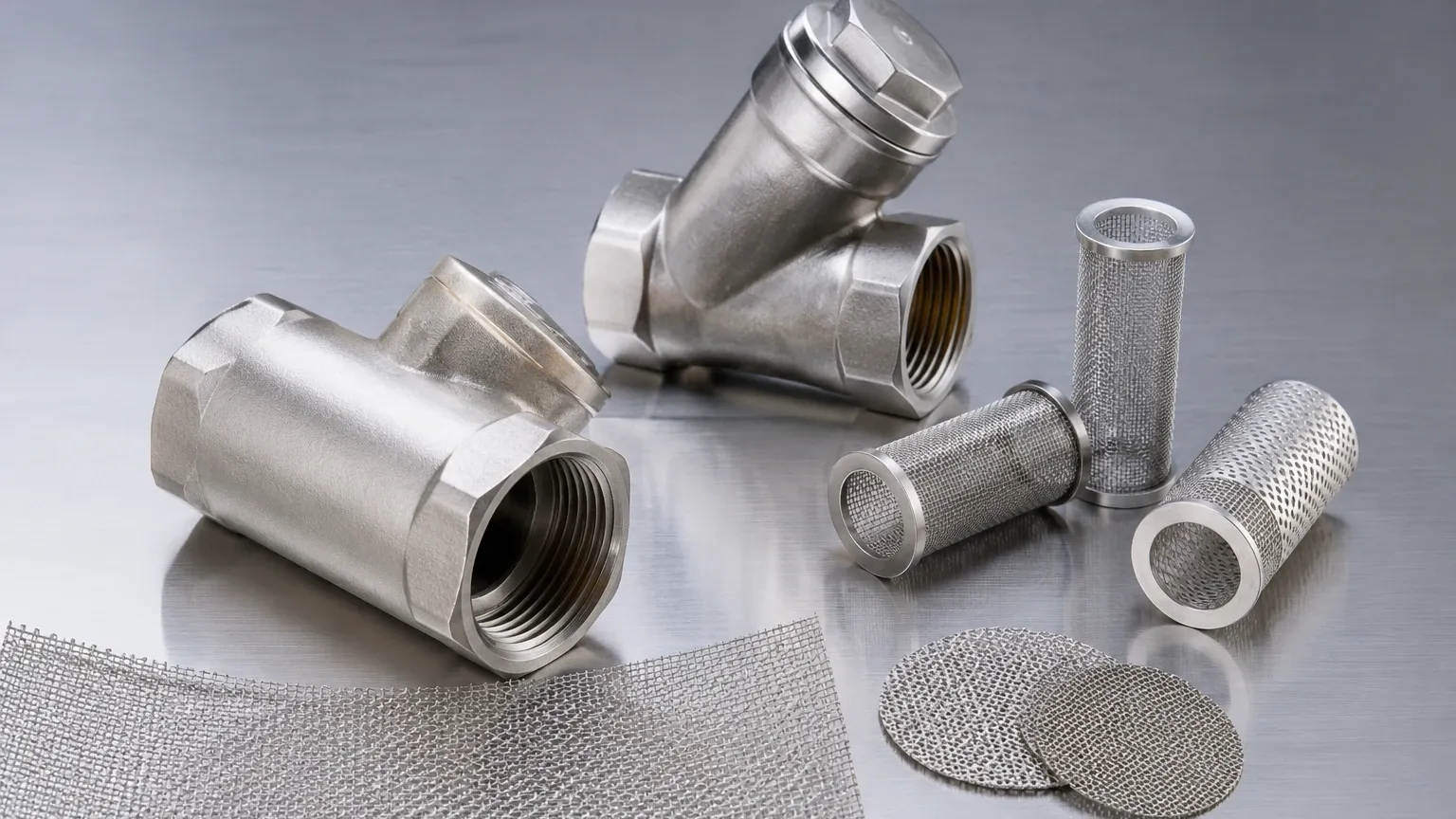
The Y-strainer derives its name from its configuration, which resembles the letter "Y." This design features a leg that branches off the main flow path at an angle, typically 45 degrees. This branch contains the straining element (the screen or basket), which intercepts particulate matter while allowing the fluid to pass through.
One of the primary advantages of the Y-configuration is its versatility in installation. These strainers can be installed in either horizontal or vertical piping runs. In vertical installations, the flow must be downward so that the collected debris is naturally directed into the straining pocket by gravity. This flexibility makes them ideal for compact mechanical rooms or complex piping layouts where space is at a premium.
From an engineering perspective, the Y-strainer is particularly well-suited for high-pressure applications. Because the body is often constructed from heavy-duty cast or forged materials, it can withstand significantly higher pressures than T-type or basket strainers of comparable size. This makes them the preferred choice for steam, high-pressure water, and chemical processing lines where safety and structural integrity are paramount.
Material Selection and Chemical Compatibility
Selecting the correct material for a Mueller Y strainer is a multi-faceted decision based on the fluid type, temperature, pressure, and environmental conditions. Common housing materials include:
* Cast Iron: Frequently used in HVAC and water distribution systems where cost-efficiency is a priority and the fluid is non-corrosive.
* Bronze: Preferred for marine applications or systems handling brackish water due to its resistance to dezincification and corrosion.
* Carbon Steel: The standard for high-temperature and high-pressure oil and gas applications.
* Stainless Steel (304/316): Essential for chemical processing, food and beverage, and pharmaceutical industries where corrosion resistance and hygiene are critical.
While the housing provides the structural envelope, the internal screen is the functional heart of the unit. Most Mueller Y strainers utilize stainless steel screens as a default due to their durability. However, in specialized chemical environments, engineers may require exotic alloys like Monel or Hastelloy. Kaifil’s manufacturing process focuses on these critical internal components, ensuring that the mesh or perforated metal used in the strainer meets exact metallurgical standards and filtration ratings.
Engineering Considerations: Pressure Drop and Flow Dynamics
A primary concern for any filtration installation is the "clean pressure drop." Every strainer introduces a degree of resistance to the flow. If the pressure drop is too high, it can lead to cavitation in pumps or insufficient flow to downstream processes.
Engineers must evaluate the Flow Coefficient (Cv), which represents the volume of water in gallons per minute that will flow through the strainer with a 1 psi pressure drop. Mueller Y strainers are designed with optimized internal geometries to maximize the ratio of the screen area to the pipe cross-section. A common industry benchmark is a "6-to-1" ratio, meaning the open area of the strainer screen is six times the area of the inlet pipe. This high ratio ensures that the strainer can collect a significant amount of debris before the pressure drop increases to a level that requires cleaning.
When specifying a strainer, it is also vital to consider the viscosity of the fluid. Higher viscosity fluids require larger mesh openings or larger strainer bodies to maintain acceptable flow rates. Failure to account for these dynamics during the design phase can lead to frequent system shutdowns and increased energy consumption by pumps trying to overcome the resistance.
Filtration Accuracy: Mesh vs. Perforation
The level of protection provided by a Y-strainer is determined by the sizing of the openings in the internal element. There are two primary types of straining media used in Mueller Y strainers:
1. Perforated Metal: These are sheets of metal with punched holes. They are typically used for "coarse" straining, where the goal is to remove larger debris like stones, scale, or welding slag. Perforation sizes are usually measured in fractions of an inch or millimeters.
2. Wire Mesh: For finer filtration, a wire mesh is lined inside a perforated metal backup screen. Mesh size refers to the number of openings per linear inch. For example, a 100-mesh screen has 100 openings per inch and can capture particles down to approximately 140 microns.
Kaifil specializes in the production of these precision components. Choosing the right mesh size is a balance between protection and maintenance. If the mesh is too fine, the strainer will clog rapidly, requiring frequent cleaning. If it is too coarse, harmful particles may pass through and damage downstream equipment. Engineers should ideally select a mesh size that is slightly smaller than the smallest clearance in the equipment being protected.
Installation and Maintenance Protocols
Proper installation is critical to the longevity of a Mueller Y strainer. The strainer must be installed with the "arrow" on the body pointing in the direction of the flow. Furthermore, sufficient clearance must be provided to allow for the removal of the strainer cap and the extraction of the screen for cleaning.
Maintenance requirements are typically dictated by the "clogged pressure drop." Many industrial systems utilize differential pressure gauges across the strainer. When the pressure difference between the inlet and outlet reaches a predetermined limit (often 5-10 psi above the clean pressure drop), the screen must be cleaned.
For systems that cannot be shut down, a "blow-off" or "blow-down" valve can be installed on the strainer cap. This allows the operator to flush out the debris collected in the screen area using the system's own pressure, without removing the cap. However, it is important to note that blow-down cleaning is only effective for loose debris; it will not remove particles that have become wedged in the mesh (often referred to as "blinding"). Periodic manual cleaning and inspection of the screen remain necessary to ensure the structural integrity of the mesh and to check for signs of corrosion or erosion.
Customization and OEM Solutions for Industrial Filtration
While standard Mueller Y strainers meet the needs of many general applications, specialized industrial processes often require customized solutions. This is where the partnership between engineering teams and specialized manufacturers like Kaifil becomes invaluable.
Customization options often include:
* Non-Standard Mesh Sizes: Tailoring the filtration rating to specific process requirements that fall outside standard catalog options.
* Reinforced Elements: In high-velocity systems, standard screens may collapse under the pressure of accumulated debris. Reinforced baskets or heavy-duty perforated cores provide the necessary mechanical strength.
* Magnetic Inserts: For systems where fine iron or steel particles (fines) are a concern, magnetic rods can be added to the strainer to capture metallic debris that might otherwise pass through the mesh.
* Specialized Coatings: Applying epoxy or PTFE coatings to the strainer body or internals to enhance chemical resistance or reduce friction.
By focusing on the precision manufacturing of the internal filtration components, Kaifil supports global customers in achieving optimal performance from their Strainers & Baskets. Whether it is a replacement screen for an existing Mueller unit or a completely custom-designed filtration component for an OEM application, the focus remains on durability, accuracy, and total cost of ownership.
Conclusion: Making Informed Purchasing Decisions
Specifying a Mueller Y strainer involves more than simply matching a pipe size. It requires a thorough analysis of flow rates, pressure ratings, material compatibility, and the specific nature of the contaminants being targeted. By understanding these technical factors, engineers can ensure they select a solution that provides maximum protection with minimal operational impact.
When evaluating suppliers, it is essential to look for partners who understand the engineering rigors of industrial filtration. From the initial material selection to the final filtration accuracy, every detail contributes to the reliability of the system. For organizations looking to optimize their filtration processes, focusing on high-quality, precision-engineered components is the most effective way to protect capital equipment and maintain consistent production quality.
