


Netting Fence Strainers
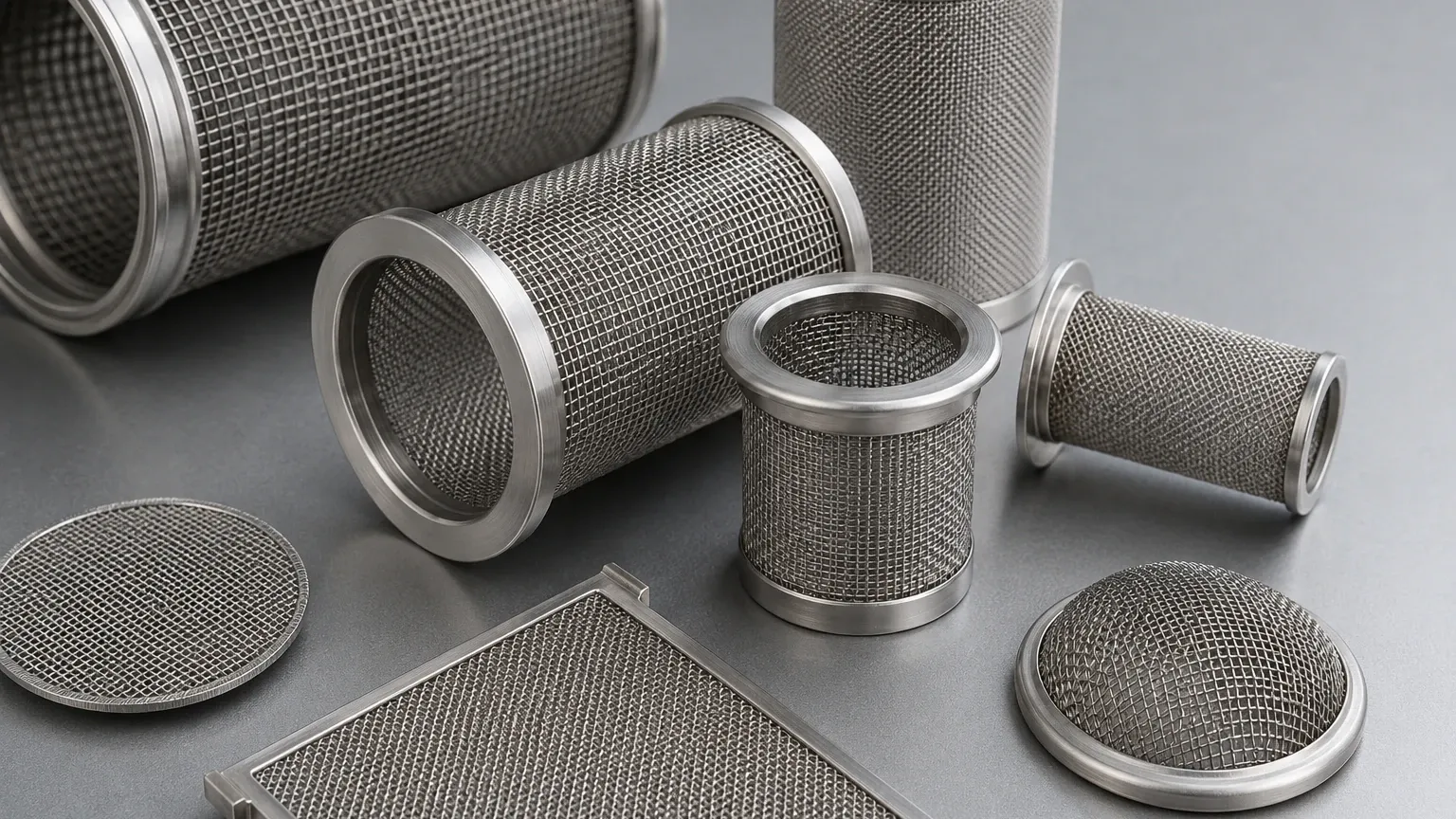
In industrial fluid handling and processing, the integrity of downstream equipment depends heavily on the efficiency of primary filtration stages. Netting fence strainers, often categorized within the broader scope of industrial Strainers & Baskets, serve as the first line of defense against coarse particulates, debris, and foreign objects that can compromise pumps, valves, and heat exchangers. These components are engineered to provide a robust physical barrier—a "fence" of precision-woven wire mesh or perforated metal—that captures solids while allowing the carrier fluid to pass with minimal resistance.
Selecting the appropriate netting fence strainers requires a deep understanding of fluid dynamics, material compatibility, and the mechanical stresses of the specific application. For engineers and procurement teams, the goal is to balance filtration efficiency with system uptime and long-term durability.
Technical Construction and Material Engineering
The performance of netting fence strainers is fundamentally determined by their construction. Unlike fine-micron membrane filters, these strainers are designed for high-flow, high-load environments where structural rigidity is as important as the filtration rating.
Stainless Steel Alloys
Most industrial netting fence strainers are fabricated from stainless steel, typically Grade 304 or 316L. Grade 304 offers excellent strength and basic corrosion resistance for water-based applications. However, in chemical processing or marine environments, 316L is preferred due to the addition of molybdenum, which enhances resistance to pitting and crevice corrosion in chloride-rich media.
Mesh and Netting Structures
The "netting" aspect refers to the wire mesh lining or the structural weave of the basket. Engineers must choose between different weave types:
* Plain Weave: The most common structure where wires cross over and under one another, providing a consistent aperture size.
* Dutch Weave: Used when a higher degree of mechanical strength is required, featuring a denser arrangement of wires that can withstand higher differential pressures.
* Perforated Metal Support: In many high-pressure applications, the netting or mesh is supported by a heavy-duty perforated metal basket to prevent the mesh from collapsing or deforming under the force of the fluid flow.
Engineering Considerations: Flow and Pressure Drop
A primary concern for any engineer integrating netting fence strainers into a system is the pressure drop, or Delta P ($ΔP$). Every strainer introduces a restriction to the flow. If the strainer is undersized or the mesh is too fine for the application, the resulting pressure drop can lead to cavitation in pumps or reduced system throughput.
Open Area Ratio (OAR)
The efficiency of a strainer is often measured by its Open Area Ratio. This is the ratio of the total area of the holes in the mesh to the cross-sectional area of the inlet pipe. A high-quality netting fence strainer typically aims for an OAR of 4:1 or higher. This ensures that even as the strainer begins to collect debris, there is enough remaining open area to maintain flow without a significant spike in pressure.
Viscosity and Flow Velocity
The behavior of the fluid significantly impacts strainer selection. High-viscosity fluids (such as heavy oils or polymers) require larger apertures and larger basket surface areas to prevent excessive resistance. Similarly, high flow velocities can cause turbulence at the strainer interface, leading to premature wear or vibration. Engineers must calculate the "clean pressure drop" during the design phase to ensure the system remains within its operational envelope.
Applications of Netting Fence Strainers
Netting fence strainers are utilized across a diverse range of industries where large-scale fluid movement is essential. Their primary role is "protection filtration."
Water Treatment and Intake Systems
In municipal water treatment or industrial cooling towers, netting fence strainers are installed at intake points to prevent leaves, twigs, and aquatic debris from entering the system. Here, the "netting" acts as a literal fence, protecting sensitive internal components from mechanical damage.
Chemical and Petrochemical Processing
In these environments, strainers are used to remove pipe scale, weld slag, and other solids that may be present in the pipeline after maintenance or during the processing of raw materials. The use of 316L stainless steel ensures that the strainer does not degrade when exposed to aggressive chemical reagents.
Food and Beverage Production
For food-grade applications, the netting fence strainers must meet stringent sanitary standards. This involves using high-polish finishes and ensuring that the basket design eliminates "dead zones" where bacteria could proliferate. These strainers often handle ingredients like syrups, juices, or oils, removing pips, skins, or accidental contaminants.
Selection Criteria for Industrial Baskets
When specifying netting fence strainers, purchasing teams and engineers should evaluate several critical factors to ensure the component is fit for purpose:
1. Micron Rating vs. Mesh Count: It is vital to distinguish between the two. Mesh count refers to the number of wires per inch, while the micron rating defines the largest particle that can pass through. For netting fence applications, the focus is usually on larger particles (typically 40 mesh to 1/2-inch perforations).
2. Seal Integrity: The strainer basket must seat perfectly within the housing. Any bypass—where fluid flows around the basket rather than through it—renders the strainer useless. Engineers should look for precision-machined flanges or O-ring seals.
3. Ease of Maintenance: In B2B environments, downtime is costly. Netting fence strainers should be designed for quick removal and cleaning. This includes features like swing-bolt covers on the housings or handles on the baskets for ergonomic handling.
4. Customization Requirements: Standard off-the-shelf strainers may not fit unique piping configurations or specific flow requirements. Working with a manufacturer that offers OEM customization allows for the adjustment of basket depth, diameter, and reinforcement structures to meet exact site conditions.
Maintenance and Total Cost of Ownership (TCO)
While the initial purchase price of netting fence strainers is an important factor, the Total Cost of Ownership (TCO) is a more accurate metric for industrial operations. TCO includes the cost of replacement, the labor involved in cleaning, and the potential cost of downstream equipment failure if the strainer fails.
Cleaning Cycles
Regular maintenance is essential. Most systems utilize differential pressure gauges to monitor the state of the strainer. When the pressure drop across the strainer reaches a predetermined limit (usually 5-10 psi above the clean drop), the basket must be cleaned. Netting fence strainers made of high-quality stainless steel can be cleaned and reused many times, providing a significant cost advantage over disposable filter elements.
Durability and Fatigue
In systems with frequent start-stop cycles or pulsating flows, the mesh in the strainer can suffer from fatigue. High-quality netting fence strainers employ reinforced seams and support cages to mitigate this risk. Investing in a robustly engineered basket reduces the frequency of replacements and prevents the catastrophic failure of the mesh, which could send metal fragments into the downstream process.
The Role of Custom Manufacturing
For complex industrial projects, standard Strainers & Baskets may fall short of performance expectations. Custom-engineered netting fence strainers allow for the optimization of every parameter. This includes selecting specialized alloys for extreme temperatures, designing non-standard basket geometries to fit into tight spaces, or integrating specific handle types for automated cleaning systems.
Manufacturers like Kaifil specialize in these tailored solutions, providing the technical expertise needed to bridge the gap between a standard component and a high-performance filtration asset. By focusing on precision manufacturing and material integrity, custom solutions ensure that the filtration system supports the overall efficiency and reliability of the industrial plant.
Conclusion
Netting fence strainers are critical components in the management of industrial fluid systems. By acting as a robust barrier against coarse contaminants, they protect expensive downstream machinery and ensure process continuity. When selecting these components, engineers must prioritize material quality, structural design, and the specific hydraulic requirements of their application. Through careful selection and regular maintenance, these strainers provide a cost-effective and reliable solution for a wide array of industrial filtration challenges. For those managing complex or high-demand systems, moving beyond standard parts to customized, engineered filtration solutions is often the most effective way to optimize performance and reduce long-term operational risks.
