


Oil Strainer
In industrial fluid management, the oil strainer serves as the primary line of defense for downstream equipment. Whether integrated into hydraulic systems, lubricating circuits, or chemical processing lines, the fundamental purpose of an oil strainer is to remove coarse particulate matter from the oil flow. This mechanical separation prevents damage to sensitive components such as pumps, valves, and heat exchangers, ensuring the operational integrity of the entire system.
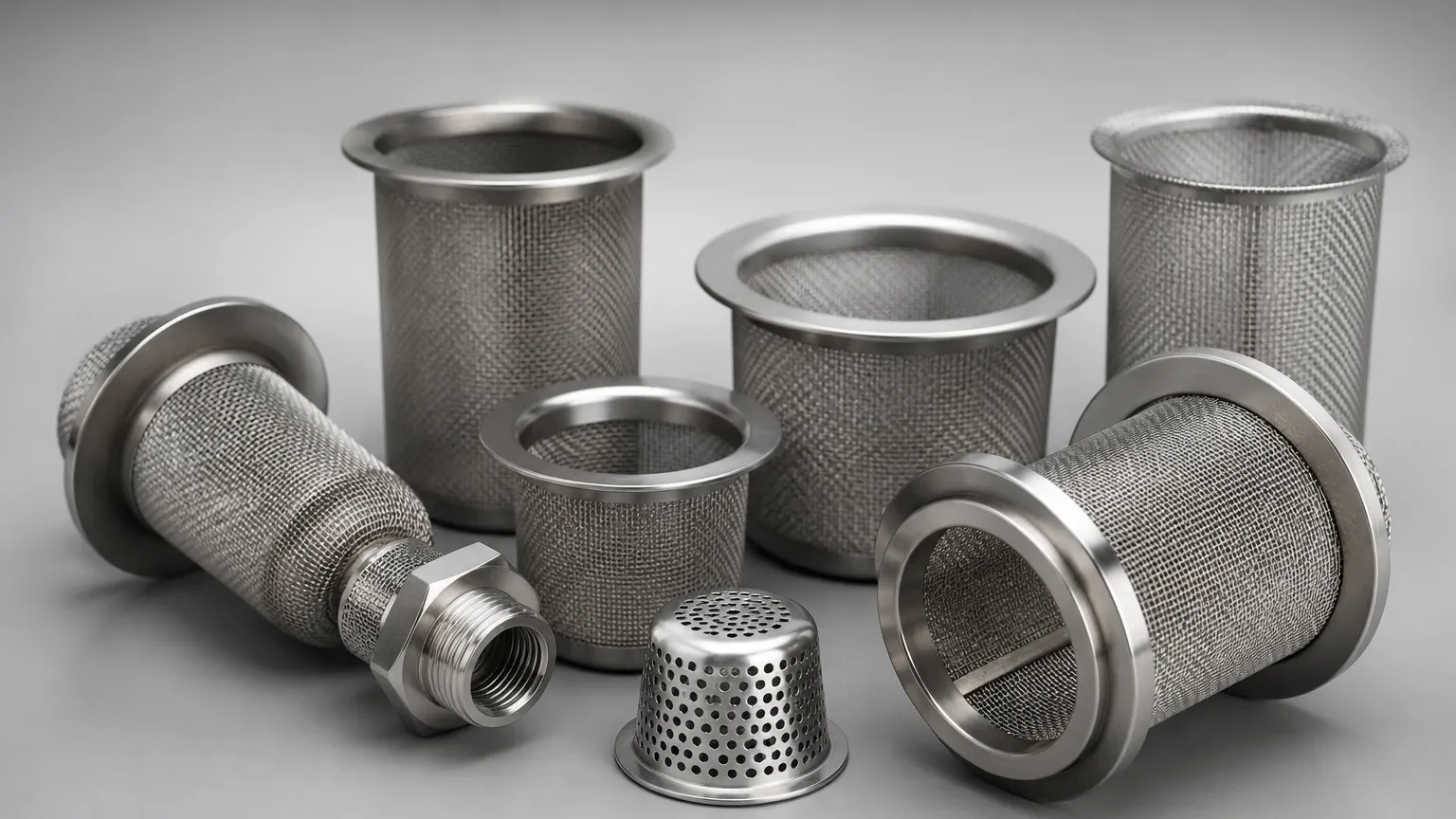
As a specialized manufacturer of stainless steel filtration solutions, Kaifil provides engineered Strainers & Baskets designed to meet the rigorous demands of industrial environments. Understanding the technical nuances of strainer selection—ranging from material compatibility to flow dynamics—is essential for engineers and procurement teams looking to optimize system performance and minimize maintenance-related downtime.
The Functional Role of the Industrial Oil Strainer
While the terms "filter" and "strainer" are often used interchangeably, they serve distinct roles in an industrial context. A filter is typically designed to remove microscopic particles (often measured in low-micron ranges) to maintain the purity of the fluid. In contrast, an oil strainer is utilized to capture larger debris, such as metal chips, scale, and casting sand, which could cause catastrophic mechanical failure if allowed to enter high-precision components.
In a typical industrial circuit, the oil strainer is positioned on the suction side of the pump. This placement protects the pump from ingesting solids that could score the housing or damage the impellers. However, strainers can also be installed in return lines or at the point of use to ensure that any contaminants generated within the system are captured before the oil is recirculated or discharged.
Engineering Specifications for Strainers & Baskets
The performance of an industrial oil strainer is dictated by its construction and the characteristics of the filtration media. For most industrial applications, stainless steel is the preferred material due to its mechanical strength and resistance to the chemical additives found in modern industrial oils.
Material Selection: 304 vs. 316 Stainless Steel
Kaifil utilizes high-grade stainless steel to ensure durability and corrosion resistance.
- 304 Stainless Steel: Suitable for most general industrial oils and hydraulic fluids. It offers excellent structural integrity and is cost-effective for standard applications.
- 316 Stainless Steel: Recommended for environments involving corrosive chemicals, high salt concentrations, or pharmaceutical-grade requirements. The addition of molybdenum provides enhanced resistance to pitting and crevice corrosion.
Perforated Metal and Wire Mesh Liners
The internal basket of an oil strainer typically consists of a perforated metal support structure lined with a precision wire mesh. The perforated metal provides the necessary mechanical strength to withstand high differential pressures, while the wire mesh determines the filtration accuracy.
Engineers must specify the mesh count or micron rating based on the smallest particle that must be excluded from the system. For heavy lubrication oils, a coarser mesh may be used to prevent excessive flow restriction, whereas hydraulic systems requiring higher precision may utilize finer mesh liners.
Evaluating Flow Dynamics and Pressure Drop
One of the most critical engineering considerations when selecting an oil strainer is the relationship between flow rate, viscosity, and pressure drop ($ΔP$). Because oil is significantly more viscous than water, and its viscosity changes with temperature, the sizing of the strainer must account for the "worst-case" scenario—typically during cold start-up when the oil is at its thickest.
Viscosity Impacts
High-viscosity oils create greater resistance as they pass through the strainer media. If the strainer is undersized, the pressure drop across the element will exceed the system's limits, potentially causing pump cavitation or triggering a bypass valve, which allows unfiltered oil to circulate. To mitigate this, engineers often select a strainer with a larger surface area than would be required for a water-based system, effectively reducing the velocity of the fluid through the mesh.
Calculating Allowable Pressure Drop
A standard rule of thumb for a clean oil strainer is to maintain a pressure drop of less than 2 PSI (0.14 bar). As the strainer captures debris, the $ΔP$ will naturally increase. Systems should be equipped with differential pressure gauges to alert operators when the pressure drop reaches a critical threshold, indicating that the basket requires cleaning.
Comparison of Strainer Configurations
The physical configuration of the oil strainer depends on the installation space and the requirement for continuous operation.
Simplex Basket Strainers
Simplex strainers are used in systems where the flow can be temporarily shut down to remove and clean the basket. These are common in batch processing or in machinery that has scheduled maintenance intervals. They are valued for their simplicity and lower initial capital cost.
Duplex (Twin) Strainers
In critical applications where the flow cannot be interrupted—such as in power generation or continuous chemical manufacturing—duplex strainers are required. A duplex system consists of two separate strainer housings connected by a diverter valve. When one basket becomes clogged, the flow is switched to the clean side, allowing the operator to service the dirty basket without stopping the process.
Y-Strainers
Y-strainers are typically used for high-pressure applications where the amount of debris is expected to be minimal. Their compact design allows for installation in tight piping configurations, though they generally have a smaller holding capacity for solids compared to basket-style Strainers & Baskets.
Maintenance Protocols and Service Life
The total cost of ownership (TCO) of an oil strainer is largely influenced by its maintenance requirements. Unlike disposable filter cartridges, stainless steel strainer baskets are designed to be cleaned and reused, providing significant long-term savings.
Cleaning Procedures
When the differential pressure indicates a clog, the basket must be removed. For oil-based applications, cleaning typically involves:
1. Degreasing: Removing the residual oil using a compatible solvent.
2. Mechanical Cleaning: Using a soft brush or compressed air to dislodge trapped solids. Care must be taken not to damage the wire mesh.
3. Ultrasonic Cleaning: For fine mesh liners where particles may be wedged deep within the weave, ultrasonic cleaning is the most effective method to restore the original flow characteristics.
Identifying Replacement Cycles
While stainless steel baskets are durable, they are not infinite. Repeated cleaning cycles and exposure to high-pressure surges can eventually lead to fatigue in the wire mesh or the spot welds connecting the mesh to the perforated support. Engineers should inspect baskets for any signs of "blinded" areas (where mesh openings are permanently blocked) or structural deformities during every cleaning cycle.
Customization and OEM Integration
Standard off-the-shelf strainers often fail to meet the specific spatial or performance requirements of specialized industrial machinery. Kaifil specializes in the design and manufacture of custom oil strainer components that integrate seamlessly into OEM equipment.
Customization options include:
- Bespoke Dimensions: Tailoring the height, diameter, and flange connections to fit existing piping layouts.
- Reinforced Construction: Adding internal supports or heavier gauge materials for high-pressure or high-surge environments.
- Specialized Media: Utilizing multi-layered sintered mesh for applications requiring high mechanical strength combined with fine filtration accuracy.
- Magnetic Inserts: Integrating magnetic rods within the strainer basket to capture fine ferrous particles that might otherwise pass through a standard mesh.
Technical Selection Checklist for Engineers
Before finalizing a specification for an oil strainer, engineers should confirm the following data points to ensure the selected component is fit for purpose:
1. Fluid Characteristics: What is the specific gravity and viscosity of the oil at both operating and start-up temperatures?
2. Contaminant Profile: What is the nature of the solids being removed (e.g., sharp metallic shards, soft organic sludge)?
3. Flow Rate: What is the maximum and minimum flow rate the system will experience?
4. Pressure Rating: What is the maximum operating pressure and the design pressure of the piping system?
5. Allowable Pressure Drop: What is the maximum $ΔP$ the system can tolerate before performance is compromised?
6. Connection Type: Are flanged, threaded, or socket-weld connections required to match existing infrastructure?
By addressing these factors, technical teams can ensure that their choice of Strainers & Baskets provides the necessary protection for their industrial assets while maintaining efficient flow dynamics. Kaifil’s engineering team works closely with global customers to translate these requirements into reliable, high-performance filtration hardware that stands up to the most demanding industrial environments.
