


Old Metal Strainers
In industrial fluid handling and processing systems, the longevity of equipment is often a testament to robust engineering. However, legacy components, specifically old metal strainers, eventually reach a point where their performance and structural integrity must be scrutinized. For engineers and maintenance teams operating in chemical processing, food and beverage, or hydraulic sectors, managing aging filtration infrastructure requires a balance between extending the life of existing assets and recognizing when a replacement is necessary to prevent catastrophic system failure.
Industrial strainers are the first line of defense for downstream equipment such as pumps, valves, and heat exchangers. When these components are neglected, the risks extend beyond simple filtration inefficiency to include contamination of the process stream and mechanical damage to high-value machinery. Understanding the technical nuances of evaluating, maintaining, or replacing old metal strainers is essential for maintaining operational continuity and safety standards.
Evaluating the Condition of Old Metal Strainers
The first step in managing legacy filtration components is a comprehensive physical and performance-based evaluation. Unlike modern components with digital maintenance logs, older strainers often lack detailed documentation regarding their original micron rating, material grade, or flow capacity.
Structural Integrity and Housing Wear
Visual inspection is the most immediate method for assessing old metal strainers. Engineers should look for signs of thinning in the housing walls, which can occur due to erosion-corrosion over decades of service. In pressurized systems, wall thinning significantly reduces the safety factor of the pressure vessel, potentially leading to ruptures. Check for pitting, especially near weld seams or flange connections, as these are common sites for localized failure.
Mesh and Perforation Analysis
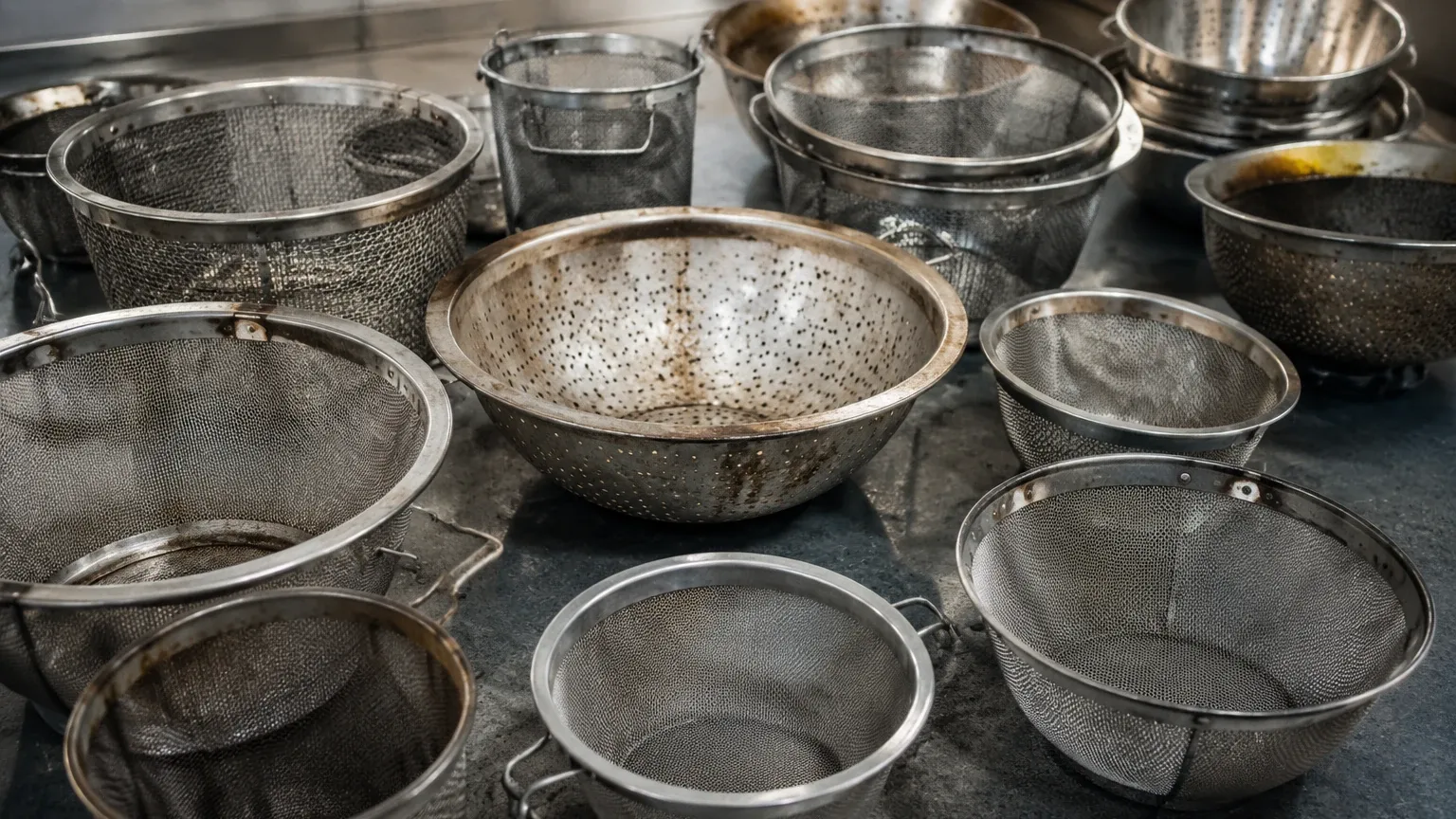
The internal element—the basket or screen—is the most vulnerable part of the assembly. In old metal strainers, the wire mesh may suffer from work hardening or fatigue due to constant pressure fluctuations. Look for broken wires, enlarged openings (which allow bypass), or "blinded" areas where particulates have become permanently embedded in the metal matrix. If the mesh is deformed or pulled away from the support frame, the strainer is no longer providing its rated level of protection.
Gasket and Seal Surfaces
Old strainers often utilize outdated sealing materials that may have degraded, hardened, or reacted with the process fluid. Inspect the flange faces and gasket seats for wire-drawing—small grooves cut into the metal by high-velocity leaks. If the sealing surfaces are compromised, even a new internal basket will not prevent bypass or external leakage.
Performance Risks of Aging Filtration Components
Continuing to operate with old metal strainers that have surpassed their design life introduces several technical risks that can impact the total cost of ownership (TCO) of a facility.
1. Increased Pressure Drop (ΔP): As metal surfaces oxidize or accumulate permanent scale, the internal friction increases. An old strainer often exhibits a higher baseline pressure drop than a modern equivalent, forcing pumps to work harder and increasing energy consumption.
2. Bypass and Media Migration: If the internal support structure of an aging basket fails, the mesh can tear, allowing large solids to pass through. In some cases, fragments of the old metal strainer itself (broken wires or solder) can break off and enter the process stream, causing downstream damage.
3. Inaccurate Filtration Levels: Over time, the effective pore size of a metal screen can change. Corrosion can enlarge openings, while heavy scaling can restrict them. This unpredictability makes it impossible to guarantee the purity of the output, which is a critical concern in pharmaceutical and food-grade applications.
Material Degradation and Chemical Compatibility
One of the primary reasons for the failure of old metal strainers is the long-term effect of the process environment on the specific alloys used. Decades ago, material science was less advanced, and the alloys selected for strainers might not have been optimized for the specific chemical stressors they face today.
Intergranular Corrosion
In older stainless steel strainers, particularly those that were not properly heat-treated after welding, intergranular corrosion can occur. This leads to "sugar-like" crumbling of the metal at the grain boundaries. Modern replacements utilize low-carbon variants like 304L or 316L to mitigate this risk, but legacy equipment remains susceptible.
Galvanic Action
In many older installations, strainers were often installed using whatever fittings were available, sometimes leading to the mixing of dissimilar metals (e.g., a bronze strainer in a carbon steel line). Over years of service, galvanic corrosion can severely weaken the threads and connection points of old metal strainers, making them difficult to remove or service without causing further damage to the piping.
Modernizing Industrial Strainers & Baskets
When the evaluation of legacy equipment indicates that refurbishment is no longer viable, the focus shifts to modernization. Selecting modern Strainers & Baskets allows engineers to integrate advanced manufacturing techniques and superior materials that were unavailable when the original systems were commissioned.
Modern industrial filtration solutions offer several advantages over legacy designs:
* Precision Manufacturing: Utilizing TIG, plasma, or laser welding ensures that the joints in the basket are as strong as the parent metal, reducing the risk of fatigue failure.
* Optimized Flow Dynamics: Modern basket designs often feature larger open area ratios, which reduce the initial pressure drop and extend the time between cleaning cycles.
* Advanced Materials: Beyond standard 304 and 316 stainless steel, modern strainers can be fabricated from Hastelloy, Monel, or Duplex steels to handle highly corrosive or high-temperature environments.
For facilities looking to replace old metal strainers, it is important to match the new component not just to the old dimensions, but to the current operational requirements of the system, which may have changed since the original installation.
Engineering Specifications for Custom Replacements
A common challenge when dealing with old metal strainers is that the original equipment manufacturer (OEM) may no longer exist, or the specific model has been discontinued. In these instances, custom-engineered filtration components are required to fit existing piping footprints while meeting modern performance standards.
When specifying a replacement for an old strainer, engineers should confirm the following technical parameters:
* Micron Rating vs. Mesh Count: Older systems often used "mesh count" (wires per inch), which does not always translate directly to a precise micron rating. It is necessary to determine the required particle retention based on the sensitivity of downstream equipment.
* Effective Filtration Area (EFA): Ensure the replacement basket has an EFA equal to or greater than the original to prevent excessive flow velocity through the mesh, which can cause premature wear.
* Structural Reinforcement: For high-viscosity fluids or high-pressure applications, the basket may require a perforated metal backup to support the fine wire mesh and prevent collapsing under high differential pressure.
* Connection Standards: Verify if the original connections were NPT, BSP, or specific flange standards (ANSI, DIN, JIS) to ensure a seamless drop-in replacement without the need for extensive piping modifications.
Maintenance and Lifecycle Management
To prevent new installations from becoming problematic "old metal strainers" prematurely, a rigorous maintenance and lifecycle management strategy must be implemented. Industrial filtration components are not "set and forget" items; they require scheduled intervention to maintain efficiency.
Cleaning Protocols
Develop cleaning procedures that are appropriate for the material. For example, using high-pressure steam or ultrasonic cleaning can be effective for stainless steel baskets but may damage finer mesh if not applied correctly. Avoid using harsh chemicals that could initiate stress corrosion cracking in the metal.
Differential Pressure Monitoring
The most effective way to manage the lifecycle of a strainer is through differential pressure (DP) monitoring. By installing gauges upstream and downstream of the strainer, operators can identify exactly when a basket is reaching its dirt-holding capacity. Consistently high DP readings, even after cleaning, indicate that the metal mesh has become permanently fouled or deformed and requires replacement.
Replacement Cycles
Establish a baseline for replacement based on the criticality of the process. In high-purity industries, it may be more cost-effective to replace the internal baskets on a fixed schedule (e.g., every 24 months) rather than waiting for physical failure. This proactive approach reduces the risk of unplanned downtime and ensures the system always operates within its design parameters.
Conclusion
Managing old metal strainers is a critical task for maintaining the health of industrial fluid systems. While these components are often simple in design, their role in protecting complex machinery is paramount. By conducting thorough evaluations, understanding the mechanical and chemical risks of aging alloys, and leveraging modern engineering solutions for replacements, technical teams can ensure their filtration systems remain reliable for years to come. Transitioning from legacy components to high-performance, custom-manufactured strainers is an investment in the long-term stability and efficiency of the entire production process.
