


Paint Strainers Home Depot
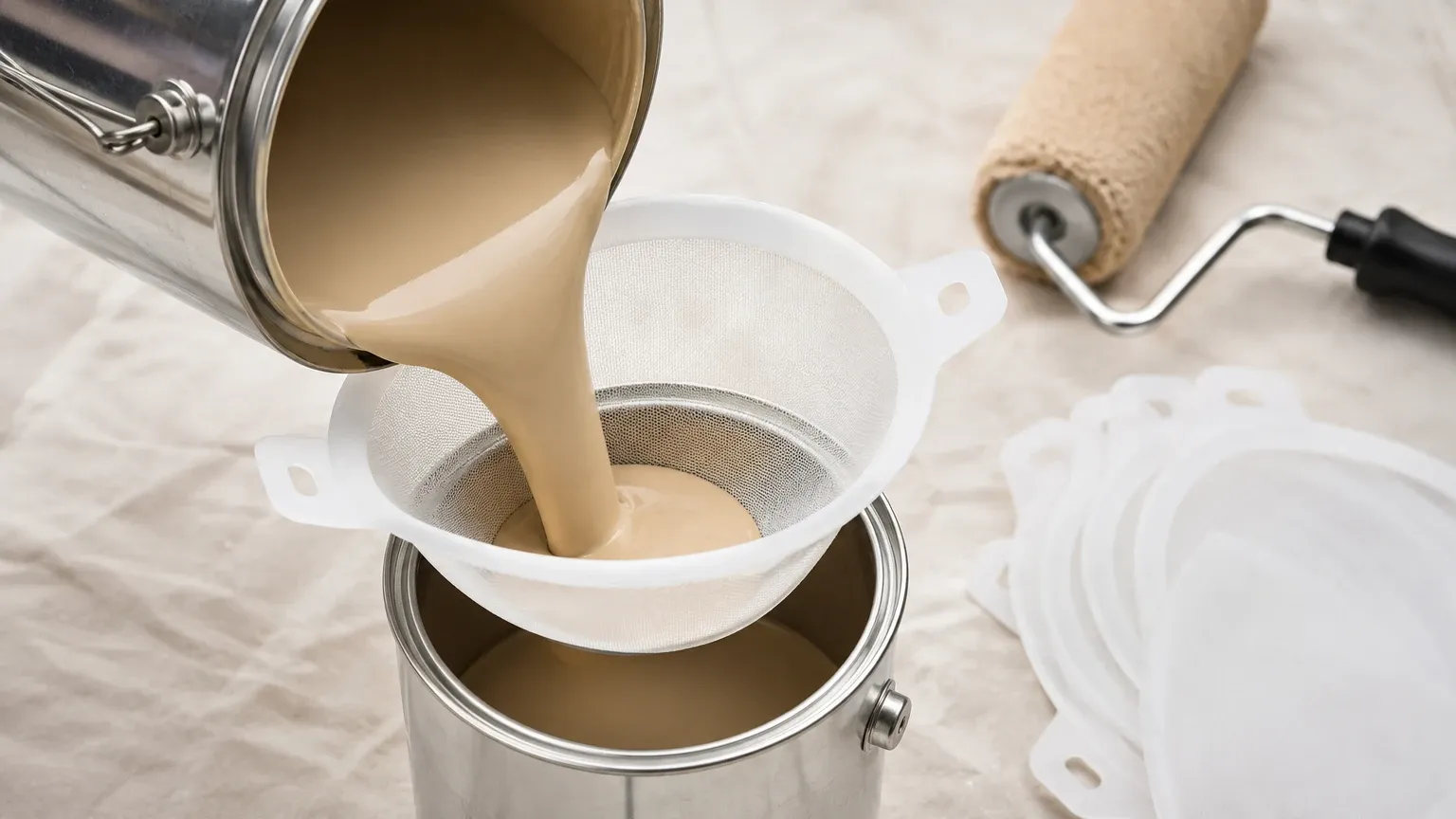
In the world of coatings and industrial finishes, the quality of the final application is inextricably linked to the purity of the medium. For many small-scale contractors or DIY enthusiasts, a search for paint strainers home depot provides a quick solution for filtering out large particulates or dried skins from a gallon of latex paint. These retail-grade solutions—typically disposable nylon mesh bags or paper cones—are designed for low-pressure, gravity-fed applications where precision and durability are secondary to convenience and cost.
However, in industrial manufacturing, chemical processing, and high-volume coating lines, the requirements for filtration shift from basic screening to rigorous engineering. For technical professionals and procurement teams, moving beyond consumer-grade options means evaluating robust Strainers & Baskets that can withstand high flow rates, aggressive solvents, and significant pressure differentials. This article explores the technical transition from retail paint strainers to industrial filtration components, focusing on performance, material science, and total cost of ownership.
Understanding the Limitations of Retail Paint Strainers
When a user searches for paint strainers home depot, they are generally looking for products like 5-gallon elastic-top strainers or fine-mesh paper funnels. These products serve a specific purpose: removing macroscopic debris that could clog a standard airless sprayer nozzle or leave visible imperfections on a residential wall.
From an engineering perspective, retail strainers have several limitations:
1. Material Integrity: Most retail strainers are made from nylon or polyester. While compatible with water-based paints, they may swell or degrade when exposed to the aggressive aromatic hydrocarbons or ketones found in industrial coatings.
2. Pressure Constraints: These strainers are designed for gravity or low-suction environments. Under the high-pressure conditions of an industrial pump, a disposable mesh bag is prone to tearing or "blow-through," where the pressure forces contaminants through the expanded pores of the fabric.
3. Filtration Precision: Retail options often lack certified micron ratings. An industrial process might require a precise 50-micron absolute filtration level, whereas a retail "fine" mesh might vary significantly in pore size across a single batch.
The Industrial Alternative: Stainless Steel Strainers & Baskets
For industrial applications, the disposable nature of paint strainers home depot products is often a liability rather than a convenience. Industrial Strainers & Baskets are engineered to be permanent, cleanable components of a fluid handling system.
The Role of Stainless Steel Wire Mesh
Unlike the synthetic fibers used in retail strainers, industrial baskets utilize high-grade stainless steel (typically 304 or 316L). Stainless steel wire mesh offers several critical advantages:
* Mechanical Strength: It maintains its structural integrity under high differential pressure, ensuring that the filtration gap remains constant even as the basket loads with contaminants.
* Chemical Resistance: Stainless steel is inert to a wide range of solvents, resins, and additives used in specialized coatings, including epoxies, polyurethanes, and lacquers.
* Temperature Stability: Industrial processes often involve heated fluids to reduce viscosity. While synthetic strainers might soften or melt, stainless steel baskets remain stable at elevated temperatures.
Engineering Considerations for Strainer Selection
When transitioning from a retail mindset to an industrial procurement strategy, engineers must consider several technical parameters that go beyond what is available in a standard search for paint strainers home depot.
Flow Rate and Pressure Drop (ΔP)
In an industrial system, every component introduces a pressure drop. A strainer basket must be sized to handle the maximum flow rate of the system without causing an excessive drop in pressure, which could lead to pump cavitation or reduced throughput. Industrial Strainers & Baskets are often designed with a "high-area" pleat or a specific open-area ratio to maximize the time between cleaning cycles while minimizing ΔP.
Micron Rating and Mesh Weave
While retail strainers are categorized simply as "fine" or "extra fine," industrial components use specific mesh counts and weave types:
* Plain Weave: Suitable for general-purpose straining where high flow is prioritized.
* Dutch Weave: Provides a denser, stronger mesh used for fine filtration and high-pressure applications.
* Perforated Metal: Often used as a "heavy-duty" support basket to protect a finer inner mesh liner from collapsing.
Viscosity Management
Paint and coatings are non-Newtonian fluids; their viscosity changes under shear and temperature. A strainer that works for water-like fluids will fail when tasked with a high-viscosity resin. Industrial baskets are engineered with the specific rheology of the fluid in mind, ensuring that the mesh does not become a bottleneck in the production line.
Customization and OEM Solutions
One of the primary differences between purchasing paint strainers home depot and sourcing from a professional manufacturer like Kaifil is the ability to customize. Industrial systems are rarely "one size fits all." Customization options include:
* Dimensional Tailoring: Baskets can be manufactured to fit existing housing units, including specific flange types, handle configurations for easy removal, and reinforced bottoms.
* Multi-Stage Filtration: Some industrial baskets feature a dual-layer design, with a coarse outer perforated layer to catch large debris and a fine inner wire mesh for precision filtration.
* Magnetic Inserts: For processes involving metallic pigments or potential ferrous contamination from upstream machinery, magnetic rods can be integrated into the basket assembly to capture sub-micron iron particles.
Total Cost of Ownership (TCO)
At first glance, the unit price of a disposable strainer from a search for paint strainers home depot is significantly lower than a custom stainless steel basket. However, for B2B operations, the TCO calculation tells a different story.
1. Waste Reduction: Disposable strainers contribute to a significant waste stream, which carries both environmental and disposal costs, especially if the strainers are saturated with hazardous materials.
2. Labor Costs: The frequency of changing disposable strainers in a high-volume environment can lead to excessive downtime. A high-capacity industrial basket requires fewer interventions.
3. Process Security: The risk of a disposable strainer failing and allowing contaminants into a multi-million dollar coating line or a sensitive pump is a risk that most industrial facilities cannot afford. The durability of Strainers & Baskets provides a level of insurance against catastrophic system failure.
Maintenance and Cleaning of Industrial Baskets
To maintain the performance of stainless steel filtration components, a regular cleaning regimen is essential. Unlike the "use and toss" philosophy of paint strainers home depot products, industrial baskets are designed for longevity.
* Ultrasonic Cleaning: This is the most effective method for removing hardened resins or fine particulates trapped deep within the wire mesh weave.
* Chemical Stripping: For baskets used with cross-linking coatings (like two-part epoxies), specialized solvent baths can dissolve the build-up without damaging the stainless steel substrate.
* Backwashing: In some automated systems, the strainer housing is designed to allow for back-flushing, where the fluid flow is reversed to knock contaminants off the surface of the mesh.
Conclusion: Making the Right Choice for Your Application
While paint strainers home depot products remain a staple for the residential painting market and small-scale touch-up work, they are rarely the correct choice for the industrial sector. Engineers and purchasing managers must evaluate the specific demands of their fluid handling systems, including chemical compatibility, pressure requirements, and long-term operational efficiency.
By investing in high-quality, precision-engineered Strainers & Baskets, facilities can ensure consistent product quality, protect expensive downstream equipment, and reduce the long-term costs associated with waste and downtime. Whether you are filtering automotive basecoats, industrial primers, or complex chemical resins, the transition from disposable retail options to professional filtration components is a critical step in optimizing industrial performance.
