


Strainer Qatar
In the rapidly expanding industrial landscape of the Middle East, particularly within the specialized sectors of Qatar, the integrity of fluid handling systems is paramount. Whether in the massive desalination plants that provide the nation's potable water, the petrochemical complexes of Ras Laffan, or the sophisticated HVAC systems of Doha’s infrastructure, the role of mechanical filtration cannot be overstated. When searching for a reliable strainer Qatar solution, engineers and procurement specialists must look beyond simple off-the-shelf components and consider the specific environmental and technical demands of the region.
Industrial Strainers & Baskets serve as the first line of defense for expensive downstream equipment, including pumps, valves, flow meters, and heat exchangers. By removing unwanted solids from liquid or gas streams, these components prevent mechanical damage, reduce downtime, and ensure the purity of the final product. For projects operating in the unique climatic conditions of the Arabian Peninsula, selecting the right filtration hardware requires a deep understanding of material science, fluid dynamics, and maintenance requirements.
The Role of Strainers and Baskets in Modern Industry
While the terms "filter" and "strainer" are often used interchangeably in casual conversation, in a B2B engineering context, they serve distinct purposes. A strainer is typically used to remove larger particles from a process stream to protect downstream equipment, whereas a filter is generally designed to remove much smaller particles, often measured in microns, to clarify the fluid itself.
In Qatar’s industrial zones, strainers are essential for several critical applications:
* Water Treatment and Desalination: Protecting high-pressure membranes from debris in seawater intake systems.
* Oil and Gas Processing: Removing scale, rust, and weld beads from pipelines to protect sensitive instrumentation.
* Chemical Processing: Ensuring that solid contaminants do not interfere with chemical reactions or clog spray nozzles.
* Food and Beverage: Maintaining hygienic standards by straining raw ingredients and protecting processing machinery.
Technical Variations: Simplex, Duplex, and Y-Strainers
Selecting the correct configuration for a strainer Qatar application depends heavily on the required flow rate, the allowable pressure drop, and the necessity for continuous operation.
Y-Strainers
Named for their shape, Y-strainers are typically used for pressurized lines, either liquid or gas. They are preferred in applications where the amount of material to be removed is relatively small, resulting in long intervals between screen cleanings. Their compact design makes them ideal for installations where space is limited.
Simplex Basket Strainers
Basket strainers feature a larger surface area than Y-strainers, allowing for a higher dirt-holding capacity. This results in a lower pressure drop across the unit and longer periods between cleanings. A simplex basket strainer is used in systems where the flow can be temporarily interrupted to remove and clean the basket.
Duplex (Twin) Basket Strainers
For critical processes in Qatar’s energy sector where downtime is not an option, duplex strainers are the industry standard. These units consist of two separate strainer baskets connected by a diverting valve. When one basket becomes clogged, the flow is diverted to the clean basket, allowing the operator to service the first basket without shutting down the system.
Material Selection for the Qatar Environment
One of the most significant challenges for any strainer Qatar installation is the corrosive nature of the environment. High ambient temperatures, coupled with high humidity and the proximity of most industrial sites to the Persian Gulf, create a highly corrosive atmosphere. Furthermore, many applications involve the handling of seawater or aggressive chemicals.
Stainless Steel 304 and 316
Stainless steel is the primary material choice for industrial filtration. SS304 is suitable for general-purpose applications; however, for the Qatari market, SS316 or SS316L is frequently specified. The addition of molybdenum in SS316 provides superior resistance to chloride-induced pitting, which is essential for any equipment exposed to coastal air or saline water.
Specialized Alloys
In extreme cases, such as high-temperature chemical processing or untreated seawater filtration, standard stainless steels may not suffice. In these instances, engineers may specify Duplex stainless steel or Super Duplex alloys. These materials offer significantly higher yield strength and exceptional resistance to stress corrosion cracking, ensuring a longer service life in the harsh conditions found in the Middle East.
Engineering Considerations: Mesh, Micron, and Flow Dynamics
When specifying Strainers & Baskets, the technical performance is defined by the relationship between the filter media and the fluid properties. Engineers must balance the need for fine filtration against the reality of pressure drop.
Filtration Accuracy (Micron Rating)
The "mesh count" refers to the number of openings per linear inch. As the mesh count increases, the size of the openings decreases, providing finer filtration. However, it is important to distinguish between "nominal" and "absolute" filtration ratings. In industrial B2B procurement, clarifying the required micron rating is essential to ensure the strainer captures the specific particle sizes that pose a risk to the system.
Pressure Drop ($ΔP$)
Every strainer introduces a restriction to the flow, resulting in a pressure drop. This drop increases as the basket collects debris. If the initial pressure drop is too high due to an undersized strainer or an overly fine mesh, it can lead to pump cavitation and reduced system efficiency. Professional manufacturers provide $C_v$ (flow coefficient) values to help engineers calculate the expected pressure drop based on flow rate and fluid viscosity.
Open Area Ratio (OAR)
The OAR is the ratio of the total area of the holes in the strainer element to the internal cross-sectional area of the inlet pipe. A high OAR (typically 4:1 or higher) is desirable as it ensures that the strainer can accumulate a significant amount of debris before the pressure drop becomes critical.
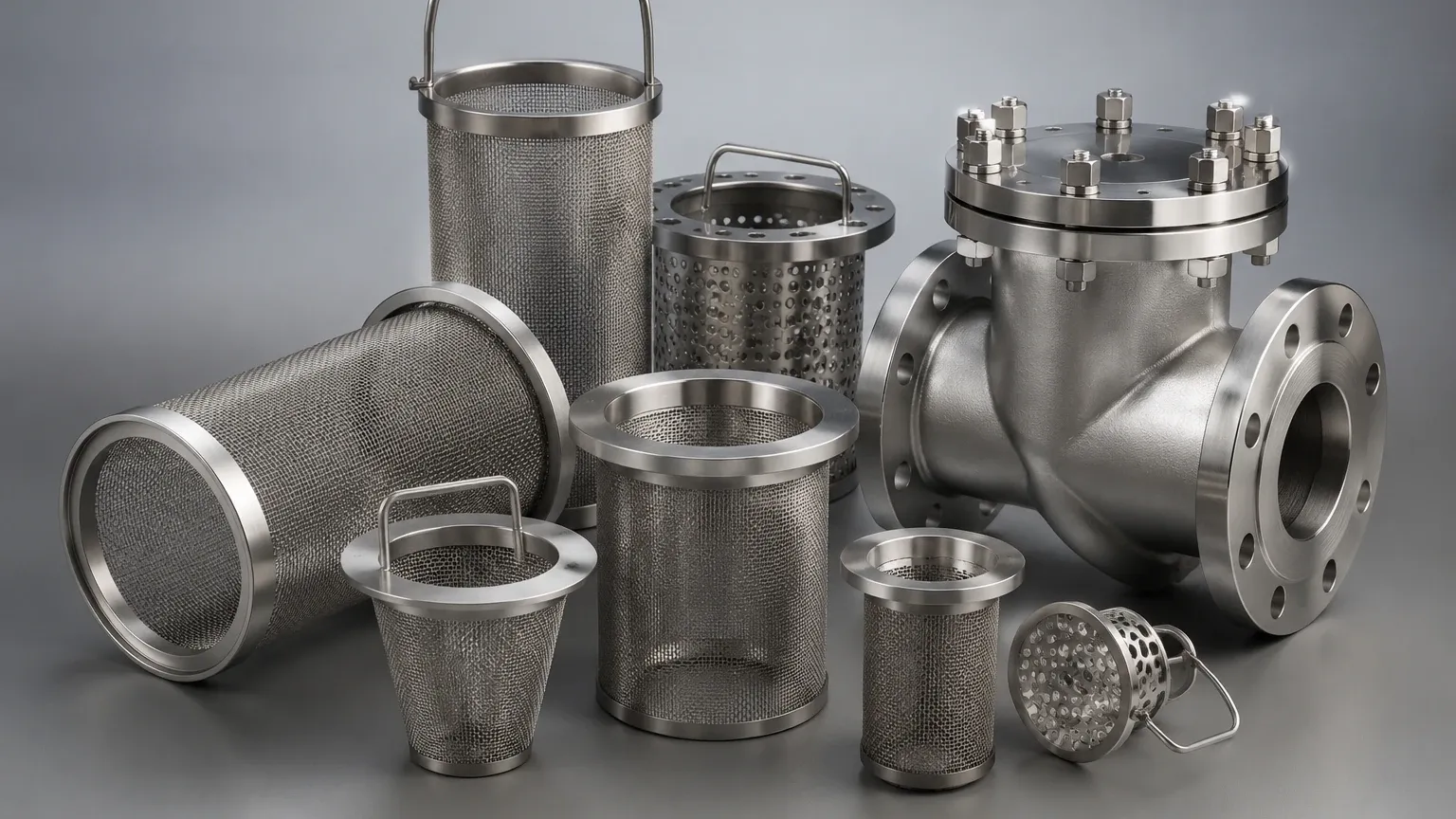
Customization and OEM Solutions
Standardized products often fail to meet the exact requirements of complex industrial projects. This is where the value of a specialized manufacturer like Kaifil becomes apparent. Customization options for a strainer Qatar project might include:
1. Custom Dimensions: Tailoring the housing and basket size to fit into existing piping footprints without extensive modification.
2. Specialized Flanging: Ensuring compatibility with various international standards, including ANSI, DIN, and JIS.
3. Reinforced Baskets: For high-pressure applications, baskets can be reinforced with perforated metal backings to prevent the mesh from collapsing under heavy loads.
4. Magnetic Inserts: Adding magnetic rods to the basket to capture fine iron or steel particles that might otherwise pass through the mesh.
By working with a manufacturer that understands OEM requirements, Qatari firms can obtain filtration components that are purpose-built for their specific operational parameters, rather than forcing a standard product into a non-standard application.
Maintenance and Operational Longevity
The total cost of ownership (TCO) for a strainer is not just the purchase price, but the cost of maintenance and the potential cost of failure. In the high-stakes environment of Qatar’s industrial sectors, reliability is the primary metric of value.
* Cleaning Protocols: Basket strainers should be cleaned when the pressure gauge indicates a specific differential (usually around 5-10 psi above the clean pressure drop). Over-cleaning can lead to unnecessary wear on seals, while under-cleaning risks basket rupture.
* Replacement Cycles: While stainless steel elements are durable, they are not permanent. Erosion from high-velocity particles can eventually thin the wire mesh, leading to bypass. Regular inspection of the mesh integrity is a critical maintenance step.
* Seal Integrity: The choice of gasket or O-ring material (Viton, EPDM, PTFE) must be compatible with both the process fluid and the high ambient temperatures of the region to prevent leaks.
Selecting a Partner for Strainer Qatar Requirements
For engineers and purchasing managers in Qatar, the selection of a filtration partner involves evaluating technical capability, material quality, and the ability to provide customized engineering support. A manufacturer like Kaifil, with expertise in stainless steel filtration solutions, provides the necessary technical depth to support demanding industrial applications.
When evaluating a supplier for Strainers & Baskets, it is recommended to confirm the following:
* Material Certification: Ensure that all stainless steel grades are verified and meet international standards (ASTM/EN).
* Design Compliance: Confirm that the pressure vessels and strainers are designed according to relevant codes (such as ASME Section VIII).
* Testing Procedures: Inquire about hydrostatic testing and filtration accuracy verification.
* Customization Flexibility: Determine if the supplier can adjust mesh sizes, dimensions, and connection types to meet specific project needs.
In conclusion, the procurement of a strainer Qatar solution is a technical decision that impacts the long-term efficiency and safety of industrial operations. By focusing on high-quality materials, precise engineering specifications, and the right configuration—whether it be a simple Y-strainer or a complex duplex system—operators can ensure their infrastructure remains robust against the challenges of the Middle Eastern industrial environment. For those seeking reliable, high-performance filtration components, exploring professional Strainers & Baskets options is the first step toward optimized fluid system management.
