


Paint Strainers Screwfix
In the realm of industrial finishing and large-scale coating applications, the quality of the final surface is dictated by the purity of the medium applied. Whether dealing with high-viscosity primers, automotive topcoats, or industrial protective layers, the presence of particulates can lead to catastrophic equipment failure and substandard results. While many maintenance teams and small-scale contractors initially look toward retail options like paint strainers screwfix for quick, low-volume tasks, industrial-scale operations require a more robust, engineered approach to fluid management.
Transitioning from disposable, light-duty filtration to heavy-duty Strainers & Baskets is a critical step for facilities aiming to optimize uptime and ensure consistent coating integrity. This guide explores the technical distinctions between entry-level straining tools and professional-grade stainless steel filtration components, providing engineers and purchasing teams with the data needed to select the right solution for their specific application.
The Role of Filtration in Professional Coating Processes
Filtration in a B2B context is not merely about removing visible debris; it is about protecting precision equipment and ensuring chemical homogeneity. In industrial spray systems, even microscopic contaminants can cause significant issues. For example, in airless spray systems, a single particle larger than the nozzle orifice can lead to pressure spikes, uneven spray patterns, and immediate downtime for cleaning.
Contaminants in paint and coatings typically originate from three sources:
1. Raw Material Impurities: Undissolved pigments or resins from the manufacturing process.
2. Environmental Contamination: Dust, lint, or airborne particulates introduced during mixing or storage.
3. Chemical Reactions: "Skinning" caused by oxidation or premature polymerization within the container.
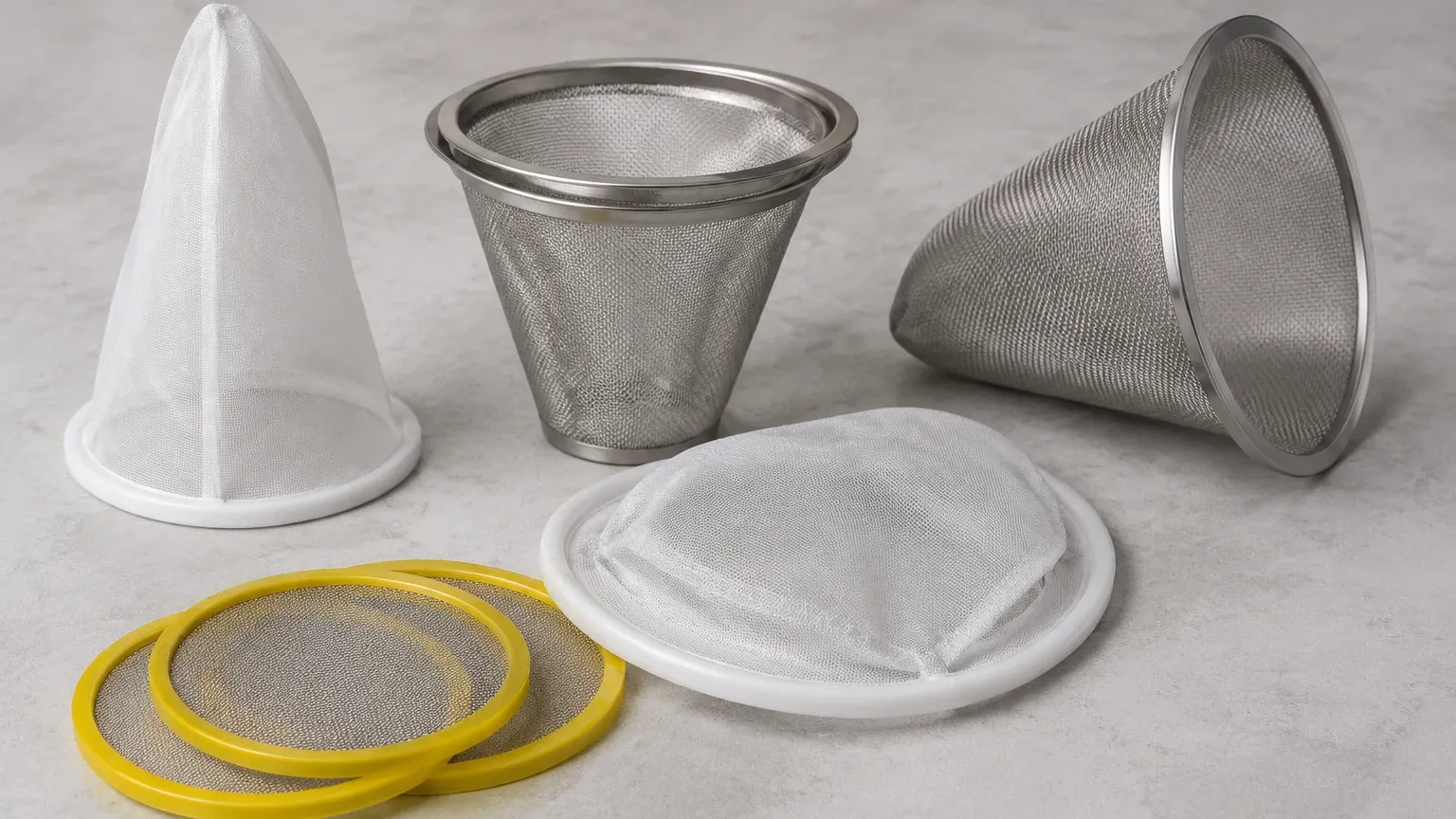
Using high-performance stainless steel strainers ensures that these particulates are captured before they reach the pump or the spray head. Unlike basic consumer-grade filters, industrial baskets are designed to handle high flow rates and significant pressure differentials without deforming or bypassing fluid.
Evaluating Paint Strainers: Retail vs. Industrial Specifications
When searching for "paint strainers screwfix," users often find disposable nylon or paper cone filters. These are excellent for one-time DIY projects or very small touch-up jobs involving a few liters of material. However, when the volume of paint scales to hundreds or thousands of gallons, the limitations of disposable retail filters become apparent.
Durability and Structural Integrity
Retail paint strainers are typically made from lightweight nylon mesh glued to a paper frame. Under the weight of heavy industrial coatings or the pressure of a circulating pump, these materials can tear, allowing unfiltered paint into the system. In contrast, industrial stainless steel baskets are TIG welded or resistance welded, providing a rigid structure that can withstand the mechanical stresses of high-viscosity fluids.
Chemical Compatibility
Industrial coatings often contain aggressive solvents, such as MEK (Methyl Ethyl Ketone), toluene, or high-strength thinners. Paper and certain low-grade plastics used in retail filters may degrade or leach contaminants into the coating. Stainless steel 304 and 316L, the materials primarily used by Kaifil, offer near-universal resistance to the solvents and resins found in industrial paints, ensuring no chemical interference occurs during the filtration process.
Sustainability and Waste Reduction
In a modern manufacturing environment, waste reduction is a key KPI. Relying on thousands of disposable filters creates a significant waste stream. Industrial strainers and baskets are designed for repeated use. Once a batch is completed, the stainless steel mesh can be cleaned with the appropriate solvent and returned to service, offering a lower total cost of ownership over the long term.
Technical Parameters for Selecting Strainers & Baskets
Engineers must look beyond the basic "fine" or "extra fine" labels found on retail packaging. Selecting an industrial strainer requires a deep dive into technical specifications to match the filter to the fluid dynamics of the system.
Mesh Count and Micron Rating
The most critical factor is the filtration accuracy. Mesh count refers to the number of openings per linear inch, while the micron rating defines the actual size of the particles the mesh will capture.
- Coarse Filtration (20-60 Mesh): Used for heavy primers or removing large skins from bulk containers.
- Medium Filtration (80-150 Mesh): Standard for most industrial topcoats and enamels.
- Fine Filtration (200-400+ Mesh): Required for high-gloss finishes, automotive clear coats, and precision electronics coatings.
Effective Filtration Area (EFA)
The EFA determines how long a strainer can operate before the pressure drop becomes too high. A larger basket provides more surface area, allowing for longer run times between cleanings. Industrial baskets are often designed with pleated or multi-layered mesh to maximize this area within a compact footprint.
Flow Rate and Pressure Drop
Every filter introduces a degree of resistance to the flow. Engineers must calculate the "clean pressure drop" to ensure the pump can maintain the required flow rate. As the strainer captures debris, the pressure drop increases. High-quality industrial baskets are engineered with optimized wire diameters to maximize open area, thereby minimizing initial resistance.
Material Selection for Chemical and Solvent Compatibility
In the production of stainless steel filtration components, the choice of alloy is paramount. While the search for "paint strainers screwfix" might lead to generic plastic tools, industrial applications demand metal alloys that can survive harsh environments.
1. Stainless Steel 304: The most common grade for industrial filtration. It provides excellent strength and good corrosion resistance for water-based paints and many standard solvents.
2. Stainless Steel 316/316L: Contains molybdenum, which provides superior resistance to chlorides and highly acidic or alkaline cleaning agents. This is the preferred choice for pharmaceutical-grade coatings or highly corrosive marine paints.
3. Specialty Alloys: For extreme applications involving high temperatures or specialized chemical processing, alloys like Monel or Hastelloy may be utilized, though stainless steel remains the industry standard for 95% of coating applications.
Kaifil’s manufacturing process ensures that the mesh is precisely woven and the frames are robustly constructed, preventing "wire migration"—a common failure in lower-quality filters where individual wires shift, creating larger holes that allow contaminants to pass through.
Industrial Applications: Beyond Standard Paint Straining
While the primary use case is paint, industrial strainers and baskets are utilized across a wide spectrum of fluid handling tasks. Understanding these applications helps engineers see the versatility of high-quality filtration components.
* Adhesives and Sealants: High-viscosity materials require reinforced baskets that can handle the high pressures needed to force the fluid through the mesh.
* Ink Manufacturing: Precision is vital in the printing industry. Strainers are used to ensure that pigments are finely dispersed and that no agglomerates remain to clog print heads.
* Resin Production: During the synthesis of resins, filtration is used to remove unreacted solids or catalysts from the final product.
* Coolants and Lubricants: In machining and metalworking, baskets are used to remove metal chips and fines from recirculating coolant systems, protecting both the pumps and the workpieces.
By choosing professional-grade Strainers & Baskets, facilities can standardize their filtration hardware across multiple departments, simplifying inventory and maintenance protocols.
Customization and OEM Solutions in Filtration
One of the primary advantages of working with a specialized manufacturer like Kaifil is the ability to move beyond off-the-shelf sizes. Retail outlets provide a limited selection of diameters and depths. In industrial settings, the strainer must often fit into a specific housing, tank, or pipe configuration.
Customization options include:
* Flange and Handle Designs: Custom flanges ensure a bypass-free seal within the housing, while specialized handles allow for safe and easy removal during maintenance.
* Reinforced Structures: For high-pressure applications, baskets can be fitted with perforated metal backings to support the fine wire mesh.
* Multi-Stage Filtration: Baskets can be designed with a coarse outer layer and a fine inner layer, allowing for graduated filtration that prevents the fine mesh from clogging prematurely.
For OEM equipment manufacturers, having a reliable partner to produce custom-branded or specifically dimensioned filtration components is essential for the performance of their own machinery.
Total Cost of Ownership: Disposable vs. Stainless Steel Solutions
When evaluating the procurement of filtration supplies, it is a mistake to look only at the unit price. A pack of disposable paint strainers screwfix may seem inexpensive, but the long-term costs accumulate quickly:
1. Replacement Frequency: Disposables are used once and thrown away. A stainless steel basket can last for years with proper care.
2. Downtime Costs: If a low-quality filter fails and allows a contaminant to reach a spray gun, the cost of the resulting downtime and equipment cleaning far outweighs the price of a premium filter.
3. Product Loss: Disposable filters often retain a significant amount of coating material in their fibers or paper frames. Stainless steel mesh allows for better drainage, ensuring more of the product reaches the substrate.
4. Environmental Compliance: Reducing the volume of solvent-soaked waste (used disposable filters) can lower hazardous waste disposal fees and help the facility meet environmental sustainability goals.
Conclusion: Making the Informed Choice
For the professional engineer or purchasing manager, the choice between retail-grade tools and industrial-grade filtration components is clear. While "paint strainers screwfix" may serve as a temporary fix for minor tasks, the reliability, precision, and durability of high-quality stainless steel Strainers & Baskets are indispensable for serious industrial operations.
By focusing on technical specifications such as micron ratings, material compatibility, and structural integrity, facilities can ensure they are protecting their equipment and delivering the highest quality finish possible. Kaifil remains committed to providing these high-performance solutions, combining advanced manufacturing techniques with engineering expertise to meet the most demanding filtration challenges in the coating and chemical industries.
