


Que Son Los Strainers
In the context of industrial fluid management and process engineering, the question of "que son los strainers" (what are strainers) is fundamental to ensuring the longevity and efficiency of piping systems. At its core, an industrial strainer is a closed vessel with a cleanable screen element designed to remove and retain foreign particles from flowing liquids, gases, or steam. Unlike a standard filter, which is typically designed to remove particles measured in microns and is often disposed of after use, a strainer is generally used to remove larger, visible particles and is designed for repeated cleaning and reuse.
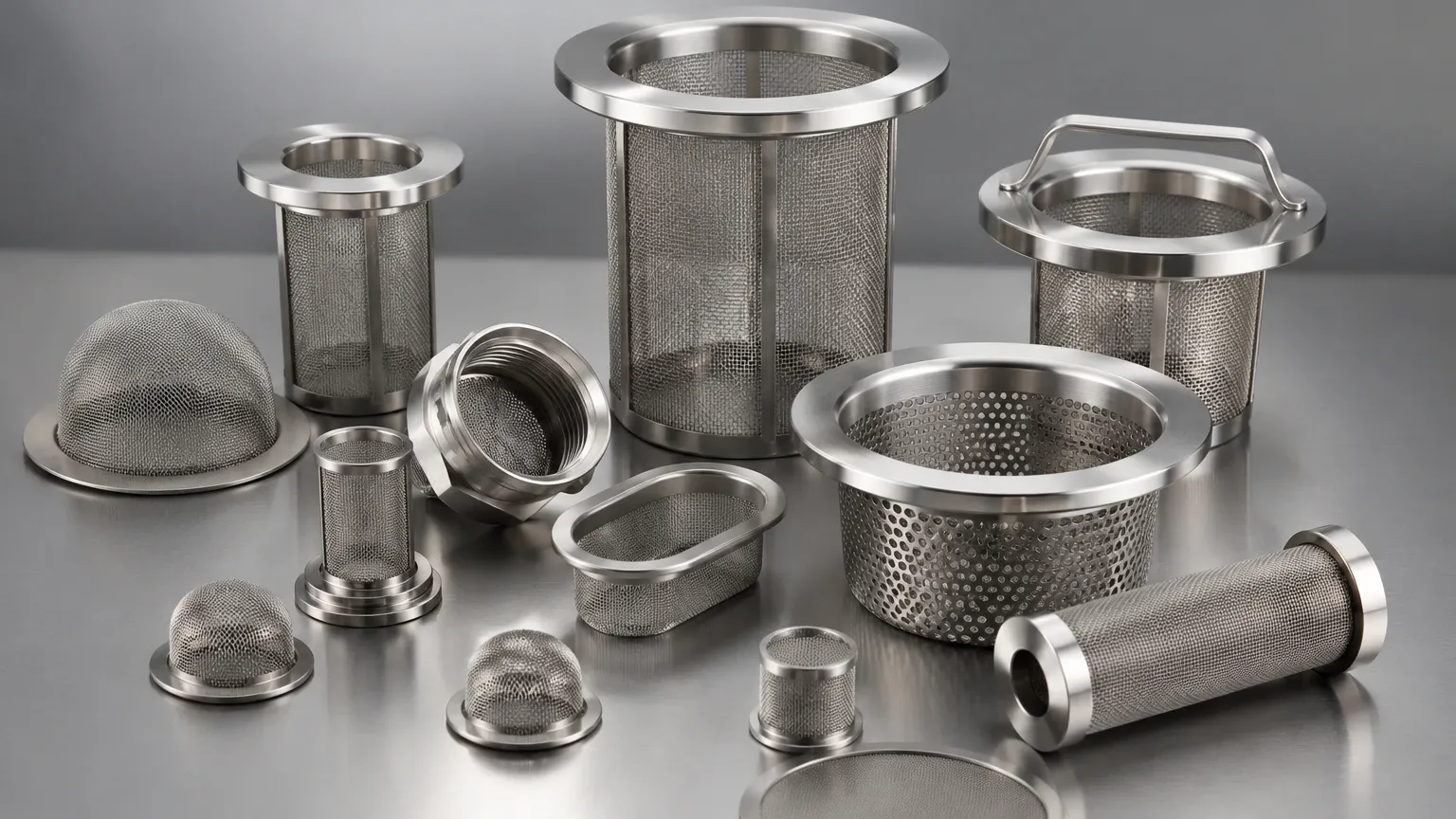
For engineers and procurement professionals, understanding the technical nuances of Strainers & Baskets is essential for protecting downstream equipment such as pumps, valves, flow meters, and heat exchangers. This article provides a comprehensive technical overview of strainer technology, material selection, and engineering considerations required for industrial applications.
The Fundamental Role of Strainers in Industrial Systems
The primary function of a strainer is the mechanical separation of solids from a fluid stream. This process is critical in preventing damage caused by debris, scale, weld slag, or other contaminants that may be present in a pipeline. When asking *que son los strainers*, one must consider them the first line of defense in a process system.
Industrial strainers operate on the principle of physical obstruction. As the fluid passes through the internal element—usually a perforated metal sheet or a wire mesh—the particles larger than the openings are trapped, while the clean fluid continues downstream. This protection is vital because even small amounts of debris can lead to catastrophic failure in precision components. For instance, a small piece of metal scale lodged in a control valve can prevent it from closing properly, leading to system leaks or safety hazards.
Primary Types of Industrial Strainers and Their Applications
Selecting the correct configuration is the most important step in strainer procurement. The two most common designs are Y-strainers and basket strainers, each suited for specific operational parameters.
Y-Strainers
Named for their shape, Y-strainers are typically used in high-pressure applications where the amount of material to be removed is relatively small. They are versatile and can be installed in either horizontal or vertical piping runs. Because of their compact design and ability to handle high pressures, they are frequently found in steam, gas, and liquid lines. However, the dirt-holding capacity of a Y-strainer is lower than that of a basket strainer, requiring more frequent cleaning if the fluid is heavily contaminated.
Basket Strainers (Simplex and Duplex)
Basket strainers feature a vertical cylinder that houses a removable basket-shaped screen. These are primarily used in liquid applications where high flow rates and high dirt-holding capacity are required.
* Simplex Strainers: These are used in systems where the flow can be temporarily shut down to remove and clean the basket. They are ideal for batch processes or systems with redundant piping.
* Duplex Strainers: Also known as twin strainers, these consist of two separate strainer chambers connected by a valve. This design allows for continuous operation; when one basket becomes full, the flow is diverted to the second chamber without interrupting the process. This is a critical requirement for chemical plants, power generation, and oil refineries where downtime is prohibitively expensive.
Material Selection and Engineering Specifications
The performance and lifespan of a strainer are heavily dependent on the materials used in its construction. At Kaifil, we specialize in high-performance stainless steel solutions, which offer superior durability compared to cast iron or carbon steel in demanding environments.
Housing Materials
The body of the strainer must be compatible with the fluid's chemical properties and the system's operating temperature and pressure. Stainless steel (specifically grades 304 and 316L) is the industry standard for corrosion resistance. In chemical processing or pharmaceutical applications, 316L stainless steel is preferred due to its resistance to pitting and crevice corrosion.
Filtration Media: Mesh vs. Perforation
The internal element is where the actual separation occurs. There are two primary types of media:
1. Perforated Metal: These are metal sheets with punched holes. They are robust and serve as the primary support for finer mesh or as a standalone strainer for large debris (typically 1/32" to 1/4" openings).
2. Wire Mesh: For finer filtration, stainless steel wire mesh is layered over a perforated metal support. Mesh size is defined by the number of openings per linear inch. For example, a 100-mesh screen has 100 openings per inch, capable of capturing much smaller particles than a standard perforated plate.
Technical Parameters: Sizing and Performance Evaluation
When engineers evaluate *que son los strainers* for a new project, they must look beyond the physical dimensions and focus on hydraulic performance. The most critical technical factor is the pressure drop, often referred to as Delta P (ΔP).
Understanding Pressure Drop
Every strainer creates a restriction in the flow, resulting in a loss of pressure. This loss increases as the strainer basket fills with debris. If the pressure drop becomes too high, it can starve downstream pumps or reduce system efficiency. Engineers must calculate the "clean pressure drop" and ensure the system can handle the "dirty pressure drop" before cleaning is required.
Open Area Ratio (OAR)
The Open Area Ratio is the relationship between the total area of the openings in the strainer element and the internal cross-sectional area of the inlet pipe. A high OAR (typically 4:1 or 6:1) ensures that the strainer can operate for longer periods between cleanings and maintains a lower initial pressure drop. A low OAR will lead to rapid clogging and high maintenance frequency.
Viscosity Considerations
The viscosity of the fluid significantly impacts strainer performance. High-viscosity fluids, such as heavy oils or syrups, require larger strainer housings and coarser screens to maintain acceptable flow rates. If a strainer is undersized for a viscous fluid, the resulting pressure drop can be high enough to collapse the internal basket.
Maintenance Protocols and Operational Longevity
A strainer is only effective if it is properly maintained. Unlike automated self-cleaning filters, manual strainers require a structured maintenance schedule. The industry standard for monitoring strainer health is the installation of differential pressure gauges across the inlet and outlet.
Cleaning Cycles
A common question from purchasing teams is how often a strainer needs to be cleaned. The answer depends entirely on the cleanliness of the process fluid. However, a general rule is that a strainer basket should be cleaned when the differential pressure reaches 5 to 10 psi above the clean pressure drop. Waiting too long can result in "permanent" pressure loss or damage to the screen element due to the force of the fluid pushing against a clogged surface.
Replacement and Repair
While the housings of stainless steel strainers can last for decades, the internal baskets are wear parts. Over time, high-velocity flow or abrasive particles can erode the wire mesh or deform the perforated metal. It is essential to source high-quality replacement baskets that match the original manufacturer's specifications to ensure a proper seal. An ill-fitting basket allows fluid to "bypass" the screen, rendering the strainer useless.
Customization in Industrial Filtration
Standard off-the-shelf strainers do not always meet the specific needs of complex industrial processes. Customization is often required to address unique challenges such as extreme temperatures, highly corrosive chemicals, or specific space constraints in a facility.
Kaifil provides OEM and customized filtration solutions, working directly with engineering teams to develop strainers that meet precise application requirements. This includes custom micron ratings, specialized flange connections (ANSI, DIN, or JIS), and the integration of magnetic inserts to capture fine metallic particles that might otherwise pass through a standard mesh.
In industries like food and beverage or pharmaceuticals, "que son los strainers" also involves sanitary design. These strainers must feature polished surfaces (low Ra values) and be designed without "dead legs" where bacteria can accumulate. Stainless steel construction is mandatory in these sectors to withstand Clean-in-Place (CIP) procedures and aggressive sanitizing agents.
Conclusion: Making an Informed Selection
Understanding *que son los strainers* is the first step toward optimizing an industrial piping system. By selecting the right type, material, and sizing parameters, engineers can significantly reduce maintenance costs and prevent expensive equipment failures.
When specifying Strainers & Baskets, it is vital to partner with a manufacturer that understands the technical demands of your specific industry. Whether you are dealing with high-pressure steam in a power plant or delicate fluid processing in a pharmaceutical lab, the quality of the filtration component determines the reliability of the entire system. Focus on technical specifications, material integrity, and the total cost of ownership to ensure your filtration solution provides long-term value.
