


Quick End Strainers
In industrial fluid handling, the efficiency of a filtration system is often measured not just by its particle retention capabilities, but by its operational uptime. Quick end strainers represent a critical evolution in the category of Strainers & Baskets, designed specifically to minimize the labor and time required for routine maintenance. As industrial processes in chemical manufacturing, pharmaceutical production, and food processing become increasingly automated and time-sensitive, the ability to rapidly access and clean a filter basket without specialized tools becomes a significant engineering advantage.
Industrial strainers are essential for protecting downstream equipment such as pumps, valves, and heat exchangers from damage caused by debris, scale, and particulate matter. However, a standard bolted-cover strainer can require significant downtime for disassembly, especially in large-diameter piping systems. Quick end strainers address this bottleneck through specialized closure mechanisms that allow for tool-free or rapid-access entry to the internal basket, ensuring that filtration performance is maintained without compromising the production schedule.
Understanding the Mechanics of Quick End Strainers
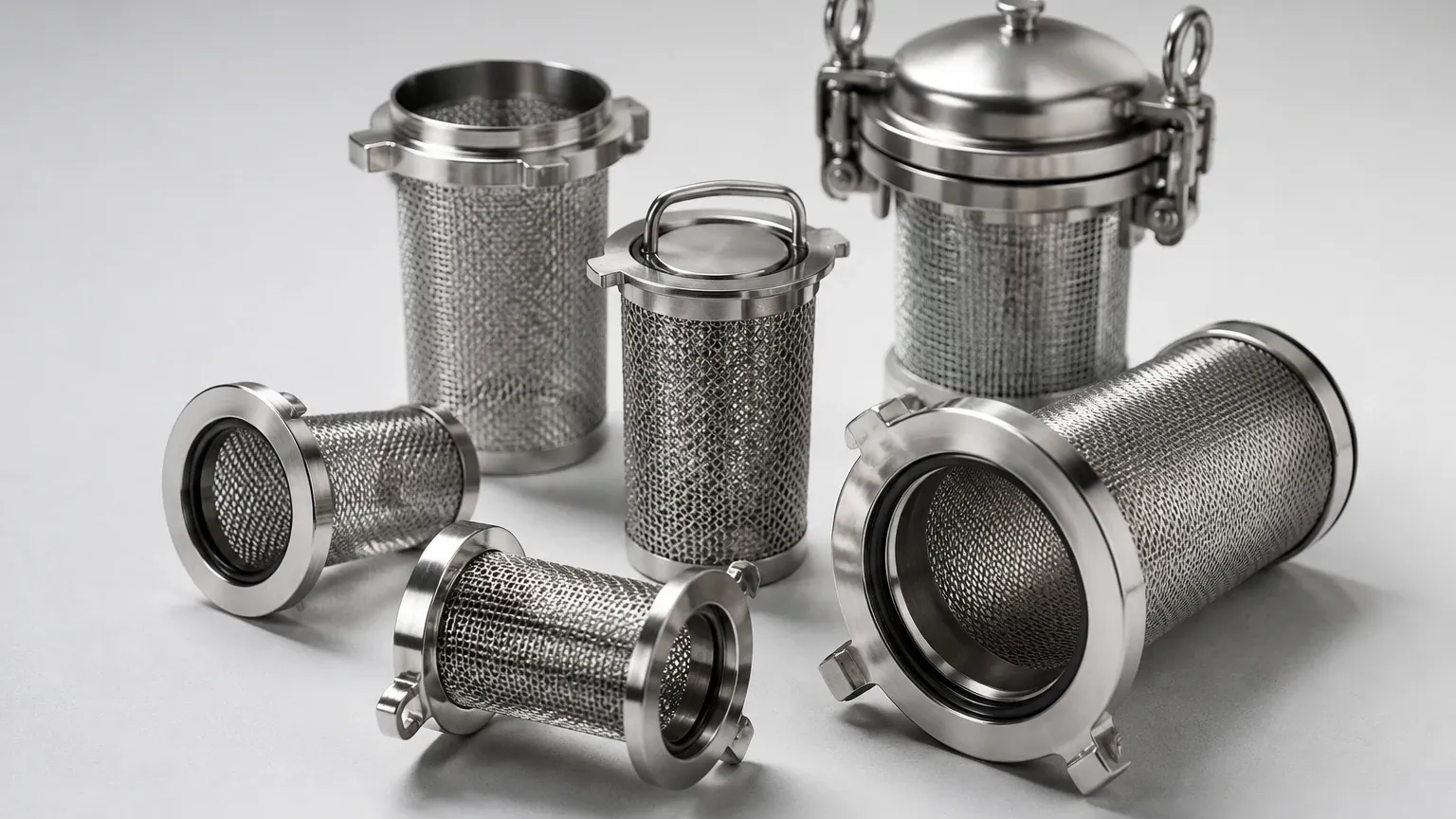
The primary differentiator of a quick end strainer is its closure design. While traditional Y-strainers or T-strainers often use heavy bolted flanges that require torque wrenches and significant manual labor to open, quick end models utilize various mechanical designs to speed up the process. Common mechanisms include swing bolts, quick-opening clamps, and threaded caps with ergonomic handles.
Swing Bolt Closures
Swing bolts are a staple in high-pressure quick-access applications. The bolts are permanently attached to the strainer body and swing into slots on the cover. This design allows the operator to loosen the nuts slightly and swing the bolts out of the way, rather than removing them entirely. This prevents the loss of hardware and significantly reduces the time required to lift the cover. For engineers, this provides a balance between the high-pressure sealing capabilities of a bolted joint and the speed of a quick-access system.
Clamp and V-Band Mechanisms
In lower-pressure or sanitary applications, such as those found in the food and beverage industry, V-band clamps or heavy-duty tri-clamps are frequently employed. These systems use a single or dual-segment clamp to secure the cover to the body. The uniform pressure applied by the clamp ensures a reliable seal while allowing the operator to open the unit in seconds. This is particularly useful in processes where the strainer basket must be cleaned multiple times per shift.
Material Engineering and Corrosion Resistance
When specifying quick end strainers, material selection is the most critical factor for long-term reliability. Because these components are often exposed to aggressive chemicals, high temperatures, and abrasive particulates, the housing and the internal basket must be constructed from alloys that can withstand the specific environment.
Stainless Steel Grades
Most industrial quick end strainers are manufactured from stainless steel, typically Grade 304 or Grade 316L.
- Grade 304: Suitable for general industrial use, water treatment, and mildly corrosive environments. It offers excellent strength and durability at a lower cost point.
- Grade 316L: The "L" denotes low carbon, which improves weldability and resistance to intergranular corrosion. This grade is preferred in pharmaceutical and chemical processing where resistance to chlorides and acids is paramount.
Gasket and Seal Compatibility
A quick-access system is only as reliable as its seal. Because quick end strainers are opened frequently, the gasket material must exhibit high resilience and chemical compatibility. Common options include:
- EPDM: Excellent for water and steam applications, offering good resistance to aging and weather.
- Viton (FKM): Preferred for high-temperature applications and systems involving oils, fuels, and many chemicals.
- PTFE (Teflon): Used for extreme chemical resistance, though it lacks the elasticity of elastomers and may require more frequent replacement in quick-access designs.
Operational Performance: Flow Dynamics and Filtration Accuracy
From an engineering perspective, a strainer is a controlled restriction in the pipeline. The goal is to maximize filtration surface area while minimizing pressure drop ($ΔP$). Quick end strainers are often designed with larger housings to accommodate high-capacity baskets, which reduces the frequency of cleaning cycles.
The Importance of Open Area Ratio
The efficiency of Strainers & Baskets is often dictated by the Open Area Ratio (OAR). This is the ratio of the total open area of the basket holes to the cross-sectional area of the inlet pipe. A high OAR (typically 4:1 or higher) ensures that even as the basket begins to fill with debris, the pressure drop remains within acceptable limits. This prevents cavitation in downstream pumps and ensures consistent flow rates.
Filtration Media Options
Depending on the application, the internal basket may utilize different types of media:
1. Perforated Metal: Best for coarse filtration (large debris removal). Perforation sizes typically range from 1/32" to 1/2".
2. Wire Mesh: Used for finer filtration requirements. Stainless steel wire mesh can be lined inside a perforated basket to provide structural support while capturing particles down to the micron level.
3. Wedge Wire: Ideal for high-viscosity fluids or applications where the debris is sticky or fibrous. Wedge wire is inherently non-clogging and easier to clean than standard mesh.
Integration and Safety Protocols in High-Pressure Systems
Integrating quick end strainers into an industrial pipeline requires careful consideration of safety protocols. Because these units are designed to be opened quickly, there is an inherent risk if the system is not properly depressurized before access.
Pressure Relief and Venting
Reliable quick end designs include integrated vent valves or pressure relief ports. Engineers should ensure that the SOP (Standard Operating Procedure) for cleaning the strainer includes a mandatory venting step. Some advanced quick-opening covers include safety interlocks that prevent the cover from being unlatched while the internal pressure exceeds atmospheric levels.
Installation Orientation
While many strainers can be installed in various orientations, quick end models are most effective when installed horizontally or vertically with the cover facing upward. This prevents fluid from spilling out excessively when the cover is opened and allows the operator to lift the basket straight out, minimizing the risk of debris falling back into the downstream side of the housing.
Maintenance Efficiency and Total Cost Considerations
When evaluating the cost of a filtration solution, purchasing managers must look beyond the initial capital expenditure (CAPEX) and consider the total cost of ownership (TCO). Quick end strainers often have a higher upfront cost than standard bolted units, but the ROI (Return on Investment) is realized through labor savings and reduced downtime.
Calculating Labor Savings
If a standard bolted strainer takes two technicians 45 minutes to service, and a quick end strainer takes one technician 5 minutes, the labor savings per cleaning cycle are substantial. In a facility where strainers are cleaned daily, these savings can amount to hundreds of man-hours per year. Furthermore, by reducing the complexity of the task, the likelihood of improper reassembly or gasket damage is significantly lowered.
Replacement Cycles
The durability of the quick-access mechanism itself is a factor in TCO. High-quality stainless steel swing bolts and heavy-duty clamps are designed for thousands of cycles. However, the gaskets should be treated as consumables. A proactive maintenance schedule that includes regular gasket inspection and lubrication of moving parts (such as swing bolt pivots) will extend the service life of the unit.
Selecting the Right Configuration for Industrial Applications
Choosing the correct quick end strainer requires a detailed understanding of the process fluid and the operational environment. Engineers should confirm the following parameters before procurement:
- Flow Rate (GPM/LPM): To determine the required pipe size and housing volume.
- Maximum Operating Pressure and Temperature: To ensure the closure mechanism and material grade are rated for the application.
- Nature of Contaminants: Is the debris hard, soft, fibrous, or abrasive? This dictates the choice between perforated metal, mesh, or wedge wire.
- Allowable Pressure Drop: To size the basket correctly for the desired cleaning interval.
- Space Constraints: Quick end covers often require additional clearance for the swing bolts or for the cover to pivot open.
In specialized sectors like hydraulic systems, where fluid cleanliness is vital for the longevity of sensitive valves, or in water treatment plants where large volumes of organic matter must be removed, the choice of strainer configuration can determine the overall reliability of the plant. Customization options, such as the addition of magnetic inserts to capture fine ferrous particles or the use of specialized coatings for extreme chemical resistance, allow these components to be tailored to the most demanding industrial environments.
Conclusion
Quick end strainers are a vital component for any industrial facility prioritizing operational efficiency and safety. By combining the robust filtration performance of stainless steel Strainers & Baskets with modern, rapid-access engineering, these units provide a dependable solution for protecting critical infrastructure. Whether it is reducing the labor costs associated with routine maintenance or ensuring that a production line can be brought back online in minutes rather than hours, the technical advantages of quick-access filtration are clear. When specified correctly with attention to material compatibility, flow dynamics, and safety protocols, quick end strainers serve as a long-term asset in maintaining fluid system integrity.
