


Strainer 1
In industrial fluid handling and processing, the initial stage of debris removal is critical for the protection of downstream equipment. Often referred to as "strainer 1" in a multi-stage filtration sequence, this primary component serves as the first line of defense against large particulates, scale, and foreign objects that could otherwise damage sensitive pumps, valves, and instrumentation. For engineers and facility managers, selecting the correct primary strainer involves more than just choosing a mesh size; it requires a deep understanding of fluid dynamics, material compatibility, and the specific mechanical demands of the application.
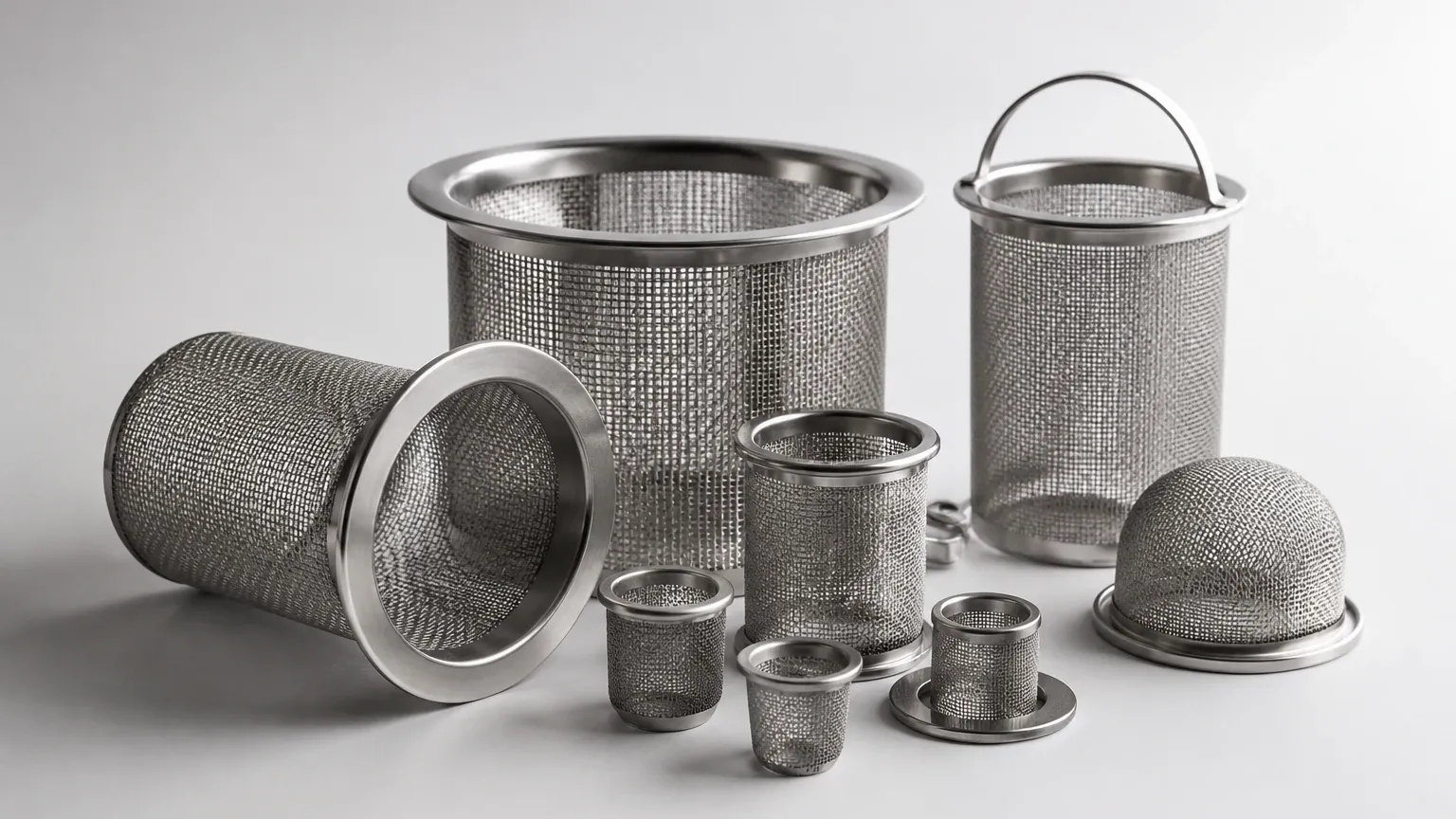
Industrial Strainers & Baskets are engineered to handle high flow rates while maintaining structural integrity under pressure. Whether the application involves chemical processing, water treatment, or food and beverage production, the performance of the "strainer 1" unit dictates the efficiency and maintenance frequency of the entire system. This guide examines the technical parameters, engineering considerations, and selection criteria essential for optimizing primary filtration stages.
The Role of Strainer 1 in Multi-Stage Filtration Systems
In most industrial piping systems, filtration is rarely a single-step process. Instead, it is a graduated approach where the coarsest particles are removed first. The "strainer 1" position is typically occupied by a heavy-duty strainer designed for high dirt-holding capacity and minimal pressure drop. By capturing large solids early in the process, this component prevents the premature clogging of finer secondary filters and protects high-velocity components from erosion and mechanical impact.
For example, in a hydraulic system or a cooling water loop, the primary strainer might be tasked with removing particles larger than 100 microns. This ensures that the secondary, high-precision filter cartridges can focus on removing microscopic contaminants without being overwhelmed by bulk debris. The strategic placement of a robust primary strainer significantly extends the service life of more expensive downstream filtration media and reduces the total cost of ownership by lowering the frequency of element replacements.
Engineering Considerations for Strainer 1 Selection
When specifying a primary strainer, engineers must balance filtration efficiency with system throughput. Several key factors influence the selection of the physical housing and the internal straining element.
Material Selection and Chemical Compatibility
Material choice is the most fundamental decision in strainer engineering. Stainless steel, particularly grades 304 and 316L, is the industry standard due to its corrosion resistance and mechanical strength. In environments involving aggressive chemicals or high-temperature steam, 316L is often preferred for its superior resistance to pitting and crevice corrosion. For food and beverage applications, the material must also meet sanitary standards, ensuring that the surface finish prevents bacterial growth and allows for effective Clean-in-Place (CIP) cycles.
Mesh Size and Micron Rating
The "strainer 1" stage usually utilizes perforated metal or coarse wire mesh. The selection of the opening size must be based on the smallest particle that could potentially damage the most sensitive downstream component. However, specifying a mesh that is too fine for a primary stage can lead to rapid pressure buildup and frequent cleaning requirements. A common rule of engineering is to select a mesh size that is approximately 50% to 70% of the size of the smallest particle to be removed, ensuring a safety margin while maintaining flow efficiency.
Flow Rate and Velocity
The internal velocity of the fluid as it passes through the strainer element affects both the pressure drop and the potential for particle bypass. If the velocity is too high, particles may be forced through the mesh or cause excessive wear on the wire strands. Designing for a low-velocity approach across the surface area of the basket or screen is essential for long-term reliability.
Comparative Analysis: Basket Strainers vs. Y-Strainers for Primary Filtration
The configuration of the strainer housing is as important as the element itself. For the primary "strainer 1" application, the choice usually falls between a Y-strainer and a basket (Simplex or Duplex) strainer.
Y-Strainers in Primary Stages
Y-strainers are frequently used in applications where the amount of debris is relatively low or where space is at a premium. They are characterized by a compact design and can be installed in both horizontal and vertical pipelines. However, in a primary filtration role where high dirt loading is expected, Y-strainers may require frequent blow-down or manual cleaning, as their debris-holding capacity is lower than that of a basket-style unit.
Basket Strainers for High Capacity
For dedicated "strainer 1" duties in high-flow industrial lines, basket strainers are generally the preferred choice. The upright basket design allows for a much larger surface area and a greater volume for collecting solids. This results in longer run times between cleaning cycles. Furthermore, basket strainers are easier to service; the top-loading design allows maintenance personnel to remove the basket without draining the entire piping system, which is a significant advantage in continuous process industries.
Performance Metrics and Pressure Drop Calculations
The most critical performance metric for any industrial strainer is the pressure drop ($ΔP$). This represents the loss of energy as the fluid moves through the strainer body and the mesh element. For a "strainer 1" installation, maintaining a low clean pressure drop is vital to ensure that the system pump operates within its efficient range.
Factors Influencing Pressure Drop
1. Viscosity of the Fluid: Higher viscosity fluids require larger mesh openings or greater surface areas to maintain the same flow rate at an acceptable $ΔP$.
2. Open Area Ratio: This is the ratio of the total area of the holes in the mesh to the total area of the mesh itself. A higher open area ratio generally correlates to a lower pressure drop. For primary strainers, an open area ratio of at least 4:1 (relative to the pipe cross-sectional area) is often recommended.
3. Debris Loading: As the strainer collects material, the effective open area decreases, and the pressure drop increases. Engineers must calculate the "dirty" pressure drop to determine the appropriate interval for cleaning or backwashing.
Monitoring differential pressure across the strainer is the standard method for determining when maintenance is required. Installing differential pressure gauges or sensors allows for automated alerts, preventing the system from reaching a critical state where the mesh might collapse or the pump might cavitate.
Maintenance and Operational Lifespan of Industrial Strainers
The durability of a primary strainer is largely dependent on the quality of its construction and the rigor of the maintenance schedule. Because the "strainer 1" unit handles the largest and most abrasive contaminants, it is subject to significant mechanical stress.
Cleaning Protocols
Manual cleaning involves removing the basket or screen and washing it with high-pressure water or air. In some cases, ultrasonic cleaning may be necessary to remove fine particles lodged within the wire mesh. For critical applications where downtime is not permitted, Duplex strainers are utilized. These consist of two separate strainer chambers connected by a diverted valve, allowing one side to be cleaned while the other remains in operation.
Inspection for Wear and Fatigue
Over time, the constant vibration and pressure fluctuations can lead to metal fatigue in the strainer element. During routine maintenance, it is essential to inspect the mesh for broken wires, thinning of the perforated metal, or distortion of the basket frame. Replacing a worn element before it fails is a fraction of the cost of repairing a downstream pump damaged by escaped debris.
Customization and OEM Solutions for Specific Industrial Requirements
Off-the-shelf strainers often fail to meet the precise requirements of complex industrial systems. This is where customized Strainers & Baskets become essential. A manufacturer like Kaifil provides the engineering expertise required to tailor the filtration solution to the specific nuances of the application.
Tailored Mesh and Support Structures
Customization allows for the selection of specific weave patterns (such as plain, twilled, or dutch weave) that provide the optimal balance of strength and filtration accuracy. Furthermore, for high-pressure applications, the internal basket can be reinforced with heavier perforated plate or internal bracing to prevent deformation.
Dimensional and Connection Flexibility
In many retrofit projects, the "strainer 1" must fit into an existing footprint with specific flange ratings or specialized connections (such as NPT, socket weld, or sanitary tri-clamp). Custom OEM manufacturing ensures that the strainer integrates seamlessly into the existing infrastructure without the need for extensive piping modifications.
Conclusion: Optimizing the Primary Filtration Stage
Selecting and maintaining the "strainer 1" unit is a fundamental aspect of industrial system design. By focusing on high-quality materials, accurate mesh sizing, and robust mechanical design, engineers can ensure that their processes remain efficient and their downstream assets remain protected. Whether you are designing a new facility or optimizing an existing line, understanding the technical nuances of primary strainers is the key to achieving reliable, long-term filtration performance. Working with an experienced manufacturer like Kaifil ensures that every component—from the initial mesh selection to the final housing design—is optimized for the rigors of industrial service.
