


Strainer 2 Inch
In industrial fluid handling, the selection of a strainer 2 inch in diameter represents a critical decision point for piping systems managing moderate flow rates. Whether used in chemical processing, water treatment, or the food and beverage industry, a 2-inch strainer serves as the primary line of defense for downstream equipment such as pumps, meters, and spray nozzles. Selecting the correct configuration involves more than simply matching pipe size; it requires a deep understanding of fluid dynamics, material compatibility, and the specific mechanical requirements of the application.
Industrial Strainers & Baskets are engineered to remove unwanted solids from liquid or gas streams. At the 2-inch scale, these components are frequently found in both batch processing and continuous flow environments where precision and durability are paramount. This guide examines the technical nuances of the strainer 2 inch, providing engineers and procurement teams with the factual basis needed to optimize filtration performance.
Understanding the Role of a 2-Inch Strainer in Industrial Systems
A strainer 2 inch is typically utilized in systems where the flow rate necessitates a balance between compact footprint and sufficient surface area for debris collection. In the context of industrial filtration, the "2-inch" designation refers to the nominal pipe size (NPS) of the inlet and outlet connections. However, the internal volume and the surface area of the filtration element (the basket or screen) vary significantly depending on the housing design.
The primary function of these components is the mechanical separation of solids. Unlike fine filters that may target sub-micron particles, strainers are generally used for coarser filtration, typically ranging from 20 mesh down to 400 mesh (approximately 37 microns). In a 2-inch line, the velocity of the fluid can impact the efficiency of this separation. If the velocity is too high, particles may be forced through the mesh or cause premature clogging, leading to a spike in differential pressure.
Key Engineering Specifications for Strainers & Baskets
When specifying a strainer 2 inch, engineers must evaluate several mechanical and chemical factors to ensure long-term reliability. Kaifil specializes in stainless steel solutions, which are often the preferred choice for industrial environments due to their corrosion resistance and structural integrity.
Material Selection
Stainless steel is the industry standard for high-performance strainers. The two most common grades are:
* SS304: Suitable for general-purpose applications, water treatment, and non-corrosive chemicals. It offers excellent strength and cost-effectiveness.
* SS316/316L: Enhanced with molybdenum, these grades provide superior resistance to chlorides and acidic environments, making them essential for pharmaceutical, marine, and chemical processing applications.
Connection Types
The method of integrating the strainer 2 inch into the piping system affects both installation ease and pressure ratings:
* Threaded (NPT/BSP): Common in lower-pressure applications where ease of maintenance and compact design are required.
* Flanged (ANSI/DIN): Preferred for high-pressure systems or applications requiring frequent removal for cleaning. Flanged connections provide a more robust seal and are easier to align in heavy-duty industrial layouts.
* Socket Weld: Used in high-pressure or high-temperature environments where a permanent, leak-proof joint is necessary.
Pressure and Temperature Ratings
A standard strainer 2 inch must be rated to handle the maximum operating pressure of the system, often designated by classes such as ANSI 150, 300, or higher. Temperature also plays a role, as it affects the integrity of the gaskets and seals (typically EPDM, Viton, or PTFE) and the thermal expansion of the metal housing.
Comparative Analysis: Y-Strainer vs. Basket Strainer 2 Inch
The choice between a Y-strainer and a basket strainer for a 2-inch line depends largely on the debris load and the frequency of required cleaning.
Y-Strainers
Y-strainers are characterized by their compact, cylindrical shape. They are most effective in applications with low concentrations of solids. Because the debris collection pocket is smaller, they are often used in steam lines or gas applications. In a 2-inch configuration, a Y-strainer can be installed either horizontally or vertically (downward flow), providing flexibility in tight mechanical rooms. However, they generally have a higher pressure drop compared to basket strainers when they begin to fill with debris.
Basket Strainers
For liquid applications with higher solids loading, a 2-inch basket strainer is the superior choice. The "basket" design allows for a much larger surface area than a Y-strainer screen. This results in a lower initial pressure drop and a higher "dirt-holding capacity," meaning the system can run longer between cleaning cycles. Basket strainers are typically designed for horizontal piping and feature a top-loading cover, which simplifies the removal and cleaning of the internal element.
Calculating Flow Rate and Pressure Drop (Delta P)
One of the most common mistakes in procuring a strainer 2 inch is overlooking the clean pressure drop. Every filtration component introduces resistance to the flow. Engineers use the Flow Coefficient (Cv) to determine the relationship between the flow rate and the pressure drop.
For a 2-inch strainer, the Cv value indicates how many gallons per minute (GPM) of water will pass through the strainer with a 1 PSI pressure drop. If the application involves high-viscosity fluids (such as heavy oils or syrups), the pressure drop will increase significantly. In such cases, it may be necessary to use a larger strainer body with 2-inch bushings or to select a high-capacity basket design to keep the Delta P within acceptable limits (usually below 2 PSI for a clean element).
Material Compatibility and Filtration Accuracy
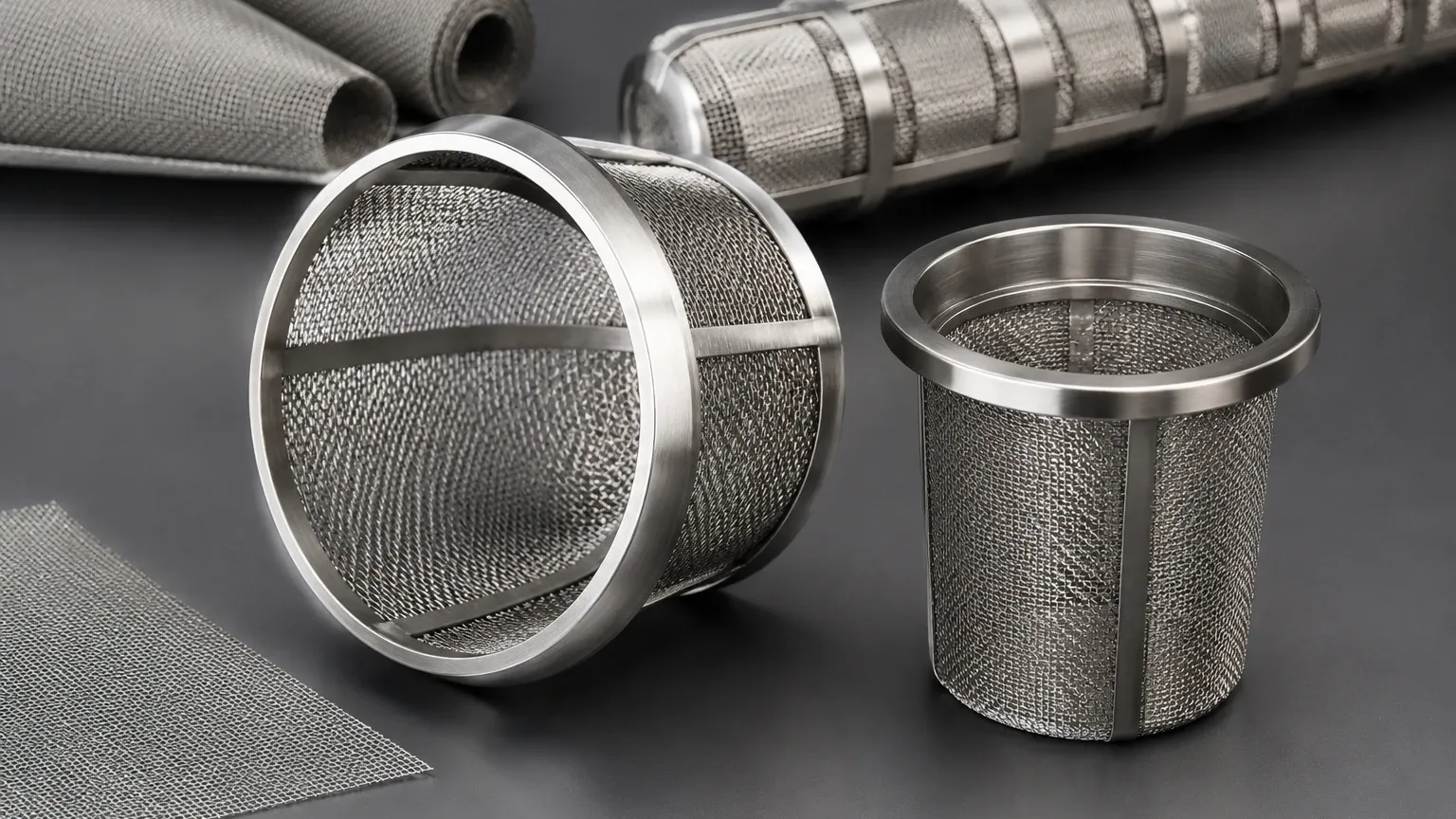
The heart of the strainer 2 inch is the internal mesh or perforated plate. The choice of filtration media must be matched to the size of the smallest particle that needs to be removed to protect downstream equipment.
1. Perforated Plates: Typically used for coarse straining (e.g., 1/16" or 1/8" holes). These are robust and act as a primary barrier for large debris like scale, welding slag, or pebbles.
2. Wire Mesh: For finer filtration, a wire mesh liner is added to the perforated plate. Stainless steel wire mesh allows for precise control over the micron rating. For a strainer 2 inch, common mesh sizes range from 20 mesh (840 microns) to 100 mesh (149 microns).
3. Reinforced Elements: In high-pressure applications, the mesh must be supported by a heavier perforated metal backup to prevent the element from collapsing under the force of the fluid flow.
Operational Risks and Maintenance Protocols
Failure to maintain a strainer 2 inch can lead to significant operational risks, including pump cavitation and system downtime. As debris accumulates, the effective open area of the mesh decreases, causing the pressure drop to rise. If the pressure differential exceeds the structural limit of the internal basket, the basket may rupture, allowing all collected debris to bypass the filter and damage sensitive downstream components.
Maintenance Best Practices:
* Differential Pressure Monitoring: Installing pressure gauges upstream and downstream of the strainer is the most effective way to monitor performance. A jump in Delta P signals the need for cleaning.
* Regular Inspection: Even if pressure remains stable, periodic inspections are necessary to check for corrosion, erosion of the housing, or damage to the gaskets.
* Spare Parts Inventory: For critical processes, maintaining a stock of replacement gaskets and at least one spare 2-inch basket is recommended to minimize downtime during cleaning cycles.
Customization Options for Demanding Applications
Standard off-the-shelf strainers may not meet the requirements of specialized industrial processes. As a professional manufacturer, Kaifil provides customized Strainers & Baskets tailored to specific engineering challenges. Customization options for a strainer 2 inch include:
* Specialized Coatings: For highly abrasive or corrosive fluids.
* Magnetic Inserts: Designed to capture fine ferrous particles that might otherwise pass through a standard mesh.
* Jacketed Strainers: For applications involving fluids that must be maintained at a specific temperature (e.g., resins or chocolate) to prevent solidification.
* Custom Dimensions: Adjusting the face-to-face length or the basket depth to fit into existing piping constraints where a standard unit would not fit.
Critical Information to Confirm Before Procurement
Before finalizing the purchase of a strainer 2 inch, engineers and purchasing teams should confirm the following technical details to ensure the component is fit for purpose:
1. Fluid Characteristics: What is the viscosity, temperature, and chemical composition of the fluid? This dictates the material of the housing and the type of seals required.
2. Maximum Flow Rate: Will the 2-inch port size handle the peak GPM without excessive pressure drop?
3. Debris Profile: What is the nature of the solids being removed? Are they hard, soft, fibrous, or metallic? This determines the mesh type and the need for reinforcement.
4. Installation Environment: Is there sufficient clearance for basket removal? Does the piping layout favor a Y-pattern or a basket-style housing?
5. Compliance Standards: Does the application require adherence to specific standards such as ASME, FDA (for food contact), or 3-A sanitary standards?
By focusing on these factual engineering boundaries, organizations can ensure that their investment in a strainer 2 inch provides reliable protection and contributes to the overall efficiency of the industrial process. For complex requirements or OEM needs, working with a manufacturer like Kaifil ensures that the filtration solution is engineered to the exact specifications of the application.
