


Strainer 20cm
In industrial filtration, the dimensions of a filtration component are as critical as the material composition. A strainer 20cm (200mm) in diameter or length represents a standard sizing solution for medium-scale piping systems and industrial processing equipment. These components are essential for removing coarse particles from liquids and gases, protecting sensitive downstream equipment such as pumps, valves, and flow meters from damage caused by debris.
At Kaifil, we specialize in the engineering and manufacture of high-performance Strainers & Baskets designed to meet the rigorous demands of chemical processing, food and beverage production, and hydraulic systems. Understanding the technical nuances of a strainer 20cm in size—including its flow characteristics, structural integrity, and material compatibility—is vital for engineers and procurement teams looking to optimize system uptime and filtration efficiency.
Engineering Standards for 20cm Industrial Strainers
When discussing a "strainer 20cm," industrial specifications usually refer to the diameter of the strainer basket or the nominal length of the filtration element. In many piping systems, a 200mm basket diameter is common for 8-inch nominal pipe size (NPS) systems or specialized custom housings. The physical dimensions directly correlate to the available filtration surface area, which is the primary determinant of the unit's dirt-holding capacity and the time intervals between cleaning cycles.
For industrial applications, these strainers are rarely off-the-shelf items. They require precise engineering to ensure they fit perfectly within the strainer housing or the pipeline. A 20cm strainer must be manufactured with tight tolerances to prevent "bypass"—a condition where unfiltered fluid escapes around the edges of the strainer element. This is typically achieved through precision-machined flanges or reinforced collars that create a secure seal within the housing.
Material Selection and Chemical Compatibility
The performance of a strainer 20cm is largely dictated by the alloy used in its construction. Stainless steel is the industry standard due to its mechanical strength and resistance to corrosion.
Stainless Steel 304
This is the most common grade for general industrial use. It provides excellent durability and resistance to oxidation. It is suitable for water treatment, cooling systems, and general manufacturing environments where highly corrosive chemicals are not present.
Stainless Steel 316L
For more demanding environments, such as pharmaceutical manufacturing or chemical processing, 316L stainless steel is preferred. The addition of molybdenum enhances its resistance to pitting and crevice corrosion, particularly in chloride-rich environments. In the food and beverage industry, 316L is often the requirement to meet hygiene standards and resist the corrosive effects of cleaning agents (CIP – Clean-in-Place processes).
Specialty Alloys
In extreme cases involving high temperatures or highly acidic fluids, exotic alloys like Monel, Hastelloy, or Inconel may be utilized. While a strainer 20cm made from these materials carries a higher initial cost, the total cost of ownership (TCO) is reduced through extended service life and reduced risk of catastrophic failure.
Structural Design: Perforated Metal vs. Wire Mesh
A strainer 20cm can be designed with different media types depending on the required filtration accuracy. The choice between perforated metal and wire mesh is driven by the size of the particles that need to be captured.
Perforated Metal Baskets
Perforated metal is used for coarse filtration. The holes are punched into a metal sheet, providing a very high degree of structural rigidity. These are ideal for "roughing" filters that capture large debris like stones, scale, or weld slag. A 20cm perforated basket can withstand significant pressure differentials without collapsing, making it a robust primary defense for industrial pumps.
Wire Mesh Liners
When finer filtration is required—ranging from 5 microns to several hundred microns—a wire mesh liner is added to the perforated basket. The perforated metal acts as a support structure (the "cage"), while the precision-woven wire mesh performs the actual filtration. For a strainer 20cm, multi-layer sintered mesh may also be used to provide both fine filtration and high mechanical strength in a single integrated component.
Performance Metrics: Flow Rate and Pressure Drop
One of the most critical factors an engineer must calculate when selecting a strainer 20cm is the clean pressure drop ($ΔP$). Every filter element introduces a degree of resistance to the flow. If the strainer is too small or the mesh is too fine for the application, the pressure drop will be excessive, leading to reduced flow rates and increased energy consumption by the pumps.
The Open Area Ratio
The efficiency of a strainer is often measured by its "Open Area Ratio" (OAR). This is the ratio between the total open area of the mesh or perforations and the cross-sectional area of the inlet pipe. A well-designed strainer 20cm should typically have an OAR of at least 4:1 or 6:1. This ensures that even as the strainer begins to collect debris, there is enough remaining open area to maintain the flow without a significant spike in pressure.
Viscosity Considerations
The fluid's viscosity plays a major role in how a 20cm strainer performs. High-viscosity fluids (like heavy oils or syrups) require larger openings or a greater surface area to maintain flow. Engineers must account for the fluid's behavior at both operating temperature and startup temperature, as viscosity can change significantly, affecting the strainer’s performance.
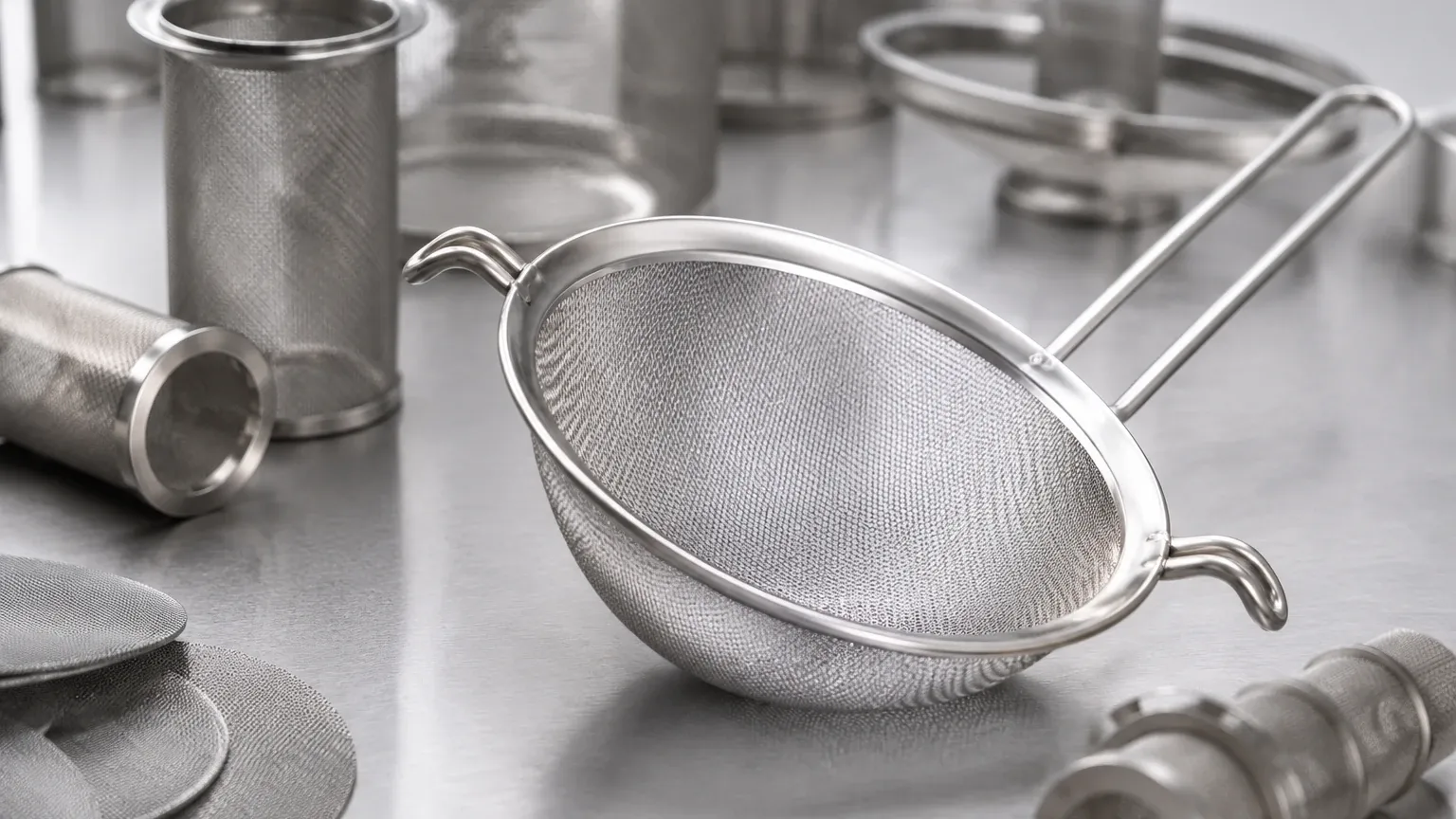
Customization Options for Industrial Baskets
Standardization is helpful, but most industrial environments require some level of customization. A strainer 20cm can be tailored with various features to improve usability and performance:
* Handle Configurations: For easy removal and cleaning, baskets can be fitted with swing handles, fixed handles, or slanted handles designed for specific housing clearances.
* Reinforcement Bands: In high-pressure applications, the 20cm body of the strainer may be reinforced with longitudinal or circumferential bands to prevent deformation under heavy cake loads.
* Magnetic Inserts: For systems where fine iron or steel particles (ferrous contaminants) are a concern, magnetic rods can be installed inside the 20cm strainer basket to capture sub-micron metallic particles that might otherwise pass through the mesh.
* Bottom Designs: Baskets can have flat bottoms, conical bottoms, or even slanted bottoms to facilitate easier debris removal and drainage.
Maintenance and Operational Longevity
The longevity of a strainer 20cm depends heavily on the maintenance protocol. Unlike disposable cartridge filters, stainless steel Strainers & Baskets are designed to be cleaned and reused.
Cleaning Procedures
Regular cleaning is essential. When the pressure differential across the strainer reaches a pre-determined limit (usually indicated by a differential pressure gauge), the basket should be removed. Cleaning methods include:
* Backwashing: Reversing the flow to dislodge particles.
* Ultrasonic Cleaning: Using high-frequency sound waves in a solvent bath to remove fine particles trapped deep within the wire mesh.
* Manual Scrubbing: Using soft brushes and appropriate cleaning agents for coarse perforated baskets.
Signs of Wear
During maintenance, the strainer 20cm should be inspected for signs of mechanical fatigue, such as broken wires in the mesh, thinning of the metal due to erosion, or distortion of the basket frame. Early detection of these issues prevents the risk of the strainer breaking and sending metal fragments downstream into the process line.
Applications Across Key Industries
The versatility of the 20cm strainer makes it a staple in numerous sectors:
* Chemical Processing: Protecting heat exchangers from scaling and particulate buildup.
* Food & Beverage: Straining fruit pulps, seeds, or ensuring the purity of liquid ingredients before bottling.
* Water Treatment: Acting as a pre-filter for membrane systems or UV sterilizers to remove larger suspended solids.
* Hydraulic Systems: Protecting large-scale hydraulic reservoirs and high-pressure pumps from metal shavings and environmental contaminants.
Conclusion: Selecting the Right Strainer 20cm
Choosing a strainer 20cm involves more than just matching a dimension. It requires a comprehensive understanding of the fluid dynamics, chemical environment, and structural requirements of the specific application. By focusing on high-quality materials like 304 or 316L stainless steel and ensuring the design provides an optimal open area ratio, engineers can significantly enhance the reliability of their industrial processes.
As a professional manufacturer, Kaifil provides the technical expertise necessary to develop customized filtration solutions. Whether you require a standard 20cm basket or a highly specialized multi-layered mesh strainer, our focus remains on durability, precision, and performance. For detailed technical specifications or to discuss custom designs for your specific industrial application, Review product options and application support to ensure your systems remain protected by the highest standard of metal filtration technology.
