


Strainer 20mm
In industrial fluid handling systems, the selection of filtration components is dictated by pipe diameter, flow velocity, and the nature of the media being processed. A strainer 20mm (often corresponding to a nominal pipe size of DN20 or 3/4 inch) serves as a critical line of defense for downstream equipment such as pumps, flow meters, and control valves. While smaller in scale compared to heavy-duty municipal or large-scale chemical processing filters, these precision components require rigorous engineering to ensure they do not become a bottleneck or a point of failure in a pressurized system.
For engineers and procurement specialists, specifying a 20mm strainer involves more than simply matching a thread size. It requires an evaluation of material compatibility, pressure drop calculations, and the specific geometry of the internal basket or mesh to balance filtration efficiency with operational uptime.
Technical Specifications of 20mm Industrial Strainers
The term "20mm" typically refers to the nominal diameter (DN) of the inlet and outlet ports. In the context of international standards, this aligns with the 3/4-inch pipe size common in hydraulic systems, pilot plants, and food processing lines. Understanding the technical boundaries of this size category is essential for correct integration.
Connection Types and Standards
Industrial 20mm strainers are manufactured with various connection types to suit specific piping architectures:
* Threaded (NPT/BSP): Most common for 20mm sizes, providing a secure, leak-proof seal for low to medium pressure applications.
* Flanged (ANSI/DIN/JIS): Used in systems requiring frequent disassembly or where high-pressure integrity is paramount.
* Socket Weld/Butt Weld: Preferred in pharmaceutical and high-purity chemical applications to eliminate crevices where bacteria or contaminants could accumulate.
Material Selection for Durability
At Kaifil, the focus remains on high-grade metallic alloys to withstand corrosive environments and thermal cycling.
* Stainless Steel 304: Suitable for general industrial use, water treatment, and non-corrosive chemical transport.
* Stainless Steel 316L: The industry standard for pharmaceutical, food and beverage, and marine applications due to its superior resistance to pitting and crevice corrosion.
* Specialty Alloys: For highly aggressive media, components may be fabricated from Duplex stainless steel or Hastelloy, depending on the chemical concentration and temperature profiles.
Engineering Considerations: Flow Rate and Pressure Drop
One of the most frequent errors in specifying a strainer 20mm is overlooking the impact of the internal filtration element on system hydraulics. Every strainer introduces a degree of resistance to the flow, known as pressure drop ($ΔP$).
The Relationship Between Mesh Size and $ΔP$
A finer mesh provides higher filtration accuracy but increases resistance. For a 20mm line, the available surface area within the strainer housing is limited. If the mesh is too fine for the particulate load, the strainer will clog rapidly, leading to a sharp increase in differential pressure. This can cause cavitation in centrifugal pumps or even structural failure of the filter element itself.
Engineers should calculate the "Open Area Ratio" (OAR). A high-quality industrial strainer should ideally have an OAR of at least 4:1, meaning the total area of the holes in the mesh is four times the cross-sectional area of the inlet pipe. This ensures that even as the strainer begins to collect debris, the flow remains relatively unimpeded.
Viscosity Impacts
The 20mm size is frequently used in hydraulic and lubrication systems. Because oil viscosity changes significantly with temperature, the pressure drop across a 20mm strainer will fluctuate. In cold-start conditions, high-viscosity fluids can create a pressure spike that triggers bypass valves or system alarms. Selecting a basket design with reinforced mesh is critical in these scenarios to prevent the element from collapsing under high differential pressure.
Design Variations: Y-Strainers vs. Basket Strainers
When selecting Strainers & Baskets for a 20mm application, the choice between a Y-pattern and a basket (T-pattern) design depends on the installation space and the expected contaminant load.
Y-Strainers (20mm)
* Compactness: Ideal for tight spaces where the footprint is a primary concern.
* Orientation: Can be installed horizontally or vertically (downward flow), providing flexibility in complex piping layouts.
* Capacity: Generally have a smaller dirt-holding capacity compared to basket designs. They are best suited for systems with low levels of particulate matter where cleaning is infrequent.
Basket Strainers (20mm)
* High Capacity: Designed with a larger internal chamber, allowing for a bigger basket and more surface area.
* Ease of Maintenance: The basket is usually accessed from the top, making it easier to remove and clean without spilling the process fluid.
* Application: Preferred for batch processes or lines where the fluid contains a higher concentration of solids.
Customization and Precision Filtration Ratings
Industrial applications rarely follow a one-size-fits-all approach. A strainer 20mm can be customized with various internal elements to meet specific process requirements. Kaifil specializes in manufacturing these internal components to exacting standards.
Perforated Metals vs. Wire Mesh
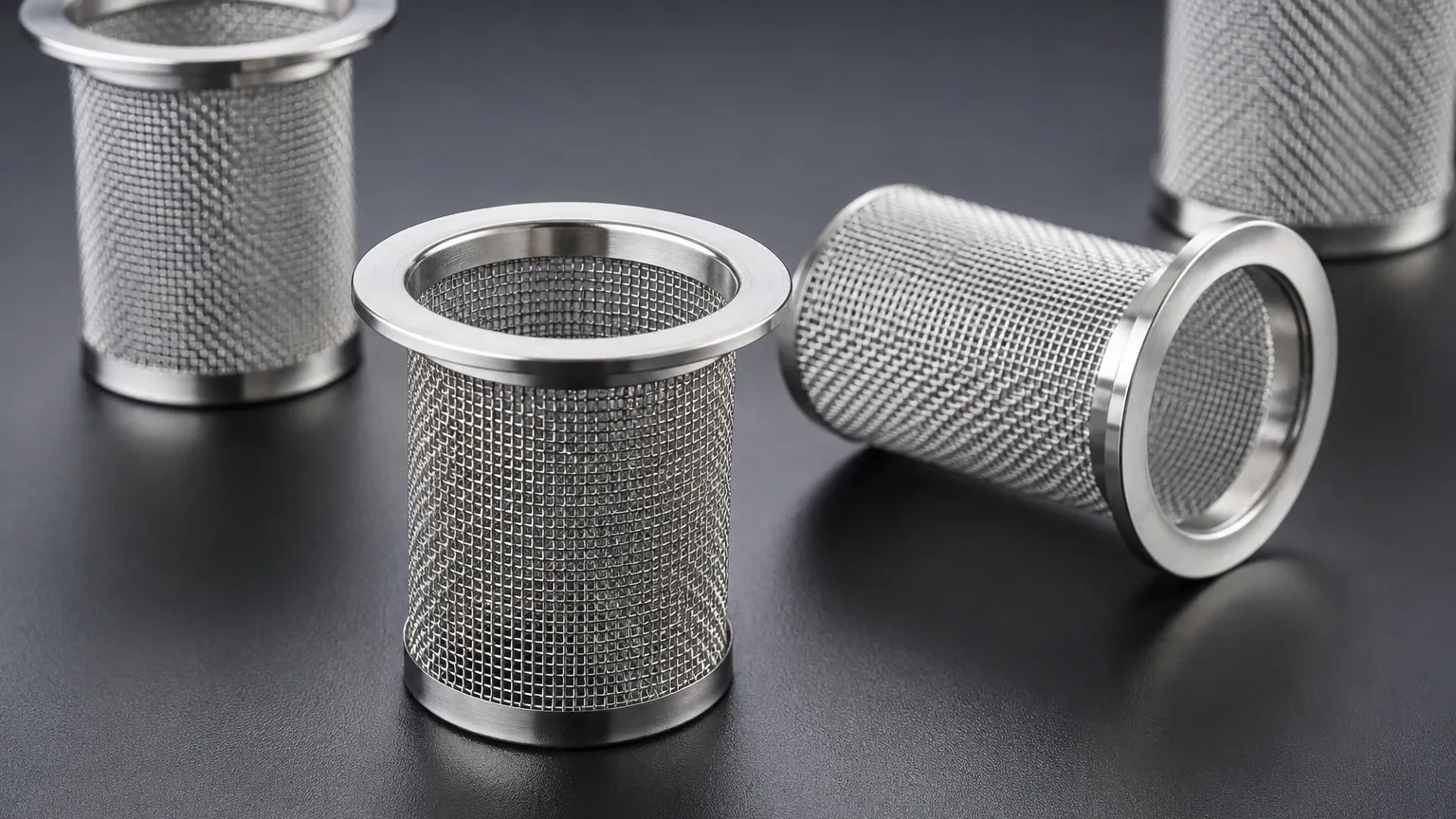
* Perforated Plate: Used for coarse filtration, typically removing particles larger than 1mm. These are robust and can serve as a "support basket" for finer mesh layers.
* Woven Wire Mesh: Provides precision filtration down to the micron level. In a 20mm strainer, multi-layered sintered mesh is often used to provide both fine filtration and structural rigidity.
* Magnetic Inserts: For hydraulic and machining applications, magnetic rods can be added to the center of the 20mm basket to capture fine ferrous particles that might otherwise pass through the mesh.
Sealing and Gaskets
The integrity of a 20mm strainer is only as good as its seals. Depending on the chemical compatibility and temperature, seals may be composed of:
* Viton (FKM): Excellent for high temperatures and chemical resistance.
* EPDM: Preferred for water treatment and steam applications.
* PTFE: Used for highly aggressive acids and bases where elastomeric seals would fail.
Maintenance and Operational Lifecycle
To ensure the longevity of a strainer 20mm, a structured maintenance program is required. In many B2B environments, unplanned downtime is significantly more expensive than the cost of the filtration component itself.
Cleaning Protocols
Manual cleaning involves isolating the strainer, venting the pressure, and removing the basket. For 20mm systems in continuous operation, a "Duplex" configuration may be employed. This consists of two 20mm strainers connected by a diverter valve, allowing one side to be cleaned while the other remains in service.
Signs of Wear and Replacement
Engineers should inspect the 20mm mesh for:
1. Wire Fraying: Indicates high-velocity erosion or fatigue from pressure pulsations.
2. Gasket Compression Set: Leads to bypass leaks where unfiltered fluid escapes around the edges of the basket.
3. Deformation: A sign that the strainer has been subjected to differential pressures exceeding its design limit.
Selection Guide for Procurement Teams
When requesting a quote for a strainer 20mm, providing the following factual data points will ensure the manufacturer delivers a component suited for the application:
* Media Type: (e.g., Water, 30% Sulfuric Acid, Hydraulic Oil ISO VG 46).
* Operating Pressure: Both nominal and maximum surge pressure.
* Temperature Range: Minimum and maximum operating temperatures.
* Filtration Target: The specific micron rating or mesh count required (e.g., 100 microns / 150 mesh).
* Flow Rate: Expressed in liters per minute (LPM) or gallons per minute (GPM).
* Housing Material: (e.g., CF8M/SS316).
Why Precision Matters in Small-Bore Filtration
While a 20mm strainer might seem like a minor component in a massive industrial plant, its role in protecting high-value assets is disproportionate to its size. A failure to capture a single piece of welding slag or a stray bolt can result in the destruction of a high-precision pump impeller or the clogging of a pharmaceutical spray nozzle.
By focusing on high-quality materials and engineered internal structures, Kaifil ensures that every Strainers & Baskets solution provides the reliability required for demanding industrial environments. Whether the application involves delicate food processing or rugged chemical manufacturing, the 20mm strainer remains a fundamental building block of system integrity.
In conclusion, selecting a strainer 20mm requires a balance of hydraulic engineering and material science. By understanding the specific needs of the application—from pressure drop limits to chemical compatibility—technical professionals can ensure efficient, durable, and cost-effective filtration performance over the long term.
