


Strainer 25mm
In industrial fluid handling, the protection of sensitive downstream equipment—such as pumps, flow meters, control valves, and spray nozzles—is a primary engineering concern. A strainer 25mm (typically corresponding to a 1-inch nominal pipe size) serves as the first line of defense against mechanical damage caused by scale, rust, weld beads, and other foreign solids. While the physical footprint of a 25mm filtration component is relatively small, its impact on system reliability and total cost of ownership is significant.
Selecting the correct configuration for Strainers & Baskets requires a technical understanding of fluid dynamics, material compatibility, and the specific filtration requirements of the application. This guide examines the engineering considerations, performance metrics, and selection criteria for 25mm straining solutions in industrial environments.
Understanding the Role of a Strainer 25mm in Industrial Systems
A strainer 25mm is designed for installation in pipelines where the flow rate and volume are moderate, yet the requirement for fluid purity is high. These components are ubiquitous in chemical processing, food and beverage production, pharmaceutical manufacturing, and hydraulic systems. Unlike filters, which are often designed to remove microscopic particles and are frequently disposed of, strainers are generally intended to remove larger, visible particles and are designed for repeated cleaning and reuse.
The primary function of the 25mm strainer is to intercept solids while maintaining a manageable pressure drop. In a 1-inch line, the velocity of the fluid can be high, meaning that any obstruction caused by the strainer must be carefully calculated to avoid cavitation in pumps or insufficient flow to critical processes. Engineers must balance the "micron rating" (the size of the particles to be removed) with the "open area ratio" (the ratio of the total area of the holes in the strainer to the cross-sectional area of the pipe).
Material Selection and Engineering Standards
The durability of a strainer 25mm depends heavily on the materials used for both the housing and the internal filtration element. In modern industrial applications, stainless steel is the preferred material due to its mechanical strength and resistance to various forms of corrosion.
Stainless Steel Grades
* SS304: The standard grade for general industrial use. It offers excellent resistance to atmospheric corrosion and many organic and inorganic chemicals. It is widely used in water treatment and general manufacturing.
* SS316/316L: Contains molybdenum, which provides superior resistance to chlorides and pitting. This is the requirement for marine environments, pharmaceutical processes, and highly acidic chemical lines.
* Specialty Alloys: For extreme environments involving high temperatures or highly aggressive chemicals, alloys like Duplex stainless steel or Hastelloy may be required, though these are less common in standard 25mm sizes.
Housing Construction
The housing of a 25mm strainer must withstand the system's maximum operating pressure (MAOP) and temperature. For 25mm sizes, housings are typically available in cast, forged, or fabricated configurations. Fabricated housings, such as those produced by Kaifil, allow for greater customization of inlet/outlet orientations and the inclusion of specialized ports for differential pressure gauges or blow-down valves.
Comparing Y-Type and Basket Strainer Configurations
When specifying a strainer 25mm, engineers must choose between two primary mechanical designs: the Y-strainer and the Basket (or Simplex) strainer. Each offers distinct advantages depending on the application.
Y-Strainers
Y-strainers are named for their shape and are commonly used in pressurized lines, both liquid and gas. They are particularly effective for steam applications where high pressures and temperatures are the norm.
* Advantages: Compact design, lower initial cost, and the ability to be installed in either horizontal or vertical (downward flow) positions.
* Limitations: Smaller dirt-holding capacity compared to basket types. Cleaning usually requires the system to be depressurized, and the screen is removed by unscrewing a cap.
Basket Strainers
Basket strainers are designed for liquid applications where the amount of debris is higher. The "basket" sits vertically within the housing.
* Advantages: Much larger surface area and debris-holding capacity. This results in a lower pressure drop and longer intervals between cleanings. The top-opening design allows for easier maintenance and removal of the basket without spilling the process fluid.
* Limitations: Generally limited to horizontal piping installations and typically carries a higher initial footprint and cost than a Y-strainer.
Filtration Media: Wire Mesh and Perforated Metal Options
The internal element of a strainer 25mm is where the actual separation occurs. This element is usually constructed from perforated metal, woven wire mesh, or a combination of both.
Perforated Metal
This serves as the robust outer support or as a standalone strainer for coarse filtration (removing particles larger than 1mm). Common hole patterns include round, square, or staggered, with the hole size and pitch determining the open area.
Woven Wire Mesh
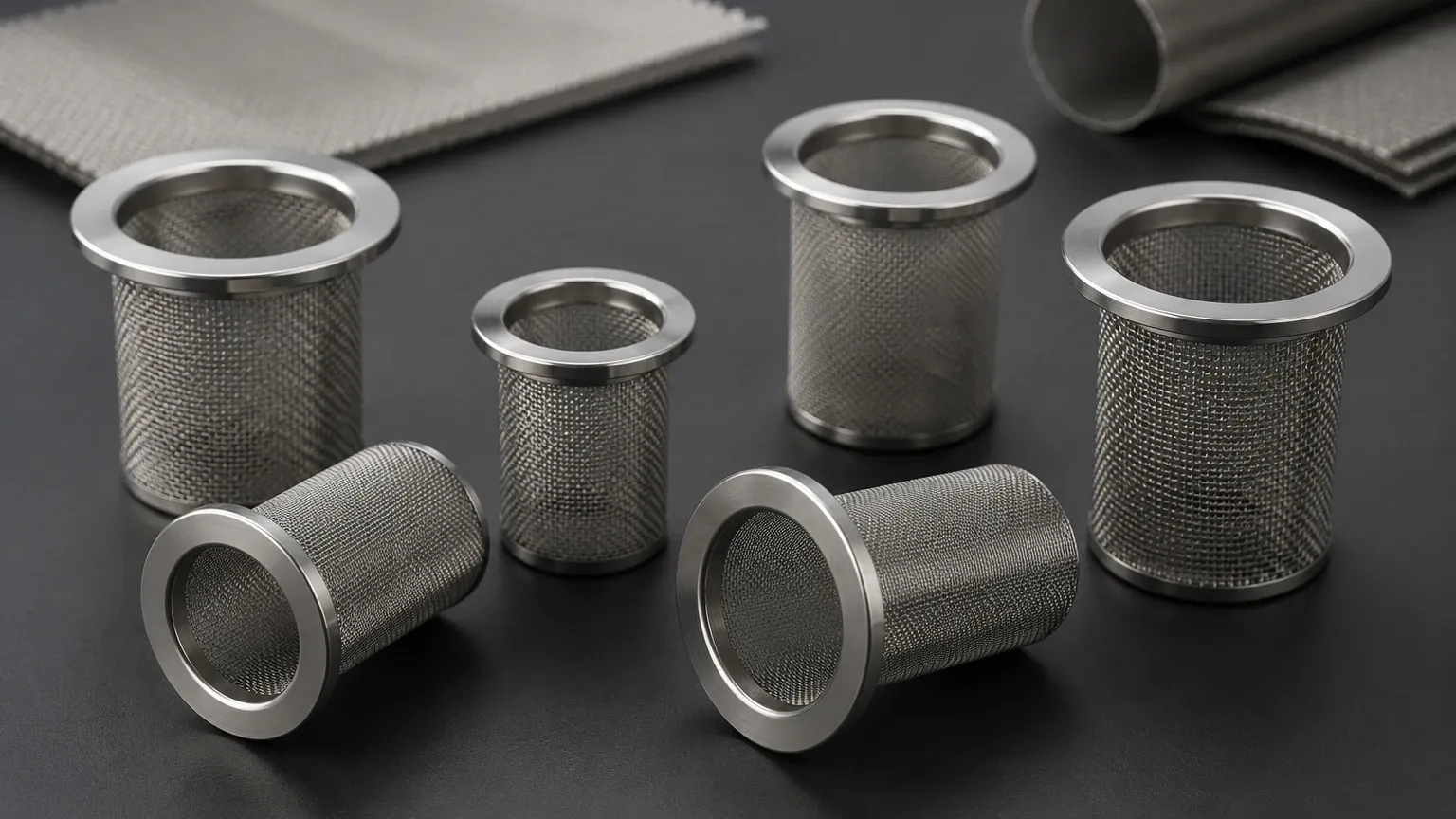
For finer filtration (down to 5 microns), stainless steel wire mesh is lined inside a perforated metal basket. The weave type—such as plain weave, twilled weave, or Dutch weave—dictates the strength and the precision of the filtration. In a strainer 25mm, a multi-layer sintered mesh may be used for high-pressure applications to prevent the mesh from deforming under the force of the fluid.
Calculating Pressure Drop and Flow Performance
One of the most critical engineering tasks when integrating a strainer 25mm is calculating the pressure drop ($ΔP$). A high pressure drop indicates that the strainer is either too small for the flow rate, the mesh is too fine, or the basket is clogged.
Flow Coefficient (Cv)
The Cv value represents the volume of water (in gallons per minute) that will flow through the strainer with a 1 psi pressure drop. A higher Cv indicates less resistance to flow. For a standard 25mm strainer, the Cv will vary significantly between a Y-pattern and a Basket pattern. Engineers should always consult the manufacturer's flow curves to ensure the selected unit meets the hydraulic requirements of the system.
Clean vs. Dirty Pressure Drop
Calculations must account for the "dirty" state. It is standard practice to size the strainer so that the clean pressure drop does not exceed 2 psi. Once the pressure drop reaches a specific threshold (often 5-10 psi above clean state), the element must be cleaned to prevent structural failure of the mesh or cavitation of downstream pumps.
Installation, Maintenance, and Operational Best Practices
Proper installation and a rigorous maintenance schedule are essential for the longevity of a strainer 25mm.
Installation Considerations
* Orientation: Ensure the flow arrow on the housing matches the pipeline flow. For Y-strainers in steam service, the "leg" should point horizontally to prevent condensate buildup.
* Accessibility: Leave sufficient clearance for the removal of the basket or screen. For a 25mm unit, this is often overlooked in tight skids, leading to maintenance difficulties.
* Instrumentation: Installing differential pressure (DP) gauges across the inlet and outlet is the most effective way to monitor the condition of the strainer.
Maintenance Cycles
The frequency of cleaning depends on the fluid's cleanliness. In new systems, strainers should be checked frequently during the first few hours of operation to catch construction debris (weld slag, tape). In steady-state operation, the DP gauge should dictate the cleaning cycle. When cleaning, the element should be inspected for signs of "blindness" (permanent clogging of the mesh pores) or mechanical damage like mesh fraying.
Customization and OEM Capabilities for 25mm Filtration
Standard off-the-shelf strainers may not meet the specific needs of specialized industrial processes. This is where custom manufacturing becomes vital. Kaifil specializes in providing tailored solutions for Strainers & Baskets that go beyond standard catalog specifications.
Custom Mesh Configurations
Depending on the viscosity of the fluid and the nature of the contaminants, a custom-layered mesh might be required. For example, a 25mm strainer used in chocolate processing requires a different mesh support structure than one used in high-pressure hydraulic oil filtration.
Connection Types
While many 25mm strainers use NPT or BSP threaded connections, high-purity or high-pressure applications may require flanged (ANSI, DIN, JIS), tri-clamp (for sanitary applications), or socket-weld connections. Custom fabrication allows these connections to be integrated directly into the housing design, reducing the need for leak-prone adapters.
Specialized Coatings and Finishes
In food and pharmaceutical industries, the internal and external surfaces of the 25mm strainer may require electro-polishing to achieve a specific Ra (roughness average) value, ensuring that no bacteria can harbor in surface microscopic pits.
Conclusion: Selecting the Right Strainer 25mm
Choosing a strainer 25mm involves more than just matching the pipe size. It requires a comprehensive evaluation of the fluid properties, flow rates, pressure limits, and the specific sensitivity of downstream components. By prioritizing high-quality materials like 304 or 316 stainless steel and selecting the appropriate mechanical configuration (Y-type vs. Basket), engineers can ensure long-term system reliability.
For purchasing teams and engineers, confirming the following details with a manufacturer like Kaifil is essential before procurement:
1. Maximum Operating Pressure and Temperature: Ensure the housing and gaskets are rated for the application.
2. Required Micron Rating: Balance the need for particle removal with the acceptable pressure drop.
3. Housing Material and Gasket Compatibility: Verify that all wetted parts are compatible with the process fluid.
4. Flow Coefficient (Cv): Confirm the unit will not cause excessive hydraulic resistance.
By focusing on these technical parameters, industrial operators can implement 25mm filtration solutions that protect their assets and optimize process efficiency.
