


Strainer 4
In industrial fluid handling, the efficiency of a system often hinges on the reliability of its protection components. When engineers specify a "strainer 4," they are typically referring to a 4-inch (DN100) nominal pipe size strainer designed to handle significant flow rates while removing particulate matter. As a critical component within the broader category of Strainers & Baskets, these units serve as the primary defense for pumps, valves, and heat exchangers in medium-to-large scale industrial operations.
Selecting the correct strainer 4 configuration requires a deep understanding of fluid dynamics, material compatibility, and the specific filtration requirements of the process. Whether the application involves chemical processing, water treatment, or food and beverage production, the technical nuances of the strainer’s design—from the basket’s mesh count to the housing’s pressure rating—determine the long-term operational costs and the safety of the downstream equipment.
The Role of 4-Inch Strainers in Industrial Piping Systems
A 4-inch strainer is a versatile tool in industrial engineering, bridging the gap between small-scale utility lines and massive primary process headers. At this size, the volume of fluid being processed is substantial, making the consequences of a filtration failure or a significant pressure drop much more severe than in smaller systems.
The primary function of these strainers is the mechanical removal of solids from a flowing liquid or gas. In a typical industrial setup, a strainer 4 is installed upstream of sensitive equipment. For example, in a cooling water loop, a 4-inch basket strainer might be used to catch scale, rust, or biological debris before it can clog the narrow passages of a plate-and-frame heat exchanger.
Because a 4-inch line can carry high velocities, the structural integrity of the internal basket is paramount. Unlike smaller 1-inch or 2-inch units, a strainer 4 must withstand significant hydraulic forces, especially during "slug loading" events where a large volume of debris hits the screen simultaneously. This necessitates heavy-duty construction, often involving reinforced stainless steel mesh or perforated plate backups.
Technical Specifications and Sizing Criteria for Strainer 4 Applications
When evaluating a strainer 4, the first technical hurdle is ensuring the unit is correctly sized for the flow rate. Sizing is not merely about matching the pipe diameter; it is about managing the velocity and the resulting pressure drop (ΔP).
Flow Capacity and Velocity
In most industrial applications, the ideal fluid velocity in a 4-inch pipe ranges from 5 to 10 feet per second (fps). At 8 fps, a 4-inch pipe carries approximately 313 gallons per minute (GPM). A well-engineered strainer 4 should provide a large open area ratio—the ratio of the total open area of the basket holes to the cross-sectional area of the inlet pipe. For high-viscosity fluids or systems with high solids loading, a ratio of 6:1 or higher is often recommended to prevent rapid clogging and excessive pressure loss.
Pressure Ratings
Industrial strainers are categorized by their pressure-temperature ratings, often following ASME B16.5 standards (e.g., Class 150, Class 300). A strainer 4 used in a hydraulic system might require a much higher pressure rating than one used in a gravity-fed water filtration system. Engineers must confirm that the housing material and the flange thickness are compliant with the maximum allowable working pressure (MAWP) of the entire system.
Material Engineering: Optimizing Stainless Steel for Longevity
Material selection is perhaps the most critical decision in the procurement of Strainers & Baskets. For most high-performance industrial environments, stainless steel is the standard due to its corrosion resistance and mechanical strength.
SS304 vs. SS316L
* Stainless Steel 304: This is the most common material for general industrial use. It offers excellent resistance to atmospheric corrosion and many organic and inorganic chemicals. It is frequently used in water treatment and general manufacturing.
* Stainless Steel 316L: For more demanding environments, such as chemical processing or marine applications, SS316L is preferred. The addition of molybdenum provides superior resistance to pitting and crevice corrosion in chloride-rich environments. The "L" (low carbon) version is essential if the strainer components require extensive welding, as it prevents carbide precipitation that can lead to intergranular corrosion.
Surface Finishes and Coatings
In the food and beverage or pharmaceutical sectors, the physical surface of the strainer 4 must meet specific roughness standards (Ra values). Electropolishing is often employed to create a smooth, non-porous surface that discourages bacterial growth and makes the cleaning process more effective. For highly abrasive slurries, specialized coatings or hardened alloys may be used to extend the life of the internal basket.
Filtration Accuracy and Mesh Configurations
The term "strainer 4" can sometimes refer to the mesh size rather than the pipe size. A 4-mesh screen has four openings per linear inch, resulting in an opening size of approximately 4.76 mm (0.187 inches). This is considered a coarse filtration level, suitable for removing large debris like pebbles, wood chips, or large scale.
However, in most 4-inch pipe applications, the filtration requirement is much finer. Engineers must specify the micron rating or mesh count required for their specific process:
1. Perforated Plate: Used for coarse straining, with hole sizes typically ranging from 1/32" to 1/2".
2. Wire Mesh: For finer filtration, stainless steel wire mesh is layered over a perforated metal backup. This can achieve filtration levels down to 20 microns or finer.
3. Wedge Wire: For high-pressure applications or sticky fluids, wedge wire (V-wire) provides a non-clogging surface and high structural strength, making it ideal for a strainer 4 in heavy industrial use.
Selecting the wrong mesh size is a common pitfall. A mesh that is too fine will clog rapidly, leading to frequent downtime and potential pump cavitation. Conversely, a mesh that is too coarse will allow harmful particles to pass through, damaging downstream components.
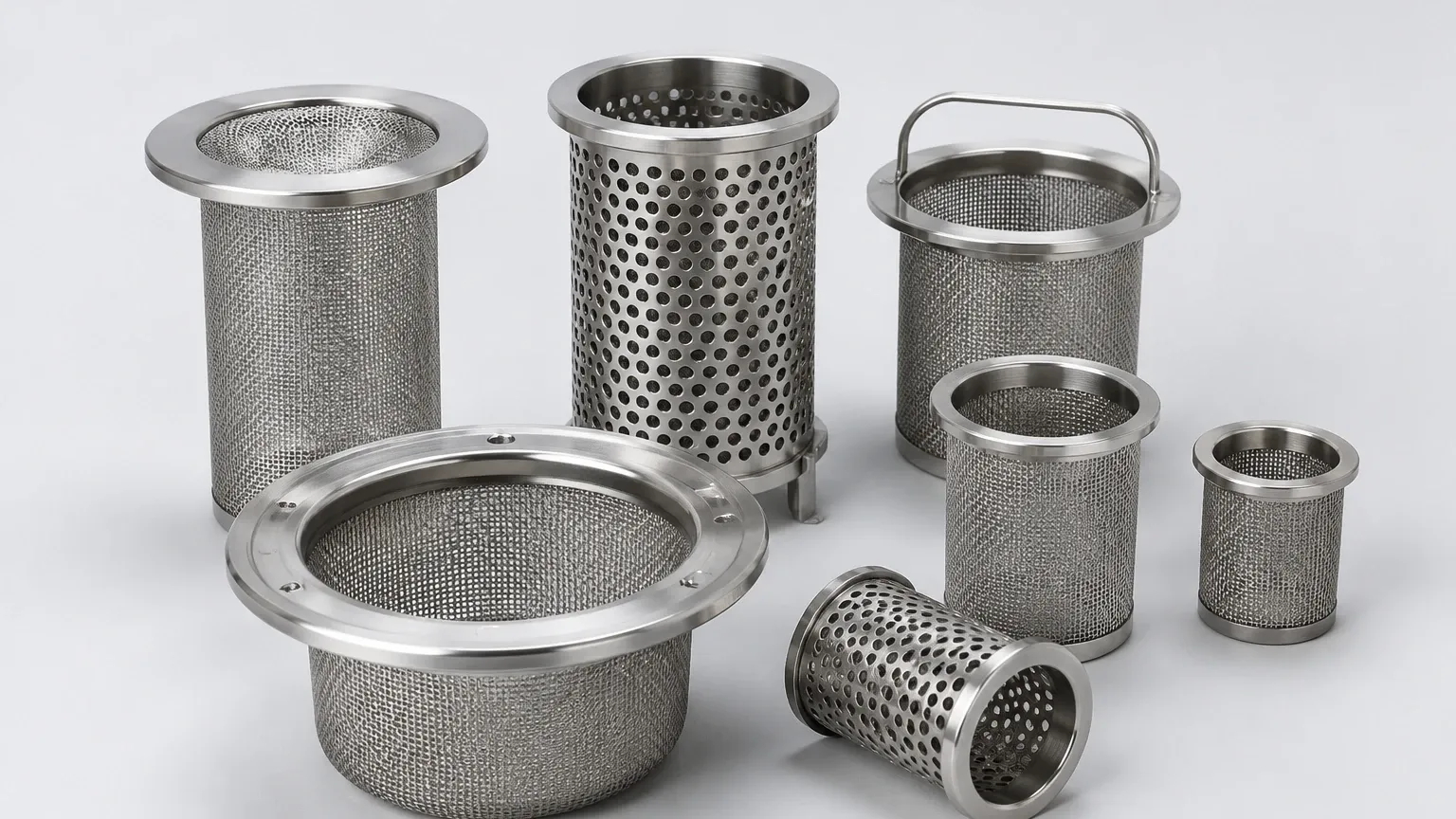
Pressure Drop and Flow Dynamics in 4-Inch Filtration Units
Every strainer introduces a restriction in the flow path, which results in a loss of pressure. This is quantified by the flow coefficient (Cv), which represents the flow of water in GPM that will pass through the strainer with a 1 psi pressure drop.
For a strainer 4, the clean pressure drop should ideally be kept below 2 psi. As the basket collects debris, the pressure drop increases. It is standard engineering practice to install differential pressure gauges across the strainer. When the ΔP reaches a predetermined limit (often 10-15 psi), the basket must be cleaned or replaced.
Engineers must also consider the "viscosity correction factor." If the fluid is significantly more viscous than water (e.g., heavy oil or resin), the pressure drop will be much higher, potentially requiring a larger strainer body or a different basket design to maintain the required flow rate.
Maintenance Protocols and Total Cost of Ownership (TCO)
The purchase price of a strainer 4 is only a fraction of its total cost of ownership. The real costs lie in maintenance labor, replacement parts, and, most importantly, the cost of system downtime.
Ease of Access
In a 4-inch line, the strainer basket can be heavy and awkward to handle. High-quality designs feature "quick-opening" covers, such as swing-bolt or knob-style closures, which allow maintenance personnel to access the basket without specialized tools. This significantly reduces the time required for cleaning cycles.
Gasket and Seal Integrity
Reliable sealing is critical, especially when handling hazardous chemicals or high-temperature fluids. Common gasket materials include EPDM, Viton (FKM), and PTFE. The choice depends on the chemical compatibility and the operating temperature. A failure in the seal of a strainer 4 can lead to environmental hazards and safety risks.
Replacement Cycles
While the housing of a stainless steel strainer can last for decades, the internal baskets are wear items. Factors that shorten basket life include corrosion, mechanical fatigue from flow surges, and damage during cleaning. Keeping a stock of replacement baskets is essential for minimizing downtime.
Customization and OEM Solutions for Specialized Filtration
Off-the-shelf strainers do not always meet the unique demands of specialized industrial processes. This is where custom manufacturing becomes invaluable. A custom-engineered strainer 4 can be designed with specific features such as:
* Specialized Inlet/Outlet Orientations: To fit into tight piping footprints where standard inline or Y-pattern strainers cannot go.
* Heating Jackets: For fluids that must be maintained at a specific temperature to remain pumpable (e.g., liquid sulfur or chocolate).
* Magnetic Inserts: To capture fine ferrous particles that might otherwise pass through the mesh.
* Reinforced Baskets: For high-differential pressure applications where standard baskets might collapse.
By partnering with a manufacturer that understands the complexities of stainless steel fabrication, engineering teams can ensure that their Strainers & Baskets are perfectly aligned with their operational goals.
Conclusion: Selecting the Right Strainer 4 for Your Facility
The selection of a strainer 4 is a technical decision that impacts the overall health of an industrial system. By focusing on material quality, precise sizing, and ease of maintenance, engineers can protect their capital equipment and optimize process efficiency.
When specifying these components, always confirm the following with your supplier:
* The exact chemical composition of the fluid and the required stainless steel grade.
* The maximum flow rate and allowable pressure drop.
* The specific particle size that must be captured.
* The connection type (flanged, threaded, or socket weld) required for your existing piping.
Investing in a high-quality, precision-engineered strainer ensures that your 4-inch process lines remain clear, your pumps remain protected, and your production stays on schedule.
