


Strainer 51s01 50 Mesh
In industrial fluid management, the selection of filtration components is a critical engineering decision that directly impacts the longevity of downstream equipment such as pumps, valves, and heat exchangers. The strainer 51s01 50 mesh represents a specific configuration often utilized in suction lines and low-pressure hydraulic circuits. Understanding the technical nuances of this specification—ranging from the mechanical properties of the 50-mesh weave to the structural design of the 51s01 series—is essential for engineers and procurement teams tasked with maintaining system integrity.
Industrial Strainers & Baskets serve as the first line of defense against particulate contamination. When a system specifies a 51s01 model with a 50-mesh rating, it is targeting the removal of medium-to-coarse debris while balancing the need for high flow rates and low initial pressure drop. This guide examines the technical specifications, application logic, and engineering considerations surrounding these critical filtration components.
Technical Specifications of 50 Mesh Filtration
The term "mesh" refers to the number of openings per linear inch of the wire cloth. A 50-mesh screen indicates that there are 50 openings in one inch. However, the mesh count alone does not fully define the filtration capability; the wire diameter is equally significant in determining the actual micron rating and the open area percentage.
Micron Rating and Particle Retention
For a standard strainer 51s01 50 mesh, the aperture size is typically approximately 297 microns (0.0117 inches). This rating is classified as coarse filtration. It is designed to capture sand, scale, metal chips, and large organic matter. In hydraulic systems, this level of filtration is often sufficient for suction strainers, where the primary goal is to protect the pump from "catastrophic" large-particle ingestion rather than fine-polishing the fluid.
Open Area and Flow Capacity
The "open area" is the percentage of the total screen surface that is not obstructed by wire. For a 50-mesh stainless steel screen with a standard wire diameter of 0.009 inches (0.23 mm), the open area is roughly 30% to 40%. A higher open area reduces the resistance to flow, which is vital in suction applications where excessive vacuum can lead to pump cavitation. Engineers must ensure that the total open area of the strainer is at least two to three times the cross-sectional area of the inlet pipe to minimize pressure drop.
Design Characteristics of the 51s01 Series
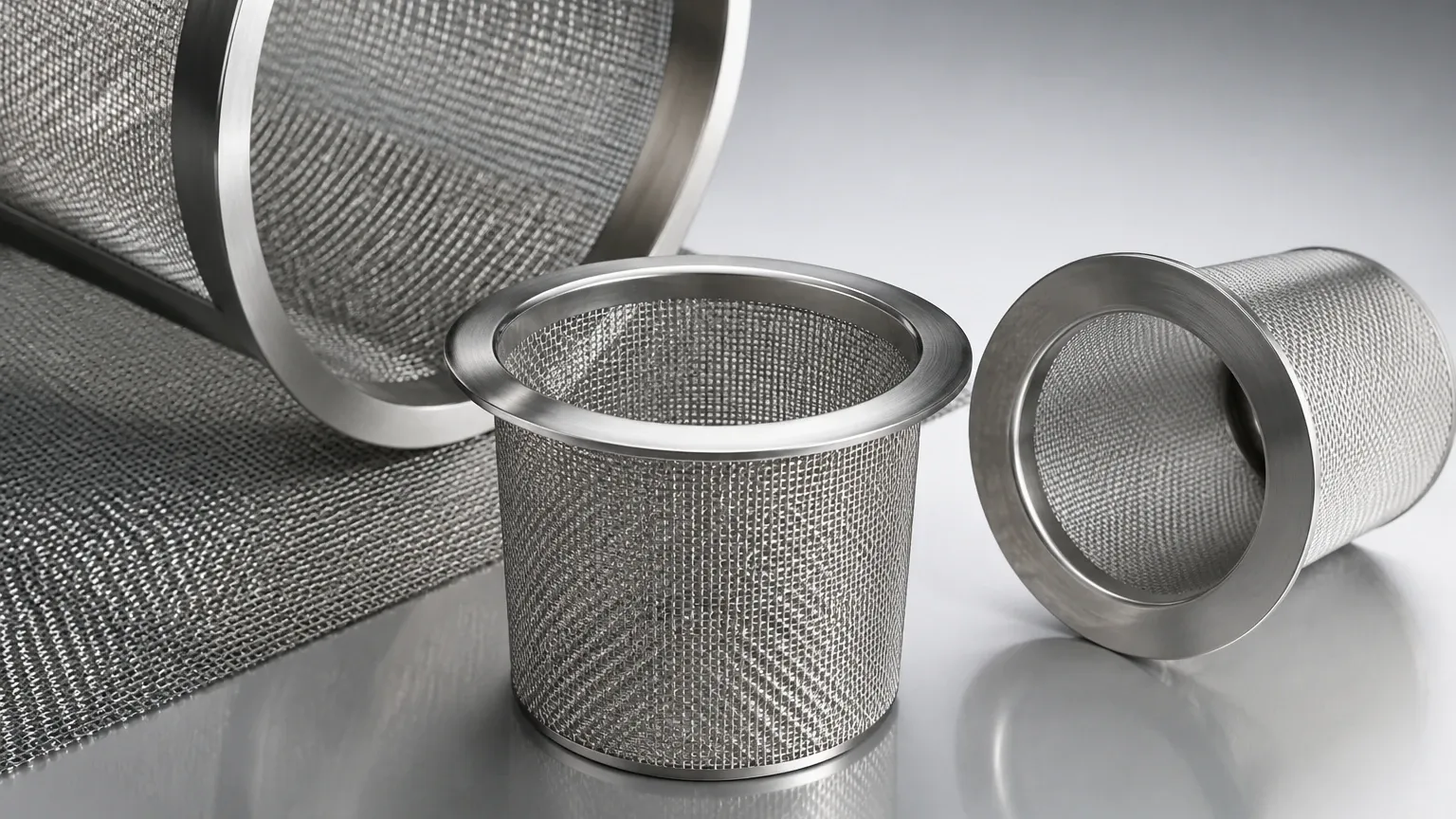
The 51s01 designation typically refers to a specific geometry of suction strainer or basket element. These are characterized by their cylindrical shape and often feature an integrated bypass valve or a specific threading for direct mounting to intake pipes.
Structural Integrity
Unlike fine pleated filters, the strainer 51s01 50 mesh is built for mechanical robustness. The mesh is often supported by a perforated metal core or an external cage. This reinforcement prevents the mesh from collapsing under the differential pressure created as the strainer becomes loaded with debris. In high-viscosity fluid applications, such as cold hydraulic oil or heavy lubricants, the structural support is critical to withstand the increased drag forces on the mesh wires.
Connection Types
Standard 51s01 units usually feature NPT (National Pipe Thread) or BSP (British Standard Pipe) connections. The integrity of these connections is paramount to prevent air ingress in suction lines. Air leaks in the suction side of a pump can lead to aeration of the fluid, causing erratic performance, noise, and accelerated wear of hydraulic components.
Material Selection for Industrial Environments
Material compatibility is a primary factor in the service life of Strainers & Baskets. While carbon steel or nylon may be used in light-duty applications, industrial-grade 51s01 strainers almost exclusively utilize stainless steel for the filtration media.
Stainless Steel 304 vs. 316
* Type 304 Stainless Steel: This is the standard material for most general-purpose industrial strainers. It offers excellent strength and good corrosion resistance for water-based fluids, oils, and mild chemicals.
* Type 316 Stainless Steel: For applications involving saltwater, high-chloride environments, or aggressive chemical processing, Type 316 is preferred. The addition of molybdenum provides superior resistance to pitting and crevice corrosion.
For the strainer 51s01 50 mesh, the choice between 304 and 316 often depends on the pH levels of the fluid and the cleaning protocols. If the strainer will be cleaned using caustic solutions or acidic descalers, 316 stainless steel is the safer engineering choice to prevent intergranular corrosion.
Engineering Considerations: Flow Rate and Pressure Drop
One of the most common mistakes in strainer selection is undersizing the unit based solely on pipe diameter. For a strainer 51s01 50 mesh, the pressure drop ($ΔP$) must be calculated based on the fluid's viscosity and the maximum flow rate.
The Impact of Viscosity
As fluid viscosity increases, the pressure drop across a 50-mesh screen increases exponentially. In cold-start conditions for hydraulic systems, the oil may be significantly more viscous than at operating temperature. If the $ΔP$ exceeds the pump's vacuum limit, cavitation will occur. Engineers should select a strainer size that allows for a maximum pressure drop of 0.5 to 1.0 psi (0.03 to 0.07 bar) when the fluid is at its highest expected viscosity.
Effective Filtration Area (EFA)
The EFA is the actual surface area available for fluid to pass through. A larger EFA allows for longer intervals between cleanings. When specifying a strainer 51s01 50 mesh, increasing the length of the basket or cylinder can provide more EFA without changing the footprint of the piping, effectively lowering the velocity through the mesh and improving the capture efficiency of the strainer.
Applications of the Strainer 51s01 50 Mesh
The versatility of the 50-mesh rating makes it a staple in various industrial sectors. Because it is fine enough to catch visible grit but coarse enough to allow high flow, it serves several distinct roles.
Hydraulic and Lubrication Systems
In these systems, the 51s01 50 mesh is primarily used as a suction strainer inside the reservoir. It protects the pump from large contaminants that may have entered the tank during refilling or through breather vents. It is not intended to replace high-pressure return-line filters, which handle much finer particles (5–25 microns).
Cooling Water and Heat Exchangers
Industrial cooling loops often use 50-mesh strainers to protect heat exchanger plates from clogging with scale or biological growth. The 297-micron aperture is typically smaller than the narrowest passage in most plate heat exchangers, ensuring that any particle that passes through the strainer will also pass through the exchanger without causing a blockage.
Chemical and Petrochemical Processing
During the initial stages of chemical batching, strainers are used to ensure that undissolved solids do not enter the reaction vessels. The durability of the stainless steel 51s01 design allows it to handle the thermal expansion and contraction associated with batch processing temperatures.
Maintenance and Total Cost of Ownership
A strainer is a "buy once, maintain often" component. The total cost of ownership (TCO) for a strainer 51s01 50 mesh is determined more by maintenance labor and downtime than by the initial purchase price.
Cleaning Cycles
Unlike disposable filter cartridges, stainless steel mesh strainers are cleanable. Cleaning should be performed when the differential pressure reaches a predetermined limit—usually double the clean pressure drop. For 50-mesh screens, ultrasonic cleaning or back-flushing with high-pressure water or air is effective. However, repeated mechanical scrubbing can deform the mesh wires, altering the 297-micron rating. It is essential to inspect the mesh for "blinding" (permanent clogging of the pores) during every maintenance cycle.
Replacement Indicators
While the 51s01 series is durable, it is not permanent. Signs that a strainer 51s01 50 mesh requires replacement include:
1. Mesh Fraying: Wires pulling away from the end caps or support structure.
2. Permanent Deformation: "Belly" or bulging in the mesh caused by high-pressure surges.
3. Corrosion: Pitting or thinning of the wires that could lead to mesh failure and downstream contamination.
Custom OEM Solutions and Selection Support
Standard off-the-shelf strainers may not always meet the specific requirements of a unique industrial application. Factors such as non-standard dimensions, specific alloy requirements (like Monel or Inconel), or the need for reinforced magnetic inserts to capture ferrous fines require a customized approach.
When evaluating Strainers & Baskets, engineers should confirm the following data points with their manufacturer:
* Fluid Compatibility: Confirm the seal materials (Buna-N, Viton, EPDM) and metal alloys are compatible with the process fluid.
* Burst Pressure: Ensure the internal support can handle the maximum possible differential pressure if the screen becomes 100% clogged.
* Certification Requirements: Determine if the application requires FDA compliance for food contact or specific pressure vessel certifications.
By focusing on these technical boundaries, procurement and engineering teams can ensure that the strainer 51s01 50 mesh they install provides reliable, long-term protection for their critical infrastructure. Whether used in a simple water pump intake or a complex hydraulic power unit, the precision of the mesh and the integrity of the 51s01 design remain fundamental to operational efficiency.
