


Strainer 65mm
In industrial fluid handling systems, the protection of sensitive downstream equipment—such as pumps, valves, and flow meters—is a critical engineering priority. The strainer 65mm, corresponding to the DN65 nominal diameter, serves as a versatile filtration component designed to remove solid particles from liquids and gases. As a standard size in medium-capacity piping systems, these strainers are integral to maintaining process integrity and preventing mechanical wear caused by debris.
Selecting the correct filtration solution requires a deep understanding of material compatibility, pressure ratings, and the specific mechanical requirements of the application. For engineers and procurement specialists, the choice of Strainers & Baskets often dictates the long-term reliability and maintenance overhead of the entire production line.
Technical Specifications and Material Selection
When specifying a strainer 65mm, the choice of material is the most significant factor influencing durability and chemical resistance. Industrial environments often demand materials that can withstand corrosive fluids, high temperatures, and mechanical stress.
Stainless Steel Alloys (304, 316, 316L)
Stainless steel is the industry standard for high-performance filtration.
- Grade 304: Suitable for general-purpose applications, including water treatment and mild chemical processing. It offers excellent strength and basic corrosion resistance.
- Grade 316: Contains molybdenum, providing enhanced resistance to chlorides and pitting. This is the preferred choice for marine environments, pharmaceutical manufacturing, and aggressive chemical processing.
- Grade 316L: The low-carbon version of 316, essential for welded components to prevent carbide precipitation, ensuring the structural integrity of the strainer 65mm housing and internal mesh.
Housing Construction
For a DN65 (65mm) size, housings are typically available in two formats: cast and fabricated. Cast housings are ideal for standard pressure ratings and high-volume production, while fabricated housings offer the flexibility to customize inlet/outlet configurations, add vent ports, or integrate differential pressure gauges.
Design Variations in 65mm Filtration
The geometry of a strainer 65mm determines its debris-holding capacity and the ease with which it can be cleaned. Depending on the installation space and the nature of the fluid, different designs are utilized.
Y-Strainers
Y-strainers are named for their shape and are most commonly used in pressurized lines, whether liquid or steam. They are compact and can be installed in either horizontal or vertical positions (provided the flow is downward). In a 65mm configuration, Y-strainers are often used where the amount of debris is relatively low, as they have a smaller collection chamber compared to basket types.
Basket Strainers
Basket strainers feature a larger internal volume, making them suitable for applications with higher solids loading. The "basket" design allows for a greater filtration surface area, which translates to a lower pressure drop and longer intervals between cleaning. For a strainer 65mm, a basket design is often the preferred choice for suction-side pump protection where minimizing flow restriction is vital.
Duplex Strainers
In processes that cannot be shut down for maintenance, duplex strainers are employed. These consist of two 65mm strainer chambers connected by a diverting valve. When one side becomes clogged, the flow is switched to the clean chamber, allowing the operator to service the dirty basket without interrupting the process flow.
Engineering Considerations: Flow Rate and Pressure Drop
A common challenge in sizing a strainer 65mm is balancing filtration efficiency with the system's hydraulic requirements. Every strainer introduces a degree of resistance to the flow, known as pressure drop ($ΔP$).
Calculating Pressure Drop
The pressure drop across a clean strainer is a function of the fluid's velocity, viscosity, and specific gravity, as well as the open area ratio of the mesh. Engineers must ensure that the $ΔP$ does not exceed the system's allowable limits, particularly in gravity-fed or low-pressure systems. As the strainer 65mm collects debris, the effective open area decreases, causing the pressure drop to rise.
The Importance of the Open Area Ratio
The ratio of the total area of the holes in the mesh to the internal cross-sectional area of the pipe is the Open Area Ratio (OAR). A well-designed strainer 65mm should ideally have an OAR of at least 4:1. This ensures that even when the basket is 50% clogged, the pressure drop remains within acceptable operating parameters.
Viscosity Effects
High-viscosity fluids, such as heavy oils or resins, require larger mesh openings or increased surface area to maintain flow. For a 65mm line handling viscous materials, a larger basket or a coarser primary screen backed by a fine mesh may be necessary to prevent excessive flow resistance.
Filtration Media: Mesh and Perforation
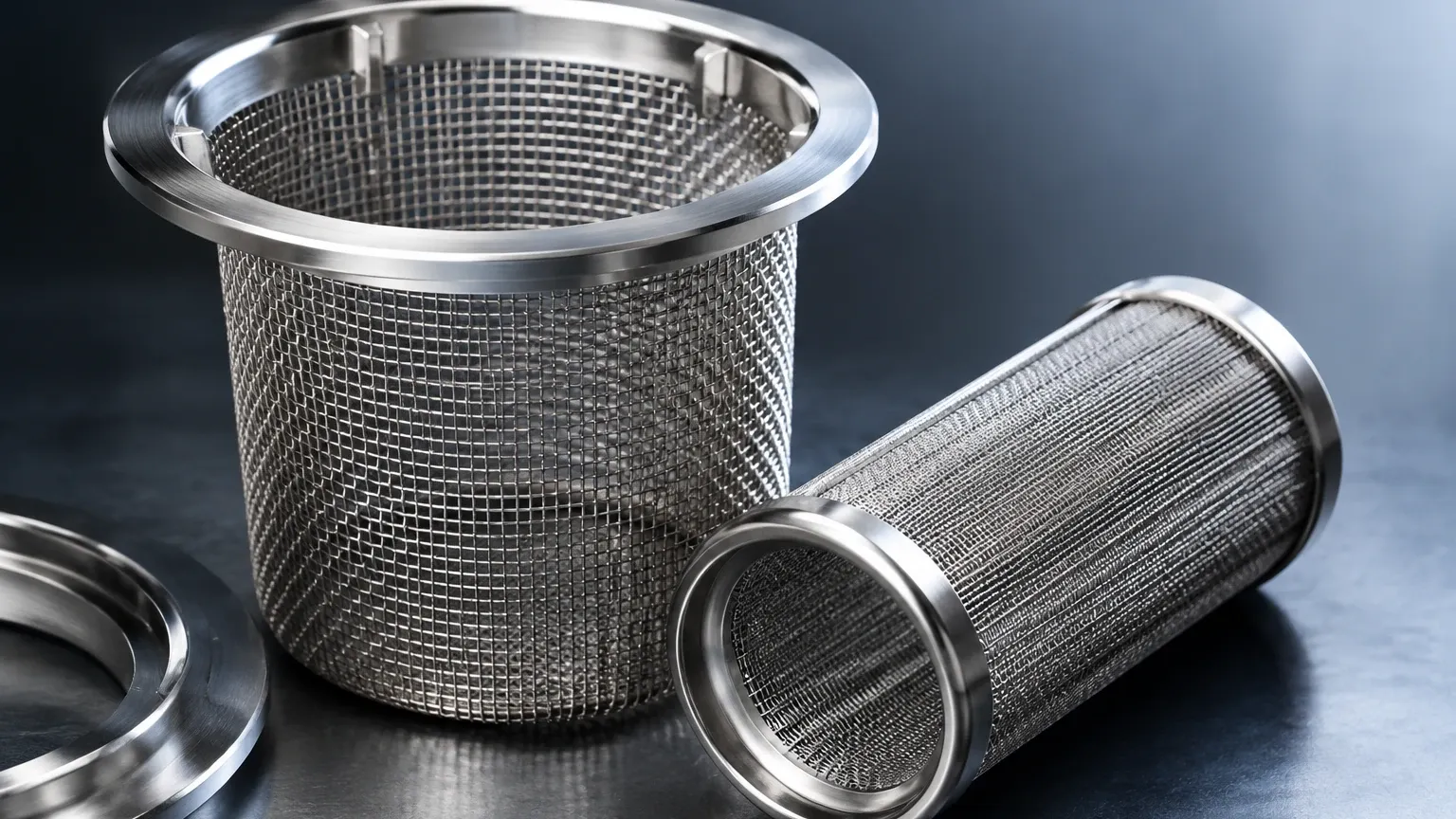
The internal component of the strainer 65mm is what determines the level of protection. This is typically a combination of a perforated metal support and a fine wire mesh.
- Perforated Metal: Provides the structural strength to withstand the pressure of the fluid flow. Common hole sizes for a 65mm strainer support range from 1mm to 5mm.
- Wire Mesh: For finer filtration (down to 5 microns), a stainless steel wire mesh is lined inside the perforated basket. The choice of weave—such as plain weave, twilled weave, or Dutch weave—impacts the flow characteristics and the ease of backwashing or manual cleaning.
When selecting mesh for a strainer 65mm, it is important to specify the particle size that must be removed. Using a mesh that is too fine will result in frequent clogging, while a mesh that is too coarse will allow damaging particles to pass through to sensitive equipment.
Industrial Applications and Compatibility
The strainer 65mm is a staple in various sectors due to its balance of flow capacity and manageable size for maintenance crews.
Chemical and Petrochemical
In these industries, the strainer 65mm is used to remove scale, rust, and weld beads from pipelines. Given the corrosive nature of many chemicals, the use of 316L stainless steel and specialized gasket materials (like PTFE or Viton) is standard to ensure chemical compatibility.
Food and Beverage
For food-grade applications, the strainer 65mm must meet stringent sanitary standards. This involves using high-polish finishes on the stainless steel surfaces to prevent bacterial growth and ensuring that the strainer design has no "dead legs" where fluid can stagnate. These strainers are frequently used in the filtration of juices, syrups, and dairy products.
Water Treatment and HVAC
In cooling towers and large-scale HVAC systems, 65mm strainers protect heat exchangers from fouling. They are also used in municipal water treatment to protect fine membrane filters from larger suspended solids.
Customization and OEM Capabilities
Standard off-the-shelf strainers do not always meet the unique requirements of complex industrial projects. Customization of the strainer 65mm allows for optimization based on specific spatial constraints or performance targets.
Tailored Connections
While standard flange connections (ANSI, DIN, or JIS) are common, some systems require threaded, socket-weld, or sanitary tri-clamp fittings. Custom manufacturing allows for the integration of these connections directly onto the 65mm housing.
Specialized Internal Components
Depending on the debris type—whether it is fibrous, granular, or gelatinous—the internal basket can be customized. This includes reinforced baskets for high-pressure differentials or magnetic inserts designed to capture fine ferrous particles that might otherwise pass through a standard mesh.
As a professional manufacturer, Kaifil specializes in these custom stainless steel filtration solutions. From material selection to precise filtration accuracy, the development of Strainers & Baskets is handled with an emphasis on durability and application-specific performance.
Maintenance, Cleaning, and Replacement Protocols
The total cost of ownership for a strainer 65mm is heavily influenced by its maintenance requirements. A neglected strainer can lead to collapsed baskets, pump cavitation, or downstream contamination.
Monitoring Performance
The most effective way to manage a strainer 65mm is through the use of differential pressure gauges. By measuring the pressure before and after the strainer, operators can determine exactly when the basket needs cleaning. A common rule of thumb is to clean or replace the internal element when the pressure drop reaches 10-15 psi over the clean drop.
Cleaning Procedures
For a basket strainer 65mm, cleaning involves depressurizing the line, opening the cover (often secured by swing bolts for quick access), and removing the basket. High-pressure water or air can be used to dislodge particles from the mesh. In chemical applications, ultrasonic cleaning or chemical baths may be required to remove stubborn deposits.
Replacement Cycles
While the stainless steel housing of a strainer 65mm can last for decades, the internal mesh and gaskets are wear items. Regular inspection should look for signs of mesh fatigue, broken wires, or bypassed seals. Keeping spare baskets and gaskets on-site is a best practice to minimize downtime during scheduled maintenance.
Final Considerations for Selection
Before finalizing the procurement of a strainer 65mm, engineers should confirm the following data points:
1. Design Pressure and Temperature: Ensure the housing and seals are rated for the maximum possible system excursions.
2. Fluid Properties: Confirm the viscosity and density at operating temperatures.
3. Particle Load: Estimate the volume of solids to determine if a Y-strainer or a larger basket strainer is more appropriate.
4. Installation Space: Verify that there is sufficient clearance to remove the basket or screen for cleaning.
5. Compliance Standards: Determine if the application requires ASME, PED, or FDA compliance.
By addressing these factors, technical teams can ensure that the selected strainer 65mm provides reliable protection and contributes to the overall efficiency of the industrial process. Whether for a new installation or an upgrade to an existing system, the integration of high-quality stainless steel filtration components is a foundational step in robust fluid management.
