


Strainer 7 8
In industrial fluid handling and process engineering, the precision of filtration components is a critical factor in maintaining system integrity and operational efficiency. The term "strainer 7 8" typically refers to a specific dimensional requirement, often associated with a 7/8-inch outer diameter (OD) connection, port size, or a specialized mesh configuration used within larger Strainers & Baskets assemblies. For engineers and procurement specialists, understanding the technical nuances of these components—ranging from material compatibility to flow dynamics—is essential for selecting the right filtration solution.
Industrial strainers serve as the primary line of defense for downstream equipment, such as pumps, valves, and heat exchangers. When a system specifies a 7/8-inch interface or component, it is usually found in high-pressure hydraulic lines, refrigeration systems, or specialized chemical processing skids. Ensuring that these components meet rigorous manufacturing standards is the difference between seamless operation and costly downtime.
Technical Specifications of 7/8" Strainer Components
The specification of a strainer 7 8 involves more than just the nominal size. In professional filtration manufacturing, several technical parameters must be harmonized to ensure the component performs under stress.
Connection Types and Interface Standards
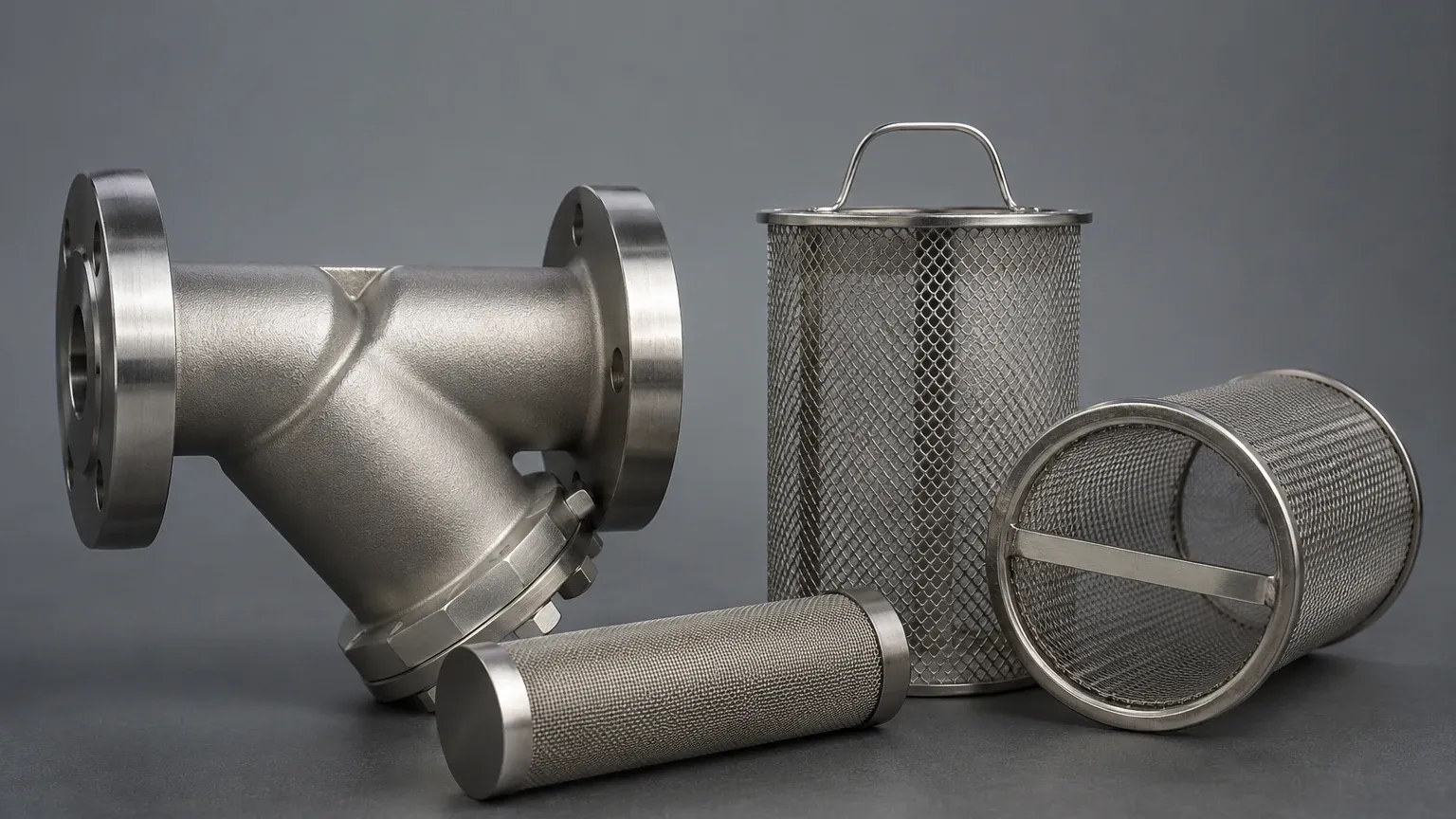
In many industrial applications, a 7/8-inch strainer interface utilizes O-ring face seals (ORFS), JIC flared fittings, or NPT threads. For stainless steel variants, socket weld or butt-weld configurations are also common in permanent installations. The choice of connection directly impacts the pressure rating of the assembly. For instance, a stainless steel Y-strainer with a 7/8-inch port may be rated for 600 PSI or higher, depending on the wall thickness and the grade of the alloy used.
Material Selection: SS304 vs. SS316
Material integrity is paramount when dealing with corrosive fluids or high-temperature environments.
* Stainless Steel 304: Suitable for general industrial use, offering excellent strength and basic corrosion resistance. It is frequently used in water treatment and standard hydraulic applications.
* Stainless Steel 316/316L: Preferred for chemical processing, pharmaceutical, and marine environments. The addition of molybdenum provides superior resistance to chlorides and pitting.
At Kaifil, the focus remains on high-grade stainless steel alloys to ensure that every strainer 7 8 component can withstand the chemical rigors of its intended environment without compromising the purity of the process fluid.
Engineering Considerations for Industrial Strainers & Baskets
Selecting a strainer is not merely a matter of matching pipe sizes; it requires a deep dive into the fluid dynamics of the system. Engineers must calculate the "Open Area Ratio" (OAR) to ensure that the strainer does not become a bottleneck.
Flow Rate and Pressure Drop (Delta P)
Every filtration element introduces a degree of resistance to the flow. The pressure drop across a strainer 7 8 assembly is influenced by the fluid viscosity, velocity, and the percentage of open area in the mesh or perforated metal. A well-engineered basket strainer should ideally have an open area at least four to six times the cross-sectional area of the inlet pipe. This allows for significant debris accumulation before a cleaning cycle is required, without causing a catastrophic drop in system pressure.
Mesh vs. Perforation
Depending on the required filtration accuracy, the internal element of the strainer may consist of perforated metal, wire mesh, or a combination of both.
* Perforated Metal: Provides structural rigidity and is suitable for removing large particulates (coarse filtration).
* Wire Mesh: Used for finer filtration requirements. In a 7/8-inch configuration, a fine stainless steel mesh can be layered over a perforated basket to provide both strength and precision.
Applications in Critical Industries
The versatility of stainless steel Strainers & Baskets makes them indispensable across various sectors. The specific use of 7/8-inch components is often dictated by the standardized tubing sizes used in high-performance machinery.
Chemical and Petrochemical Processing
In these environments, strainers must handle aggressive solvents and high temperatures. A strainer 7 8 might be used in sampling lines or additive injection systems where precise flow control and contaminant removal are vital to protect sensitive analytical equipment.
Food and Beverage Industry
Sanitary standards require filtration components to be easily cleanable and resistant to bacteria growth. Stainless steel strainers with polished surfaces (Ra < 0.8 µm) are used to remove pulp, seeds, or incidental debris from process lines. The 7/8-inch sizing is frequently seen in specialized bottling equipment and flavoring dispensers.
Pharmaceutical Manufacturing
Precision is the hallmark of pharmaceutical production. Strainers used here must comply with FDA and USP Class VI standards. The use of 316L stainless steel ensures that there is no metallic leaching into the product, and the precise 7/8-inch fitment prevents bypass, ensuring that all fluid passes through the validated filtration media.
Customization and OEM Capabilities
Off-the-shelf solutions often fail to meet the unique constraints of complex industrial systems. This is where custom manufacturing becomes essential. When a project requires a strainer 7 8 with non-standard dimensions, specific mesh counts, or unique housing geometries, OEM expertise is required.
Tailored Filtration Accuracy
Customization allows for the selection of specific micron ratings. Whether the application requires 5-micron fine filtration or 500-micron coarse straining, the internal basket can be engineered to meet those exact needs. Kaifil works closely with engineering teams to develop these custom components, ensuring that the structural integrity of the mesh is maintained even under high differential pressures.
Structural Reinforcements
For high-pressure hydraulic applications, a standard wire mesh may collapse. Custom strainers can be designed with internal support cores or external cages to provide the necessary mechanical strength while maintaining the 7/8-inch interface requirements. This ensures the longevity of the filter element in systems subject to pressure surges or heavy particulate loading.
Maintenance Protocols and Operational Longevity
The total cost of ownership (TCO) for industrial filtration is heavily influenced by maintenance requirements and the durability of the components. A high-quality strainer 7 8 manufactured from stainless steel offers a significantly longer service life compared to plastic or carbon steel alternatives.
Cleaning and Reuse
Unlike disposable cartridge filters, stainless steel baskets and strainers are designed to be cleaned and reused. Maintenance teams should monitor the pressure differential across the strainer. Once the Delta P reaches a predetermined limit (typically 10-15 PSI), the basket should be removed and cleaned. Ultrasonic cleaning or high-pressure backwashing are effective methods for restoring the flow capacity of stainless steel mesh.
Inspecting for Wear
During routine maintenance, it is critical to inspect the 7/8-inch sealing surfaces and the integrity of the mesh welds. Any signs of wire fraying or bypass around the seals indicate that the component needs replacement. Utilizing precision-manufactured parts ensures that the fit remains tight after multiple cleaning cycles, preventing the "bypass" of contaminants that can damage downstream pumps.
Selecting the Right Strainer Configuration
When specifying a strainer 7 8 for a new project or as a replacement part, engineers should confirm the following data points to ensure compatibility and performance:
1. Fluid Characteristics: Viscosity, density, and chemical composition.
2. Operating Conditions: Maximum operating pressure and temperature ranges.
3. Contaminant Profile: The nature of the solids being removed (hard, soft, fibrous) and the expected loading rate.
4. Target Micron Rating: The specific particle size that must be captured to protect downstream assets.
5. Space Constraints: The physical footprint available for the strainer housing, especially in compact skid designs.
By addressing these factors, procurement teams can move beyond simple part-number matching and instead invest in a filtration solution that optimizes system performance. Whether it is a standard Y-strainer, a T-type strainer, or a custom basket design, the precision of the 7/8-inch interface remains a cornerstone of system reliability.
In conclusion, the strainer 7 8 is a vital component in the industrial landscape, bridging the gap between coarse protection and precision filtration. By leveraging high-grade materials and advanced manufacturing techniques, Kaifil provides the industrial sector with the durable, high-performance Strainers & Baskets required for today's demanding process environments. Understanding the technical requirements—from flow dynamics to material science—enables engineers to make informed decisions that safeguard their equipment and ensure process continuity.
